
Korea’s startup ecosystem has become increasingly visible in global conversations around innovation. In recent years, that visibility has extended beyond commercial technology into social innovation, where Korean ventures are designing solutions for energy access, education, climate, and development challenges.
Recognition has then followed. Awards, pilot deployments, and international partnerships have validated the technical and design capabilities of these ventures. Yet across multiple cases, a consistent question remains unresolved: what happens next after validation?
The gap between proving a concept and sustaining it at scale is emerging as one of the most important structural challenges in Korea’s social innovation ecosystem.
Korea’s Social Innovation Ecosystem Is Expanding Beyond Domestic Boundaries
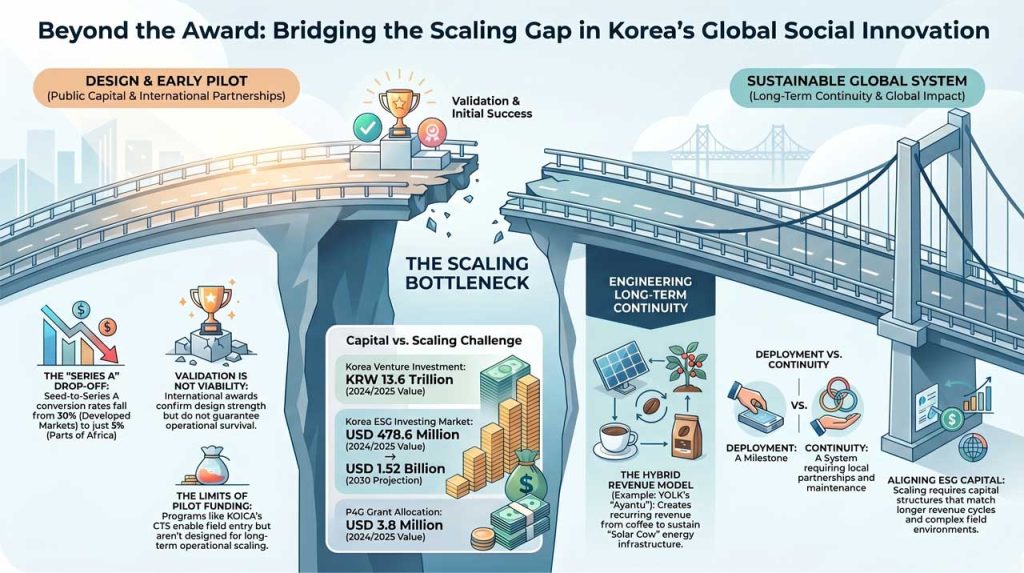
Korea’s policy and capital infrastructure for startups continues to strengthen. The Ministry of SMEs and Startups reported that venture investment reached KRW 13.6 trillion in 2025, one of the highest levels on record. Public capital formation through the Mother Fund also continues to expand, with KRW 2.1 trillion in government contributions planned to mobilize larger private venture funds.
At the same time, Korea is increasingly positioning startups within global problem-solving frameworks.
Programs such as the Korea International Cooperation Agency (KOICA)’s Creative Technology Solution (CTS) initiative connect startups with development challenges in emerging markets. The program explicitly supports ventures applying technology and business models to address issues in regions where traditional approaches have struggled.
Partnership platforms such as the P4G further extend this direction. Korea has been a participating country since 2017 and continues to support early-stage climate ventures through funding and ecosystem-building efforts. P4G’s model focuses on helping startups move toward investment readiness, including financial structuring, market positioning, and ESG integration.
This combination of policy support, capital formation, and international engagement suggests that Korea is not lacking in early-stage innovation infrastructure.
So, the most crucial question now lies in whether those solutions can transition into systems that sustain themselves beyond pilot stages.

Recognition Confirms Design Strength, Not System Viability
Korean social ventures are increasingly recognized for their design capabilities and field-oriented solutions. One such case is Solar Cow, developed by YOLK, which has received global recognition including TIME’s Best Inventions and global design awards.
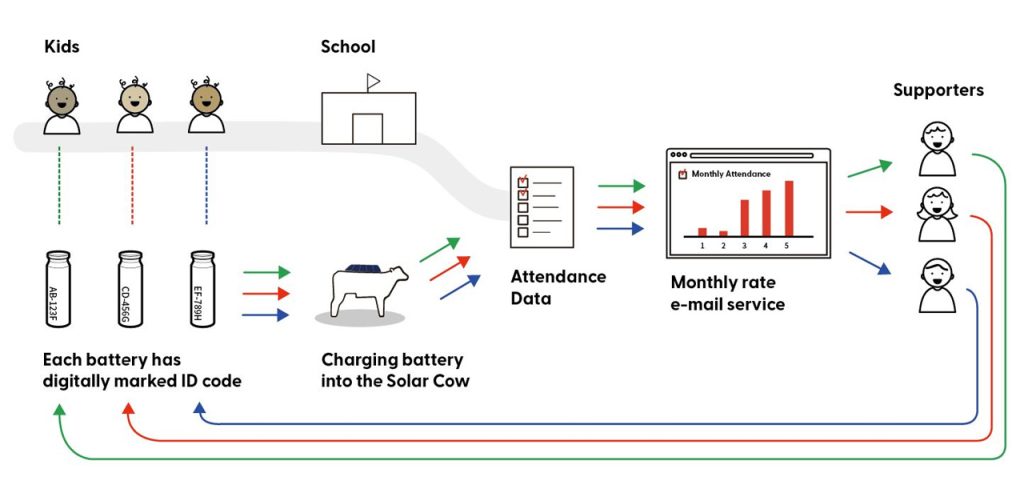
Solar Cow demonstrates how a system can be designed around real-world constraints, linking school attendance with access to electricity in off-grid communities. Field deployments across Tanzania, Kenya, and the Democratic Republic of Congo have shown that the model can influence behavior at the household level.
At the same time, the transition from deployment to continuity introduces a different set of challenges.
As shared in KoreaTechDesk’s interview, YOLK’s founder Sena (Sung-Un) Chang explained the broader direction of the company’s evolution:
“Our goal is to integrate social impact into everyday needs, enabling daily consumption to contribute to meaningful change.”
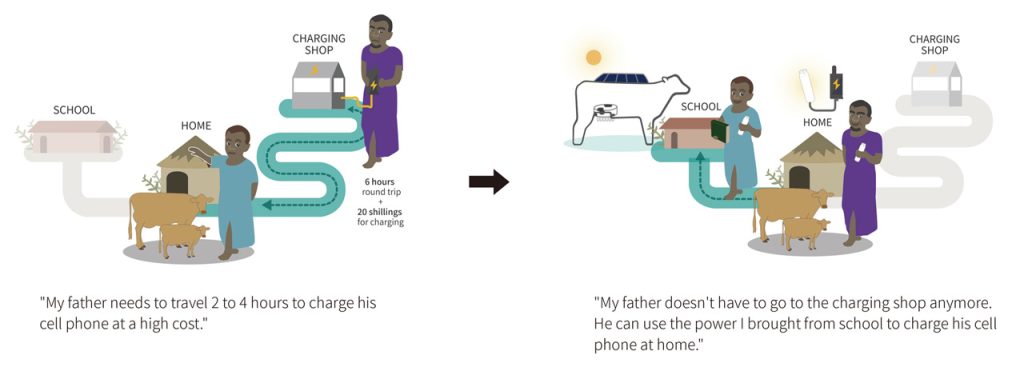
This shift reflects a broader realization. Designing a solution that works in the field is one stage. But building a system that continues operating across multiple environments, over time, requires a different structure entirely.
From Pilot Success to System Design: Where the Gap Emerges
The gap between validation and scale is not unique to a single company. It reflects a broader pattern observed across global impact ecosystems.
P4G’s climate startup support programs illustrate where the transition from pilot to scale begins to break down. In 2025, the organization allocated approximately USD 3.8 million in grants and technical assistance to 14 early-stage ventures across Africa, Latin America, and Southeast Asia. The support focused on areas such as financial modeling, investor readiness, ESG strategy, and market positioning, rather than early-stage ideation.
Yet, even after initial validation, most startups are not yet investment-ready. P4G data indicates that seed-to-Series A conversion rates average around 20–30% in developed markets, but drop to roughly 10% in Latin America and near 5% in parts of Africa.
Now, the bottleneck is not the absence of solutions. It’s the difficulty to build systems that can sustain those ideas across operational, financial, and institutional constraints.
ODA Programs Provide Access, but Not Always Continuity
Korea’s development-linked startup programs, particularly KOICA’s CTS, play a critical role in enabling field deployment. They reduce entry barriers for startups operating in unfamiliar environments and provide initial funding to test solutions in real-world contexts.
However, these programs are not designed to carry ventures through long-term scaling.
By design, CTS focuses on early-stage validation and demonstration. Once a project proves its feasibility, startups must transition into independent operational models. This transition requires new forms of capital, local partnerships, maintenance systems, and revenue structures.
In practice, this is where many ventures face difficulty.
A World Bank assessment of off-grid energy systems highlights a similar issue. Solar infrastructure can be deployed relatively quickly, but systems often face operational disruptions if long-term maintenance and financing structures are not secured.
This pattern reinforces a key distinction: deployment is a milestone, but continuity is a system.
ESG Capital Is Growing, but Alignment Remains Complex
The rise of ESG investment has introduced new expectations for startups engaging with social and environmental challenges. In South Korea, the ESG investing market generated approximately USD 478.6 million in 2024 and is projected to reach around USD 1.52 billion by 2030, reflecting sustained growth in capital allocated to sustainability-linked strategies.
Major financial institutions have expanded ESG portfolios, while government-backed initiatives such as the Mother Fund have begun directing capital toward ventures pursuing social value. At the same time, impact-focused funds remain selective, with only a limited number of managers meeting qualification standards in recent fund allocations.
This growth, however, does not automatically translate into scalable funding for early-stage social ventures. Impact-driven startups often face longer revenue cycles, higher operational uncertainty in field environments, and challenges in producing standardized performance metrics.
As a result, the gap is not simply about capital availability. It is about whether funding structures are aligned with the realities of deploying and sustaining impact systems over time.
YOLK as a Case Study in System Transition
YOLK’s evolution from Solar Cow to Ayantu reflects this transition in practice.
Early Solar Cow deployments relied on a combination of public participation, project-based funding, and institutional support. This approach enabled initial rollout and validation. However, it did not provide a stable base for long-term expansion.
The introduction of Ayantu, a coffee brand linked to Solar Cow deployment, represents an attempt to build a recurring revenue layer tied to everyday consumption. The model connects global consumer markets with field-level infrastructure, creating a continuous funding mechanism.
At its current stage, this approach remains in development. Still, this illustrates both the potential and the complexity of building hybrid models that combine commercial activity with social impact.
More importantly, it also shows that the path to scale requires ventures to operate across multiple domains simultaneously: product design, local execution, market positioning, and financial structuring.
What This Means for Korea’s Global Startup Positioning
Korea’s role in the global startup ecosystem is evolving. The country is no longer defined solely by manufacturing excellence or domestic market success. It is increasingly contributing to solutions that address global challenges, particularly in emerging markets.
This shift introduces new expectations.
Startups entering these environments must operate beyond product performance. They must engage with local institutions, navigate cultural contexts, and build systems that can function independently over time.
For investors and policymakers, the implication is equally significant. Supporting social innovation requires more than funding early-stage experimentation. It requires building pathways that connect validation to scale, including capital structures, partnership networks, and measurement frameworks.
Without these elements, even well-designed solutions risk remaining confined to pilot stages.
The Next Phase of Korean Social Innovation
Korea’s social innovation ecosystem has reached a stage where solutions can be designed, deployed, and recognized on a global level.
The next phase is less visible, but more demanding.
It involves translating those solutions into systems that can sustain themselves across different environments, over extended periods, and under real-world constraints.
YOLK’s Solar Cow and Ayantu illustrate this transition. Not as a complete model, but as an ongoing attempt to bridge the gap between impact and continuity.
And for Korea’s startup ecosystem, this gap may define the difference between innovation that is seen and innovation that endures.

Key Takeaway
- Korea’s social innovation ecosystem has strong design and policy support, including programs like KOICA CTS and global partnerships such as P4G
- Recognition and pilot deployment do not guarantee scalability, as ventures must transition into sustainable operational systems
- Scaling requires alignment across finance, governance, and local execution, not only product performance
- ESG capital is growing in Korea, but impact startups need specialized funding structures suited to longer cycles and complex environments
- YOLK’s Solar Cow and Ayantu illustrate a broader transition, where social ventures move from project-based models toward integrated business systems
- For global startup ecosystems, the key challenge is no longer invention, but building systems that sustain impact over time
– Stay Ahead in Korea’s Startup Scene –
Get real-time insights, funding updates, and policy shifts shaping Korea’s innovation ecosystem.
➡️ Follow KoreaTechDesk on LinkedIn, X (Twitter), Threads, Bluesky, Telegram, Facebook, and WhatsApp Channel.
🤝 Looking to connect with verified Korean companies building globally?
Explore curated company profiles and request direct introductions through beSUCCESS Connect.