
Electricity access is usually framed as an infrastructure gap. In many off-grid regions, it operates more like a decision driver inside households. Korea-based YOLK built Solar Cow around this dynamic, connecting energy access to daily behavior rather than distribution alone. The system introduces a different approach, where access is structured through participation, not simply provided.
Solar Cow by YOLK: Linking Daily School Attendance with Household Energy Access
In many off-grid communities, electricity is not a background utility. It directly influences how families allocate time, labor, and priorities. Across parts of sub-Saharan Africa, where access remains limited, this constraint often intersects with education and attendance patterns.
YOLK approached this intersection by combining two conditions into a single system. Rather than treating energy access and school attendance separately, Solar Cow integrates them into a shared daily routine.
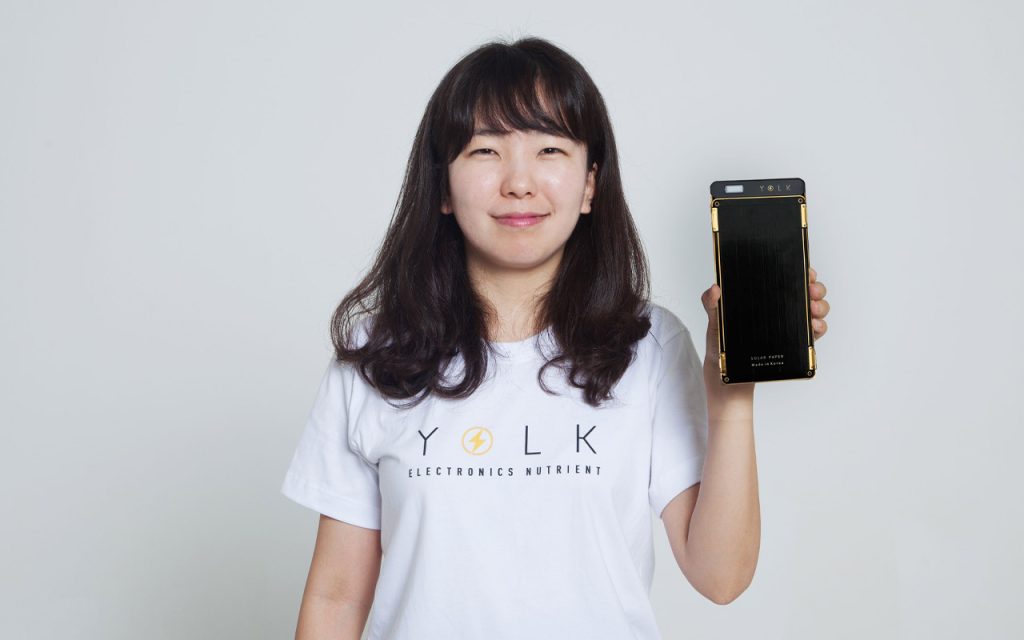
Recognized byTIME’s Best Inventions of 2019 and the 2019 CES Innovation Awards, Solar Cow operates through a simple structure: students charge portable Solar Milk batteries at school and take them home after class.
This mechanism positions school attendance as the point of access to electricity, embedding energy use into everyday behavior.
Designing Around Constraint: Why Solar Cow Exists
The logic behind Solar Cow reflects a broader structural reality. According to the International Energy Agency, around 600 million people in Africa still lack access to electricity.
At the same time, 2025 data from UNICEF and the International Labor Organization revealed that nearly 138 million children were engaged in child labor in 2024, including around 54 million in hazardous work. They also reported that sub-Saharan Africa carries the heaviest burden, accounting for around 87 million children in child labor.
In many communities, children’s time is closely tied to household survival, shaping school attendance decisions. At the same time, basic energy needs such as lighting and device charging remain a recurring cost burden for families.
YOLK’s founder, Sena (Sung-Un) Chang, described the starting point in an interview with KoreaTechDesk:
“By incentivizing school attendance, we encouraged more parents and families to support their children’s education while addressing the issue of limited access to electricity.”
This positions Solar Cow less as an energy product and more as a system shaped by how households actually make daily decisions under constraint.
From Product to System: How Solar Cow Works in Practice
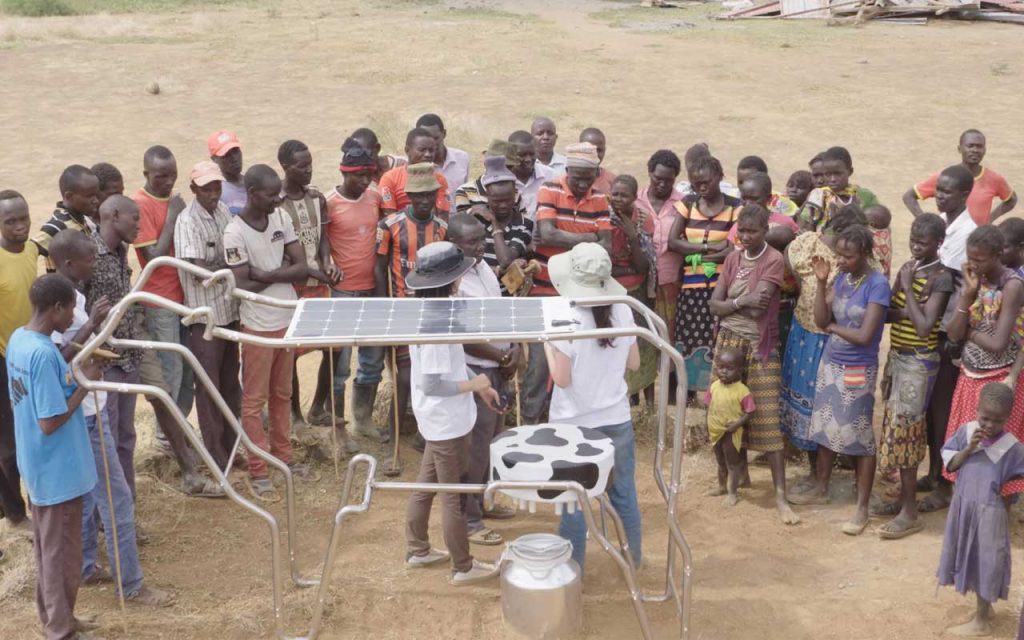
Solar Cow operates through a school-based charging model.
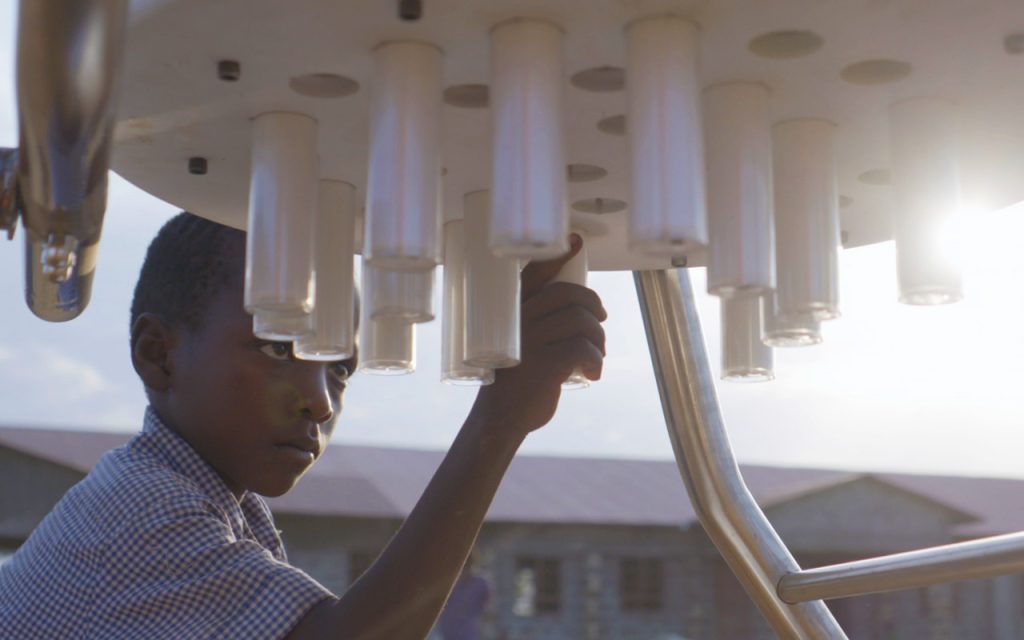
Solar panels are installed at schools’ power charging stations where students plug in portable batteries known as Solar Milk during class hours. At the end of the day, these batteries are taken home and used for lighting or charging small devices.
The structure reflects a deliberate design choice. Rather than introducing new usage patterns, YOLK aligned Solar Cow with existing routines, using the daily school commute as the point where energy access is integrated.
As YOLK described,
“The Solar Cow system does not require families and children to do the unusual. It fits into and enhances their existing daily routines of travelling to and from school.”
Battery capacity and charging access were also designed with constraints in mind. Limiting energy storage ensures that batteries need to be recharged regularly at school, reinforcing daily attendance patterns.
This approach reflects a shift in how technology is deployed in constrained environments. Instead of focusing solely on technical performance, the system is designed to align with how people actually live, work, and make daily decisions.
Field Reality: What Changes When the Solar Cow System Meets the Ground
Solar Cow’s development has been shaped by direct field deployment across Tanzania, Kenya, and the Democratic Republic of Congo. YOLK reports 15 installations in Tanzania, 3 in Kenya, and 6 in DRC, reflecting an early-stage footprint across varied local conditions.
These deployments quickly revealed where initial design assumptions did not hold. One of the earliest challenges emerged in the charging mechanism. The magnetic connection, originally introduced to simplify use for children, proved impractical in dusty environments, where sand and debris interfered with the charging process.
Chang revealed,
“What we hadn’t accounted for… was the local environment, sand and dirt became easily lodged in the charging mechanism.
This issue was resolved by redesigning the charging mechanism… to a top-insertion system.”
The adjustment reflects a broader pattern observed during field deployment. Design choices that perform well in controlled environments often need to be reworked once they encounter local conditions.
And these challenges are not limited to hardware. In one instance, a Solar Cow unit was relocated by a teacher for personal use, disrupting the system’s intended role within the school. Rather than treating this as an isolated case, Chang interprets it as part of a larger operational reality.
“Technology alone is not enough. Operations must adapt to human, environmental, and cultural realities.”
This experience underscores a key shift in approach. What begins as a product must ultimately function as a system shaped by behavior, incentives, and context on the ground.
Community Alignment as a Core Variable
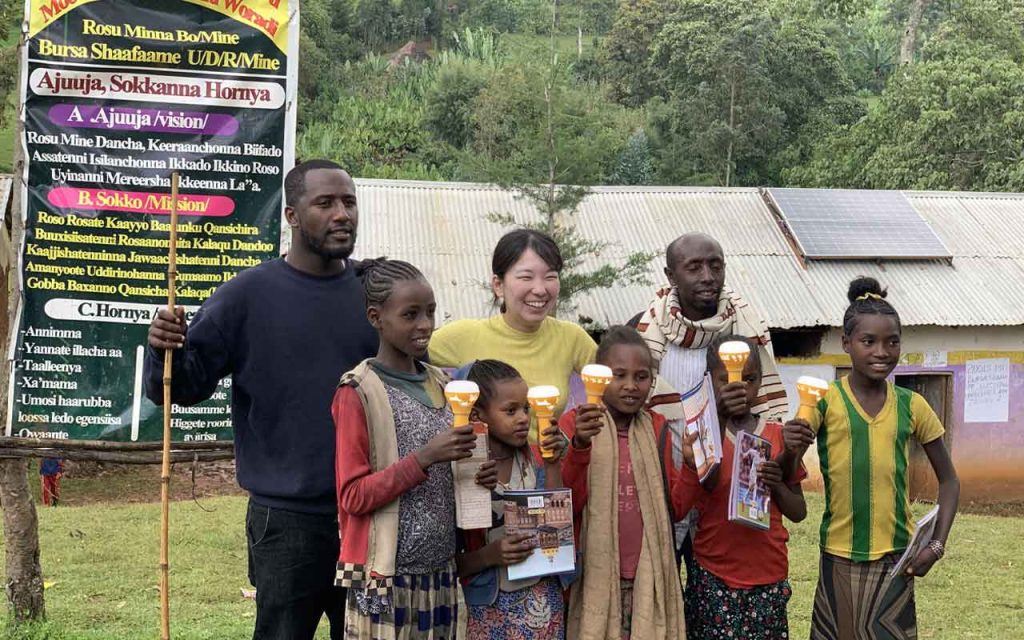
One of the more consistent observations across deployments has been the role of community engagement. According to YOLK, outcomes vary significantly depending on the involvement of teachers and families.
In Kibera, Kenya, where school staff were actively engaged, the company reported improvements in both attendance and academic performance based on teacher feedback. Yet, in other locations, results were less consistent, highlighting the dependence of the system on local participation.
This aligns with broader research on off-grid solar interventions. Studies supported by the World Bank indicate that access to solar lighting can increase study time and reduce reliance on kerosene, but long-term education outcomes depend on a wider set of factors beyond energy access.
In practice, Solar Cow operates within these constraints. The system can influence behavior, but it does not fully determine outcomes.
Cultural and Social Friction in Deployment
Field implementation has also surfaced cultural considerations that are not immediately visible at the design stage.
In Zanzibar, where much of the population follows Islamic practices, parents expressed concern over the inclusion of music features in Solar Milk devices. While the core function of the system remained intact, the experience highlighted how embedded assumptions in product design can conflict with local norms.
The company then adjusted its approach accordingly, reinforcing the importance of cultural awareness in system deployment.
These experiences point to a broader insight: technology deployed across global contexts often carries built-in assumptions about how people use it, how they behave, and what is considered acceptable.
But in practice, those assumptions do not always hold, making continuous local adaptation essential for the system to function as intended.
What This Means for Korean Startups Operating Globally
Solar Cow reflects a shift in how some Korean startups are approaching global markets, particularly in emerging economies.
Historically, Korean innovation has been associated with product excellence and manufacturing capability. In this case, the focus extends beyond the product itself toward system design and continuous adaptation based on field conditions.
YOLK’s process shows that entering complex markets requires more than exporting technology. It requires understanding how constraints shape behavior, and designing systems that operate within those constraints.
This approach has implications beyond social ventures. For startups and investors looking at cross-border expansion, especially in regions with infrastructure gaps, the ability to adapt products into context-specific systems becomes a critical capability.
Solar Cow: A System Still in Development
Solar Cow is currently being implemented across selected communities. Still, measuring long-term impact consistently across these environments remains complex, given the realities of operating in diverse and resource-constrained settings.
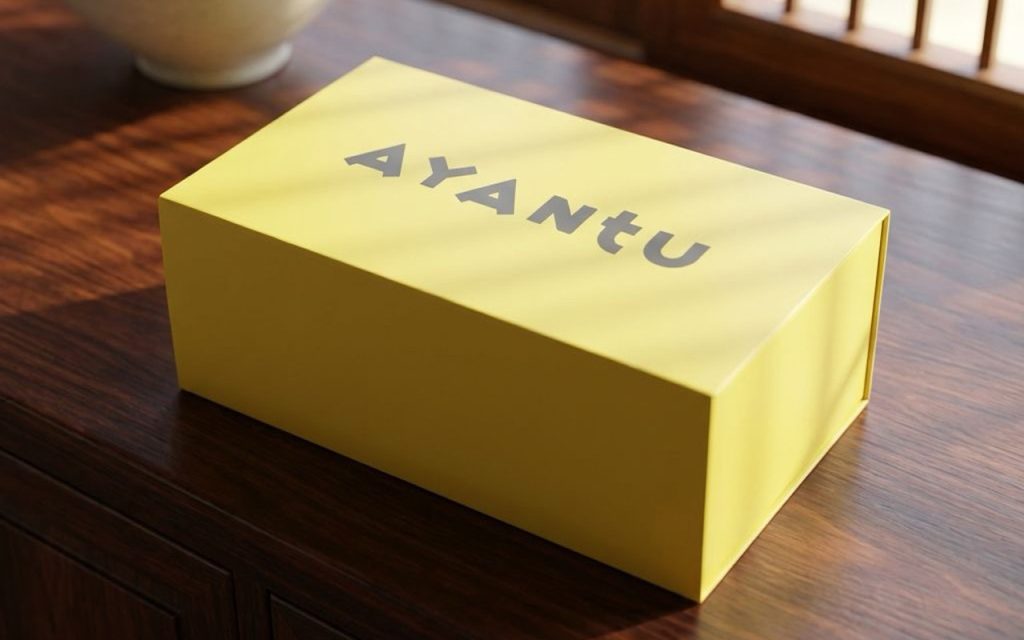
YOLK notes that observations and feedback from schools and communities continue to guide how the system evolves, both in design and in day-to-day operation. Alongside this, the introduction of Ayantu reflects an effort to support the project’s continuity over time.
Ayantu operates as a specialty coffee brand sourcing beans from Ethiopian farmers, with a portion of its revenue reinvested into Solar Cow deployments, linking everyday consumer activity to ongoing field implementation.
At its current stage, Solar Cow offers insight into how energy access can be structured around daily behavior, illustrating how technology and routine can be combined in off-grid environments.
Key Takeaway for Global Startup Ecosystem
- Solar Cow operates as a behavior-linked system, not just a solar product, connecting school attendance with energy access in daily routines
- Field deployment reshapes design decisions, as seen in hardware changes driven by environmental conditions and usage realities
- Impact depends on community alignment, with outcomes varying based on teacher and family engagement
- Cultural context affects technology adoption, requiring ongoing adaptation beyond initial product design
- For Korean startups expanding globally, this case highlights a shift toward system-level innovation grounded in real-world constraints, not just product export
– Stay Ahead in Korea’s Startup Scene –
Get real-time insights, funding updates, and policy shifts shaping Korea’s innovation ecosystem.
➡️ Follow KoreaTechDesk on LinkedIn, X (Twitter), Threads, Bluesky, Telegram, Facebook, and WhatsApp Channel.
🤝 Looking to connect with verified Korean companies building globally?
Explore curated company profiles and request direct introductions through beSUCCESS Connect.