KoreaTechDesk | Korean Startup and Technology News

Sun, February 22, 2026

Sign in

Virtual Demo Day
Menu
  • Home
  • Startup News
    • AI & Big Data
    • AR & VR
    • Blockchain
    • Clean Technology
    • Content & Games
    • Cybersecurity
    • Enterprise & SaaS
    • FinTech
    • Gadgets & Electronics
    • Health & Bio
    • Manufacturing
    • Press Release
    • IoT
    • Marketplaces & E-commerce
    • Robotics
    • Transportation
    • Investments
    • Ecosystem & Lists
  • Governments
    • Artificial Intelligence Industry Cluster Agency
    • Daegu Technopark
    • GANGNAM-GU
    • Gyeonggido Business & Science Accelerator
    • Hwaseong Industry Promotion Agency
    • Invest Seoul
    • Korea Creative Content Agency
    • Korea Internet & Security Agency
    • Korea Information Security Industry Association
    • Korea Institute of Startup & Entrepreneurship Development
    • Korea Tourism Organization
    • Korea Trade-Investment Promotion Agency
    • Ministry of Culture, Sports and Tourism
    • Ministry of SMEs & Startups
    • National IT Industry Promotion Agency
    • Pangyo Techno Valley
    • Seoul Business Agency
    • Seoul FinTech Lab
    • South Gyeongsang Province
    • Seoul Metropolitan Government
  • Events
    • COMEUP
    • Korea Fintech Week
    • K-Content Expo
    • NextRise
    • Try Everything
  • Interviews
    • Investors’ interviews
    • Founders’ interviews
  • Programs
    • Asan Voyager
    • CAPA Global Program
    • Campus Town Program
    • SGSC Global Bootcamp
    • Gangnam-gu Global Roadshow
    • Global SaaS Marketplace Support Project
    • LAUNCHPAD
    • COMEUP STARS 120
    • K-Startup Grand Challenge
    • TIPS X beSUCCESS Global Project
    • SFL Global Program
    • KTO Global Showcase
    • Yonsei Univ Global Class
    • KOSME Global Program
  • Partner With Us
    • Press Release
    • Startup Scouting
    • Business Agencies
    • Global Mentorship Program
    • Investment Opportunities
    • K-Scouter Program
  • Lists
  • Home
  • Startup News
    • AI & Big Data
    • AR & VR
    • Blockchain
    • Clean Technology
    • Content & Games
    • Cybersecurity
    • Enterprise & SaaS
    • FinTech
    • Gadgets & Electronics
    • Health & Bio
    • Manufacturing
    • Press Release
    • IoT
    • Marketplaces & E-commerce
    • Robotics
    • Transportation
    • Investments
    • Ecosystem & Lists
  • Governments
    • Artificial Intelligence Industry Cluster Agency
    • Daegu Technopark
    • GANGNAM-GU
    • Gyeonggido Business & Science Accelerator
    • Hwaseong Industry Promotion Agency
    • Invest Seoul
    • Korea Creative Content Agency
    • Korea Internet & Security Agency
    • Korea Information Security Industry Association
    • Korea Institute of Startup & Entrepreneurship Development
    • Korea Tourism Organization
    • Korea Trade-Investment Promotion Agency
    • Ministry of Culture, Sports and Tourism
    • Ministry of SMEs & Startups
    • National IT Industry Promotion Agency
    • Pangyo Techno Valley
    • Seoul Business Agency
    • Seoul FinTech Lab
    • South Gyeongsang Province
    • Seoul Metropolitan Government
  • Events
    • COMEUP
    • Korea Fintech Week
    • K-Content Expo
    • NextRise
    • Try Everything
  • Interviews
    • Investors’ interviews
    • Founders’ interviews
  • Programs
    • Asan Voyager
    • CAPA Global Program
    • Campus Town Program
    • SGSC Global Bootcamp
    • Gangnam-gu Global Roadshow
    • Global SaaS Marketplace Support Project
    • LAUNCHPAD
    • COMEUP STARS 120
    • K-Startup Grand Challenge
    • TIPS X beSUCCESS Global Project
    • SFL Global Program
    • KTO Global Showcase
    • Yonsei Univ Global Class
    • KOSME Global Program
  • Partner With Us
    • Press Release
    • Startup Scouting
    • Business Agencies
    • Global Mentorship Program
    • Investment Opportunities
    • K-Scouter Program
  • Lists
Home Government Policies

Korea Moves to Shield 6,000 Exporters After U.S. Supreme Court Tariff Ruling

by Dae-jung Park
February 22, 2026
in Government Policies
0

The U.S. Supreme Court’s decision to invalidate tariffs imposed under the International Emergency Economic Powers Act did more than settle a constitutional question in Washington. It forced exporting countries to reassess exposure in real time. In Seoul, the response was immediate and procedural, not political. For thousands of Korean exporters, the issue is no longer whether tariffs were lawful, but whether money already paid can be recovered.

U.S. Supreme Court IEEPA Tariff Ruling Prompts Korea’s Immediate SME Response

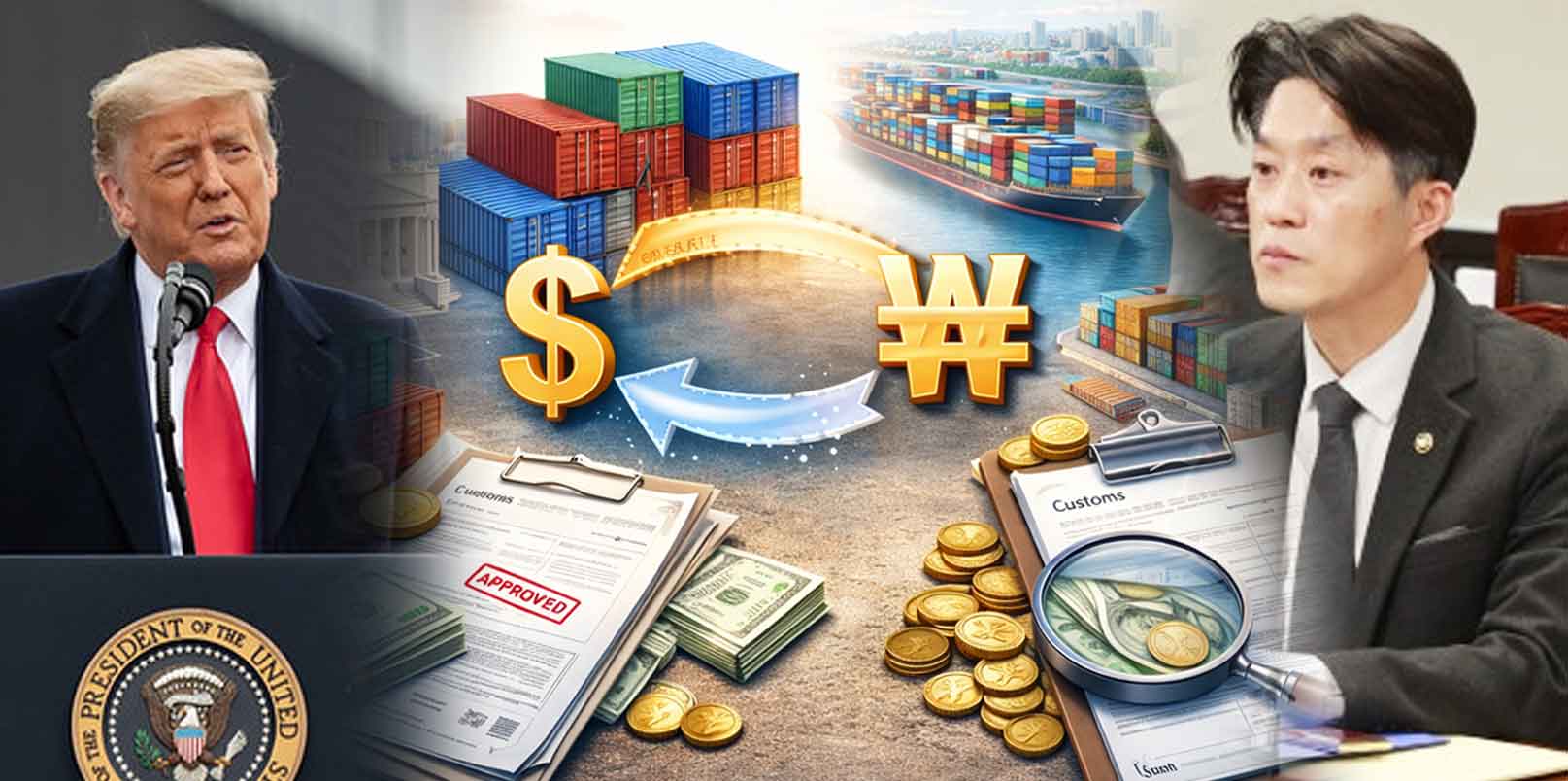
On February 20 (local time), the U.S. Supreme Court ruled that the International Emergency Economic Powers Act (IEEPA) did not authorize the president to impose reciprocal tariffs, affirming that the power to levy taxes, including tariffs, rests with Congress.

The following day, South Korea’s Ministry of SMEs and Startups (MSS) and the Korea Customs Service (KCS) moved to contain potential disruption for exporters.

MSS confirmed that it shared the ruling through a pre-established hotline with 11 major associations, including the Korea Federation of SMEs, the Korea Venture Business Association, and the Inno-Biz Association.

According to Vice Minister Noh Yong-seok on February 21,

“We will monitor follow-up developments within the United States while assessing the impact on the SME sector together with relevant associations and organizations.”

KCS announced it would immediately begin providing guidance on basic refund procedures and claim deadlines to companies exporting to the United States. Through analysis of export declaration data, the agency identified approximately 6,000 firms that exported reciprocal tariff-targeted items or steel and aluminum products under DDP (Delivered Duty Paid) terms.

Under DDP conditions, exporters — rather than U.S.-based importers — pay duties directly. In such cases, Korean exporters may apply to U.S. Customs and Border Protection (CBP) for refunds themselves.

Why the Refund Mechanism Changes the Conversation for Korean SMEs

For months, tariff volatility has been framed as a pricing problem. The Supreme Court ruling reframes it as a compliance and cash-flow issue.

Out of roughly 24,000 Korean firms that exported goods subject to reciprocal or product-specific tariffs to the U.S., about 6,000 used DDP terms. And this distinction matters because DDP exporters bore tariff costs directly and now face a potential refund process that requires navigating U.S. customs procedures.

This shifts the risk profile. Instead of renegotiating contracts, companies must now evaluate documentation, liquidation timelines, and CBP procedures. The Korean government’s rapid identification of affected firms signals that export governance has evolved beyond diplomatic negotiation into operational intervention.

MSS has indicated that if refund eligibility and procedures become clearer, it will coordinate with the Ministry of Trade, Industry and Energy and the Korea Customs Service to provide explanatory briefings and customized consulting.

Refund Eligibility Does Not Eliminate Execution Friction

The ruling invalidated IEEPA-based reciprocal tariffs. It did not automatically trigger refunds, nor did it address tariffs imposed under other statutes such as Section 232 or Section 301.

That distinction introduces uncertainty.

Refund claims must be processed through U.S. Customs and Border Protection. While KCS stated it will maintain close coordination with CBP and provide real-time updates, the detailed refund framework has yet to be formally announced by U.S. authorities.

For exporting SMEs, this creates a familiar gap between legal clarity and administrative execution. Even if refunds become possible, firms must meet procedural requirements, preserve documentation, and monitor deadlines. For smaller exporters without in-house customs expertise, that process may require external advisory support.

The government’s activation of hotlines and export support centers reflects awareness of that friction. Yet the operational burden ultimately rests with firms.

What This Enables — and What It Leaves Untouched

The Supreme Court ruling removes a layer of tariff exposure tied specifically to IEEPA. For DDP exporters, it potentially opens a path to financial recovery.

However, it still does not remove sectoral tariffs imposed under other legal authorities. Automotive, steel, and certain product-specific duties remain governed by separate statutes. Nor does it resolve broader trade policy uncertainty, as U.S. authorities retain alternative legal tools to impose tariffs under different frameworks.

For Korean exporters, the immediate opportunity lies in reclaiming previously paid duties where eligible. But the longer-term risk remains structural: exposure to evolving U.S. trade policy instruments.

What Global Founders and Investors Should Understand About Korea’s Response

The Korean government’s reaction reveals less about politics and more about administrative capacity.

Rather than issuing broad diplomatic statements, agencies moved to identify affected exporters, clarify DDP eligibility, and prepare procedural guidance. The reactivation of coordination mechanisms, including cross-ministerial monitoring and export enterprise support centers, suggests that trade risk is now treated as an operational management function.

For global investors assessing Korean startups, it indicates that Korea’s export governance infrastructure is capable of rapid data analysis and targeted outreach. However, it also highlights a constraint: SMEs remain directly exposed to foreign administrative systems when cross-border contracts allocate duty responsibility to exporters.

The episode reinforces a practical lesson for founders scaling internationally. Trade structure — including Incoterms such as DDP — can determine who absorbs geopolitical shocks.

Judicial Clarity Does Not End Trade Volatility

The Supreme Court’s ruling restored constitutional boundaries in the United States. It did not stabilize the global trade environment.

In Seoul, agencies are moving to convert legal change into procedural guidance. Whether affected exporters recover funds will depend on documentation, timing, and cross-border administrative coordination.

The broader signal is less dramatic but more durable. Export resilience is no longer defined only by market diversification or tariff negotiation. It now depends on how quickly governments and firms translate legal shifts into executable steps.

Key Takeaways on Korea’s Response on U.S. Supreme Court’s Trump’s Tariffs Rulings

  • The U.S. Supreme Court ruled that IEEPA does not authorize reciprocal tariffs, affirming that tariff authority rests with Congress.
  • Korea’s Ministry of SMEs and Startups activated its hotline with 11 associations to assess SME exposure.
  • The Korea Customs Service identified approximately 6,000 exporters using DDP terms who may be eligible to seek refunds directly from U.S. CBP.
  • Refund procedures have not yet been fully detailed by U.S. authorities, creating execution uncertainty.
  • Sector-specific tariffs imposed under other statutes remain unaffected.
  • The episode underscores how Incoterms allocation, such as DDP, shapes startup-level exposure to global trade risk.

– Stay Ahead in Korea’s Startup Scene –
Get real-time insights, funding updates, and policy shifts shaping Korea’s innovation ecosystem.
➡️ Follow KoreaTechDesk on LinkedIn, X (Twitter), Threads, Bluesky, Telegram, Facebook, and WhatsApp Channel.

Tags: cross-border trade complianceDDP exporters refund claimKorea Customs Service 2026Korea reciprocal tariff refundMinistry of SMEs and Startups (MSS)Ministry of SMEs and Startups responsereciprocal tariffsSME export risk managementSMEs and StartupsSMEs and Startups fundingSMEs and Startups PolicySMEs and Startups protectionSMEs and Startups supportSupreme Court Trump tariffsTarifftariff crisis responseU.S. Supreme Court IEEPA rulingU.S. TariffU.S. tariff policy impact KoreaU.S. tariffs on Korean goods
Previous Post

From IEEPA to Section 122: How America’s Tariff Shift Reshapes Risk for Korean Export-Driven Startups

MOST READ ARTICLE OF THE WEEK

1.
Korea’s Youth Employment Slide Deepens, Raising Questions for an AI-Led Startup Economy
16 Feb 2026
2.
K-Fashion Finds a Capital-Light Export Path as Korean Brands Use Crowdfunding to Test Global Demand
16 Feb 2026
3.
NEXUS Bets on an Agentverse Strategy, Offering a New Signal to Korea’s Tech Market
16 Feb 2026
4.
KIBO’s Record Loan Repayments Signal Rising Stress in Korea’s Startup Credit Pipeline
16 Feb 2026
5.
As Lunar New Year Cash Flows In, Korea’s Newly Institutionalized STO Market Faces Its First Real Retail Test
17 Feb 2026
Register for Event

[the_ad id=”18508″]

List Article

1.
6 Reasons Why Seoul Is Poised to Become a Top 5 Global Economic Hub by 2030
20 Aug 2024
2.
Top Co-working Spaces for Startups & Companies to Explore in South Korea
3 Apr 2024
3.
Top Accelerators in South Korea Shaping Startup Success
29 Nov 2023
4.
Top Korean Venture Capital Firms Backing Startup Success
26 Oct 2023
5.
Top Apps for Seamless Korean to English Translation
14 Aug 2023

Similar Articles

Government Policies

From IEEPA to Section 122: How America’s Tariff Shift Reshapes Risk for Korean Export-Driven Startups

More
Government Policies

Why Korea’s Open Innovation Demand Just Spiked: Startups Move Closer to Core R&D

More
Government Policies

Korea’s ‘Mandatory Closure’ Model Is Colliding With 24/7 Commerce, and Policy Is Catching Up Late

More

Topics

Menu
  • AI & Big Data
  • AR & VR
  • Blockchain
  • Clean Technology
  • Content & Games
  • Cybersecurity
  • Enterprise & SaaS
  • FinTech
  • Gadgets & Electronics
  • Health & Bio
  • IoT

Program

Menu
  • Asan Voyager
  • CAPA Global Program
  • SGSC Global Bootcamp
  • LAUNCHPAD
  • COMEUP STARS 120
  • K-Startup Grand Challenge
  • TIPS X beSUCCESS Global Project
  • SFL Global Program
  • KTO Global Showcase
  • Yonsei Univ Global Class
  • KOSME Global Program

About

Menu
  • About Us
  • all articles
  • Terms of Use
  • Privacy
  • Cookie-policy
  • twitter

Subscribe and be informed first hand about actual Korean startup news.

All the day’s headlines and highlights, direct to you every morning.

Contact us : [email protected]

Topics

Menu
  • AI & Big Data
  • AR & VR
  • Blockchain
  • Clean Technology
  • Content & Games
  • Cybersecurity
  • Enterprise & SaaS
  • FinTech
  • Gadgets & Electronics
  • Health & Bio
  • IoT

Program

Menu
  • Asan Voyager
  • CAPA Global Program
  • SGSC Global Bootcamp
  • LAUNCHPAD
  • COMEUP STARS 120
  • K-Startup Grand Challenge
  • TIPS X beSUCCESS Global Project
  • SFL Global Program
  • KTO Global Showcase
  • Yonsei Univ Global Class
  • KOSME Global Program

About

Menu
  • About Us
  • all articles
  • Terms of Use
  • Privacy
  • Cookie-policy
  • twitter

Subscribe and be informed first hand about actual Korean startup news.

All the day’s headlines and highlights, direct to you every morning.

© 2023 Koreantech News & Media Korea Zrt. All rights reserved.

Our Spring Sale Has Started

You can see how this popup was set up in our step-by-step guide: https://wppopupmaker.com/guides/auto-opening-announcement-popups/

Our Spring Sale Has Started

You can see how this popup was set up in our step-by-step guide: https://wppopupmaker.com/guides/auto-opening-announcement-popups/

We hope you enjoy our content, May you please give us Feedback regarding our website!

Single Post Feedback

dgdfgfdgdf

What you think about Koreatechdesk, Share your idea with us!

feedback popup

Invitation submission has been closed

Insert/edit link

Enter the destination URL

Or link to existing content

    No search term specified. Showing recent items. Search or use up and down arrow keys to select an item.