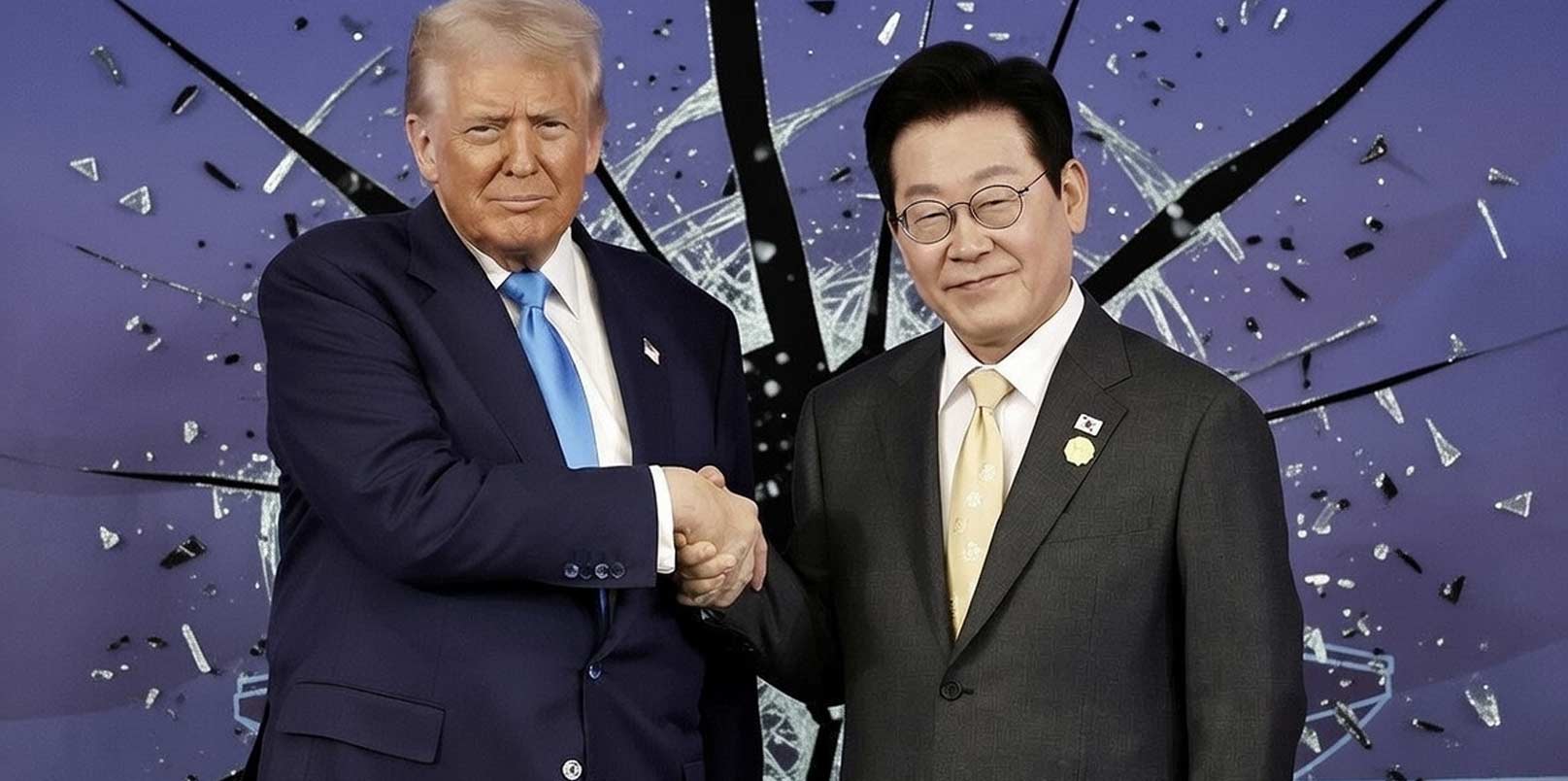
When uncertainty returns, apparently it doesn’t knock twice — it barges in instead. Korea’s trade-dependent economy woke up to a reminder of how fragile policy trust can be when politics shifts abroad. U.S. President Donald Trump’s abrupt decision to restore tariffs on Korean goods has upended assumptions across sectors. And for startups, this tariff shock sends a critical lesson that global exposure without policy agility can turn opportunity into risk overnight.
Tariff Hike Shocks Korean Industries Amid Delayed U.S.–Korea Investment Law
U.S. President Donald Trump announced that tariffs on Korean automobiles, timber, pharmaceuticals, and other goods would rise from 15% to 25%, accusing Korea’s parliament of failing to ratify last year’s bilateral trade agreement. The reversal dismantles a deal that had lowered tariffs in exchange for Seoul’s USD 350 billion investment pledge in U.S. strategic industries.
The decision, made public through Trump’s Truth Social post on January 26 (local time), immediately sent ripples through Korea’s automotive and manufacturing sectors. At Pyeongtaek Port, vehicles bound for export stood idle as companies awaited clarification from the Ministry of Trade, Industry and Energy (MOTIE).
Business leaders from Samsung, SK, Hyundai, and LG are now on high alert, “We spent all of last year defusing the tariff crisis,” one executive said, “and now we’re right back where we started.”
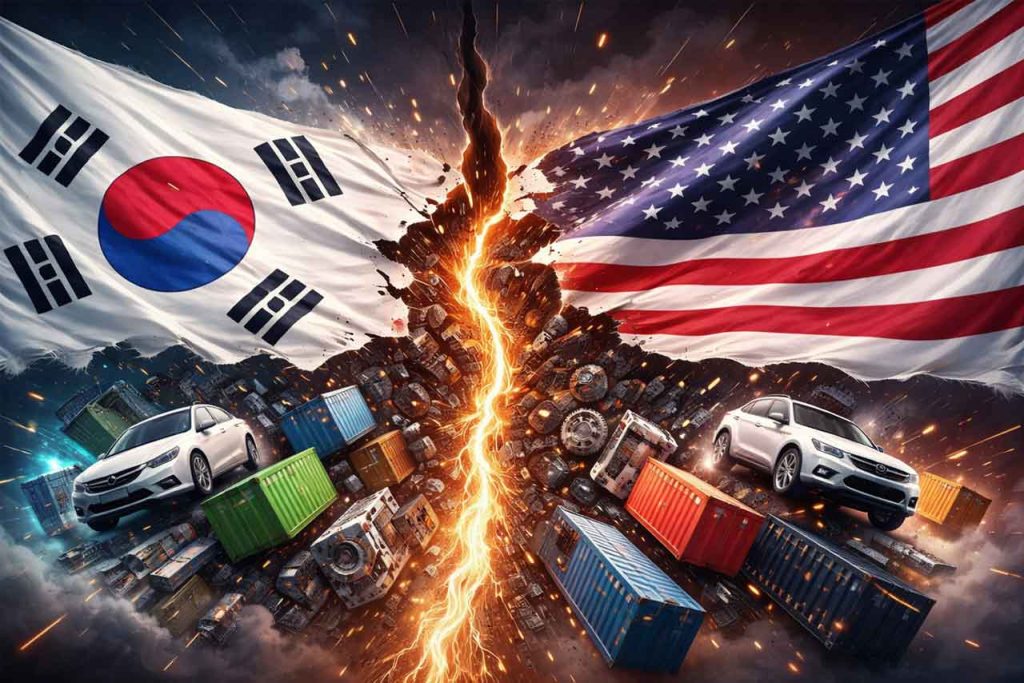
How Trump’s Tariff Shock Ripples Through Korea’s Startup and Export Ecosystem
Beyond the boardrooms of conglomerates, the shockwave hit Korea’s small exporters first. SMEs and startups that had only begun recovering from last year’s tariff volatility now face another round of pricing uncertainty in their U.S. contracts.
A shoe exporter told News1, “We were just finalizing new orders. Now we can’t even set prices.” Another supplier added, “If tariffs return to 25%, buyers will demand renegotiations. It could erase months of progress.”
This volatility undermines confidence in the broader startup ecosystem’s ability to plan for global scaling. For founders whose growth models depend on steady trade conditions and stable foreign demand, policy unpredictability is the new operational risk.
Policy Delay Meets Political Power: The Hidden Weak Link in Korea’s Trade Strategy
The deeper issue lies between policy ambition and execution reality. Korea’s parliament has yet to pass the Special Act on U.S.–Korea Strategic Investment Management — a prerequisite for implementing the tariff reduction deal. The legislative delay gave Washington political ammunition but also exposed Seoul’s structural bottleneck: policies move faster than parliamentary coordination allows.
The U.S. move also underscored how Korea’s export backbone — spanning automotive parts to AI-driven manufacturing startups — remains exposed to concentration risks. Despite diplomatic efforts toward diversification, recent trade data show a persistent imbalance: North America still accounts for more than one-third of Korea’s automotive parts exports and remains the largest single destination for manufacturing-linked startups.
This gap between geopolitical ambition and execution is where uncertainty festers — and where startups, often lacking trade buffers, absorb the first impact.
Localization as Survival: What Korea’s Bio and Tech Sectors Reveal About Adapting to Tariff Risks
Ironically, Trump’s tariff escalation could accelerate something Korea’s policymakers have long pushed: strategic decoupling and onshore resilience. The bioindustry’s swift pivot toward U.S.-based production, led by Celltrion, SK Biopharm, and Samsung Biologics, now looks prescient rather than defensive.
These companies neutralized tariff exposure by manufacturing within the U.S. or U.S.-aligned territories like Puerto Rico, effectively bypassing the import tax altogether. Their model — global presence through local production — may now set a precedent for tech and deep-tech startups seeking cross-border insulation.
Still, localization comes with cost. Startups lack the capital to replicate such scale. Without coordinated incentives or a trade insurance framework, most SMEs will remain exposed to every policy swing abroad.
Why Global Investors Should Read Korea’s Trade Crisis as a Governance Test, not a Market Panic
The case then offers unmistakable signal for global investors, that Korea’s trade environment is sophisticated but politically exposed. The country’s dependence on cross-border industrial frameworks — from semiconductors to EV supply chains — means startup risk is now directly tied to geopolitics.
However, Korea’s swift institutional response — including how the Blue House convening a trade emergency session and dispatching senior trade negotiators to Washington — shows a government that treats trade governance as part of its innovation infrastructure. That responsiveness may, paradoxically, increase long-term investor confidence in Korea’s policy maturity.
To international founders, this episode underscores why policy-readiness must be treated as seriously as product-market fit. In an era where legislation determines logistics, adaptability becomes a startup’s most valuable export.
The Real Lesson: Innovation Thrives Only Where Policy Can Keep Its Promises
For Korea, Trump’s tariff shock is less about numbers than about dependency — on foreign markets, on political timing, and on legislative speed. What looked like a resolved trade chapter is now a test of institutional endurance.
Hence, the ecosystem’s next evolution may not come from another investment round, but from mastering how to stay agile in a world where political cycles rewrite business models overnight.
Key Takeaway on Trump’s Sudden Tariff Hike 2026
- Event: U.S. President Donald Trump reinstated 25% tariffs on Korean automobiles, timber, pharmaceuticals, and related goods.
- Cause: Delay in Korea’s National Assembly ratifying the Special Act on Strategic Investment Management, part of the 2025 U.S.–Korea trade accord.
- Impact: Immediate uncertainty across manufacturing, startups, and SME exporters; automotive and electronics sectors face renewed price pressure.
- Bio Exception: Korean biopharma firms mitigate risk through U.S. production bases (Celltrion, SK Biopharm, Samsung Biologics).
- Structural Tension: Korea’s legislative lag highlights the gap between global ambition and domestic execution.
- Policy Signal: Seoul’s swift diplomatic response suggests trade governance is now central to innovation strategy.
- Global Insight: Korea’s startup ecosystem must build resilience not only through technology but through policy adaptability and diversification.
– Stay Ahead in Korea’s Startup Scene –
Get real-time insights, funding updates, and policy shifts shaping Korea’s innovation ecosystem.
➡️ Follow KoreaTechDesk on LinkedIn, X (Twitter), Threads, Bluesky, Telegram, Facebook, and WhatsApp Channel.
🤝 Looking to connect with verified Korean companies building globally?
Explore curated company profiles and request direct introductions through beSUCCESS Connect.