South Korea is starting to acknowledge a problem that money alone does not solve. AI startups can raise attention, win policy mentions, and still fail to reach real deployment if nobody gives them a first live use case. That is why the latest signal from Seoul shows that the government is not just talking about funding AI. It is starting to frame itself as the buyer that can help early products cross the gap between prototype and industrial adoption.
Korea’s MSS Minister Says the State Should Be the First Buyer for AI Startups
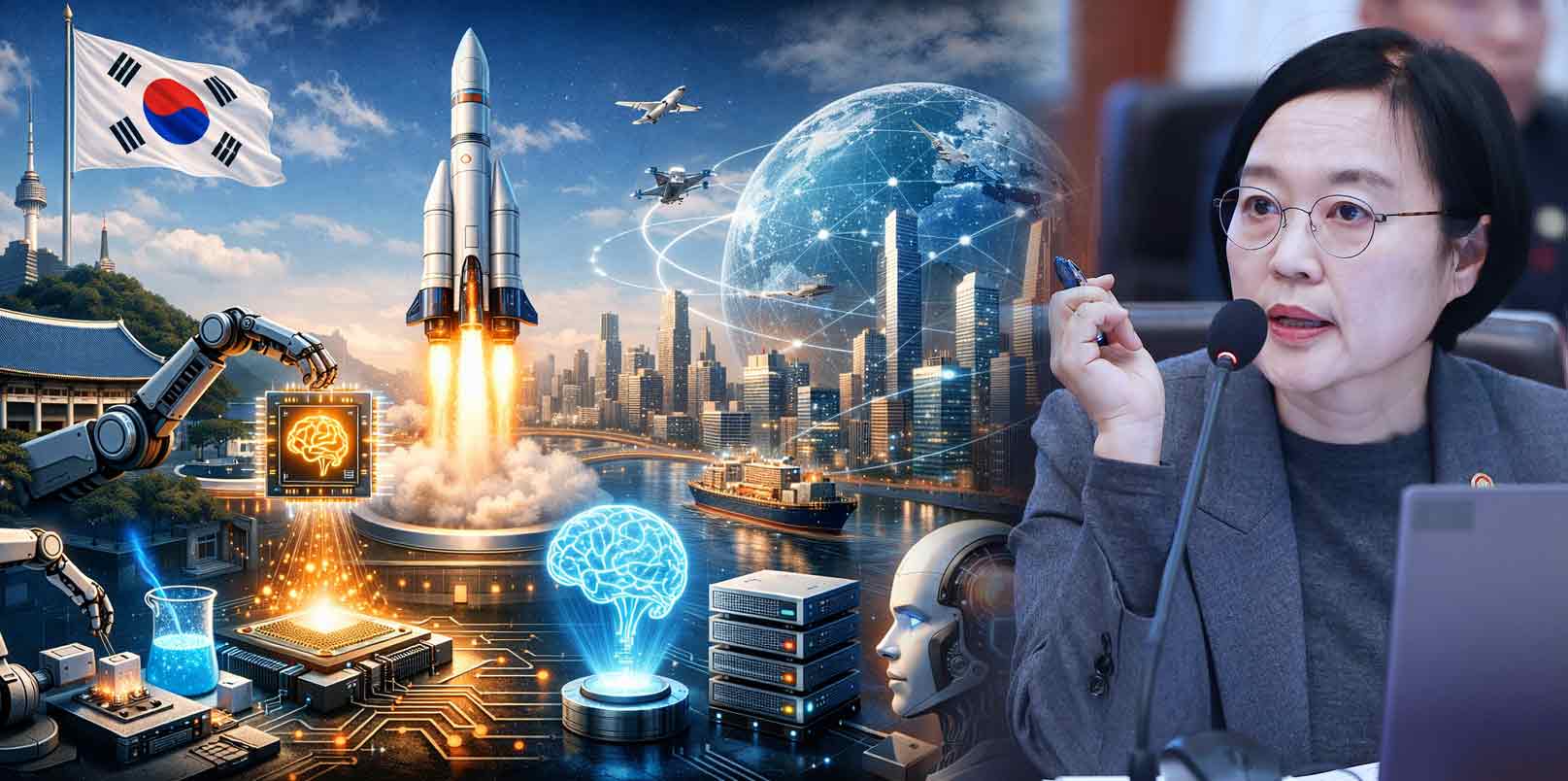
Han Seong-sook, Minister of SMEs and Startups, said the Korean government should become the first buyer of AI startups in order to help their technologies reach industrial settings.
According to the Ministry of SMEs and Startups (MSS), Han made the remark in a recent interview with Singapore’s state broadcaster CNA. Responding to concerns that AI startup growth has been slow, she said AI must be tested directly in real industrial environments because it is used across multiple sectors, but startups often struggle to secure those opportunities.
Han also said the government would build a support structure for startups facing the practical burdens of AI development. She pointed to three policy directions now under discussion or already underway.
First, she cited the possible introduction of a broad text and data mining, or TDM, exemption. Under such a system, data used for AI training could be exempt from copyright infringement liability if certain conditions are met. Han noted that countries such as Singapore already operate under similar frameworks, while Korea’s legal system remains underdeveloped in this area.
Second, she said Korea is discussing broader access to relevant data for SME and startup research, with institutional reforms being prepared to create more opportunities for startups.
Third, she said the government has already begun projects in which public-sector datasets are opened, and startups are invited to commercialize them through open-challenge programs. She added that more opportunities to build new businesses through active data use are expected this year.
Han made these comments after accompanying President Lee Jae-myung on his March 1 to 2 visits to Singapore, where she attended the Korea-Singapore AI Connect Summit and presented the government’s plan to build a global fund-of-funds known as K-VCC.
The fund is intended to reach USD 300 million by 2030 and support promising AI and deep tech startups in both countries.
Why Korea’s AI Startup Policy Is Shifting From Funding to Market Access
This matters because it marks a subtle but important shift in how Seoul is defining the AI startup bottleneck.
Korea has already spent years building startup financing programs, policy roadmaps, and public R&D channels. What Han is now highlighting is a different constraint. Many AI startups do not fail at the idea stage. They stall at the validation stage, where a working model still needs a real customer, real data, and a real operating environment.
Her comments point to a demand-side diagnosis. In this framing, the problem is not only that startups need more capital. It is that they need someone credible enough to buy early, test early, and reduce the commercial risk for the next buyer.
That is a meaningful shift for the ecosystem. It suggests the government sees procurement, data access, and legal reform not as secondary support tools, but as part of the core commercialization path for AI startups.
It also gives a more concrete explanation for why AI startup growth can look slow even in a market with strong policy attention. AI is expensive to build, but the harder part is often proving it works inside conservative industries that do not like taking first-mover risk on unproven vendors.
Korea’s AI Ambition Still Faces a Procurement and Legal Execution Gap
The policy signal is clear. But the execution path is clearly not.
Government-first purchasing can help startups, but public procurement systems are rarely built for fast-moving experimental products. In practice, procurement rules tend to favor compliance, documentation, and low-risk vendors. That often benefits established firms more than early-stage startups, even when policy language says the opposite.
The same tension applies to data and copyright reform.
Han’s reference to a comprehensive TDM exemption is important, but it remains a policy direction, not a completed legal change. Korea has discussed wider access to research and training data before. The difficult part is not identifying the need. It is designing a framework that gives startups usable room without triggering prolonged legal and political resistance around copyright, data control, and commercial fairness.
There is also a practical issue inside the “government as first buyer” idea. Buying software is one thing. Deploying AI into real industrial workflows is another. That requires integration capacity, internal champions, procurement flexibility, and a willingness inside ministries or public agencies to tolerate early-stage imperfection. Policy can open the door. It cannot force institutions to move faster than their own incentives allow.
This is the harder truth beneath the announcement. Korea’s AI policy is becoming more realistic about startup needs, but realism in diagnosis does not automatically produce speed in execution.
What Korea’s New AI Startup Support Can Enable, and What It Still Cannot
If implemented well, this approach could give Korean AI startups something they often lack: a first verified use case strong enough to unlock follow-on customers.
A government-backed initial deployment can help startups in several ways. It can generate reference cases, improve product credibility, shorten sales cycles with private-sector buyers, and create feedback loops that sharpen the product in real operating conditions. Wider access to public datasets can also lower one of the biggest barriers facing smaller AI teams that cannot afford proprietary data at scale.
A clearer TDM framework would be especially meaningful for startups working on model training, data-intensive applied AI, and industry-specific tools that rely on broad text or data ingestion.
Still, this does not solve the full structural problem.
Government demand can help validate a product, but it cannot replace founder execution, product-market fit, or global sales capability. Public data can support experimentation, but it does not eliminate the need for proprietary industry data, customer trust, and domain expertise. A TDM exemption can reduce one legal barrier, but it does not solve compute costs, talent shortages, or the challenge of competing against much larger AI firms.
In other words, this strategy can improve the on-ramp. It does not guarantee scale.
What Global Founders, Investors, and Cross-Border Partners Should Watch in Korea
For global founders and investors, the main signal is that Korea is trying to make its AI startup support stack more commercially usable.
That matters because many countries claim to support AI startups, but the real test is whether policy reaches the point of deployment. Korea is now signaling that it understands the commercialization gap between building AI and getting someone to use it.
International investors should watch how far this translates into real procurement pathways, not just public statements. If government agencies begin acting as credible launch customers, Korean startups may become less dependent on long pre-revenue periods and better positioned for enterprise adoption. That could improve the investability of applied AI teams, especially in sectors tied to industrial workflows, public infrastructure, and regulated environments.
Cross-border partners should also pay attention to the legal reform side. If Korea moves closer to jurisdictions such as Singapore on TDM rules and startup data access, it could become a more workable base for AI product development than its current legal framework suggests. But if reform stalls, the gap between policy ambition and startup utility will remain.
For overseas founders looking at Korea, this is not yet a signal that the market has become easy. It is a signal that Seoul is starting to address the part of the AI pipeline that has quietly held many startups back.
Korea’s Real AI Test Is Not Funding, but Institutional Willingness to Adopt Early
The deeper issue here is not simply startup support. It is institutional behavior.
Korea has shown that it can organize funds, announce initiatives, and frame AI as a national priority. The next test is harder. It must show that public institutions are willing to use immature but promising technology early enough to help domestic startups survive the period before market trust forms.
That is where many innovation systems become contradictory. They celebrate startups in policy language, then buy only from companies that no longer need the help.
Han’s remarks suggest Seoul is trying to close that contradiction. The significance of this moment will depend on whether the Korean state can act less like a grant-maker and more like a disciplined early adopter.
Key Takeaway on Korea’s AI Startup Launch Strategy
- South Korea’s Ministry of SMEs and Startups is signaling a new AI startup strategy centered on the government acting as the first buyer.
- Minister Han Seong-sook said AI startups struggle to secure real industrial validation opportunities even when their technologies are promising.
- Korea is reviewing broader institutional support, including wider access to relevant datasets and discussion around a comprehensive text and data mining exemption for AI training.
- The government has already launched open-challenge projects that allow startups to commercialize public-sector data.
- Han linked this domestic support logic to Korea’s broader AI and deep tech push announced during the Korea-Singapore AI Connect Summit, including the planned USD 300 million K-VCC fund by 2030.
- The main ecosystem shift is a move from supply-side support alone toward demand-side support, especially early adoption and commercialization.
- The core risk remains execution: procurement rules, legal reform, and institutional incentives may still slow the real-world impact of the policy.
– Stay Ahead in Korea’s Startup Scene –
Get real-time insights, funding updates, and policy shifts shaping Korea’s innovation ecosystem.
➡️ Follow KoreaTechDesk on LinkedIn, X (Twitter), Threads, Bluesky, Telegram, Facebook, and WhatsApp Channel.
🤝 Looking to connect with verified Korean companies building globally?
Explore curated company profiles and request direct introductions through beSUCCESS Connect.