
A faster engineering cycle used to sound like an obvious advantage. In 2026, it is becoming a sharper management test. As AI coding tools help teams produce software at unprecedented speed, enterprise leaders are discovering a harder question beneath the productivity gains: not how quickly a team can build, but how clearly it knows what deserves to be built in the first place.
AI Coding Has Moved Into the Enterprise Mainstream
AI-assisted software development is no longer a fringe experiment. The Stack Overflow 2025 Developer Survey found that 84% of respondents are using or planning to use AI tools in their development process, up from 76% the previous year. Among professional developers, 51% said they use AI tools daily.
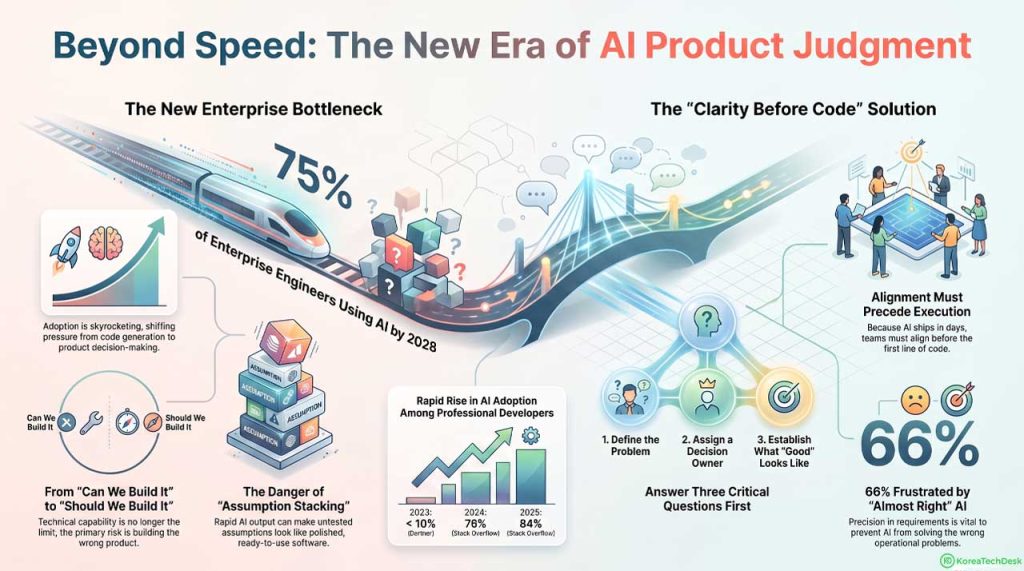
Enterprise adoption is also accelerating. Gartner projected that 75% of enterprise software engineers will use AI code assistants by 2028, compared with less than 10% in early 2023. Gartner also stated that 63% of organizations were already piloting, deploying, or had deployed AI code assistants, based on a 2023 survey of 598 global respondents.
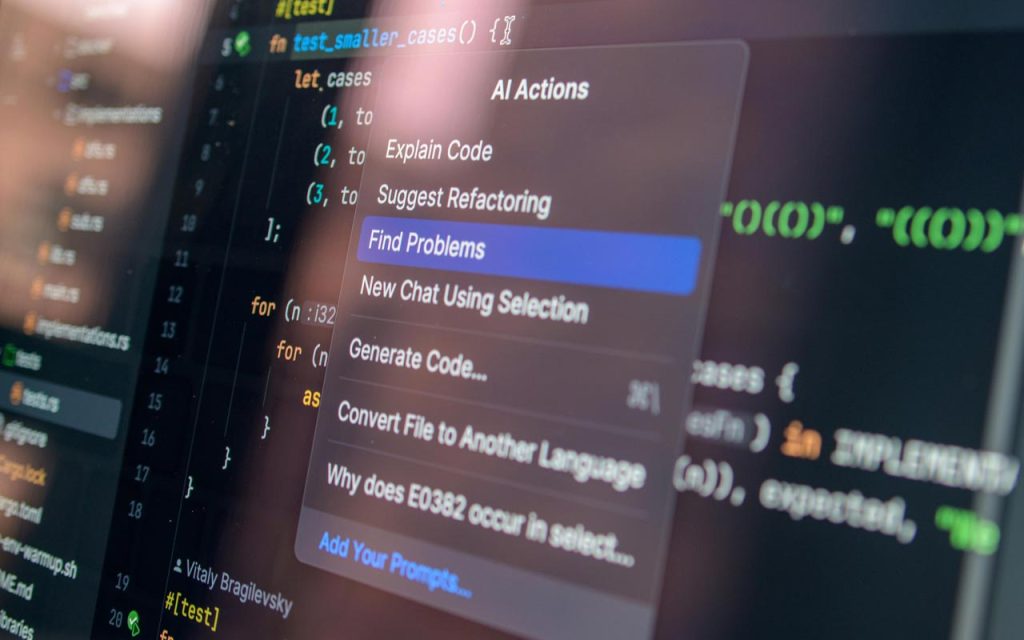
These figures show why software leaders are now under pressure to rethink development workflows. AI tools are reducing the time needed to generate code, test ideas, and move product concepts into working form. Yet adoption alone does not answer a more operational question: are teams building better products, or simply building more quickly?
That is the tension Carlos Herrera, Founder and CEO of Nimble, sees across enterprise and high-growth teams in Southeast Asia. In a written interview with KoreaTechDesk, Herrera said the market shift has made the old software bottleneck less relevant.
“The conversation inside companies stopped being ‘can we build this’ and became ‘should we build this,’ and most teams are not equipped for that second question,”

The New Bottleneck Is Product Judgment, Not Code Generation
The core issue is not that AI coding tools lack value. Google’s 2025 DORA research found that more than 80% of surveyed software professionals said AI enhanced their productivity, while 59% reported a positive influence on code quality. Those numbers support what many product teams are already experiencing: AI can help teams move faster.
The same research also points to an important caution. Google’s DORA team described AI as most useful when teams point it at a clear problem. Without strong delivery systems, clear feedback loops, and team discipline, faster output can expose weaknesses that were previously hidden by slower development cycles.
Herrera’s field observation aligns with that finding. In his view, AI-driven speed is already changing how teams work day to day. Because software can now be built much faster, teams have less time to think through their choices during development. This means they need to be clearer from the start about what they are building, why it matters, and how they will judge success.
In large organizations, decisions are usually shared across multiple teams and leaders rather than handled by a single founder or product owner. Herrera explained that each stakeholder often controls a different part of the outcome, which makes coordination more complex.
When development moved slowly, teams had more time to discuss, adjust, and reach agreement along the way. But with AI speeding up the process, there is much less time to resolve disagreements during development, so teams need to align earlier or risk building in the wrong direction.
“When building was slow, those people had time to align,”
Herrera said.
“Now that you can ship in days, the alignment has to happen before a single line of code or it does not happen at all.”

Why “Vibe Coding” Creates Risk Inside Enterprise Teams
The phrase “vibe coding” became widely associated with AI-assisted software creation after AI researcher Andrej Karpathy used it in 2025 to describe a style of development where users guide coding through natural language and AI-generated output. Korean and global technology discussions have since used the term to describe a new mode of building in which software creation becomes less dependent on manual coding and more dependent on prompting, iteration, and review.
For startups, this often lowers the barrier to experimentation and makes it easier to test ideas quickly. In enterprise environments, however, the situation is more complex. The issue is not simply that AI can generate code, but that it can make weak or untested assumptions appear credible and ready for real-world use.
Herrera described one recurring pattern as “assumption stacking.” A team makes an early call about the user, the problem, or the expected workflow, then builds rapidly on top of that assumption. Because the output looks polished, the underlying assumption may not be challenged until later.
“A team moves fast, makes a call early on about who the user is or what they need, and then builds everything on top of that call,.
Nobody writes it down. Nobody pressure-tests it. It just becomes the foundation.”
This is where AI-assisted development can change the risk profile of enterprise software. A weak brief can now produce a working product quickly. A vague user assumption can become a demo. A poorly defined workflow can become an internal tool that looks convincing enough to survive early review.
Stack Overflow’s 2025 survey also shows why this matters. While AI tool adoption rose, developer trust remained limited. Stack Overflow reported that 46% of developers actively distrust the accuracy of AI tools, and 66% said their top frustration is that AI solutions are “almost right, but not quite.”
That phrase matters for enterprise product work. In coding, “almost right” may create bugs. In product decision-making, “almost right” can mean a tool that functions but solves the wrong problem.
When Speed Is Confused With Validation
One of the most dangerous effects of AI-assisted development is psychological. Once teams can produce functional prototypes quickly, they may mistake output for evidence.
Herrera said this pattern appears when teams treat fast shipping as validation. A tool works. Stakeholders like the interface. The first demonstration looks impressive. Yet none of that proves the product is solving the right operational problem.
“You ship fast, people say it looks great, and the team takes that as a green light.
But ‘it works’ and ‘it solves the right problem’ are two very different things.”
This distinction is especially relevant for founders, corporate innovation teams, and investors evaluating AI-enabled software development. Speed reduces the cost of experimentation, but it can also reduce the pressure to define success before building even begins.
And worse, the risk is not limited to bad code. It extends into product governance. Teams may skip questions that seem slow in the moment: who owns the outcome, what user behavior needs to change, what decision must be made before building, and what evidence will prove the product is working.
Herrera said teams often skip the ownership question early on. When software can be built in a week, it is easy to assume responsibility can be sorted out later. But without a clearly defined owner, no one is accountable for decisions or outcomes, making it difficult to evaluate whether the final product is actually successful.
“The most common one we see is teams skipping the ownership question. Nobody stops to ask: who is actually accountable for this thing once it is built?”
Korea’s AI Software Debate Has the Same Structural Warning
This discussion is not only relevant to Southeast Asia. Korea’s own software and AI ecosystem is moving through a similar transition as developers, startups, and enterprises adopt generative AI tools across the software development lifecycle.
The Software Policy & Research Institute in Korea has highlighted a useful distinction. Its analysis of generative AI in software development indicates that AI tools can be especially useful in implementation and testing, while requirements analysis and design remain harder because they depend on customer communication, contextual judgment, and complex technical integration.
That distinction matters because building software and understanding the market are two different challenges.
Korean startups and enterprise technology companies are increasingly targeting overseas markets, where workflows, purchasing decisions, and user expectations can vary significantly from what they are used to at home. While AI can speed up development, it cannot confirm whether a product actually fits the needs of those new markets or solves the right problem for those users.
And it becomes a clear lesson for Korea-linked founders entering Southeast Asia. Building software faster does not eliminate the need to understand the market, validate the problem, or define who owns key decisions.
In fact, it makes those steps even more critical, because weak assumptions can now turn into fully functioning products before anyone has enough time to question them.
This is where Herrera’s Southeast Asia perspective becomes especially relevant for Korean and global ecosystem players. Put simply, AI can help teams build faster, but it cannot decide what should be built or why. Because those decisions still eventually depend on clear thinking, alignment, and ownership within the organization.
“Clarity Before Code” Becomes an Enterprise Discipline
Herrera’s proposed answer is simple but demanding: clarity before code.
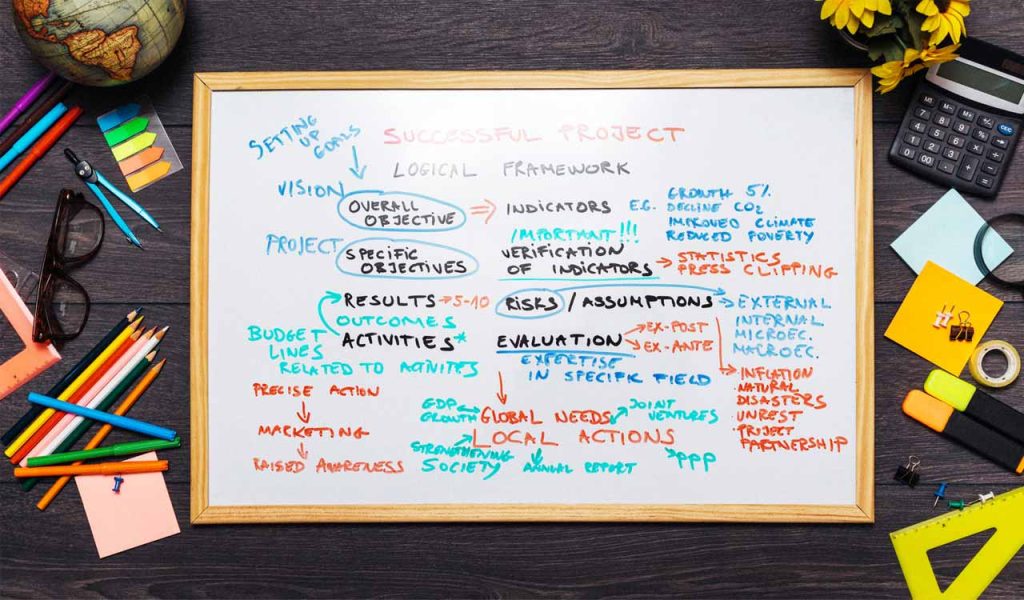
In his view, teams should answer three questions before development begins. What problem are we solving? Who owns the decision if there is disagreement? What does good look like when the work is done?
These questions sound basic, but they are often skipped when AI makes development feel frictionless. Strong teams do not merely use AI to move faster. They use AI only after they have already clarified the problem, decision rights, and success criteria.
“In practice, it is less about frameworks and more about having three questions answered before anyone starts building.
What problem are we solving, who owns the decision if we disagree, and what does good look like when we are done.”
This matters because enterprise AI adoption is increasingly judged by outcomes, not tool usage. A company can deploy AI coding assistants and still fail to improve product quality if the teams using those tools do not know which decision they are trying to support.
BCG’s AI at Work research reinforces that point at the organizational level. Its 2026 study found that AI use among frontline employees rose sharply, and many regular users reported saving substantial time. Yet BCG also found that organizations with a clear AI strategy saw much stronger measurable impact than those relying mainly on better tools.
Hence, it is essential for enterprise software teams to remember that success lies not in slowing down, but in making sharper, more deliberate decisions before accelerating execution.
What Founders and Investors Should Watch
Now, for investors, AI-assisted development makes it harder to judge a team based on how fast they ship. In the past, frequent releases often signaled strong execution and product thinking. Now, because AI tools make building faster for almost everyone, speed alone is no longer a reliable indicator of quality.
A more useful signal is how clearly a team can explain its decisions. Strong teams can describe why they chose a specific problem, why they built a certain feature, and what outcome they expect. Weak teams may ship quickly but struggle to explain the reasoning behind their choices.
And Herrera cautioned that leadership teams should pay attention to the gap between execution confidence and decision confidence. If a team is confident in delivering features but cannot clearly justify why those features matter, speed may be hiding deeper issues in product judgment.
“The signal we tell leaders to watch for is when the team can ship quickly but struggles to explain clearly why they built what they built.”
That observation is useful for founders as well. AI tools can help teams build faster and produce more output, but they can also make it easier to move forward without fully understanding the correct product direction. When a team has a clear product strategy, faster execution strengthens that advantage. But when initial assumptions are unclear or incorrect, faster execution can quickly scale those mistakes.
For Korea’s startup ecosystem, where technical teams are increasingly using global AI tools and aiming to expand overseas, this distinction becomes especially important. AI can help Korean startups enter new markets more quickly, but it cannot replace the need to understand local customers, define clear product ownership, and validate whether the product actually solves the right problem in each market.
The Real Advantage Is Knowing What Not to Build
The most important shift in AI software development may not be the ability to build more. It may be the discipline to build less with greater clarity.
As AI lowers the cost of execution, the value of judgment rises. Teams that can define the problem, assign ownership, validate assumptions, and measure success before writing code will benefit most from faster development. Teams that cannot do those things may simply accelerate waste.
That is why the next enterprise software advantage may not belong to the fastest builders alone. It may belong to the teams that understand when speed is useful, when it is dangerous, and when the smartest product decision is to pause before the first line of code.
Key Takeaway
- AI has shifted the enterprise software question away from “can we build this” and toward “should we build this.”
- AI coding tools are now mainstream, with Stack Overflow’s 2025 Developer Survey showing that 84% of respondents are using or planning to use AI tools in development.
- Enterprise AI decision-making is becoming the new bottleneck, because faster coding does not automatically create clearer product judgment, ownership, or validation.
- Vibe coding creates enterprise risk when teams build quickly on untested assumptions and mistake polished output for product-market evidence.
- Clarity before code means teams should define the problem, decision owner, and success criteria before development begins.
- Korean startups expanding globally should treat AI-assisted development as leverage, not a substitute for customer discovery, local market understanding, and disciplined product ownership.
- The strongest AI-enabled software teams will not only build faster. They will know what deserves to be built, who owns the decision, and how success will be measured.
– Stay Ahead in Korea’s Startup Scene –
Get real-time insights, funding updates, and policy shifts shaping Korea’s innovation ecosystem.
➡️ Follow KoreaTechDesk on LinkedIn, X (Twitter), Threads, Bluesky, Telegram, Facebook, and WhatsApp Channel.
🤝 Looking to connect with verified Korean companies building globally?
Explore curated company profiles and request direct introductions through beSUCCESS Connect.