
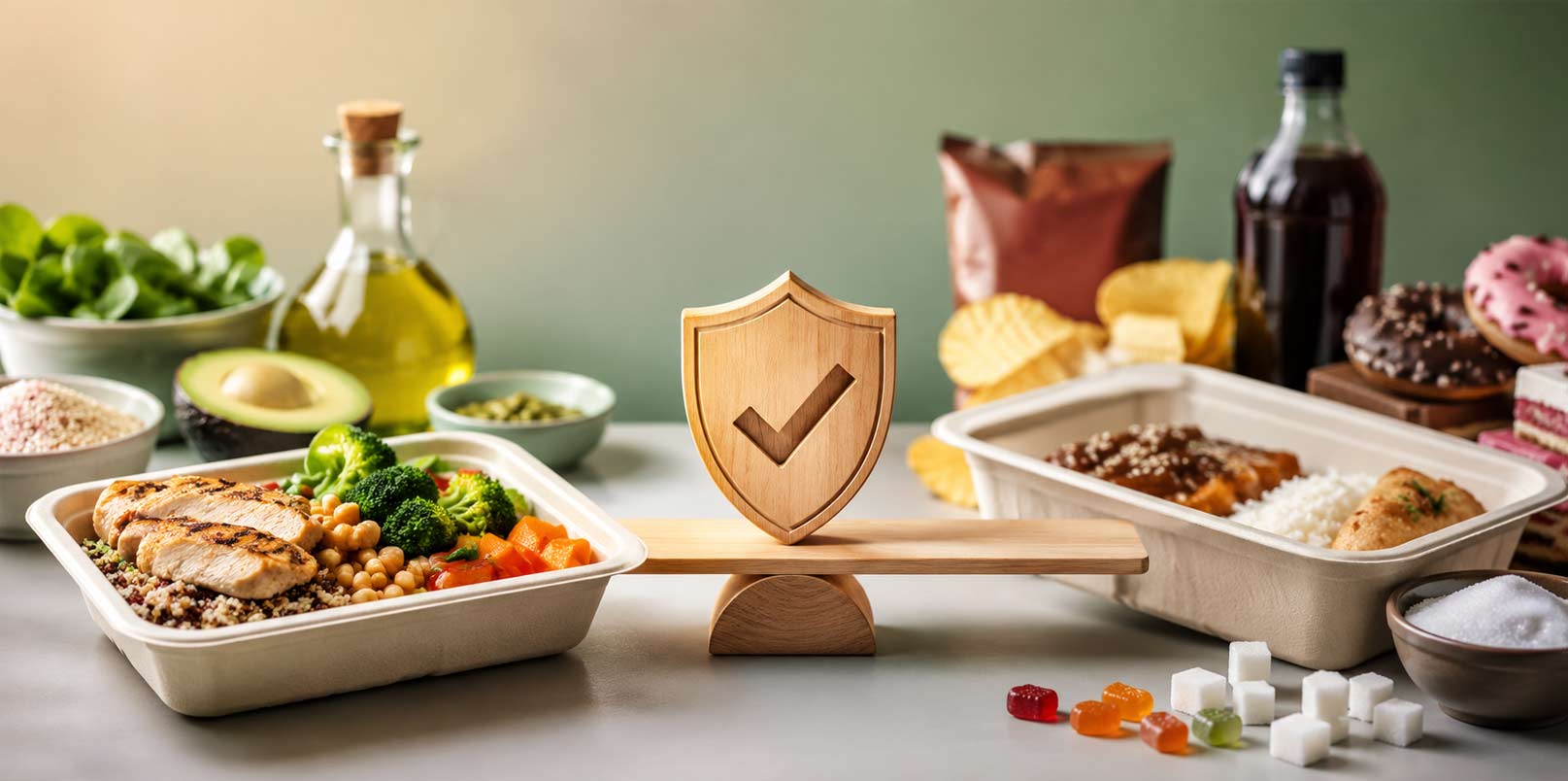
Health has become one of the most powerful selling points in Korea’s food industry. Low-sugar snacks, protein-rich meals, wellness-focused products, and personalized nutrition solutions are appearing across retail shelves and online marketplaces. But as consumers become more familiar with health-oriented food claims, a new greater challenge is emerging today: global food startups and companies must now answer not just who can make the strongest wellness promise, but also who can earn lasting trust.
Korea’s Health Food Market Is Expanding Beyond Supplements
The wellness economy in South Korea is increasingly moving into everyday meals and convenience foods.
According to industry analysis cited by KPMG Samjong, the country’s wellness food market now spans health supplements, protein foods, and so-called low-spec foods designed to reduce sugar, calories, sodium, or alcohol content.
So, what was once a niche category has become part of mainstream consumer behavior.
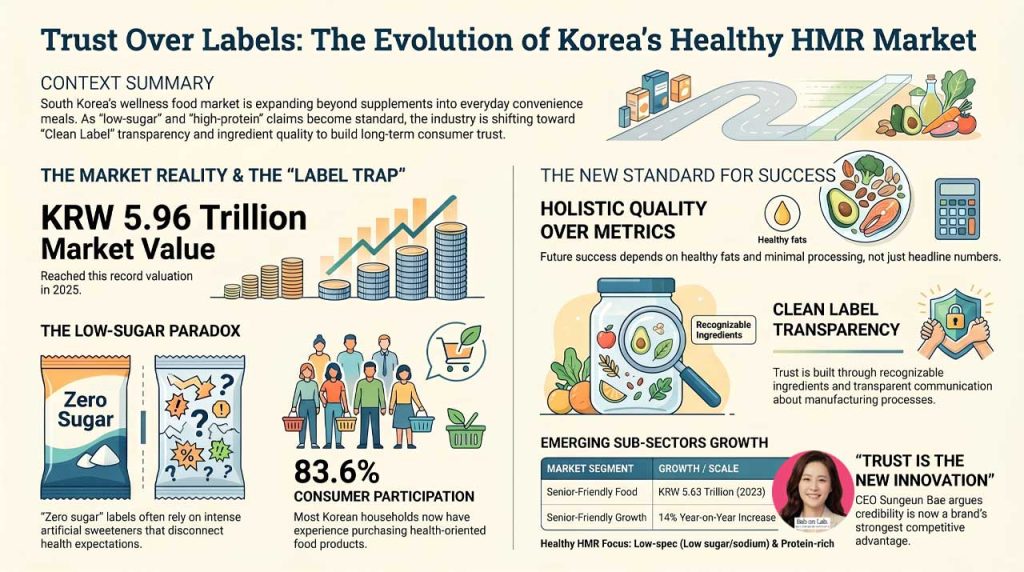
The trend is visible across the broader health food market as well. According to the Korea Health Functional Food Association, the domestic health functional food market reached KRW 5.96 trillion in 2025. Consumer participation also remains high, with 83.6% of surveyed households reporting experience purchasing health functional foods.
At the same time, demographic changes are creating additional demand. Data cited by FoodToday shows Korea’s senior-friendly food manufacturing market reached KRW 5.63 trillion in 2023, growing 14% year-on-year. Ready-to-eat products within that category recorded particularly strong growth.
These developments are creating opportunities for startups, food manufacturers, and foodtech companies seeking to build the next generation of health-oriented convenience meals.

The Risk of Building Health Through Labels Alone
As the market expands, competition increasingly revolves around nutritional claims.
Products marketed as low sugar, high protein, low calorie, or wellness-focused have become common across convenience stores, supermarkets, and e-commerce platforms. Yet industry operators are beginning to question whether health positioning alone is enough.
Sungeun Bae, CEO of Bab On Lab, has worked across food product development roles at CJ CheilJedang, Market Kurly’s Next Kitchen, Medisola, and now advises food brands on commercialization and product strategy.
Drawing on her experience designing health-oriented convenience meals, Bae told KoreaTechDesk that food companies can sometimes become overly focused on nutritional marketing language.
“Having designed Health HMRs myself, I’ve realized that marketing keywords often obscure the essence of food.”
Her observation now reflects a growing challenge within the industry. As health claims become easier to communicate, consumers face increasing difficulty evaluating what those claims actually mean in practice.
The Low-Sugar Paradox Behind Many Health Claims
One area attracting growing attention involves sugar reduction strategies.
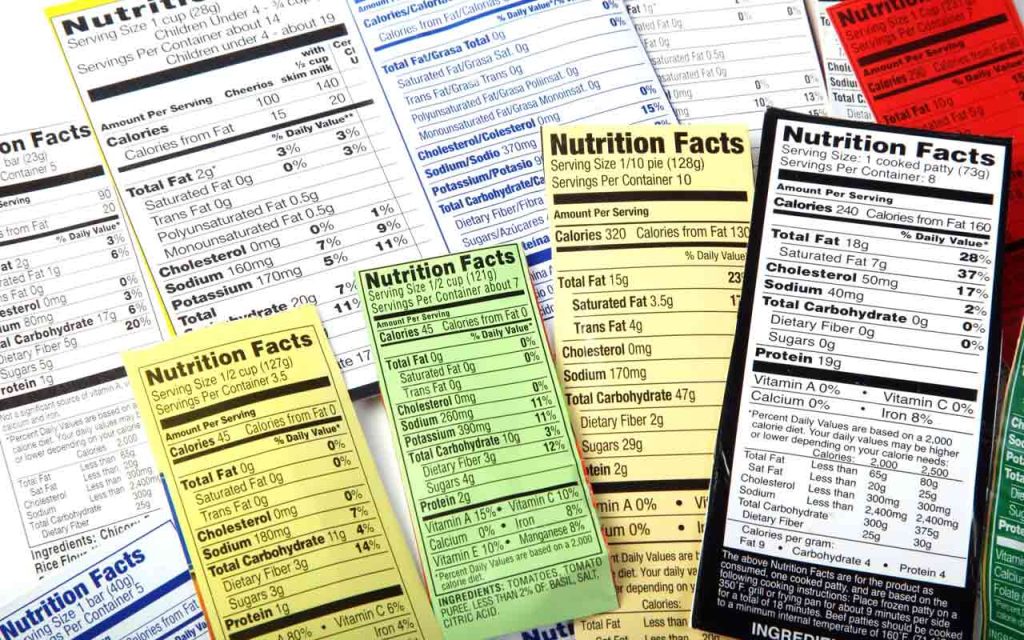
South Korea’s Ministry of Food and Drug Safety has already strengthened labeling requirements for products using sweeteners and sugar substitutes alongside claims such as “zero sugar” and “no added sugar.” The changes were introduced partly to reduce consumer misunderstanding surrounding health-related marketing claims.
Bae believes this reflects a broader issue inside product development.
“Even if you meet all nutritional indicators, blood sugar can still spike.”
She also pointed to what she describes as a low-sugar paradox.
“To get a Low Sugar label, companies often add sugar alcohols or sweeteners, resulting in an even more intense, artificial sweetness.”
The concern is not that sugar substitutes are inherently unsafe. Global regulators continue to permit their use under established safety standards. The challenge, according to Bae, is that health expectations and consumer experiences do not always align.
“Consumers expect healthiness without sweetness, but they end up consuming intense sweetness without sugar.”
And as consumers become more educated today, that disconnect could become increasingly important for brands seeking long-term credibility.

Why Nutrition Metrics Alone May Not Build Consumer Trust
The discussion also highlights a broader limitation in how healthy foods are often marketed.
Nutritional targets such as protein content, calorie reduction, or macronutrient balance provide useful information. However, they do not always capture how a meal performs in real-life consumption.
Recent research published in Nature Medicine found significant differences in post-meal glucose responses among individuals consuming similar foods, illustrating the complexity of human metabolism.
Now, this does not mean that nutritional information is unimportant for food companies. Rather, it suggests that consumers may increasingly evaluate products using a wider set of criteria than simple front-of-package metrics.
That shift is particularly relevant as personalized nutrition, preventive health management, and functional foods continue gaining traction globally.

GLP-1, Protein Demand, and the Next Phase of Healthy Convenience Food
Health-oriented food innovation is also being influenced by developments outside Korea.
The growing adoption of GLP-1 weight management medications, which help users feel fuller for longer and have become increasingly popular for obesity and weight management, has accelerated global interest in protein-rich foods.
Furthermore, Reuters recently reported as well that food companies have been increasing investments in protein-focused products as consumers seek solutions that support satiety and muscle maintenance.
So, for Korean food companies, this creates both opportunities and responsibilities.
Higher protein content may help attract health-conscious consumers. Yet long-term success will likely depend on more than just adding protein-related claims to packaging.
After all, consumers have been increasingly expecting products that feel satisfying, fit into daily routines, and support broader wellness goals.
That is why as the competition intensifies, brands may find that nutritional positioning alone is no longer enough to create differentiation.
Why Healthy HMR May Need a More Holistic Definition
For Bae, the future of healthy convenience meals may depend on returning to more fundamental principles.
“Future health convenience foods must return to the essence of nourishing the body.”
She argues that ingredient quality, fat quality, processing methods, and sensory experience deserve greater attention than headline nutritional figures alone.
“Criteria such as the quality of macronutrients, the use of healthy fats over cheap oils, minimal processing, and a multi-sensory design will become far more important than mere marketing figures.”
That perspective aligns with broader global discussions surrounding clean-label products, ingredient transparency, and consumer trust.
A 2025 study published in Food and Life noted that consumer purchasing decisions are increasingly influenced by ingredient origin, additive use, manufacturing-process transparency, and clean-label expectations.
The study also emphasized that clean-label products are not defined simply by the absence of additives, but by recognizable ingredients, minimal processing, and transparent communication.
For healthy HMR brands, this suggests that consumer trust may increasingly depend on explaining how products are made, not just what claims appear on the front of the package.
Hence, as health-conscious consumers become more sophisticated, the companies that succeed may be those that communicate clearly, formulate responsibly, and deliver experiences that match their promises.
Trust May Become the Next Competitive Advantage
Finally, the healthy HMR market is entering a more mature phase.
Consumers still care about sugar reduction, protein content, calories, and functional benefits. Yet those factors are increasingly becoming baseline expectations rather than decisive differentiators.
And as health-oriented convenience foods become more common, trust may emerge as the industry’s most valuable asset.
Companies that rely primarily on marketing claims may continue attracting attention. The brands that build lasting loyalty, however, are likely to be those that help consumers understand what they are eating, why it was formulated that way, and how it fits into a healthier lifestyle.
Because in a market crowded with wellness messaging, credibility may ultimately become the strongest form of product innovation.
Key Takeaway
- Korea’s health-oriented food market continues expanding beyond supplements into convenience meals, protein foods, and low-spec food categories.
- Marketing keywords can sometimes obscure the fundamental purpose of food: nourishment and long-term health value.
- The “low-sugar paradox” is where products marketed as healthier may rely heavily on sweeteners or sugar alcohols to maintain sweetness.
- Regulators are paying closer attention to how health-related food claims are communicated to consumers.
- Global trends including GLP-1 adoption, personalized nutrition, and functional food demand are raising expectations for health-focused convenience products.
- Bae argues that future healthy HMR products should emphasize ingredient quality, healthy fats, minimal processing, and sensory satisfaction alongside nutritional metrics.
- For Korean foodtech companies, startups, and food manufacturers, trust is becoming a strategic asset that may prove more durable than marketing claims alone.
- The future of healthy HMR will depend on transparency, formulation quality, and consumer credibility rather than labels alone.
– Stay Ahead in Korea’s Startup Scene –
Get real-time insights, funding updates, and policy shifts shaping Korea’s innovation ecosystem.
➡️ Follow KoreaTechDesk on LinkedIn, X (Twitter), Threads, Bluesky, Telegram, Facebook, and WhatsApp Channel.
🤝 Looking to connect with verified Korean companies building globally?
Explore curated company profiles and request direct introductions through beSUCCESS Connect.