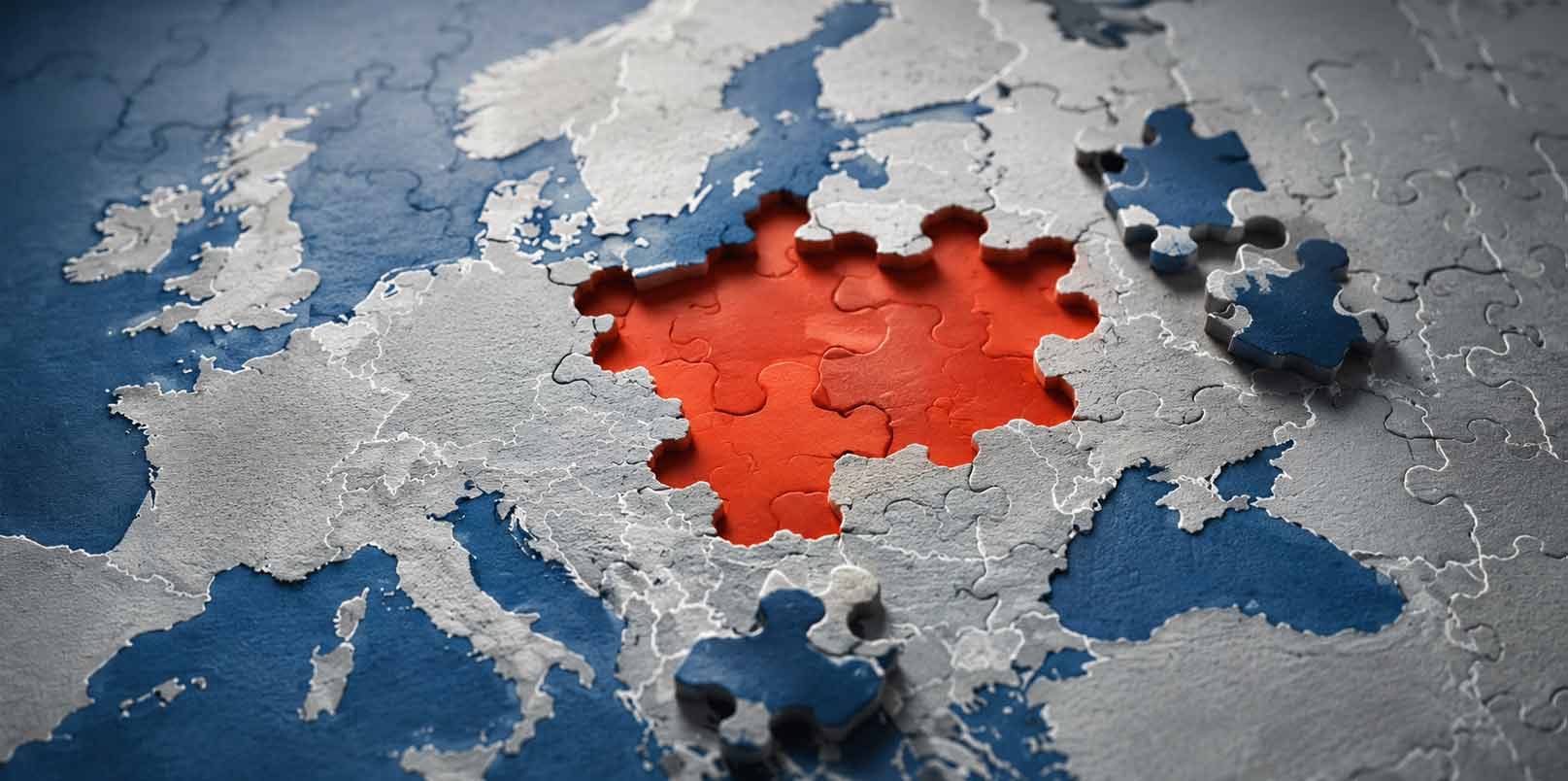
For many Korean startups, Central and Eastern Europe (CEE) looks like an attractive shortcut into the broader European market. The region offers growing industrial ecosystems, lower operational costs than Western Europe, and expanding demand across sectors tied to manufacturing, mobility, software, and infrastructure. Yet many companies discover the harder reality only after expansion begins: CEE may sit inside the European Union, but operationally, it is far from a single market.
Korea’s Industrial Expansion into CEE Is Already Deepening
South Korea’s economic relationship with Central and Eastern Europe has expanded significantly over the past two decades.
According to the Korea Institute for International Economic Policy (KIEP), Korean companies accelerated expansion into the Visegrád Four (V4) countries, Poland, Hungary, Czechia, and Slovakia, after those economies joined the European Union and emerged as manufacturing and supply-chain hubs.
More recently, Korean investment has shifted heavily toward electric vehicles (EVs), batteries, renewable energy, and advanced industrial supply chains. KIEP noted that companies such as LG Energy Solution expanded battery operations in Poland, while Samsung SDI and SK Innovation-related supply chains strengthened their presence in Hungary.
This industrial footprint is becoming increasingly relevant for Korean startups as well. Many younger companies now view CEE not only as a manufacturing base but also as a potential gateway into Europe’s broader market.
However, that gateway often proves to be more fragmented than expected.
The Biggest Miscalculation Happens Before Expansion Starts
Igor Strečko, Founding and Managing Partner at NeoZone Collective, former CEO of Webglobe, Managing Director at Strecko Investment, and a global investor-advisor who led more than 25 strategic acquisitions across multiple markets, believes many companies underestimate how operationally different the region actually is.
“The biggest mistake is underestimating how fragmented the CEE region really is,”
Strečko explained to KoreaTechDesk as discussions on the operational challenges of international scaling and cross-border execution continue.
“Korean companies often look at Europe as a single market. To some extent, especially from a regulatory perspective, that is true.
But operationally and commercially, it is absolutely not.”
And this fragmentation extends well beyond language differences alone.
The European Commission’s 2025 Single Market and Competitiveness Report acknowledged that despite decades of integration, the European Single Market still faces operational fragmentation through administrative procedures, employment rules, tax structures, packaging requirements, authorizations, permits, and service-market restrictions across member states.
In practice, companies entering Europe still encounter country-specific business systems, local procurement behavior, regulatory interpretation differences, and distinct buyer expectations.
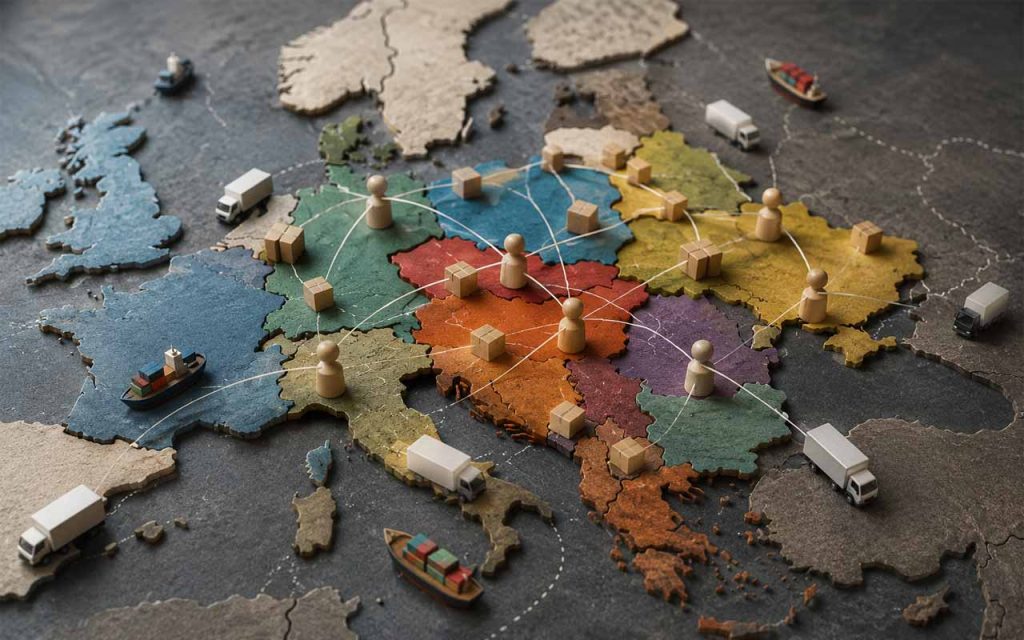
This becomes particularly important for startups attempting rapid cross-border scaling with limited operational bandwidth.
Poland Success Does Not Automatically Translate Across CEE
Now, Poland is often the first market Korean companies enter in CEE, and not without reason.
According to World Bank data, Poland’s economy reached roughly USD 917 billion in 2024, making it substantially larger than neighboring Hungary, Romania, or Bulgaria. Its population of around 36.5 million also provides a significantly larger domestic market than most surrounding countries.
That scale naturally makes Poland attractive as a regional entry point.
Still, Strečko warned that many companies mistakenly treat Poland as proof they understand the wider region.
“A classic mistake is launching operations in Poland and expecting the Czech Republic, Slovakia, or Hungary to naturally follow, or assuming expansion into those markets will simply be a copy-paste exercise.”
Operationally, that assumption can become expensive.
CEE countries may share geographic proximity and partial regulatory alignment under the EU framework, but customer behavior, distribution structures, procurement cycles, pricing expectations, and business communication patterns often differ substantially between markets.
Even neighboring economies can operate with very different commercial rhythms.
Why CEE Business Relationships Feel Different for Korean Companies
According to Strečko, one of the most overlooked adjustments involves B2B communication and decision-making culture.
“The CEE B2B environment is generally less relationship-driven and hierarchical than Korea.
It tends to be more transactional, with shorter sales cycles, lower customer loyalty, and different decision-making patterns.”
This difference can create operational misunderstandings during early expansion stages.
KOTRA’s Czech market-entry guidance similarly noted that Czech companies may stop communication entirely after internal review if they decide cooperation is unnecessary. The report advised Korean companies not to interpret reduced follow-up communication too emotionally or aggressively and recommended adapting communication expectations to local business practices.
These differences may appear small initially, but over time they affect negotiations, partnership development, customer retention, and sales execution.
And startups usually feel those operational mismatches faster because they have smaller teams and fewer buffers than large conglomerates.
Europe’s Fragmentation Is Also Becoming a Scaling Problem Inside Europe Itself
The issue is not unique to Korean startups.
The European competitiveness report led by former European Central Bank President Mario Draghi warned in 2024 that fragmentation inside Europe itself is limiting the ability of innovative companies to scale efficiently across the continent.
The report stated that many European firms still struggle to achieve scale because operational and regulatory complexity differs significantly between countries despite formal market integration.
The OECD made similar observations in its 2025 economic survey of the European Union, noting that fragmented service markets, telecommunications systems, professional regulations, and national operating rules continue creating barriers even within the broader EU economy.
So for startups, those operational inconsistencies matter because scaling speed often depends on repeatable execution systems. And fragmented markets reduce the ability to replicate the same playbook across multiple countries quickly.
Korean Industrial Presence Creates a Bridge, Not a Shortcut
At the same time, Korean companies already maintain a substantial industrial presence across CEE.
A 2024 analysis by TRENDS Research & Advisory noted that Slovakia hosts more than 100 Korean companies, including major industrial players such as Kia, Samsung, Hyundai Steel, and Mobis, reflecting the depth of Korea’s long-term industrial presence across the CEE region.
This existing ecosystem creates a different kind of opportunity for Korean startups entering Europe.
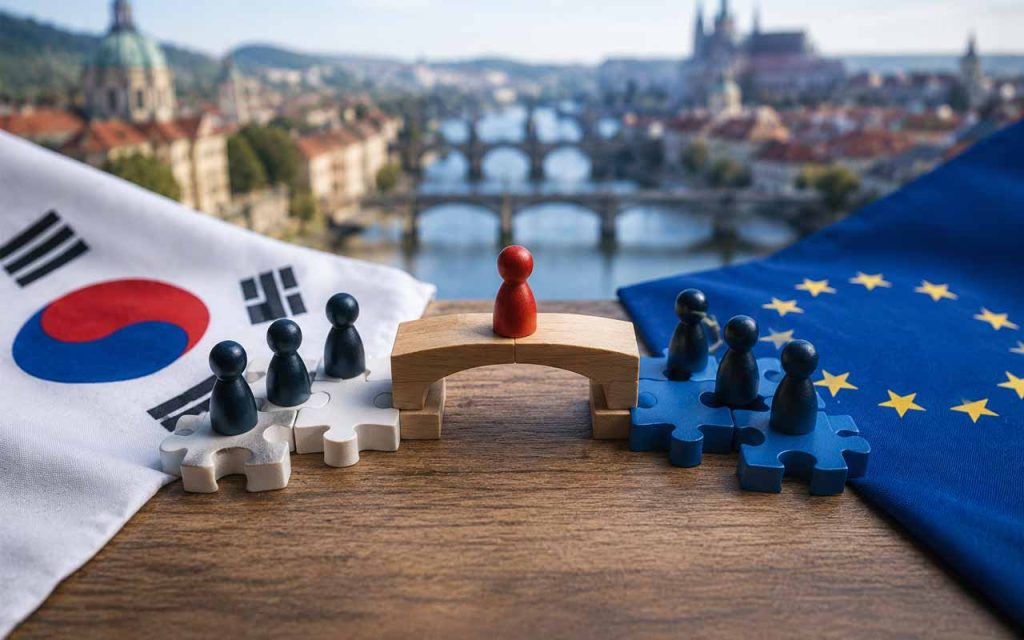
“In this area, the CEE region can actually become a very valuable bridge,”
Strečko said.
He believes startups benefit significantly from working with professionals who understand both Korean and local European operating environments.
“For startups, it is almost always a good idea to find someone who can function as a bridge between both business cultures and both markets.”
That bridge may involve Korean professionals already living in CEE, local operators experienced with Korean companies, or advisors capable of translating not only language but also business expectations and organizational behavior.
The Real Expansion Challenge Is Sequencing, Not Geography
Many startups still approach European expansion as a geographic problem. In reality, the harder challenge is operational sequencing.
Success in one CEE market does not automatically validate expansion readiness across neighboring countries. Each market introduces different buyer behavior, labor conditions, communication styles, and operational realities.
As Strečko explained,
“When it comes to actually operating and scaling a local branch, nothing replaces hands-on experience with the specific market itself,”
And this may become increasingly important as more Korean startups attempt overseas scaling beyond East Asia and North America.
Because entering Europe is no longer simply about regulatory access or market size alone.
Increasingly, long-term success depends on how carefully companies adapt execution systems country by country before assuming regional scalability.

Key Takeaways
- CEE is not one operational market, despite sharing parts of the EU regulatory framework. Business behavior, hiring conditions, communication patterns, and customer expectations differ significantly across countries.
- Poland is often a logical first entry point because of its larger economy and population, but success there does not automatically translate into neighboring CEE markets.
- Korean industrial presence in CEE is already substantial, particularly across EV, battery, manufacturing, and supply-chain industries involving countries such as Poland, Hungary, Slovakia, and Czechia.
- Transactional B2B environments and different communication norms can create operational misunderstandings for Korean startups expanding into the region.
- Local bridge operators matter increasingly more because they help companies navigate both Korean and local European business dynamics simultaneously.
- European expansion increasingly depends on country-by-country execution sequencing, not assumptions that one regional strategy automatically scales across all CEE markets.
– Stay Ahead in Korea’s Startup Scene –
Get real-time insights, funding updates, and policy shifts shaping Korea’s innovation ecosystem.
➡️ Follow KoreaTechDesk on LinkedIn, X (Twitter), Threads, Bluesky, Telegram, Facebook, and WhatsApp Channel.
🤝 Looking to connect with verified Korean companies building globally?
Explore curated company profiles and request direct introductions through beSUCCESS Connect.