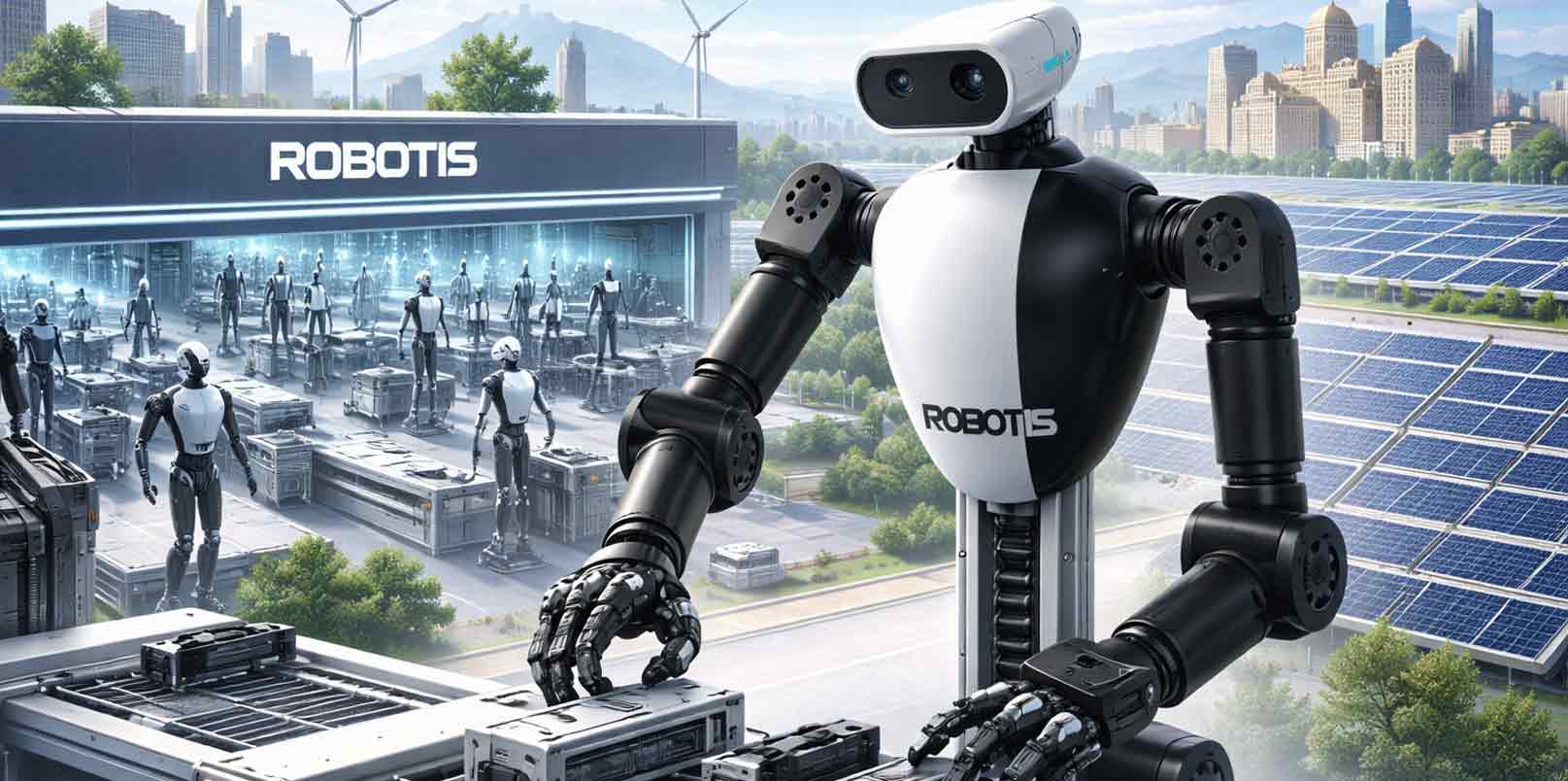

Autonomous robotics is entering a decisive phase. The technology is no longer experimental, yet large-scale deployment remains limited. Across industries, systems that perform well in controlled settings still struggle in real environments. This gap is becoming a key concern for manufacturers, investors, and policymakers, particularly in South Korea, where adoption is already among the highest globally, but reliability is still being tested.
Robotics Has Advanced, But Deployment Still Lags
Autonomous robotics is no longer a speculative technology. Global adoption continues to rise, with 541,000 industrial robots installed in 2023 and total operational stock reaching 4.3 million units, according to the International Federation of Robotics (IFR).
South Korea sits at the center of this shift. The country leads the world in robot density, with 1,012 robots per 10,000 employees, far above the global average.
Yet deployment at scale remains uneven. Systems that perform well in controlled environments still struggle in real-world conditions where variability is harder to predict and manage.
This gap is becoming one of the defining constraints in the next phase of robotics commercialization.
AI Progress Has Not Solved Real-World Reliability
Advances in artificial intelligence have improved perception, navigation, and decision-making in autonomous systems. However, these improvements have not translated directly into reliable deployment in dynamic environments.
Research on autonomous mobile robots highlights persistent challenges in environmental complexity, safety requirements, and system interoperability, even as algorithmic performance improves.
In an interview with KoreaTechDesk, Vivek Burhanpurkar, CEO of Cyberworks Robotics, pointed to a structural mismatch between technical capability and deployment readiness.
“AI hallucinations and edge-case failures are the main obstacle to commercial adoption. Even when systems reach high levels of performance, they remain unreliable in real-world environments.”

The issue is not whether autonomous systems can function. It is whether they can function consistently without human intervention.
The 99% Problem: Why the Last 1% Determines Scale
Most autonomous systems can achieve high levels of reliability in familiar conditions. The challenge lies in what remains.
Burhanpurkar describes this as a “99% problem.”
“It is straightforward to develop systems that perform reliably for the vast majority of situations.
Achieving 99% safety and functionality can be done relatively quickly. However, the remaining 1% of scenarios determines whether a product is safe at scale.”
Those remaining scenarios include:
- unusual sensor conditions
- ambiguous human behavior
- unpredictable environmental variations
- failure modes that are not well understood
These edge cases are not rare in operational settings. They are constant in environments such as airports, hospitals, warehouses, and public infrastructure.
In these contexts, even small failure rates translate into frequent interruptions. A system that requires operator intervention several times per hour cannot be considered commercially viable.
This is why many deployments remain limited to controlled or semi-controlled environments despite rapid improvements in AI.
Why Edge Cases Take Years, Not Months
The difficulty of resolving edge cases is not purely technical. It is cumulative.
“There is no substitute for time. It takes decades to collect and analyze real-world edge cases.”
— Vivek Burhanpurkar, CEO of Cyberworks Robotics.
This aligns with broader industry observations. Autonomous systems require:
- long-term data collection across diverse conditions
- repeated field testing
- verification processes that account for safety-critical scenarios
Academic research also confirms that real-world variability and safety constraints remain key barriers in autonomous mobile robotics.
The implication is clear. Progress is not only a function of better models. It depends on the accumulation of operational experience.
This creates a structural advantage for companies that have spent years or decades working on real-world deployment rather than purely algorithmic development.

Full-Stack Integration Is Slowing Commercial Adoption
Beyond edge cases, another constraint is emerging at the system level.
Autonomous capabilities are often developed as isolated modules. Commercial deployment, however, requires integration across the entire system.
Burhanpurkar noted that the availability of end-to-end full-stack software solutions remains limited.
Without this, OEMs face:
- long development cycles
- fragmented system architectures
- challenges in aligning hardware and software layers
This slows the transition from prototype to product.
Industry data reflects similar friction. According to McKinsey, timelines for autonomous systems, including autonomous vehicles, have slipped by one to two years on average, as real-world complexity proves harder to resolve than expected.
The bottleneck is not a single component. It is the interaction between multiple systems under unpredictable conditions.
South Korea: High Adoption, But Still in the Validation Phase
South Korea’s robotics ecosystem is already advanced. The country combines:
- leading robot density
- strong manufacturing capabilities
- active corporate investment from companies such as Hyundai Motor Group and Samsung
At the same time, public sector efforts indicate that deployment challenges are still being addressed.
Government initiatives continue to focus on:
- robot demonstration projects
- regulatory frameworks for autonomous systems
- safety certification standards
Policy documents from the Ministry of Trade, Industry and Energy (MOTIE) acknowledge that institutional frameworks and safety standards remain incomplete in some areas, particularly for mobile and service robots operating in open environments.
This suggests that Korea’s robotics sector is transitioning from adoption to validation.
The next phase is not about increasing robot numbers. It is about ensuring those systems operate reliably in real-world conditions.
What Korean OEMs and Startups Are Underestimating
For Korean OEMs and startups, the key risk is not technological capability. It is misjudging the time required to achieve deployment reliability.
Burhanpurkar directly highlighted this gap.
“Many teams underestimate the time and effort required to resolve rare, real-world edge cases.”
This has several implications:
For OEMs
- integrating autonomous capabilities requires full-stack coordination
- reliability must be proven across diverse operating conditions
- timelines are longer than expected
For startups
- competitive advantage comes from deployment experience, not just model performance
- data accumulation and validation pipelines become critical assets
The focus is shifting away from building intelligent systems toward proving they can operate consistently in real environments.
A Global Constraint, Not Just a Korean One
The deployment gap is not unique to South Korea.
Globally, autonomous systems continue to face:
- delays in commercialization timelines
- challenges in scaling beyond pilot environments
- increasing costs tied to validation and safety
The pattern is consistent. AI capability has advanced rapidly, but deployment remains constrained by real-world complexity.
This reinforces a broader shift in how the industry is evaluated.
The question is no longer what systems can do under ideal conditions. It is how they perform under unpredictable ones.
The Last Mile Defines the Market
Autonomous robotics has reached a critical stage. The technology works. Adoption is growing. Investment is increasing.
However, scale depends on solving a narrower and more difficult problem.
The final 1% of reliability.
For ecosystems like South Korea, which already lead in robotics adoption, this becomes the defining challenge.
The next phase of competition will not be about building more capable systems. It will be about building systems that can operate reliably in the environments where they are actually deployed.
Key Takeaway
- Autonomous robotics faces a deployment gap despite strong AI progress
- Systems can achieve ~99% reliability, but the remaining 1% determines commercial viability
- Edge cases include unpredictable environments, human behavior, and sensor anomalies
- Solving edge cases requires years of real-world data, testing, and validation
- Full-stack system integration remains a major barrier for OEM adoption
- South Korea leads in robot density but is still addressing deployment reliability and safety standards
- Government programs and regulatory efforts indicate the market is still in validation phase
- Competitive advantage is shifting toward real-world deployment experience, not just AI capability
- The same constraints apply globally across autonomous systems, including robotics and mobility
– Stay Ahead in Korea’s Startup Scene –
Get real-time insights, funding updates, and policy shifts shaping Korea’s innovation ecosystem.
➡️ Follow KoreaTechDesk on LinkedIn, X (Twitter), Threads, Bluesky, Telegram, Facebook, and WhatsApp Channel.
🤝 Looking to connect with verified Korean companies building globally?
Explore curated company profiles and request direct introductions through beSUCCESS Connect.