
South Korea’s campaign to eliminate illegal intermediaries in startup and SME financing has entered a critical operational stage. Two months after launching a national reporting system for illegal policy-fund brokers, authorities have received 228 reports tied to suspected third-party intervention. The early numbers reveal both enforcement momentum and an important reality inside Korea’s public funding ecosystem. Many entrepreneurs are still navigating a complex system that has historically encouraged informal broker reliance.
Korea’s Policy-Fund Reporting System Logs 228 Cases in Two Months
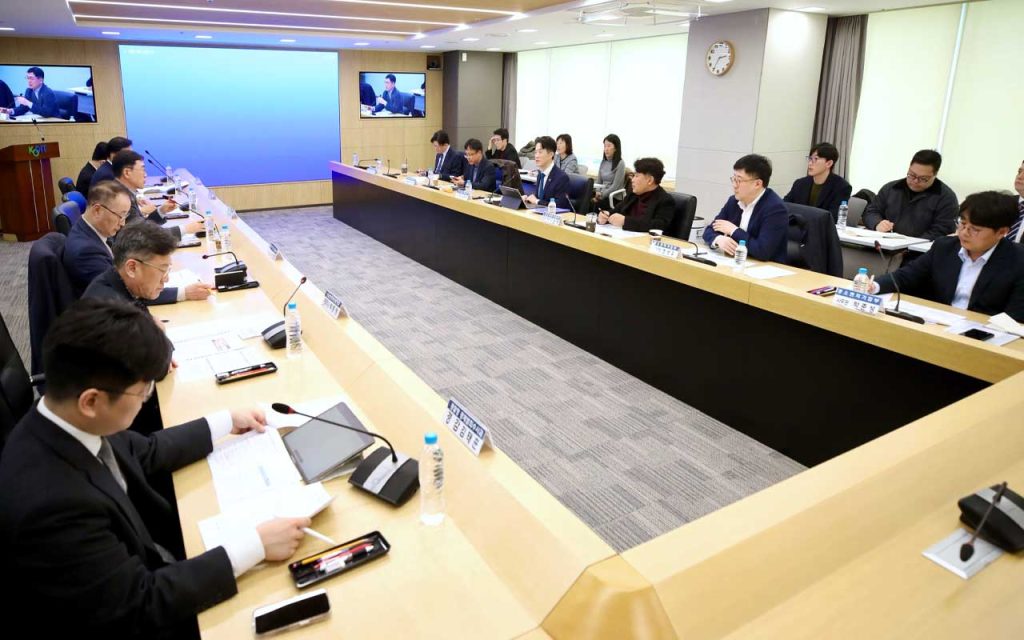
South Korea’s Ministry of SMEs and Startups held the fourth meeting of the “Task Force on Resolving Improper Third-Party Intervention” on March 12 at the Korea Credit Guarantee Fund’s Front1 facility in Seoul.
The meeting reviewed the early performance of the Illegal Broker Reporting Center, which began operating on January 1 across four major policy finance institutions.
Those institutions include:
- Korea SMEs and Startups Agency (KOSME)
- Small Enterprise and Market Service (SEMAS)
- Korea Technology Finance Corporation (KIBO)
- Korea Federation of Credit Guarantee Foundations (KODIT)
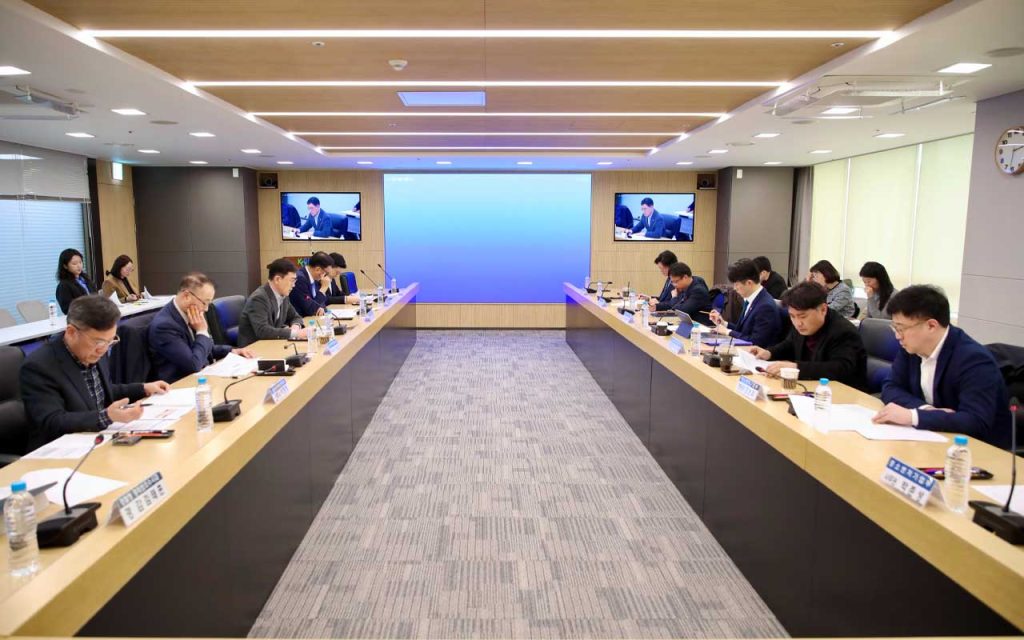
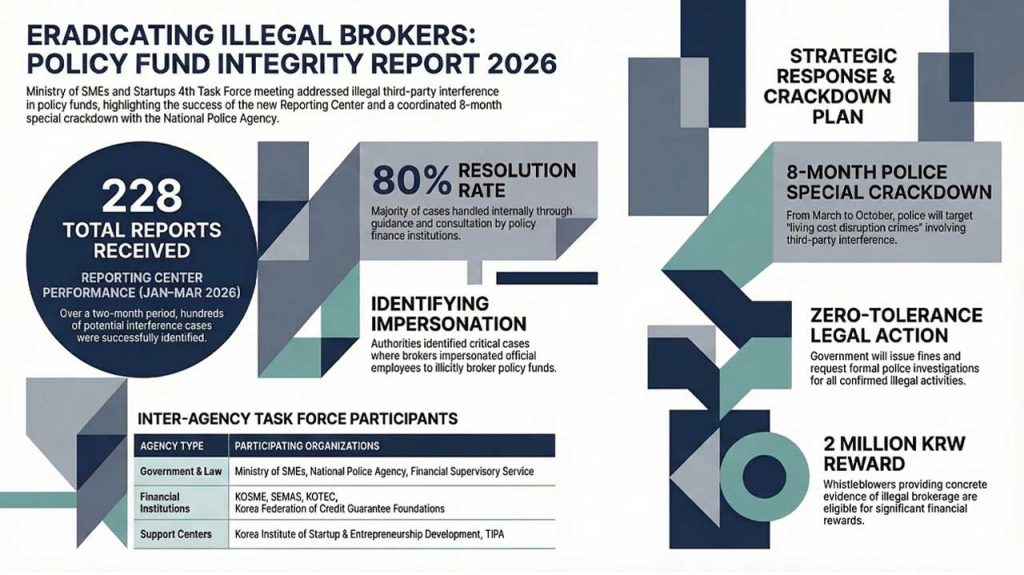
According to the ministry, the reporting system received 228 complaints between January 1 and March 2.
Officials emphasized that the majority of submissions were not confirmed violations. More than 80 percent were inquiries asking whether certain consulting or intermediary activities constituted illegal third-party intervention.
In many cases, policy finance institutions were able to resolve the issue directly by providing guidance to the reporting company.
Some reports remain under additional fact verification. Authorities stated that cases judged to involve potential illegality may be referred for investigation or administrative sanctions.
Authorities Investigate Impersonation and Fee-Based Brokerage Practices
Government officials outlined several forms of misconduct reported through the system.
These include:
- falsifying policy fund application documents while charging consulting fees
- promising policy fund loans to companies that do not qualify
- impersonating government officials or employees of policy finance institutions
- claiming personal connections that can secure government funding in exchange for payment
One case currently under review involves an individual impersonating an employee of a policy finance institution.
Authorities said the conduct could violate existing laws. The ministry and policy finance agencies are considering requesting a formal investigation and reviewing possible administrative fines under the Small and Medium Enterprise Promotion Act or the Small Enterprise and Small Commercial Business Support Act.
The reporting system also includes a whistleblower reward program introduced at the end of January. Depending on the significance and credibility of a case, informants may receive rewards of up to KRW 2 million.
Police Launch Eight-Month Investigation Into Policy-Fund Broker Activity
Enforcement is now expanding beyond administrative review.
The National Police Agency announced during the task force meeting that improper third-party intervention in policy funds will be treated as a “cost-of-living disruption crime.”
Police plan to conduct a nationwide special investigation lasting eight months, running from March through October.
A dedicated investigation task force will also be established at police headquarters under the leadership of the Director of the Criminal Investigation Bureau. Regional police investigative units and intelligence teams at local police stations will focus on detecting illegal brokerage activity connected to government financing programs.
The Ministry of SMEs and Startups confirmed it will cooperate closely with police and financial authorities during the crackdown.
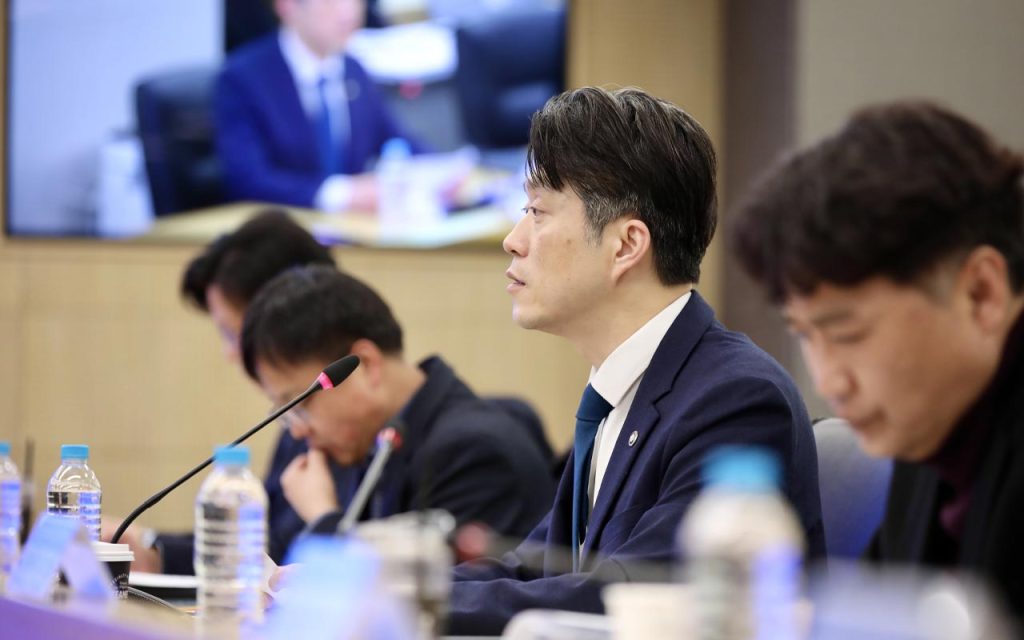
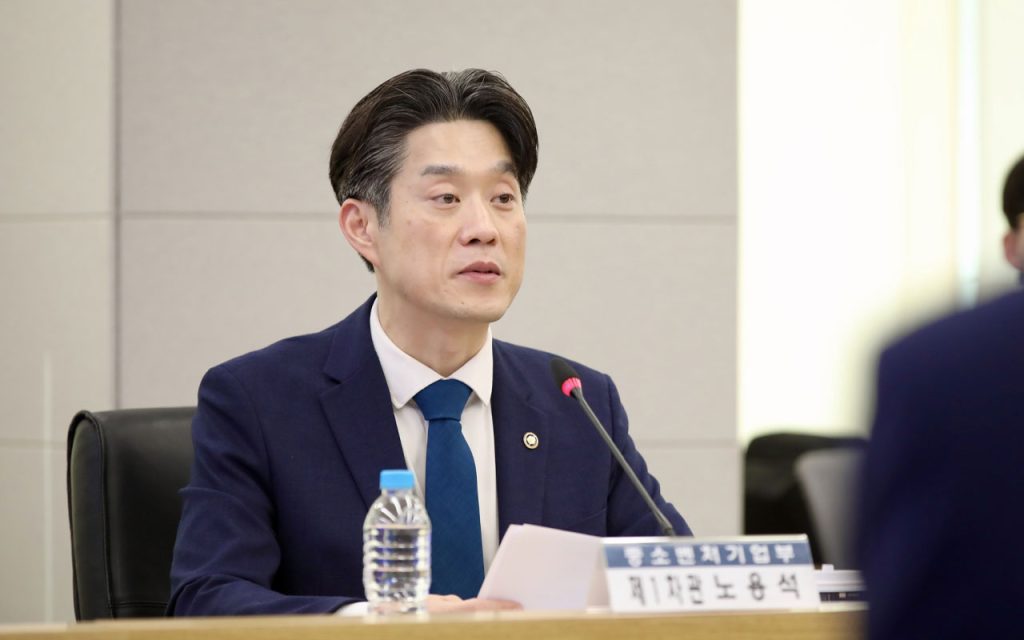
According to MSS official press release, First Vice Minister Noh Yong-seok stated during the meeting,
“Reports received through the Illegal Broker Reporting Center will be reviewed promptly, and if illegality is determined, sanction measures will be actively considered.”
Why Policy-Fund Brokers Emerged in Korea’s Startup Financing System
Illegal brokerage did not appear in isolation. It grew within the structure of Korea’s policy finance system.
Government-backed loans, guarantees, and support programs have long played a major role in financing early-stage companies and small enterprises in South Korea. Many startups rely on these programs during periods when private capital is limited or when banks hesitate to lend.
However, navigating policy funding can be administratively demanding.
Applications often involve detailed documentation, eligibility verification, and coordination across multiple government agencies. For founders without internal administrative teams, these requirements can create barriers to access.
In that environment, informal intermediaries began offering assistance. Some consultants provided legitimate advisory services. Others exploited the complexity by promising guaranteed approvals or charging high commissions tied to policy loans.
South Korea’s recent regulatory campaign aims to separate legitimate consulting support from illegal brokerage practices.
Previous KoreaTechDesk coverage has documented how the government is building a broader framework to address the issue. That effort includes a consulting registration system, AI-based application support tools, and expanded data-sharing across government agencies.
The reporting system now represents the tangible operational layer of those reforms.
Early Reporting Data Reveals Another Challenge: Founder Uncertainty
The early statistics from the reporting center highlight an important ecosystem signal.
More than four out of five reports submitted during the first two months were inquiries rather than confirmed cases of illegal brokerage.
This pattern suggests that many entrepreneurs are still uncertain about the boundary between lawful consulting and prohibited intermediary activity.
The reporting center is therefore functioning not only as an enforcement channel but also as an information channel.
Companies appear to be using it to clarify how the new rules apply to consulting services, application assistance, and other forms of advisory support connected to policy funding.
Vice Minister Noh noted during the task force meeting that the reporting mechanism must move beyond simple case counting. The government’s focus is now on ensuring that reports move through a full process of verification, coordination with investigative authorities, and follow-up enforcement when necessary.
The Real Test: Enforcement Without Slowing Startup Funding
The next phase of the reform will determine how the system performs in practice.
Policy finance remains a foundational liquidity channel for Korean startups and small businesses. Loans and guarantees provided through institutions such as KOSME and KIBO often determine whether young companies can secure working capital or scale early operations.
Efforts to eliminate illegal brokerage aim to strengthen fairness and transparency inside that system.
At the same time, authorities must ensure that stronger oversight does not make policy funding harder for legitimate startups to access.
The early reporting data suggests that administrative clarity will remain as important as enforcement.
If companies understand how to apply for government programs without relying on unregulated intermediaries, the system can reduce fraud while maintaining accessibility.
What Global Founders and Investors Should Watch
For international founders and venture investors observing Korea’s startup ecosystem, the development signals a tightening governance framework around public capital.
Three points are worth noting.
First, reporting mechanisms are now operational. Hundreds of cases have already passed through the system within weeks of its launch.
Second, enforcement is expanding beyond administrative supervision. Police investigators will now participate in identifying illegal brokerage networks tied to policy funding.
Third, compliance expectations are rising. Startups seeking government support must ensure accurate documentation and transparent advisory relationships.
South Korea’s policy finance system remains one of the most significant state-backed funding environments in Asia. The government’s current reforms aim to ensure that capital reaches legitimate businesses without distortion from unauthorized intermediaries.
The Operational Testing of Korea’s Dual Objective
South Korea’s anti-broker initiative has moved from policy design to operational testing.
The first two months of reporting show that the system is active, but they also highlight the complexity of regulating a financing environment that thousands of companies rely on each year.
The coming months of investigation and enforcement will reveal whether Korea can achieve its dual objective. Authorities want to eliminate exploitative brokerage practices while preserving the accessibility that has made policy finance a central pillar of the country’s startup ecosystem.
Key Takeaways for the Global Startup Ecosystem
- South Korea’s Illegal Broker Reporting Center received 228 reports during its first two months of operation.
- More than 80 percent of submissions were inquiries seeking clarification about third-party intervention rules.
- Authorities are investigating cases involving document falsification, brokerage commissions, and impersonation of policy finance officials.
- The National Police Agency will conduct an eight-month nationwide investigation into illegal policy-fund brokerage activity.
- The reform is part of a broader effort to strengthen transparency and compliance in Korea’s government-backed startup financing system.
– Stay Ahead in Korea’s Startup Scene –
Get real-time insights, funding updates, and policy shifts shaping Korea’s innovation ecosystem.
➡️ Follow KoreaTechDesk on LinkedIn, X (Twitter), Threads, Bluesky, Telegram, Facebook, and WhatsApp Channel.
🤝 Looking to connect with verified Korean companies building globally?
Explore curated company profiles and request direct introductions through beSUCCESS Connect.