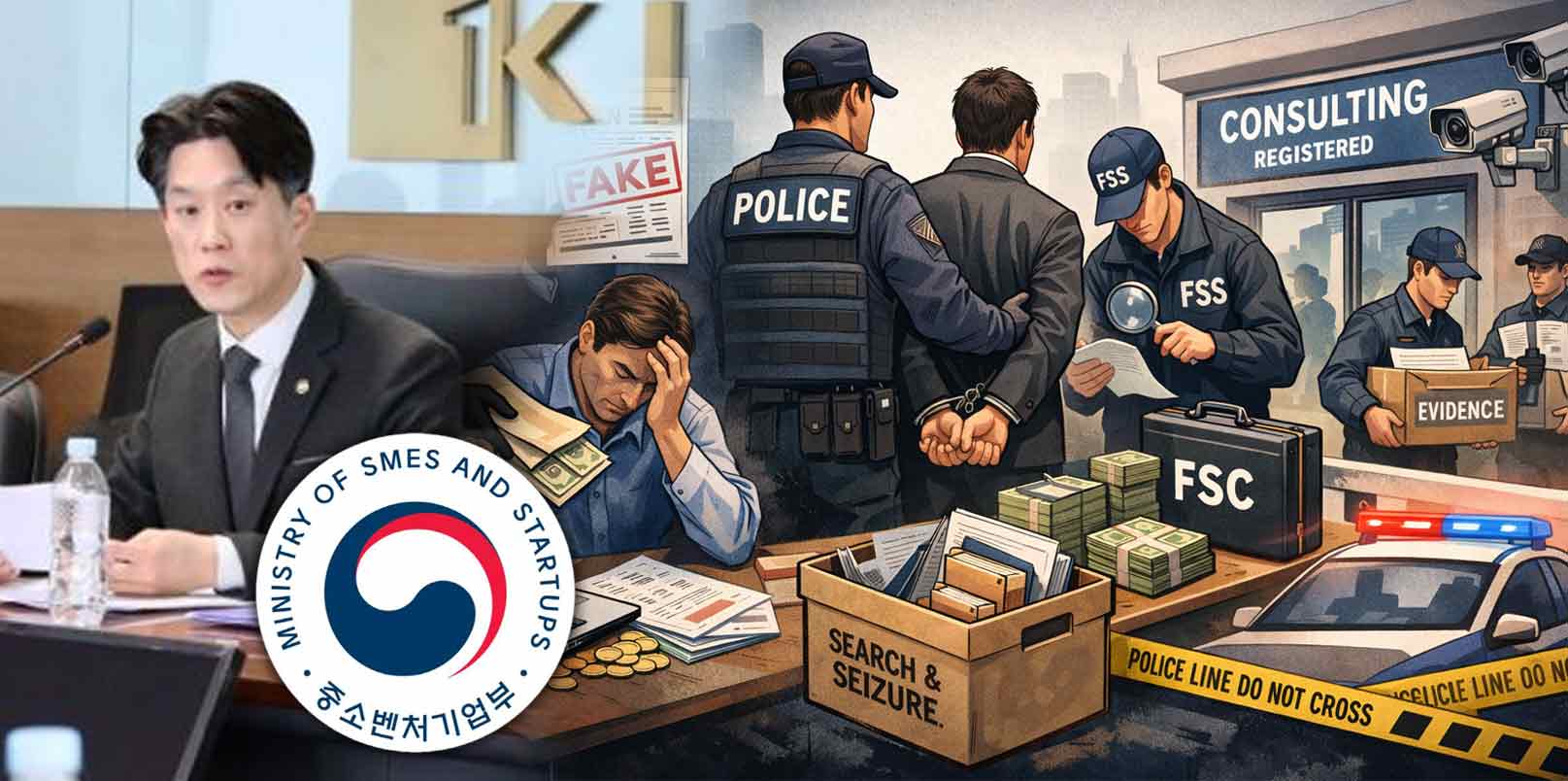
The Korean government has drawn a line against long-tolerated intermediaries in its policy finance system. Illegal “policy fund brokers” — those who forged documents or extracted fees from small firms seeking state-backed loans — are now the target of a sweeping enforcement plan. The Ministry of SMEs and Startups (MSS) has rolled out a “Three-Part Package” that includes cash rewards for whistleblowers, legal immunity for self-reporters, and a new consulting registration framework that will regulate all intermediaries in SME policy financing.
MSS Launches “Three-Part Package” to Curb Policy Fund Misconduct
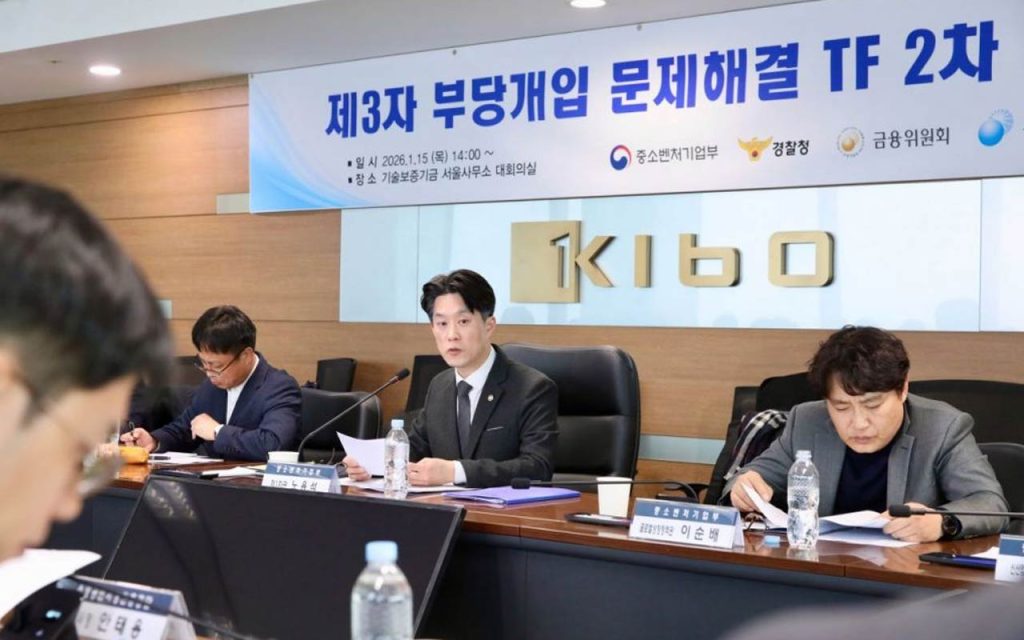
The Ministry of SMEs and Startups announced a new initiative on January 15, 2026, designed to address the growing issue of illegal third-party policy fund broker interference in state-backed SME financing.
The plan—officially called the “Three-Part Package Against Improper Third-Party Intervention”—includes:
- A reward system offering up to KRW 2 million per verified report of illegal broker activity.
- A whistleblower immunity system to protect self-reporting SMEs from financial penalties.
- A legal foundation for a consulting registration system to regulate and certify consultants who assist in policy fund applications.
The initiative was finalized during the ministry’s second Task Force on Third-Party Interference, chaired by Vice Minister Noh Yong-seok and attended by key financial and regulatory bodies, including the Financial Services Commission (FSC), National Police Agency, and Financial Supervisory Service (FSS).
Vice Minister Noh Yong-seok emphasized during the meeting:
“We will introduce both the reporting reward and immunity systems this month to encourage active reporting. All reported cases will be referred for investigation, and the government will respond firmly to any illegal actions.”
Korea’s Policy Finance Crossroads: Why This Crackdown Could Redefine Startup Capital Access
For years, policy finance has been one of Korea’s key growth levers — a national mechanism connecting state liquidity to early-stage innovation. Yet that system’s credibility has been quietly eroded by unofficial middlemen. Consulting firms and freelance brokers often filled procedural gaps, sometimes falsifying documentation or overpromising access to state-backed loans.
Beyond a simple compliance upgrade, the new measures shifted how the government sees trust as infrastructure, not just paperwork. Korea’s startup ecosystem has matured to a stage where public capital must now operate under the same transparency expectations global investors demand from private capital.
From January 21, the MSS and four major policy finance institutions — the Small and Medium Business Corporation (SBC), Small Enterprise and Market Service (SEMAS), Korea Technology Finance Corporation (KOTEC), and Korea Credit Guarantee Foundation (KODIT) — will conduct a nationwide anonymous survey to assess the prevalence and structure of third-party interference.
Inside the Illegal Brokers Friction: When Policy Ambition Meets the Realities of SME Financing
With this move, South Korea has moved beyond just a policy to tangible action to stop the leakage. Yet, the country’s policy finance ecosystem has long relied on intermediaries precisely because of its own complex system.
In fact, many SMEs and founders lack the administrative capacity or legal literacy to navigate government lending protocols.
While the consulting registration system may eliminate illegal brokers, it also risks constraining legitimate advisory support that startups often depend on.
That is why the challenge now will lie in distinguishing compliance from capacity-building — ensuring that regulation doesn’t unintentionally slow down capital access for smaller or less-experienced founders.
Moreover, only 84 reports of illegal brokerage have been filed across MSS-affiliated agencies to date, with enforcement actions taken in just 15 cases. That figure underscores how deeply informal practices are normalized within the ecosystem — and how difficult it will be to change behavior without overhauling the culture around reporting.
What Korea’s New System Fixes—and the Structural Gaps It Still Leaves Behind
If executed well, this initiative could create a cleaner, traceable capital flow within Korea’s public funding system. It will clarify who is authorized to advise on policy loans, making future misuse easier to track. It also enhances transparency, aligning with Korea’s broader fintech, compliance, and SME-digitalization goals.
However, this reform does not yet resolve the structural issue: why founders still need intermediaries at all.
Until administrative friction is reduced — through better digital platforms, simplified eligibility criteria, and clear guidance for first-time applicants — the vacuum left by brokers may simply be filled by new gray-market actors.
Why This Reform Signals a New Compliance Era for Global Investors in Korea
For international VCs and corporate investors, this is more than a domestic regulatory update. After all, it actually marks Korea’s ongoing evolution from a grant-driven innovation model to a compliance-anchored capital architecture.
The formalization of consulting in policy finance signals that Korea intends to hold its public investment ecosystem to the same governance standards global capital markets expect. This could improve the trust quotient of Korean startups seeking cross-border investment or co-financing. It also gives foreign accelerators and funds clearer assurance that state-linked funding no longer operates in opaque or broker-driven channels.
Still, investors should watch how the new system balances control with flexibility. If bureaucracy expands faster than transparency, Korea’s competitive edge in startup policy finance — long admired for its speed — could slow under its own caution.
The Deeper Story: Building Trust into the Architecture of Capital
In the end, Korea’s “Three-Part Package” is not just about catching criminals, but also about redesigning incentives. By rewarding transparency and decriminalizing honest self-reporting, the government is trying to rebuild trust where suspicion has quietly festered.
However, trust cannot be legislated — it must be operationalized.
For policy finance to truly become infrastructure, Korea must prove that integrity and accessibility can coexist.
If it succeeds, this reform could become a case study in how a government turns compliance into a growth strategy — and how an innovation economy matures, not by moving faster, but by moving more responsibly.
– Stay Ahead in Korea’s Startup Scene –
Get real-time insights, funding updates, and policy shifts shaping Korea’s innovation ecosystem.
➡️ Follow KoreaTechDesk on LinkedIn, X (Twitter), Threads, Bluesky, Telegram, Facebook, and WhatsApp Channel.
🤝 Looking to connect with verified Korean companies building globally?
Explore curated company profiles and request direct introductions through beSUCCESS Connect.