
South Korea is taking decisive action to restore trust in its public financing system. Following a string of reports exposing illegal “policy fund brokers,” the government has begun a coordinated crackdown to eliminate third-party manipulation within national loan and guarantee programs. This reform marks a critical step toward a more transparent, data-driven public funding ecosystem — and it will directly affect how startups secure capital in Asia’s fourth-largest innovation economy.
Government Launches Task Force to Eliminate Policy Fund Brokers
The Ministry of SMEs and Startups (MSS) has officially launched a cross-agency Task Force (TF) to address illegal brokerage practices and internal data misuse in policy financing.
The initiative was confirmed during the Policy Finance Third-Party Intervention Review Meeting on December 24, 2025, chaired by Minister Han Seong-sook, and formalized with a kickoff session on December 26 at the Korea Technology Finance Corporation (KIBO) headquarters in Yeongdeungpo, Seoul.
The TF brings together the MSS and its four affiliated financial agencies — Korea SMEs and Startups Agency (KOSME), Small Enterprise and Market Service (SEMAS), Korea Technology Finance Corporation (KIBO), and Korea Federation of Credit Guarantee Foundations (KODIT). The Financial Services Commission (FSC), Financial Supervisory Service (FSS), and National Police Agency are also participating to ensure enforcement and rapid investigation.
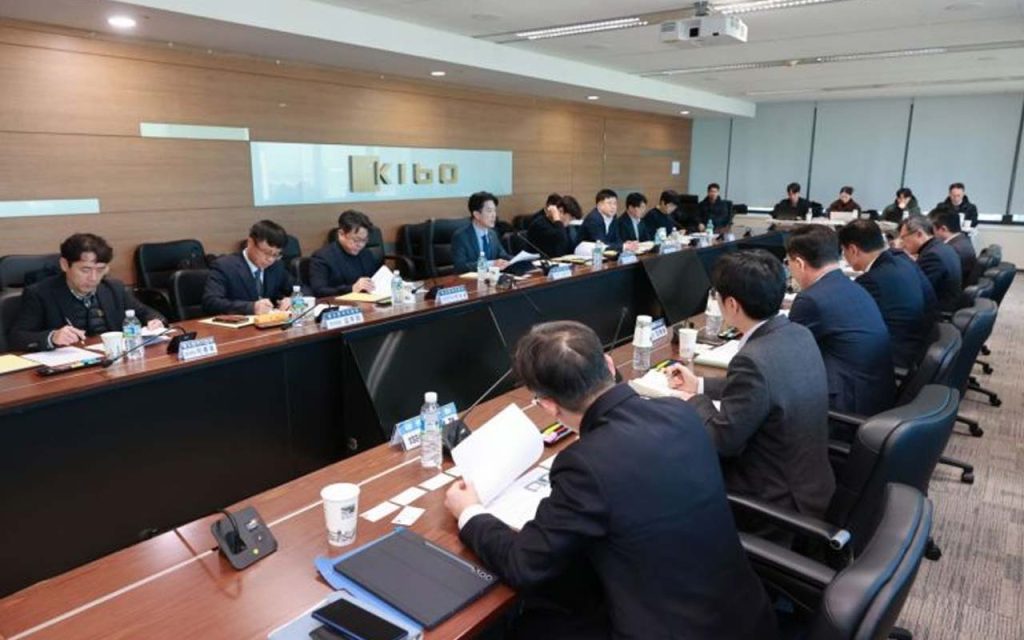
Led by First Vice Minister Noh Yong-seok, the TF is divided into four working groups — General Affairs, Legal and Institutional Reform, External Cooperation, and Media Response — and will meet regularly to assess violations, standardize procedures, and pursue coordinated legal action.
Longstanding Loopholes in Korea’s Policy Funding System
Policy financing in Korea has long been a cornerstone of startup and SME growth. Through low-interest loans and government guarantees, the system supports thousands of founders each year. Yet as the funding structure expanded, so did opportunities for exploitation.
Between 2019 and 2024, the Korea SMEs and Startups Agency reported 31 official broker-related cases, with the majority involving unauthorized insurance sales, contract breaches, and impersonation of government agencies. However, only nine cases were formally sanctioned.
Investigations revealed that some brokers charged 2–8 percent in commission fees, forged documents, or manipulated applications by offering to “secure approvals” for clients. In several instances, brokers were found to have linked policy-loan approvals to mandatory insurance purchases — a practice uncovered in televised exposés.
The underlying issue stems from structural complexity. Many small firms lack in-house administrative capacity, making it difficult to navigate over 20 different policy fund programs. This administrative gap created the space for illegal intermediaries to operate.
Coordinated Enforcement and Legal Reform
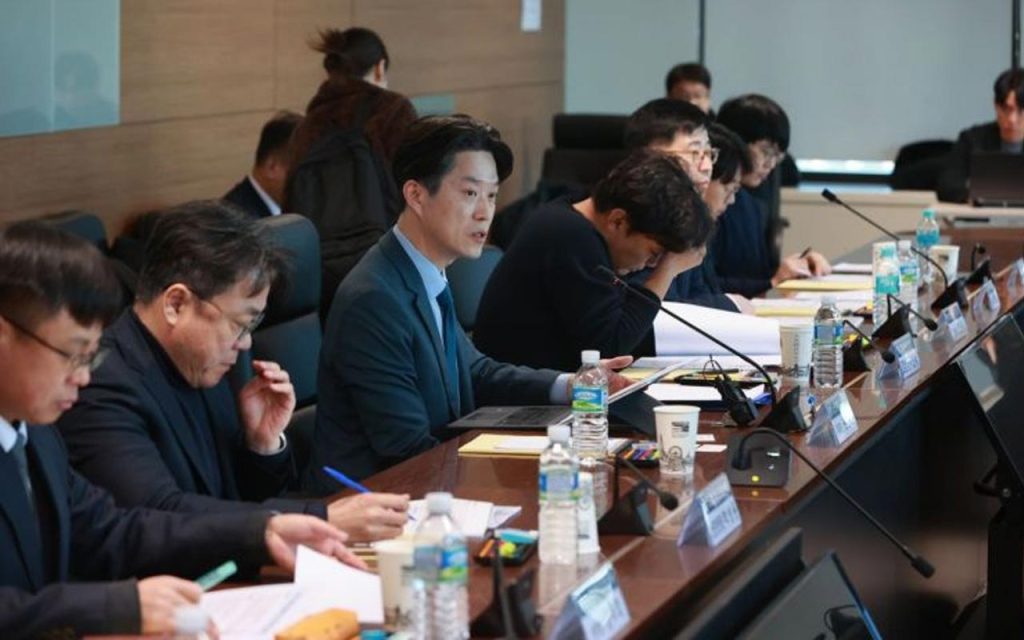
Minister Han Seong-sook underscored the government’s commitment to systemic reform, stating,
“We must establish a cooperative system with the Financial Services Commission and the Financial Supervisory Service so that improper intervention reports can be processed swiftly. The ministry will create a solid legal basis for investigations and sanctions by next year to protect SMEs and small business owners.”
Vice Minister Noh Yong-seok, who leads the TF, emphasized that the effort would be sustained until the environment becomes fully transparent:
“This will not be a one-time campaign. We will continue operating the TF until third-party interference has no room to exist. Each affiliated financial agency must operate its own TF to closely monitor and report cases.”
Noh further explained that the ministry is introducing a whistleblower reward system — with anonymity and immunity provisions — to encourage reports of illegal brokers. The program, set to begin in January 2026, will compensate individuals who provide credible evidence of wrongdoing, even for already-executed loans.
Transparency as a Catalyst for Capital Confidence
The crackdown reflects more than a compliance effort. It is part of a broader financial integrity reform that could redefine how startups interact with government-backed capital.
For early-stage founders and venture-backed SMEs, access to policy loans is often critical during pre-revenue or expansion stages. However, reliance on opaque intermediaries undermines investor confidence and distorts capital allocation.
By institutionalizing oversight and launching the Policy Fund Navigator — an AI-driven digital system that recommends eligible programs based on a company’s operational profile — the government is signaling a shift toward data-verified lending.
The initiative aligns with Korea’s 2026 Venture 4 Powerhouse Strategy, which seeks to merge financial accountability with growth-oriented innovation policies. For global investors, this signals a maturing venture ecosystem built on transparency, predictability, and regulatory credibility — qualities essential for attracting cross-border venture capital and institutional funds.
Restoring Trust in Korea’s Public Finance System
In the end, with the policy finance overhaul, South Korea is making a strong declaration that public capital must serve innovation, not exploitation. By targeting the roots of broker-driven misconduct and integrating data transparency into SME financing, the government is rebuilding confidence in one of Asia’s largest public funding systems.
For startups, this reform brings both challenge and opportunity. Compliance expectations will rise, but so will access clarity. The days of informal “consulting intermediaries” are numbered, replaced by a structured system that rewards legitimate entrepreneurship and fair competition.
If effectively executed, this could become a model for other innovation economies — a governance blueprint where financial transparency becomes the foundation of startup growth.
– Stay Ahead in Korea’s Startup Scene –
Get real-time insights, funding updates, and policy shifts shaping Korea’s innovation ecosystem.
➡️ Follow KoreaTechDesk on LinkedIn, X (Twitter), Threads, Bluesky, Telegram, Facebook, and WhatsApp Channel.
🤝 Looking to connect with verified Korean companies building globally?
Explore curated company profiles and request direct introductions through beSUCCESS Connect.