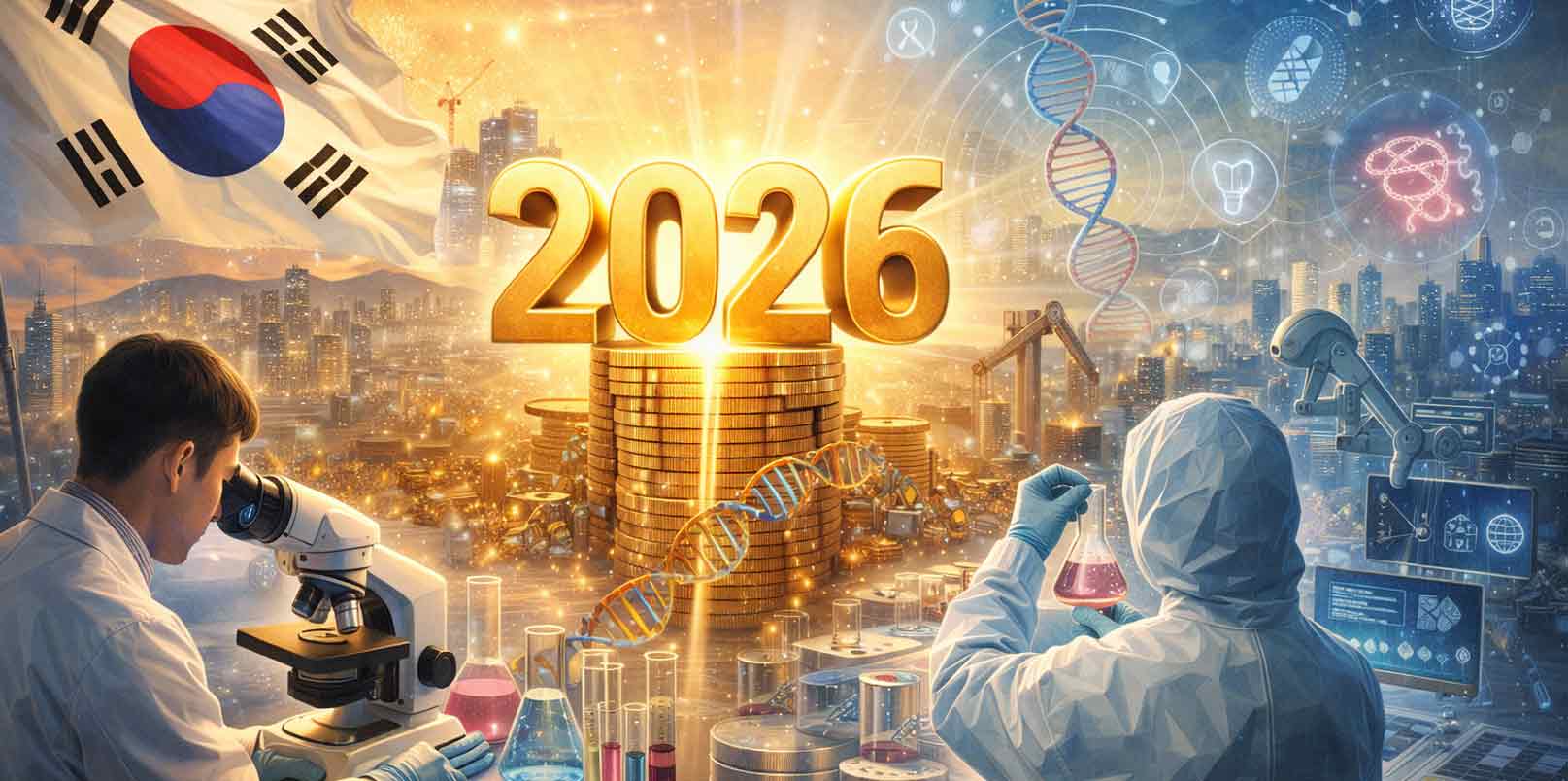
South Korea’s biotechnology sector is on the verge of transformation. The nation’s annual technology exports now exceed KRW 20 trillion, placing Korean firms among the world’s top innovation suppliers. Yet, behind the success story lies a structural bottleneck—regulations that have not kept pace with the speed of biotech innovation. As 2026 approaches, industry experts warn that this year may define whether K-Bio evolves into a self-sustaining global leader or stalls under outdated rules.
Korea Moves Beyond Licensing to Build Global Blockbusters
South Korea’s bio industry is entering a new chapter. After a decade of thriving on technology exports, Korean biotech firms are setting their sights higher: owning, producing, and commercializing their own drugs on the global stage.
SK Biopharm’s cenobamate, an anti-epileptic drug developed entirely in-house, has already proven that the model works. The company earned U.S. FDA approval and directly sells the medicine in the United States, generating global revenue without relying on licensing partners.

Analysts expect at least two or three similar success cases to emerge in 2026, marking the transition from a licensing-out economy to one capable of creating independent blockbuster pipelines.
Lee Seung-gyu, Vice Chairman of the Korea Bio Association, said
“Korea has already joined the ranks of the world’s top three suppliers of core technology to global big-pharma companies. Our compounds and clinical data are now recognized as global-standard assets.”
Foreign Biotech Investment Shifts Toward Korea’s Innovation Hub
The shift in Korea’s biotech reputation is also reflected in global investment behavior. Flagship Pioneering, the U.S. venture studio that founded Moderna, recently appointed Lee Byung-geon, head of the Bio-Venture Special Committee at the Korea Pharmaceutical and Bio-Pharma Manufacturers Association, as a special advisor. The move signals deeper collaboration with K-bio research and startup ecosystems.
Additionally, Flagship has already attracted a joint KRW 72 billion (approximately USD 48 million) investment from four Samsung affiliates—Samsung C&T, Samsung Biologics, Samsung Bioepis, and Samsung Venture Investment. The firm’s expansion into Korea is not just financial strategy, but it also aims to directly incubate promising Korean technologies and position them for global launch.
Vice Chairman Lee also notes that this influx of strategic capital proves Korean biotech has moved “from the periphery of innovation to its center.” It underscores Korea’s growing status as a preferred gateway for biotech commercialization in Asia,
“The fact that global ‘big players’ like Flagship are visiting Korea is proof that the value of our biotechnology meets global standards.”
Regulation Lags Behind Innovation in Korea’s Biotech Sector
Despite surging capital inflows and international attention, experts caution that Korea’s regulatory system remains anchored in a manufacturing-era mindset.
One of the biggest obstacles is the “loss before tax on continuing operations” rule (known locally as Beop-cha-son), which automatically flags companies for delisting review when accounting losses exceed 50 percent of equity capital.
For R&D-intensive sectors like biotech, this rule creates a paradox: the more a firm invests in innovation, the higher its risk of being penalized for accounting losses.
Vice Chairman Lee further explained,
“Foreign investors see R&D as an investment in future value, but Korean regulations treat it as a sign of insolvency. This disconnect keeps global funds from committing to Korea at scale.”
Korea’s rigid perception of founder shareholding ratios adds further constraint. While global markets separate ownership from management, Korean regulations often view declining founder stakes as instability—discouraging venture-stage capital and dilutive investment necessary for scaling.
The Early-Stage Crisis Threatening the Pipeline
Underneath strong stock-market performance, the foundation of Korea’s biotech ecosystem is weakening.
High interest rates and reduced venture liquidity have sharply lowered the survival rate of early-stage biotech startups. Industry veterans note that current industry leaders such as Alteogen and ABL Bio were products of an earlier, more resilient startup environment.
Vice Chairman Lee then warned,
“If today’s early-stage ventures collapse, the damage won’t be visible immediately. But within two or three years, we may lose the very pipelines that sustain our export economy.”
The Korea Bio Association is calling on policymakers to prioritize ecosystem restoration—supporting R&D-stage ventures through targeted financial mechanisms, flexible listing criteria, and regulatory clarity to retain global capital confidence.
2026 is The Golden Time for Korea’s Biotech Reform
The year 2026 is being described within the industry as a “golden time” for regulatory reform. Korea’s biotech achievements have validated its technological credibility; now, institutional innovation must match that pace.
For investors, Korea presents a paradoxical opportunity: one of the most scientifically advanced markets in Asia, constrained by structural inefficiencies ripe for reform. For policymakers, aligning financial and regulatory frameworks with innovation-driven industries could determine Korea’s position in the next decade of global biotech competition.
If reforms succeed, Korea could solidify itself as a major biotech powerhouse—bridging Asian innovation with global capital markets. If not, the country risks watching its most promising startups seek friendlier markets abroad.
Defining Korea’s Biotech Future
K-Bio has already proven its scientific strength. What comes next depends on how effectively Korea modernizes its rules for an innovation-led economy. The transition from a licensing-driven model to a self-sustaining biotech ecosystem will define Korea’s industrial future—and 2026 stands as the decisive year to make that transformation real.
– Stay Ahead in Korea’s Startup Scene –
Get real-time insights, funding updates, and policy shifts shaping Korea’s innovation ecosystem.
➡️ Follow KoreaTechDesk on LinkedIn, X (Twitter), Threads, Bluesky, Telegram, Facebook, and WhatsApp Channel.
🤝 Looking to connect with verified Korean companies building globally?
Explore curated company profiles and request direct introductions through beSUCCESS Connect.