
South Korea’s global content success is often measured through hit dramas, international rankings, and streaming records. Yet one of the most significant changes has happened behind the screen. Over the past decade, Korean drama production has quietly evolved from a broadcaster-controlled system into a more complex business ecosystem where production companies increasingly manage intellectual property, financing structures, platform relationships, and international expansion. And for companies operating inside Korea’s content industry, that shift has changed both the opportunities and the risks.
Korea’s Content Industry Has Become a Major Economic Sector
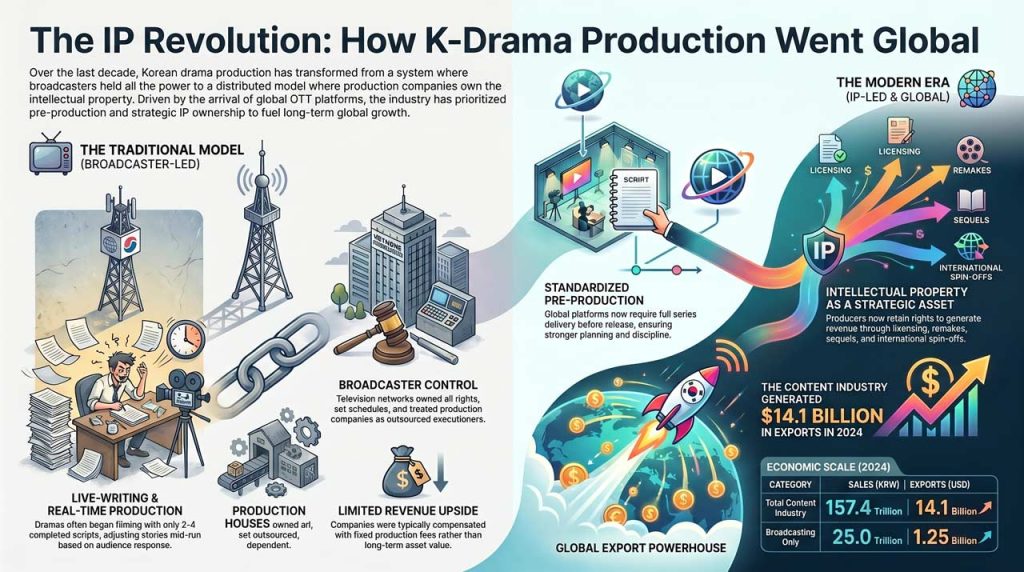
South Korea’s content industry has grown into a significant export sector. According to the Ministry of Culture, Sports and Tourism, the country’s content industries generated KRW 157.4 trillion in sales and USD 14.1 billion in exports in 2024.
Broadcasting contributed KRW 25 trillion in sales and USD 1.25 billion in exports, highlighting the scale of Korea’s screen-content business.
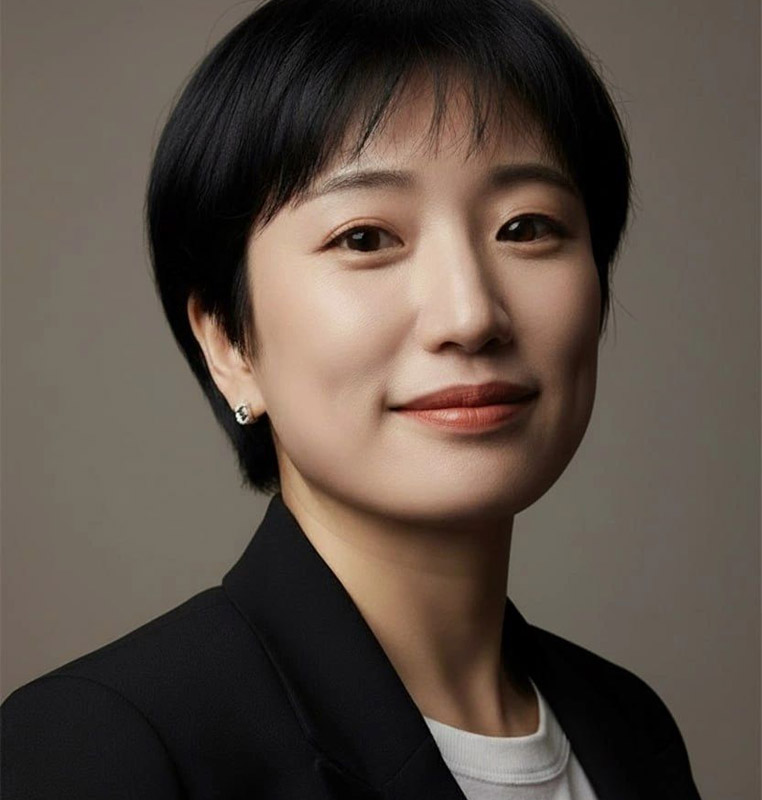
As the industry expanded globally, the production system behind Korean dramas also changed. And only few people have observed that transformation as closely as HeeKyoung Yun, founder and CEO of AnotherStory and a producer whose career spans more than two decades across Korean television, web dramas, international projects, and large-scale content production, including prominent titles like Sungkyungkwan Scandal (2010) and Reborn Rich (2022).
Yun’s experience covers multiple generations of Korea’s drama industry. Her perspective offers a rare view into how the business side of Korean storytelling has evolved alongside its international growth.
When Korean Dramas Were Still Being Written While Airing
Many international viewers are familiar with Korea’s current polished production standards. And yet, the industry in fact operated very differently not long ago.
“Just a decade ago, Korean dramas typically began production with only two to four completed scripts out of a sixteen-episode run,”
Yun told KoreaTechDesk in an exclusive interview.
“The show was already airing while the writing wasn’t finished and cameras were still rolling. Productions would literally adjust the story direction mid-run based on audience response.”
The system created enormous pressure on writers, directors, actors, and production teams. Scripts continued to be developed while episodes were already reaching audiences.
Industry research also reveals that pre-production was far less common during that period. It was the rise of global streaming platforms that had gradually changed expectations around production schedules, delivery requirements, and project management.
Yun also believed that in South Korea, the turning point came with the arrival of global OTT platforms.
“Because platforms require full delivery before release, pre-production became the industry standard rather than the exception.”
The shift helped establish a production environment that prioritized completed development, stronger planning discipline, and global distribution readiness before launch.

The End of the Broadcaster-Controlled Model
Moreover, the transformation was not limited to production schedules.
For decades, Korean drama production largely operated under a broadcaster-led structure. Broadcasters controlled scheduling, distribution, financing, and rights ownership, while production companies focused primarily on execution.
“When I entered this industry, Korean drama production was broadcaster-led in every meaningful sense,”
Yun said.
“The broadcaster owned the rights, set the schedule, and the production company executed.”
Industry reports from Samil PwC Korea also show that under traditional outsourcing arrangements, broadcasters often secured most distribution rights while production companies were compensated through production fees and limited participation in long-term value creation.
But today, that balance has significantly shifted.
“What we have now is a more distributed structure,”
Yun explained.
“Production companies increasingly own or co-own IP. Financing is assembled from multiple sources, including platform pre-buys, co-production investment, government support funds, and brand partnerships.”
The result is a greater strategic influence for production companies. They are no longer responsible only for producing content. They increasingly participate in shaping financing structures, rights ownership, distribution pathways, and long-term commercialization plans.
Why Intellectual Property Has Become a Strategic Asset
Not only that, but the industry’s growing focus on intellectual property also reflects a broader change in how content businesses create value.
In the broadcaster era, long-term ownership opportunities were often limited. Today, production companies are placing greater emphasis on retaining rights that can generate future revenue through licensing, remakes, adaptations, international distribution, sequels, and spin-offs.
Public policy has also begun supporting this direction. Recent Korean content-support programs backed by the Korea Creative Content Agency (KOCCA) have specifically encouraged production entities to secure IP rights as part of their business strategy.

Yun believes the increased control offers meaningful advantages, but it also introduces new responsibilities.
“As production companies have gained the ability to own IP, they have secured greater rights as creators and achieved a more stable revenue base.
The upside is real: owning your IP means owning your future.”
At the same time, ownership requires preliminary investment.
“To retain IP, a production company has to fund and invest in the project itself, which means taking on financial risk that simply didn’t exist under the old model.”
And that trade-off has become one of the defining characteristics of Korea’s modern content industry.
Global Platforms Expanded Opportunities but Raised Expectations
The rise of global streaming platforms accelerated many of these structural changes.
Netflix announced a USD 2.5 billion investment plan for Korean content in 2023, reinforcing the country’s role as a major global production hub. At the same time, international platforms introduced stricter delivery standards, larger production budgets, and global release expectations.
The benefits have been substantial. Korean dramas can now launch simultaneously across international markets, reaching audiences that were previously inaccessible under traditional broadcast distribution.
Yet the new environment is also more competitive.
In fact, recent industry research indicates that while international demand for Korean content remains strong, commissioning activity has become more selective. Production companies increasingly face pressure to differentiate themselves through strong IP, operational capabilities, and international execution expertise.

AnotherStory Reflects the Industry’s Next Phase
Yun’s decision to launch AnotherStory in 2025 reflects many of the industry’s broader trends.
After spending sixteen years at RaemongRaein (now Artist Studio Inc.) and more than two decades in the industry overall, she saw an opportunity to explore areas that traditional production structures did not always prioritize.
“International co-production is one of those areas,”
she said.
“It’s where I’m now putting considerable energy, including active participation in overseas markets.”
And that ambition mirrors a larger shift taking place across Korea’s content ecosystem. Because today, as production companies gain greater control over IP and project structure, they are also looking beyond domestic broadcasting relationships toward global partnerships, co-production models, and international growth opportunities.
Korea’s Next Content Challenge Is No Longer Visibility
Indeed, Korean content has already proved it has successfully earned global visibility. That is why the next challenge is a battle over ownership, control, and long-term value creation.
The industry’s center of gravity is now gradually shifting away from broadcaster-led systems into more strategic role and dominant structures for production companies.
This greater freedom certainly comes with even greater responsibility. Companies that choose to retain ownership must also accept the financial and operational risks that ownership demands.
And so, for founders, investors, and ecosystem stakeholders, this transformation offers a lesson that extends well beyond the content sector.
Global demand alone does not guarantee durable growth. The organizations that create lasting value are often the ones that control the underlying assets, build scalable operating capabilities, and position themselves close to the points where future value accumulates.
In that sense, the story of Korea’s drama industry is no longer just about exporting successful shows. It is increasingly about how Korean production companies are rebuilding themselves for a more IP-driven and globally connected era.
Key Takeaways
- Korean drama production has shifted from a broadcaster-led model toward a more distributed structure where production companies play a larger strategic role.
- Global OTT platforms accelerated the adoption of pre-production, changing how projects are planned, financed, and delivered.
- Intellectual property ownership has become a critical business asset for Korean production companies.
- Greater IP control creates new revenue opportunities but also requires companies to assume more financial risk.
- International expansion now depends on production capabilities, financing strategy, rights management, and global execution, not just content distribution.
- The launch of AnotherStory reflects a broader industry move toward international co-production and globally oriented growth models.
– Stay Ahead in Korea’s Startup Scene –
Get real-time insights, funding updates, and policy shifts shaping Korea’s innovation ecosystem.
➡️ Follow KoreaTechDesk on LinkedIn, X (Twitter), Threads, Bluesky, Telegram, Facebook, and WhatsApp Channel.
🤝 Looking to connect with verified Korean companies building globally?
Explore curated company profiles and request direct introductions through beSUCCESS Connect.