

Korea and India are deepening startup collaboration at both policy and ecosystem levels. A recent forum in Seoul brought founders, operators, and policymakers into the same room. The conversation reflected growing alignment. At the same time, it exposed a more persistent issue. Cross-border expansion is no longer limited by access. It is increasingly constrained by execution.
Korea – India Startup Collaboration Is Gaining Institutional Momentum
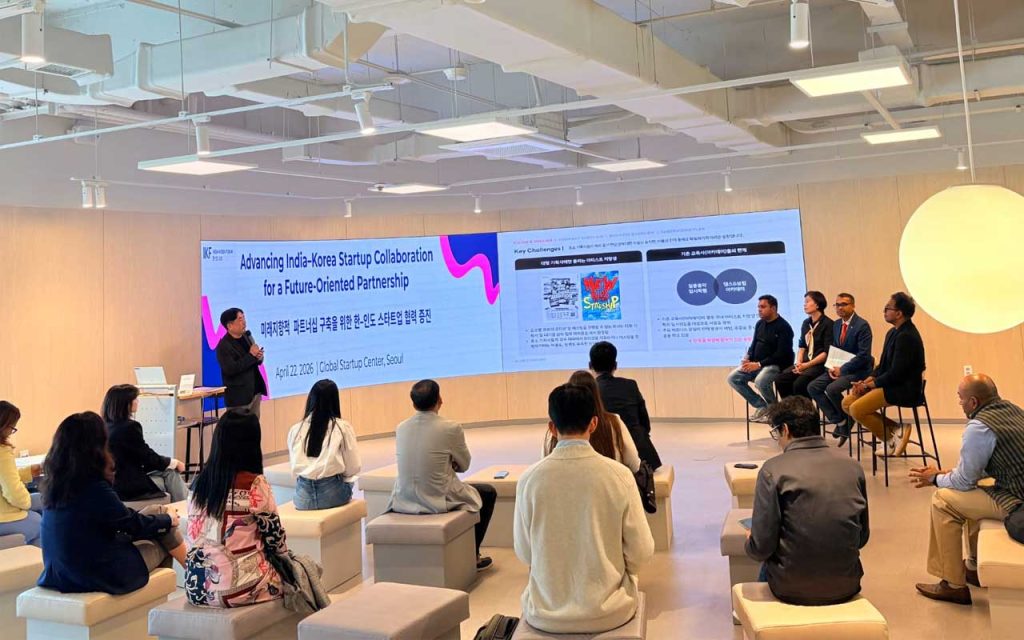
The India – Korea Forum (IKF) recently hosted a high-level startup dialogue in Seoul on April 23, 2026, titled “Advancing India–Korea Startup Collaboration for a Future-Oriented Partnership.” The event brought together startup founders, CEOs, academics, and policymakers from both India and South Korea, reflecting growing cross-border engagement at multiple levels of the ecosystem.
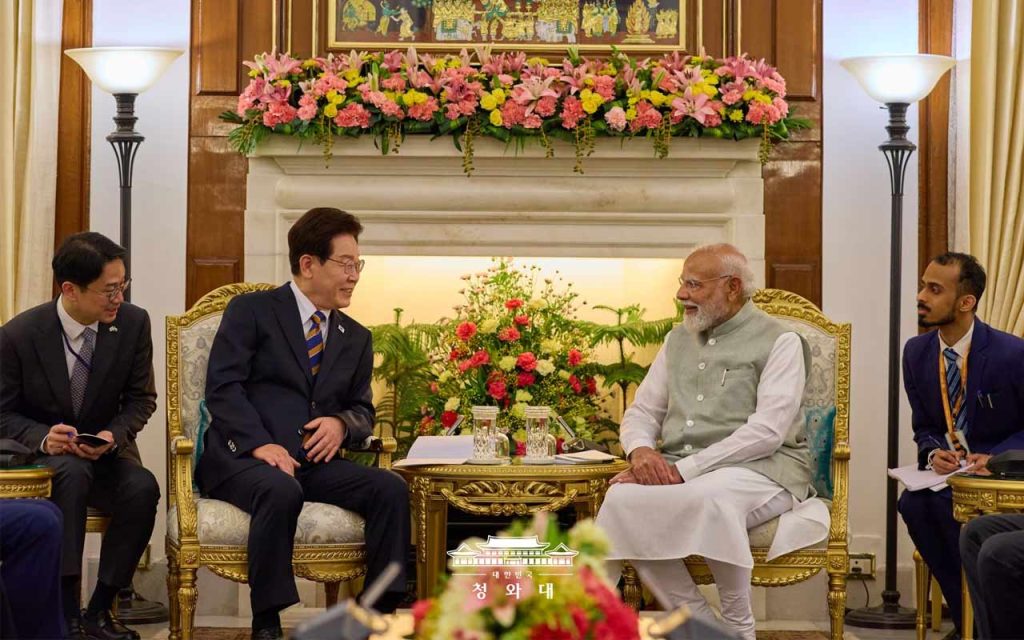
The forum took place shortly after the India–Korea Summit in New Delhi, where Prime Minister Narendra Modi and President Lee Jae Myung emphasized expanding cooperation in startups, SMEs, and innovation ecosystems. This positioned the Seoul dialogue not as a standalone event, but as part of a broader push to translate high-level bilateral alignment into more practical collaboration.
The forum itself was structured around three focused discussion areas.
The first examined comparative dynamics between the Indian and Korean startup ecosystems, highlighting differences in structure, scale, and market behavior. The second addressed how Indian startups can expand into the Korean market, where their presence remains limited despite increasing interest. The third explored pathways for Korean startups to engage more actively with India, a market often viewed as high-potential but operationally complex.
Taken together, these discussions show that Korea–India startup collaboration is moving beyond early-stage exploration, supported by stronger institutional backing and rising founder participation.
At the same time, the conversation is shifting toward a more demanding question. As this corridor expands, the focus is no longer on visibility or access, but on whether these initiatives can produce consistent, execution-driven business outcomes on the ground.

Execution Gaps Are Emerging as the Central Constraint
Despite this momentum, the forum discussions pointed to a recurring issue. Strategic alignment does not automatically lead to execution.
In direct correspondence with KoreaTechDesk, Prof. Rajiv Kumar, Director of the India – Korea Forum (IKF), outlined the core problem:
“One of the key execution challenges lies in bridging the gap between high-level intent and on-the-ground implementation.
While both India and Korea recognize the importance of startup collaboration, there are still practical barriers such as regulatory differences, market entry complexities, and limited institutional coordination.”
This reflects a broader pattern across cross-border startup ecosystems. Policy alignment may accelerate initial access, but it rarely addresses the operational friction that follows. And in the Korea – India startup corridor, this gap is becoming a defining constraint on execution.
Why Korea – India Expansion Is Structurally Complex
Not only that but these challenges are also closely tied to how the two ecosystems are structured. This then in turn shapes how startups execute across markets.
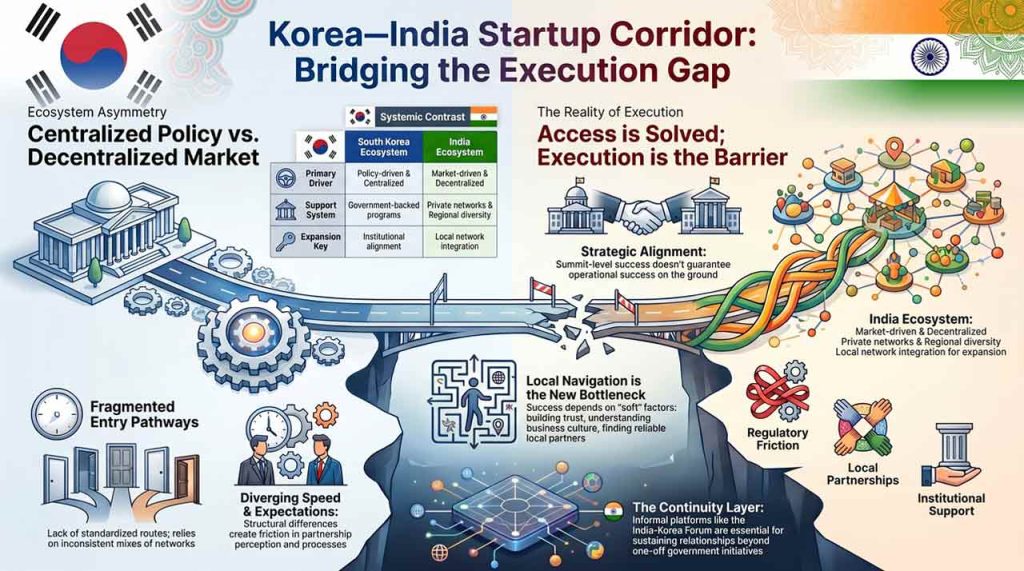
Fragmented Entry Pathways
Startups do not follow a single, standardized route when entering either market. They rely on a mix of government programs, local partners, and informal networks. This creates inconsistency in execution.
That is why without a clear pathway, expansion becomes dependent on individual relationships rather than repeatable systems.
Ecosystem Asymmetry
The Korean startup ecosystem is relatively centralized and policy-driven. Government-backed programs and structured support systems play a significant role.
On the other hand, India’s ecosystem is more decentralized. Market dynamics, private networks, and regional diversity shape how startups scale.
In practice, this difference creates friction, as expectations around speed, processes, and partnerships often diverge.
Limited Institutional Coordination
Multiple stakeholders are involved in cross-border collaboration. These include government agencies, accelerators, corporates, and ecosystem platforms.
And so, with limited coordination across these layers, startups often gain initial access but struggle to sustain momentum over time.
Founders Point to Local Navigation as the Real Bottleneck
Participants of the forum also highlighted a more practical constraint. They noted that while entering a market is one step, operating within it presents a different challenge.
According to Prof. Rajiv Kumar:
“From the discussions at the forum, several founders highlighted that navigating local ecosystems, understanding business culture, building trusted networks, and accessing reliable partners remains one of the most critical and often underestimated aspects of cross-border expansion.”
This is way more than just a secondary challenge. It directly affects execution, where startups without trusted local partners often face delays in forming relationships, acquiring customers, and building teams.
Cross-border expansion requires more than product–market fit. It requires alignment with local networks.
Platforms Like India – Korea Forum Are Emerging as Execution Connectors
Beyond the dialogue itself, the India – Korea Forum (IKF) shows how ecosystem platforms are becoming more important in connecting stakeholders across markets.
Prof. Rajiv Kumar explained:
“Beyond hosting dialogue, our focus is on creating continuity by bringing together ecosystem actors, facilitating trust-building, and gradually shaping more practical pathways for collaboration.”
After all, while formal programs indeed create entry points, sustaining relationships requires a different layer of support.
This is where the role of informal platforms is becoming increasingly crucial. These platforms help connect founders, investors, and ecosystem actors beyond one-off initiatives. And as connectors, they strategically translate high-level discussions into ongoing engagement.
However, it doesn’t mean that informal platforms directly replace operational execution. Startups still need local capability to navigate each market and turn these connections into actual business outcomes.
What This Means for Startups and Investors
The Korea–India startup corridor is becoming more active, but also more complex to navigate. As collaboration expands, expectations are rising alongside the operational demands placed on founders and investors.
Korean startups entering India are encountering a market with strong potential, yet one that requires longer timelines to build traction. Local partnerships often determine whether early momentum can be sustained. Institutional programs can facilitate initial access, but they rarely address the day-to-day realities of operating in a fragmented and relationship-driven environment.
Indian startups looking at South Korea face a different set of conditions. The ecosystem offers structured support and access to advanced industries, but success depends on the ability to align with regulatory frameworks and institutional processes. Without that alignment, progress tends to slow even after initial entry.
Investors are also adjusting their expectations. Cross-border expansion between Korea and India carries execution risks that extend beyond capital deployment. Supporting portfolio companies now requires deeper involvement in operational strategy, local partnerships, and market adaptation.
The opportunity across this corridor remains strong. What determines outcomes is no longer access, but how effectively each participant can manage the friction that comes with operating across two distinct systems.
The Shift from Access to Execution
The shift underway in Korea–India startup collaboration is no longer about opening doors. It is about what happens after entry.
Earlier efforts focused on access but what is emerging now is a more demanding stage.
Growth depends on whether startups can navigate regulatory environments, align with different ecosystem structures, and build operational footing within each market. And these require sustained coordination across stakeholders and consistent engagement on the ground.
So, this transition is the turning point of how success is defined and measured. Visibility and participation are no longer enough. The central benchmarks now lie in execution, continuity, and the ability to convert connections into real business outcomes
Prof. Rajiv Kumar summarized this shift clearly:
“India–Korea startup collaboration must now move from conversation to execution. This requires not only policy alignment but also sustained engagement through platforms that can anchor long-term cooperation.”
Korea – India Startup Partnership: A Growing Corridor Facing Execution Reality
Finally, Korea – India startup ties are strategically expanding with strong institutional backing and increasing founder participation.
But the next phase will be defined by execution.
Access has improved through forums, programs, and bilateral alignment. What remains unresolved is how startups convert that access into sustained operations. Regulatory friction, fragmented pathways, and reliance on local networks continue to slow real outcomes.
For founders and investors, the signal is clear. Expanding into the Korea–India corridor now requires more than opportunity recognition. It demands execution readiness, local integration, and long-term commitment on the ground.
The next phase of Korea – India startup collaboration will no longer about how many initiatives are launched. It will be defined by how many ventures can actually scale across both systems.
Key Takeaway
- Korea – India startup collaboration is expanding, supported by bilateral momentum and ecosystem engagement
- Execution gaps are now the main constraint, especially in regulatory alignment and market entry complexity
- Local navigation is critical, including trust-building, partnerships, and cultural understanding
- Ecosystem asymmetry between Korea and India creates friction in execution expectations
- Platforms like India–Korea Forum act as connectors, but do not replace operational capability
- The core shift is from access to execution, defining the next phase of cross-border startup growth in Asia
– Stay Ahead in Korea’s Startup Scene –
Get real-time insights, funding updates, and policy shifts shaping Korea’s innovation ecosystem.
➡️ Follow KoreaTechDesk on LinkedIn, X (Twitter), Threads, Bluesky, Telegram, Facebook, and WhatsApp Channel.
🤝 Looking to connect with verified Korean companies building globally?
Explore curated company profiles and request direct introductions through beSUCCESS Connect.