Korea’s venture movement is entering a new era. With artificial intelligence transforming global industries, the Korean government has set its sights on building one of the world’s top four venture powerhouses by 2030. The newly announced K-Venture Blueprint signals a decisive shift: moving beyond startup support into a long-term, system-driven strategy that links AI infrastructure, capital, and global expansion into a unified growth engine.
Government Announces the 2030 K-Venture Blueprint at COEX
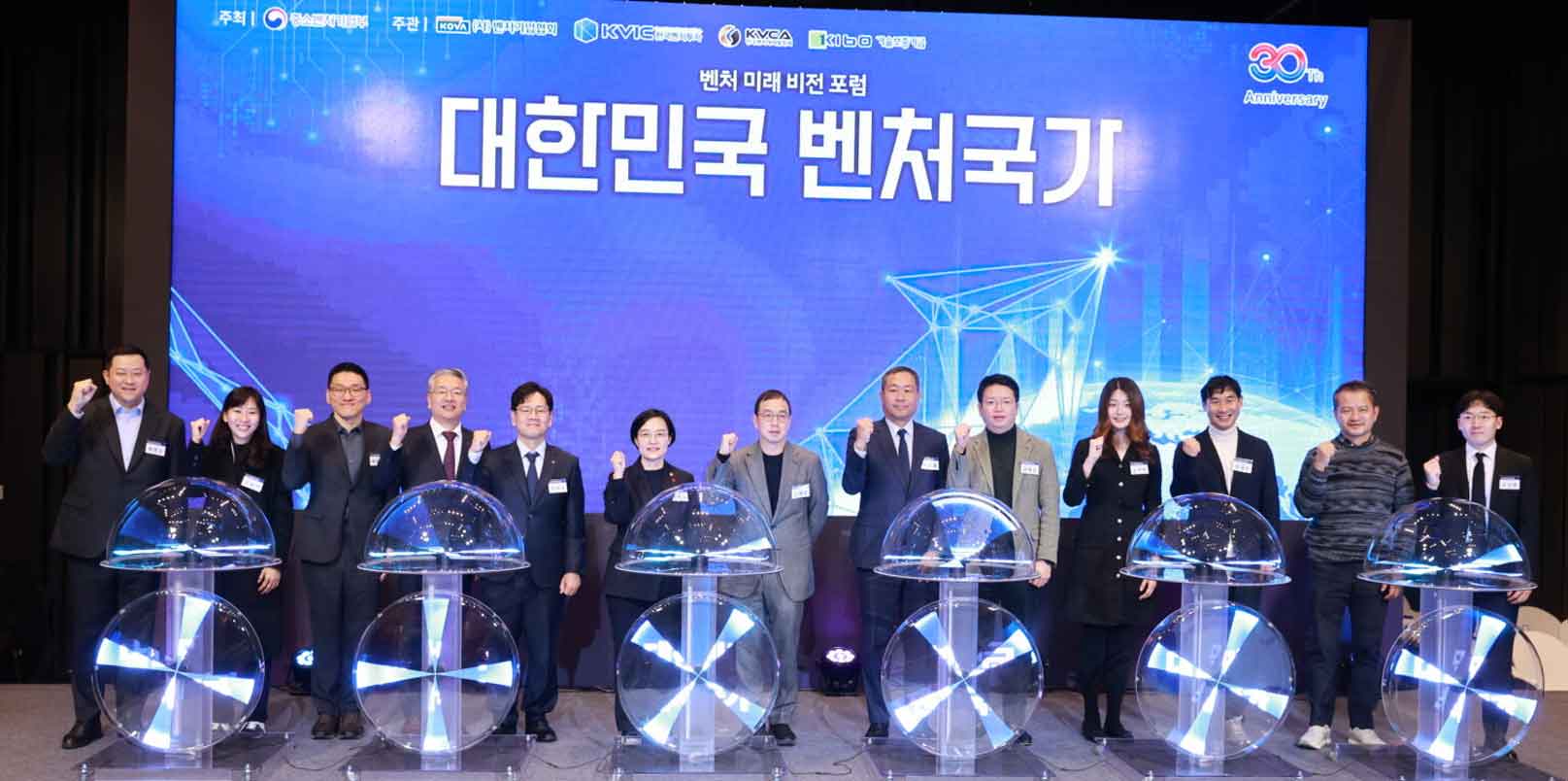
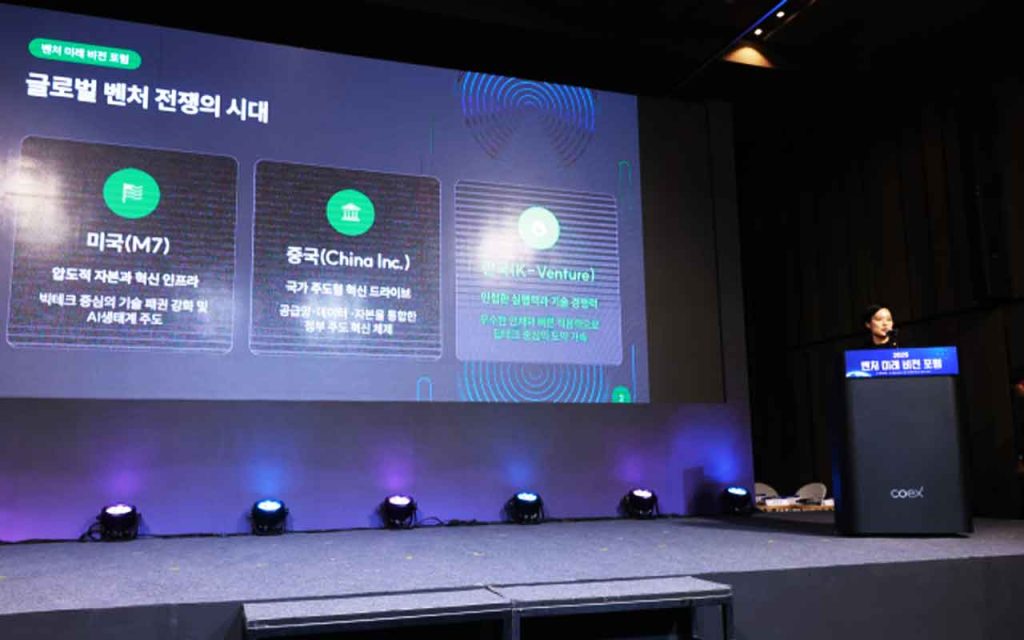
On December 11, the Ministry of SMEs and Startups (MSS) unveiled the 2030 K-Venture Blueprint during the Venture Future Vision Forum at COEX, Seoul.
The plan sets four key targets:
- Foster 10,000 AI and deep-tech startups across six strategic industries, including semiconductors, defense, and biotechnology.
- Develop 50 unicorns and decacorns as Korea’s next generation of K-Big Tech leaders.
- Expand the venture investment market to KRW 40 trillion (USD 30 billion) annually.
- Position Korea among the world’s top four venture nations by 2030.
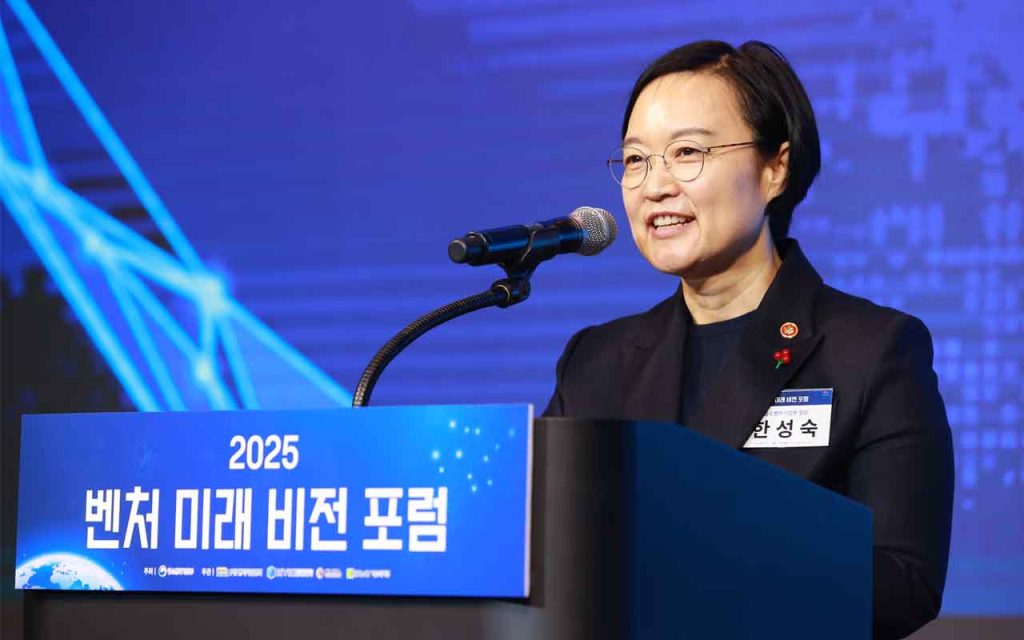
Minister Han Seong-sook stated,
“Korea’s venture ecosystem now stands at the threshold of global leadership. The AI expressway has been built; now we must grow the companies that will race ahead and define our future.”
Building the Infrastructure for Korea’s Next Unicorn Era with K-Venture Blueprint Programs
Central to the blueprint is the integration of AI infrastructure as national venture capital.
The government will allocate 50,000 GPUs to startups and launch the NEXT UNICORN Project, providing up to KRW 100 billion per company to accelerate scale-up toward global big-tech status.
In parallel, global venture campuses will open in Silicon Valley, Tokyo, Singapore, and London beginning in January 2026. These hubs will connect Korean startups to local accelerators, investors, and research partners, turning outbound expansion into structured, reciprocal collaboration.
Vice Prime Minister and Science and ICT Minister Bae Kyung-hoon added that one-third of the 260,000 GPUs secured by 2030 will go to SMEs and startups, reinforcing Korea’s goal of AI-driven industrial competitiveness, saying:
“As a graduate of KAVA’s second class, I know how vital venture capital is to national growth. Of the 260,000 GPUs the government will secure by 2030, one-third will go to SMEs and startups.”
Regional Expansion and a Safer Startup Environment
The blueprint also aims to spread innovation beyond Seoul. Ten regional startup cities will be designated nationwide, while the Regional Growth Fund expands to KRW 3.5 trillion.
Five additional Startup Parks will be built, creating ten regional innovation clusters across Korea.
To strengthen the safety net for founders, MSS will launch a Re-Challenge Support Center and expand the Re-Challenge Fund sevenfold by 2030. Beginning next year, joint liability exemptions will apply to all venture investment areas, reducing risk for early-stage entrepreneurs.
Talent, Governance, and Social Innovation as Growth Drivers
The plan also emphasizes human capital and inclusive innovation. A Silicon Valley-style stock compensation system allowing rapid board approval for stock options will be introduced to attract global talent. The Startup for All Project will nurture 1,000 new founders, while venture policy coverage expands beyond unicorns to post-growth companies.
Minister Han confirmed plans to legislate the Social Venture Act, defining social enterprises under global standards and increasing their share in government-backed programs such as TIPS and impact funds.
The minister pledged,
“Venture history has been written on technology, but it has always been powered by the spirit of challenge. We will translate that spirit into a strong foundation for Korean ventures to lead the global market.”
Toward a New Era of K-Big Tech and Global Capital Flows
Through the Fund of Funds 2.0 initiative, Korea will redesign its venture capital system to achieve a full investment-growth-exit-reinvestment cycle. New pension-linked “national accounts” will mobilize institutional capital, while global anchor funds are planned for Singapore and other key markets.
The government will also refine KOSDAQ’s tech-special listing standards, raise venture fund IPO allocation from 25 to 30 percent, and expand M&A guarantees and secondary funds.
Minister Han emphasized,
“No venture-born company currently ranks among Korea’s top ten by market capitalization. When startups finally reach that tier, our economy will have entered a new era. The government will spare no effort or resources to make it happen.”
The 2030 K-Venture Blueprint: What It Means for Global Investors
The 2030 K-Venture Blueprint consolidates Korea’s ongoing shift from short-term support toward policy-driven industrial transformation. By embedding AI infrastructure, venture capital reform, and global expansion into one coordinated framework, Korea is positioning itself as a strategic hub for Asia-Pacific innovation flow — connecting U.S., European, and Southeast Asian markets.
Meanwhile, for global investors, this roadmap signals that Korea’s venture globalization is entering its institutional phase. Cross-border funds, deep-tech pipelines, and startup-government partnerships are now structured under national policy, creating predictable frameworks for participation and co-investment.
Korea’s Venture Economy at a Turning Point
As the K-Venture Blueprint takes shape, Korea is redefining what it means to be an innovation-driven nation. The country that once relied on manufacturing giants is now engineering an ecosystem where startups, policy, and capital move in sync.
If successful, this transformation could make Korea not only a launchpad for global startups but a model for state-backed venture globalization — where technology, policy, and ambition converge to power the next generation of global growth.
– Stay Ahead in Korea’s Startup Scene –
Get real-time insights, funding updates, and policy shifts shaping Korea’s innovation ecosystem.
➡️ Follow KoreaTechDesk on LinkedIn, X (Twitter), Threads, Bluesky, Telegram, Facebook, and WhatsApp Channel.
🤝 Looking to connect with verified Korean companies building globally?
Explore curated company profiles and request direct introductions through beSUCCESS Connect.