
Korea’s startup ecosystem has taken a decisive step toward maturity. A new legal amendment has officially ended joint liability for startup founders, marking a structural shift in how entrepreneurial risk is managed. The reform not only protects innovators from personal financial ruin but also redefines how Korea fosters second-chance entrepreneurship in its emerging “Third Venture Boom.”
National Assembly Passes Landmark Venture Investment Law
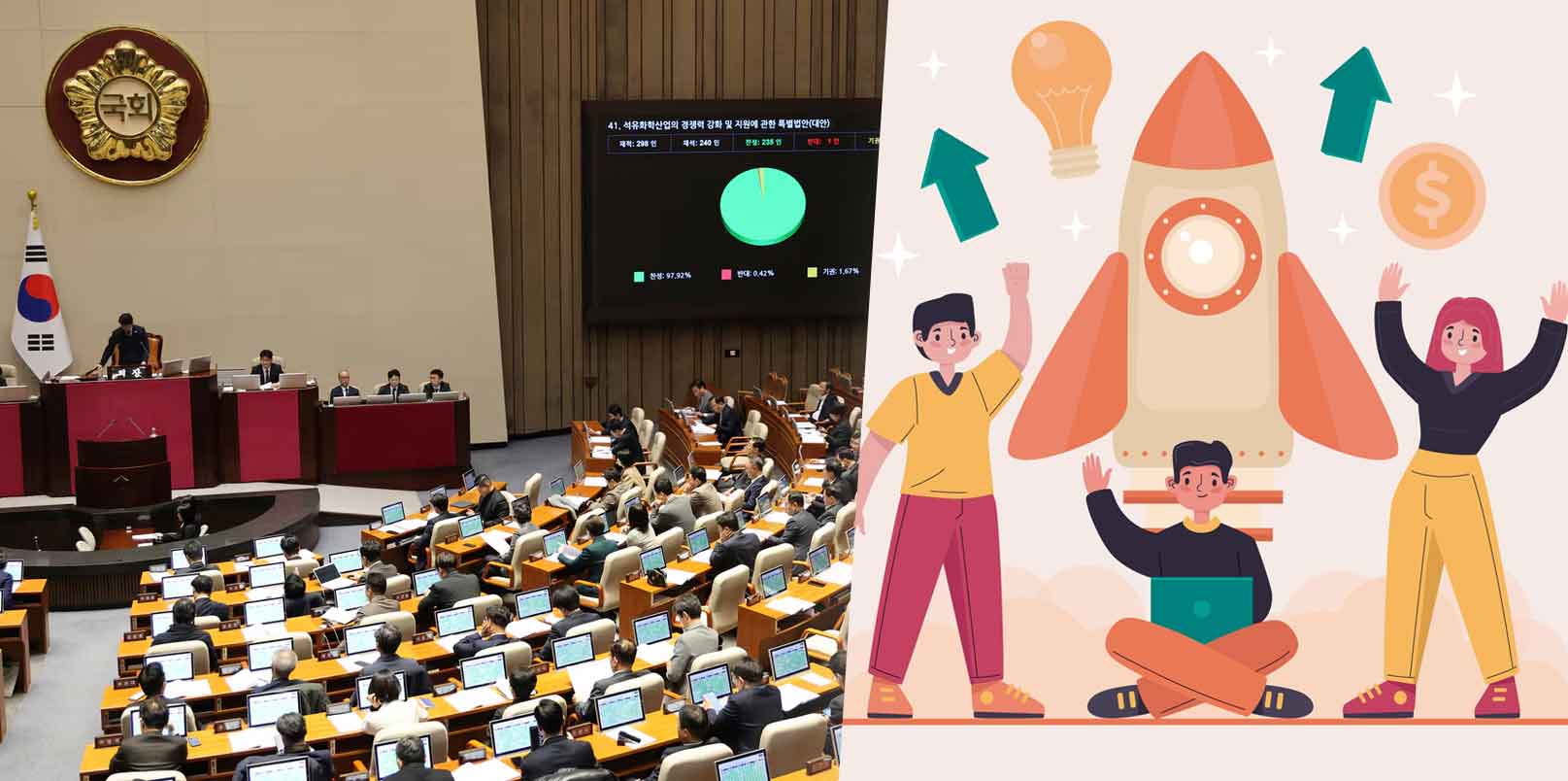
The National Assembly of Korea has passed the Amendment to the Act on the Promotion of Venture Investment, effectively banning joint liability clauses that held startup founders personally accountable for venture losses.
The legislation passed the plenary session on December 2, 2025, in what policymakers call a “critical safeguard for innovation.”
Under the new law, venture investment companies, venture investment associations, startup accelerators, and individual investment associations—whether operated by accelerators or private investors—are legally prohibited from demanding founders share repayment responsibilities when startups fail.
Previously, this rule existed only in administrative notices issued by the Ministry of SMEs and Startups (MSS). Its elevation to national law gives it full legal enforceability, closing long-standing loopholes that allowed private venture firms and financial institutions to include joint liability clauses in investment contracts.
Founder Joint Liability Ban: Ending a Decade of Informal Pressure on Founders
The reform builds on a decade-long policy movement to eliminate personal guarantees in Korea’s entrepreneurial ecosystem. Since 2014, financial companies have been barred from demanding joint guarantees, and by 2018, the same prohibition extended to government agencies such as the Korea SMEs and Startups Agency (KOSME) and the Korea Technology Finance Corporation (KIBO).
However, several private venture capital and investment firms had continued to exploit gray areas in investment contracts—framing repayment obligations as “founder accountability.” These clauses forced entrepreneurs to shoulder debts when ventures collapsed, undermining Korea’s ambition to normalize risk-taking and re-challenge culture.
The new amendment removes this structural disincentive. It ensures that investment losses remain with investors, not with founders who already risk personal careers and reputations in pursuing innovation.
A Foundation for Second Chances
The Korea Startup Forum (KOSPO), representing over 2,000 member companies, praised the law as a “decisive milestone for Korea’s startup renaissance.”
In a statement, the group noted,
“This legislation institutionalizes the idea that failure is not a crime but part of innovation. It establishes the foundation for a sustainable re-challenge ecosystem where founders can stand up again without the weight of personal liability.”
Government officials have echoed similar sentiment, framing the move as essential for encouraging private sector-led entrepreneurship. The Ministry of SMEs and Startups stated that this legal change aligns Korea’s startup governance closer to global venture capital norms, where founders’ personal finances are separate from corporate risk.
Trust, Risk, and Global Alignment
The passage of this law signals a turning point for Korea’s startup ecosystem. It moves the country toward a trust-based investment culture, long recognized as a prerequisite for sustainable innovation economies like those of the United States and Israel.
Removing personal liability shifts the perception of entrepreneurship from debt-bearing risk to value-creating opportunity. Investors are now incentivized to strengthen due diligence, governance, and portfolio risk diversification instead of relying on founders’ personal assets as collateral.
In the broader context of Korea’s Third Venture Boom, the law also redefines how the government and private sector share risk. By ensuring founders can fail without being financially destroyed, Korea is setting the stage for more experimental, high-impact innovation, particularly in deep tech, AI, and biotech, where uncertainty is inherent but potential rewards are transformative.
Founder Joint Liability Ends: A Legal Shift Toward a True Venture Nation
The end of joint liability is more than a regulatory milestone—it marks a cultural evolution in how Korea views entrepreneurship. It reinforces that innovation requires institutional trust as much as capital.
By protecting founders from punitive debt structures, Korea is not only aligning with global venture norms but also building the moral and structural backbone of a resilient innovation economy.
The further homework will be whether the country is ready to welcome new innovations as these founders pursue their second chance—even when such innovations challenge the interests of legacy industries, as seen in the DoctorNow Bill saga.
Additionally, as Korea’s founders continue to navigate the dual VC licensing system, they may still encounter joint and several liability clauses in agreements with venture firms licensed under the SFCA framework.
Together, these remain critical points of attention as Korea strives to position itself among the world’s top four venture powerhouses.
That is why the country’s next challenge lies in ensuring investors adapt to this new paradigm—where accountability, not fear, drives the next generation of Korean entrepreneurship.
– Stay Ahead in Korea’s Startup Scene –
Get real-time insights, funding updates, and policy shifts shaping Korea’s innovation ecosystem.
➡️ Follow KoreaTechDesk on LinkedIn, X (Twitter), Threads, Bluesky, Telegram, Facebook, and WhatsApp Channel.
🤝 Looking to connect with verified Korean companies building globally?
Explore curated company profiles and request direct introductions through beSUCCESS Connect.