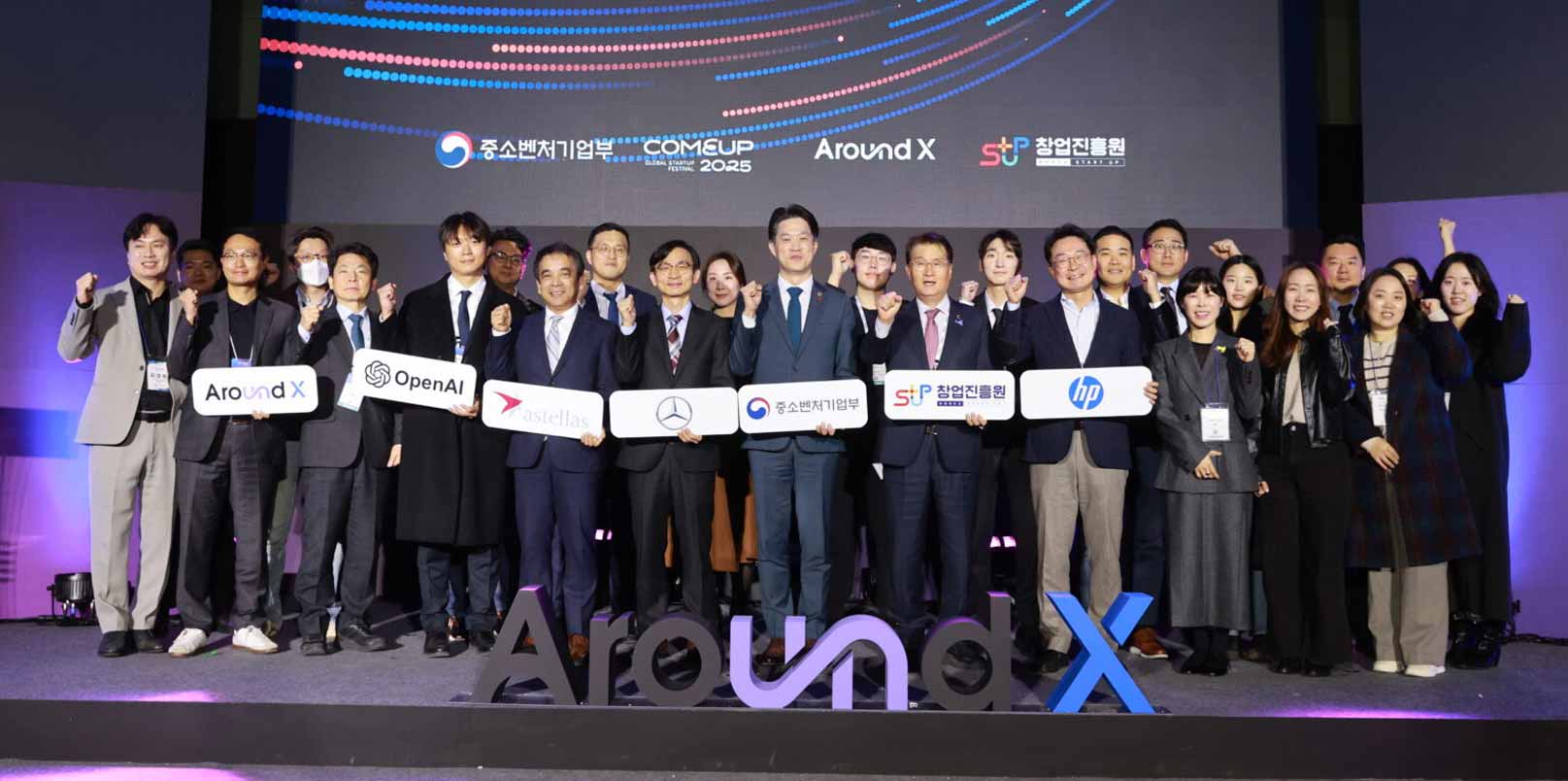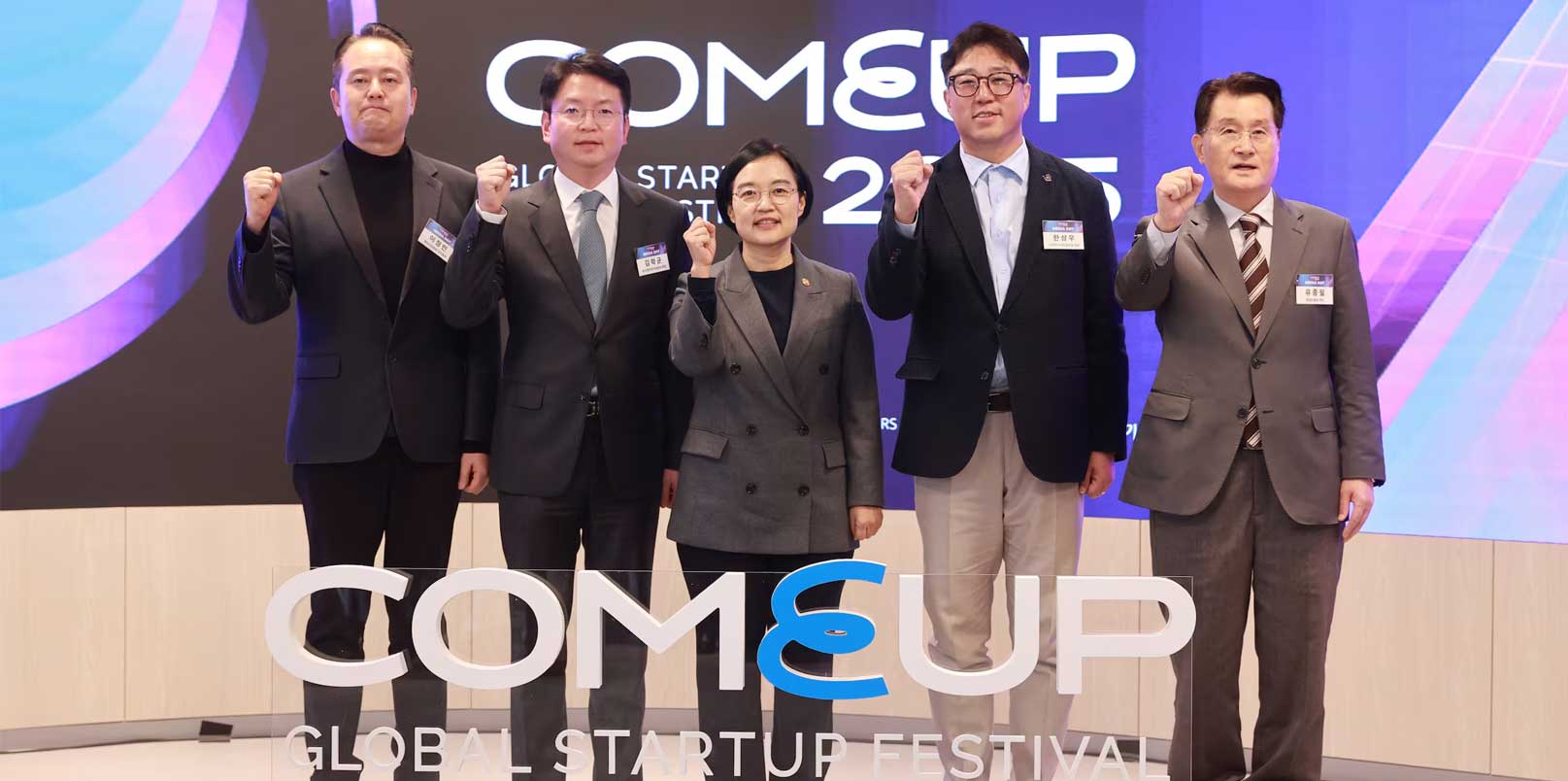
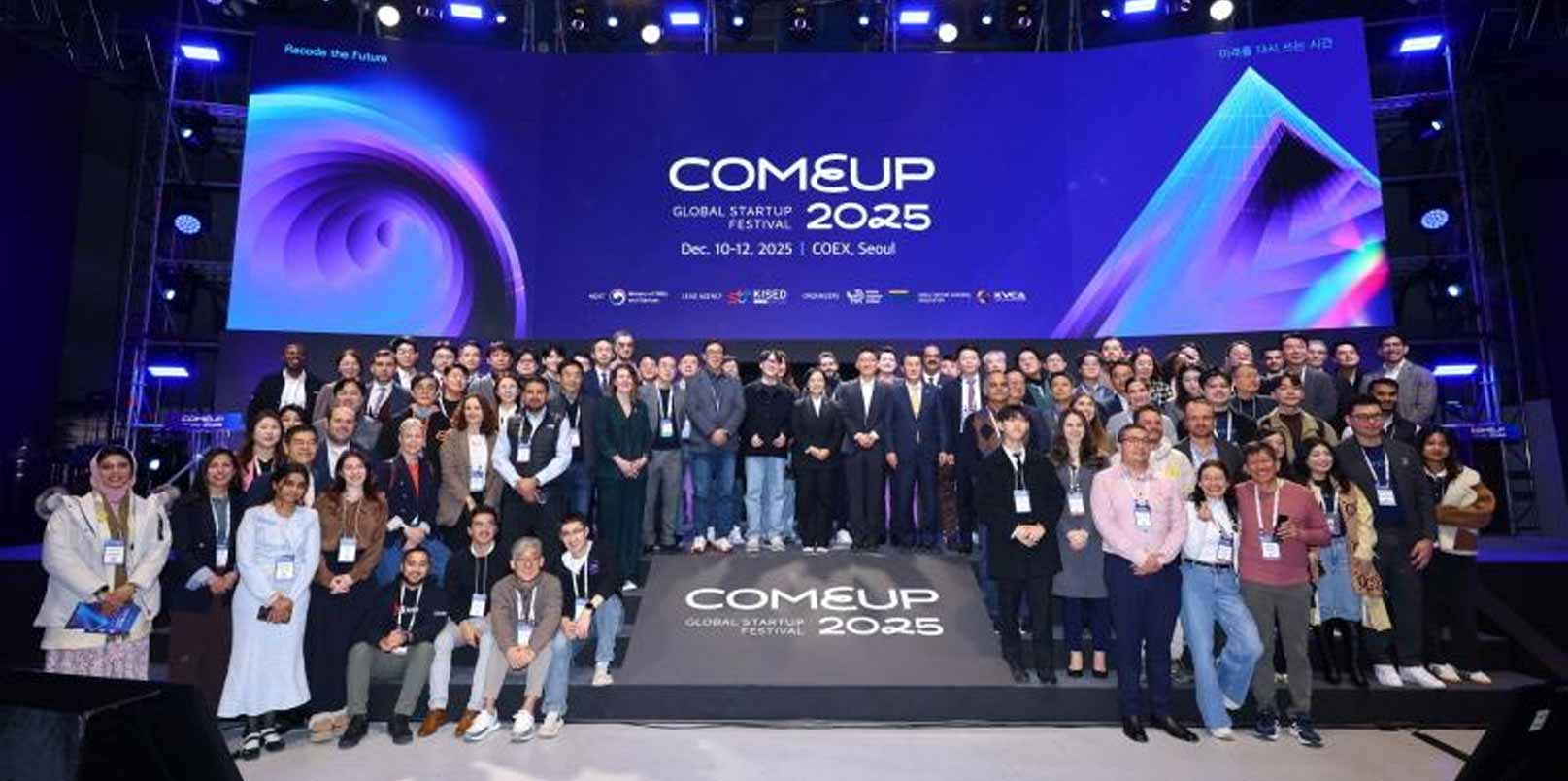
Korea’s startup festival COMEUP 2025 has reached a turning point. Once viewed as a showcase, it is now functioning as a real marketplace connecting global investors, founders, and policymakers. Over just two days, 2,800 business meetings confirmed how Korea’s venture landscape is maturing into a results-driven ecosystem — one that is moving beyond visibility toward measurable economic engagement.
COMEUP 2025 Records 2,800 Business Matches in Two Days
The Ministry of SMEs and Startups (MSS) announced that COMEUP 2025 generated more than 2,800 business matching cases, exceeding its original target of 2,000 in just two days. The figure includes startup-investor meetings and open-innovation consultations with major corporations, underscoring Korea’s new emphasis on deal-making and commercialization outcomes.
Minister Han Seong-sook wrote on Facebook that “COMEUP 2025 brought together domestic and international investors through both pre-scheduled and on-site sessions,” revealing that 1,567 investment consultations occurred on the first day alone.
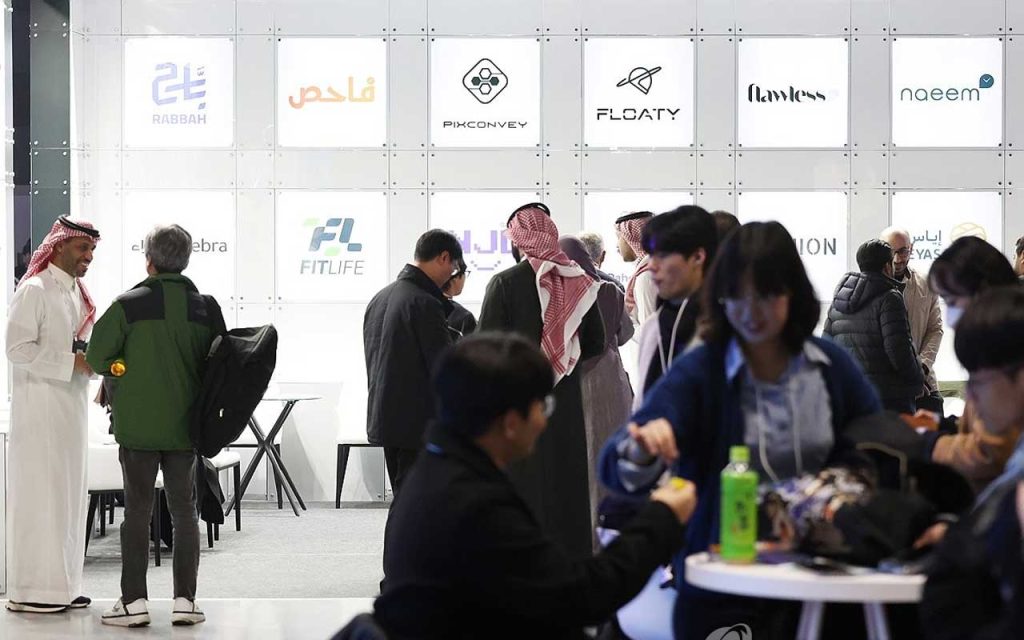
This year’s COMEUP hosted startups from 46 countries and 275 exhibitors across COEX Hall B, with seven national pavilions including Saudi Arabia and India. The turnout was strong: more than 14,000 pre-registered participants and 6,000 on-site attendees crowded the venue, turning it into one of the busiest innovation exchanges in Asia.
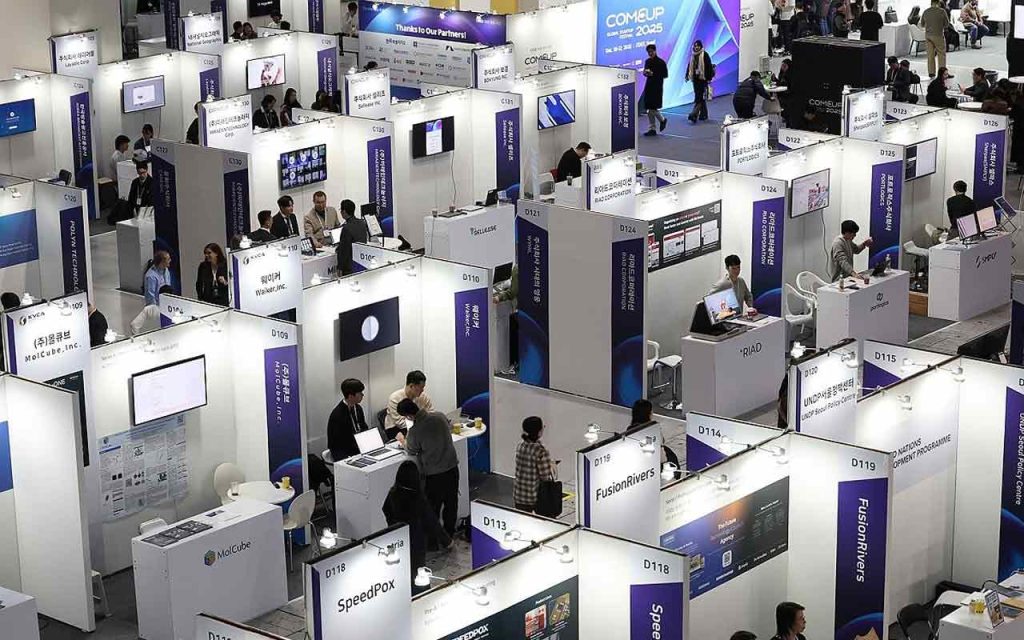
The atmosphere reflected this transformation. Investors and founders filled meeting zones, IR materials in hand, while the business-matching area remained fully booked. “We had more investor meetings than booth visitors,” one startup founder commented — a sentiment widely shared among exhibitors.
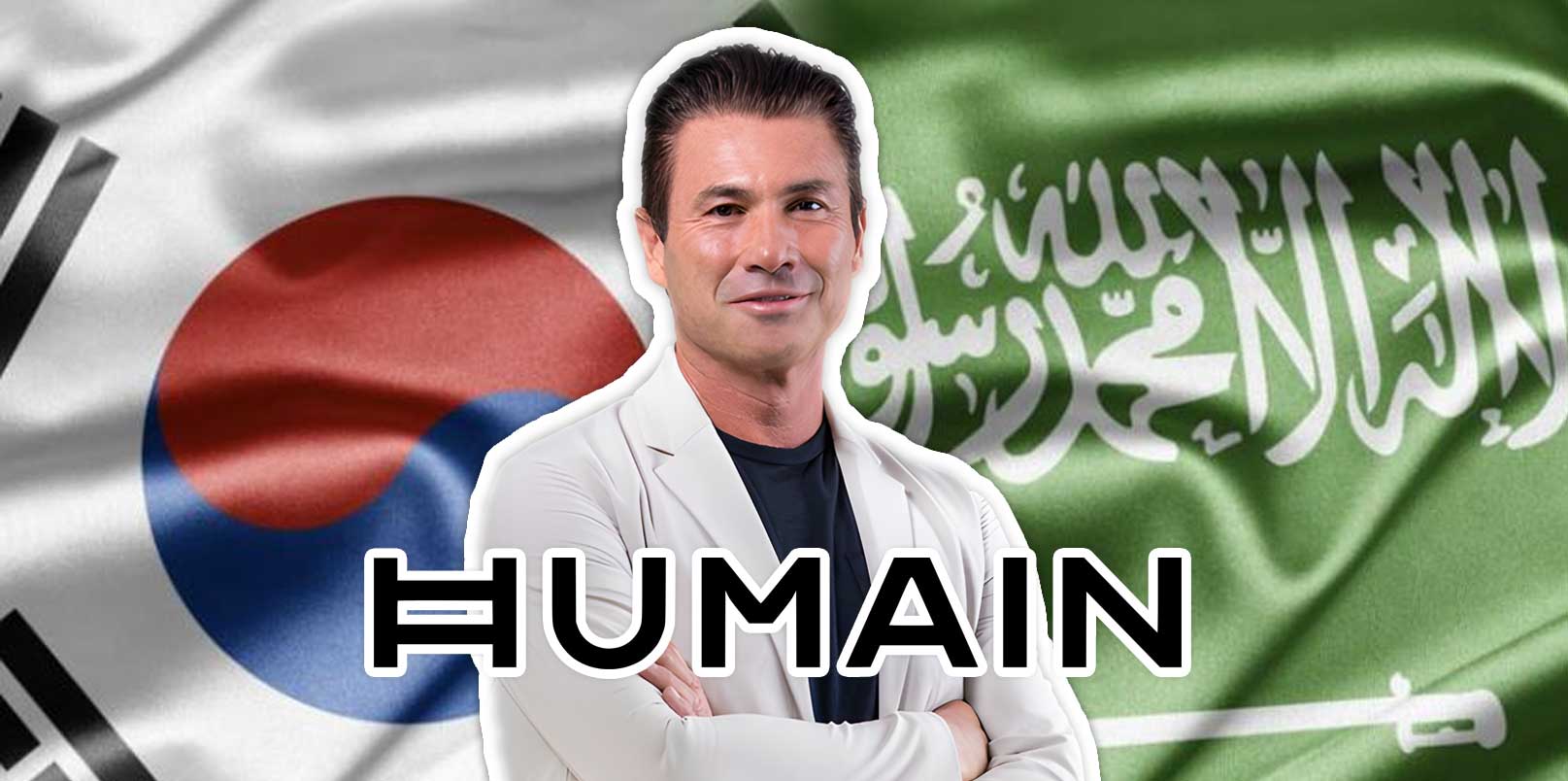
Saudi Arabia’s Tareq Amin, CEO of HUMAIN, a state-backed AI enterprise, opened the event with a keynote emphasizing that “AI is redefining national competitiveness,” signaling Korea’s growing visibility in global innovation diplomacy.
K-Venture Vision Unveiled: Beyond Unicorns, Toward Global Scale
A pivotal part of the event was the Venture Future Vision Forum, marking 30 years of Korea’s venture ecosystem and 20 years of the national Fund of Funds. Minister Han introduced the message “From Unicorns to K-Venture”, outlining a shift from startup creation toward scaling globally competitive technology companies.
The 2030 K-Venture Blueprint defines four major goals:
- Nurture 10,000 AI and deep-tech startups across six strategic industries including bio, defense, and semiconductors.
- Build 50 unicorn and decacorn companies.
- Expand annual venture investment volume to KRW 40 trillion.
- Position Korea among the world’s top four venture powerhouses by 2030.
Minister Han Seong-sook emphasized that the time has come to elevate startups to the core of Korea’s economic structure:
“Our venture ecosystem stands at the threshold of global leadership. The AI highway has been paved, and it is time to grow the companies that will drive our future.”
The policy framework combines AI infrastructure expansion — including large-scale GPU allocations — with the creation of regional startup hubs, stock-option reforms, and circular venture-capital mechanisms designed to ensure sustained funding and growth.

Re-Challenge Center Launches to Strengthen the Recovery Pipeline
The Re-Challenge Support Center, officially launched during COMEUP’s second day, adds a new dimension to Korea’s venture ecosystem. The center will connect re-founders, partner institutions, and investors under a coordinated system that supports entrepreneurs re-entering the market after failure.
The initiative extends beyond financing, integrating consulting, credit guarantees, sales channels, and investment pipelines. With venture funding conditions tightening globally, the program signals Korea’s intent to institutionalize “failure recovery” as part of ecosystem sustainability rather than treating it as a setback.
Beginning in 2026, the center will organize nationwide Failure Concerts, Regional Startup Festivals, Re-Challenge IR events, and Entrepreneurship Policy Forums. The government also plans to provide KRW 200 billion in restructuring funds for companies showing early distress and shorten the re-startup restriction period from three years to one.
A KRW 1 trillion Re-Challenge Fund will be established within five years, with KRW 100 billion allocated next year to back recovery-stage entrepreneurs. Starting in 2026, the exemption from joint liability will extend across all venture investment areas.
COMEUP 2025: From Showcase to Strategic Engine
COMEUP 2025’s success reflects a structural shift in Korea’s startup policy. It demonstrates that ecosystem building is no longer confined to promotion or awareness — it is being measured by capital flow, investment outcomes, and re-entry opportunities for entrepreneurs.
By pairing global investors with early-stage innovators and linking recovery programs to policy reform, the festival now functions as a real-time laboratory for Korea’s next-generation venture model. The inclusion of AI-driven enterprises, cross-border pavilions, and deep-tech verticals highlights how Korea’s ecosystem is evolving toward interconnected global competitiveness.
Meanwhile, for policymakers and investors, COMEUP 2025 stands as evidence that Korea’s startup scene is entering a phase where policy ambition, global integration, and measurable performance intersect — redefining what it means to host a “startup festival” in Asia’s most dynamic innovation hub.
The Pivot from Spectacle to Substance
COMEUP 2025’s distinct evolution from a showcase into a transactional marketplace signals a critical inflection point: Korea’s venture economy has graduated from hype to execution.
As deep-tech founders, global investors, and returning entrepreneurs converge under one policy framework, the country’s innovation infrastructure is solidifying its position within the Asia-Pacific startup corridor.
And the metrics underscore this maturity. Because generating 2,800 confirmed business matches in just 48 hours represents more than mere volume; it is proof of a cultural and structural maturity within Korea’s startup ecosystem that has successfully moved beyond aspirational networking to structural, capital-backed growth.
As COMEUP continues to evolve, the annual gathering is set to deepen its role as a driving force behind Korea’s innovation agenda, expanding its impact across global investment networks and the broader Asia-Pacific startup landscape.
– Stay Ahead in Korea’s Startup Scene –
Get real-time insights, funding updates, and policy shifts shaping Korea’s innovation ecosystem.
➡️ Follow KoreaTechDesk on LinkedIn, X (Twitter), Threads, Bluesky, Telegram, Facebook, and WhatsApp Channel.
🤝 Looking to connect with verified Korean companies building globally?
Explore curated company profiles and request direct introductions through beSUCCESS Connect.