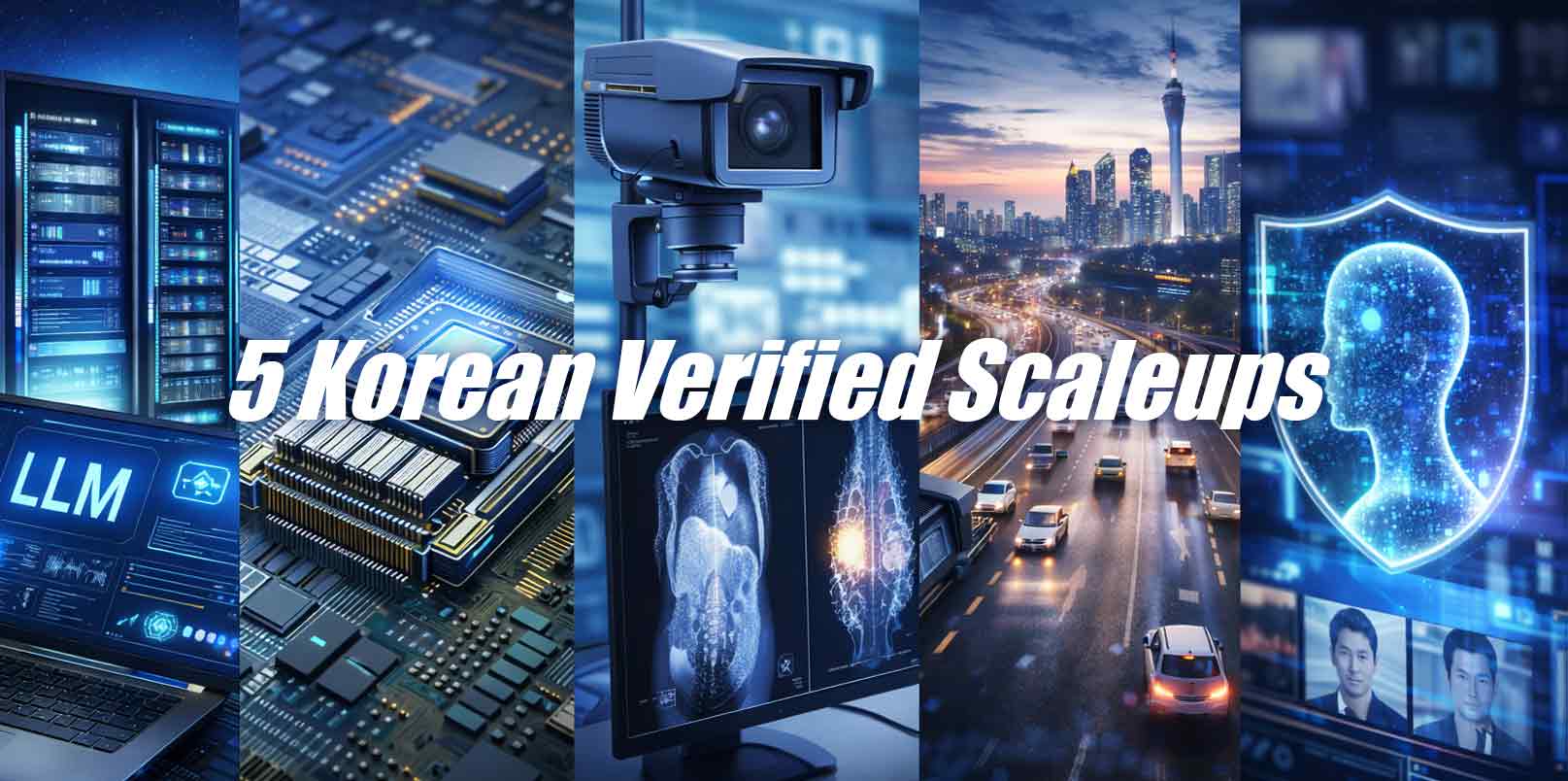
Seoul now ranks as the world’s second most powerful AI city, according to Counterpoint Research’s 2025 AI Cities Index, just behind Singapore. Over the past four years, the capital’s startup ecosystem has grown from roughly USD 40 billion to USD 237 billion in value, based on Startup Genome data.
At the same time, Andreessen Horowitz opened a Seoul office in December 2025. And OpenAI launched OpenAI Korea months earlier, citing a sharp rise in domestic adoption.
But capital arrival is not the real story.
The deeper shift came in January 2026, when South Korea’s AI Basic Act took effect. The law requires labeling of AI-generated content, mandates risk assessments for high-impact systems such as medical diagnostics and financial decision tools, and introduces safety documentation requirements for powerful models.
Startups have voiced concern about compliance readiness. Civil society groups argue the framework leaves gaps. And the tension is critical and real.
Yet for companies operating in healthcare, semiconductors, transport infrastructure, and enterprise systems, regulatory clarity can function as a signal rather than a barrier. The question now is whether Korea’s AI governance experiment strengthens global trust or slows execution.
Because beyond the stage, five Korean AI companies offer early evidence that export traction is already underway.
Why Seoul’s AI Ecosystem Is Moving from Hype to Execution
South Korea’s government has framed the AI Basic Act as “trust-based promotion and regulation.” The Guardian described it as one of the most comprehensive AI laws to enter enforcement, even as startups voiced concerns about compliance readiness.
Nearly all AI startups surveyed by Startup Alliance in late 2025 reported they were unprepared for the new framework. That gap between ambition and execution remains real.
Yet the companies scaling abroad are not waiting for perfect clarity. They are building within the framework and, in some cases, using it to signal credibility in overseas markets where regulatory scrutiny is tightening.
The pattern emerging is not consumer app experimentation. It is enterprise deployment across regulated sectors: healthcare, semiconductors, transport infrastructure, financial services, and media integrity. And that distinction matters for global investors and corporate partners evaluating Korean AI beyond the headlines.
Below are five Korean companies whose global expansion now sits at the intersection of deployment and compliance. Each maintains a verified profile on beSUCCESS Connect, a platform that allows global investors, enterprise buyers, and partners to request direct introductions.
1. Upstage: Enterprise LLMs Expanding Into U.S. Insurance and Document AI
Enterprise AI firm Upstage has raised a total of USD 157 million, including a USD 45 million Series B bridge round, backed by Korea Development Bank, Amazon, and AMD.
The company focuses on enterprise language models and document AI. Its Solar model line is designed for corporate environments rather than general-purpose consumer use. Upstage reports growing adoption in the U.S. insurance sector and works with large enterprises including Samsung and Korean insurers.
Its strategy reflects a deliberate choice: instead of competing in open-ended foundation model hype cycles, it is targeting structured document-heavy industries where AI automation can reduce operational costs.
Upstage is also working with Amazon Web Services to build and deploy its models using AWS infrastructure. That technical alignment is not mere cosmetic. Because for enterprise buyers abroad, infrastructure compatibility reduces integration risk.
Direct connection to Upstage and demo requests are available for global founders and investors via beSUCCESS Connect:

2. Rebellions: Building AI Inference Chips Beyond the GPU Default
Korea’s AI semiconductor push often centers on memory giants like SK Hynix. Yet, Rebellions represents a different layer: AI inference accelerators optimized for large language models.
The company’s first-generation ATOM chip has seen commercial deployment since 2024, including expansion into Saudi Arabia, Japan, and the United States. In August 2025, Rebellions unveiled REBEL-Quad at the Hot Chips Symposium in Palo Alto, highlighting its chiplet architecture, HBM3E integration, and focus on performance per watt.
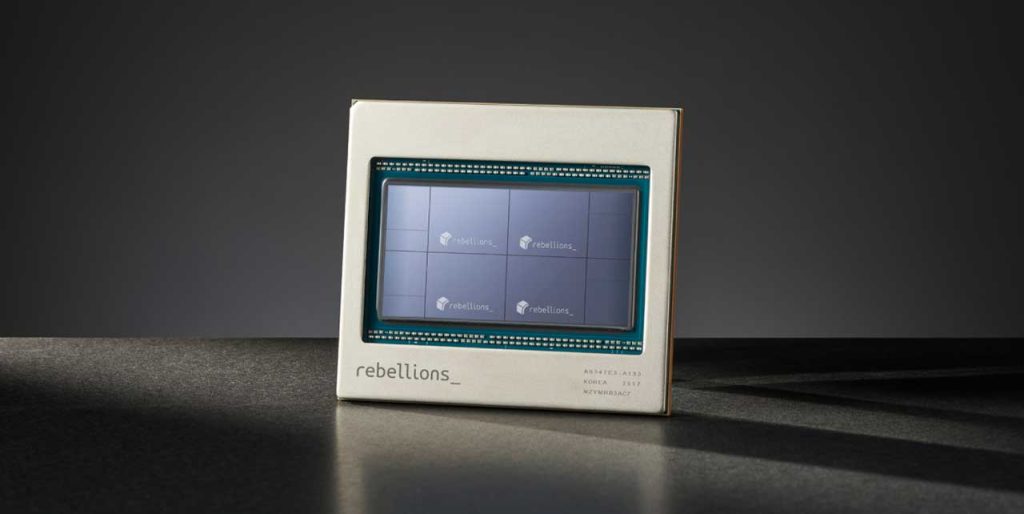
Its positioning is explicit. CEO Sunghyun Park has argued that AI cannot scale on GPUs alone and that energy efficiency must become central to infrastructure strategy.
Rebellions is backed by SK Telecom, SK Hynix, KT, Samsung Ventures, and Aramco’s Wa’ed Ventures. That investor base underscores another tension: Korea wants semiconductor independence, yet global expansion requires tight collaboration with overseas partners and hyperscalers.
After all, as sovereign AI initiatives gain traction in regions such as the Middle East, inference specialization becomes geopolitically relevant.
Rebellions direct connection and demo requests are available via beSUCCESS Connect:

3. Lunit: Medical AI Scaling Under FDA and Global Clinical Standards
If regulation is a constraint, Lunit shows how it can also be an entry ticket.
The KOSDAQ-listed medical AI company reported KRW 56.65 billion in cumulative Q3 2025 revenue, a 66% year-on-year increase. Its solutions are deployed across 10,000 medical institutions in 65 countries.
Lunit INSIGHT Risk received FDA Breakthrough Device designation in April 2025, and the company filed a 510(k) premarket notification in December 2025 for its breast cancer risk prediction solution. Some of its products are FDA-cleared and CE-marked under EU MDR.
And yet the difference here is material. Healthcare AI cannot rely on rapid iteration alone. It must pass through layered regulatory gates in the U.S., Europe, and the Middle East. Lunit’s partnerships with Labcorp in the U.S. and healthcare entities in the UAE indicate that Korean medical AI is no longer limited to pilot programs.
And so, for global hospital networks and institutional investors today, regulatory navigation capability may matter more than model performance claims.
Direct connection and demo requests to Lunit are available via beSUCCESS Connect:

4. Nota AI: Edge Optimization and On-Device AI in the Middle East
Nota AI operates in a quieter but critical layer of the stack: model optimization and on-device deployment.
In April 2025, the company signed a contract with Dubai’s Road and Transport Authority to supply intelligent transportation system solutions powered by its Nota Vision Agents suite. The deal marked one of the first Korean commercialization of on-device AI in the Middle East.
Nota’s flagship platform, NetsPresso, automates model compression techniques such as pruning and quantization, enabling AI systems to run efficiently on edge devices. Its customer and partner ecosystem includes NVIDIA, Samsung Electronics, Qualcomm, Sony, and Renesas.
The company listed on KOSDAQ in November 2025 at an estimated valuation of approximately KRW 640 billion. Its trajectory reflects a broader structural shift: as AI models grow larger, optimization and energy efficiency become business imperatives, not academic exercises.
Edge AI in transport, mobility, and industrial systems require hardware-software alignment across jurisdictions. That operational complexity is not easily replicated.
Direct connection and demo requests to Nota AI are available via beSUCCESS Connect:

5. DeepBrain AI: Generative Video and AI Detection Under Compliance Pressure
Generative AI companies often face the sharpest regulatory scrutiny. DeepBrain AI operates at that intersection.
The company’s AI Studios platform enables text-to-video production using AI avatars and multilingual voice synthesis. The company’s multiple services have been recognized at CES Innovation Awards in consecutive years from 2022 – 2024.
Beyond content generation, DeepBrain AI has developed AI Detector in collaboration with AWS. The solution is deployed on AWS infrastructure and has been used by the Korean National Police Agency to support investigations into manipulated or synthetic media. According to AWS partner materials, deployments achieved over 80% accuracy in distinguishing real and synthetic content during investigations.
The introduction of Korea’s AI Basic Act, which requires labeling of AI-generated content and risk documentation for high-impact systems, increases pressure on generative AI providers to demonstrate compliance and detection capability.
In this context, generation and detection become two sides of the same export equation.
DeepBrain AI’s company profile and direct introduction requests are available via beSUCCESS Connect:

The Structural Pattern: Retail-Ready AI Under Regulatory Friction
Now, what has actually linked these companies is not sector, but the deployment posture.
These five Korean next-gen AI giants are not merely selling abstract models. Instead, they are directly integrating into hospitals, transport authorities, data centers, insurance workflows, and law enforcement systems.
That “retail-ready” positioning creates both opportunity and strain. Korea’s AI Basic Act adds compliance overhead. Surveys suggest many startups feel unprepared. Civil society groups argue the law does not go far enough in protecting citizens.
And that tension is still unresolved.
However, for global partners evaluating Korean AI, a functioning regulatory baseline can reduce due diligence risk. Companies that can document model governance, labeling processes, and risk assessment protocols may find smoother entry into enterprise contracts abroad.
Policy ambition alone does not export technology. Execution under scrutiny does.
For Global Investors and Buyers: Where Korea’s AI Expansion Is Headed
Finally, Korea’s rise in global AI rankings and the arrival of major venture firms signal external validation. But ecosystem maturity is measured less by capital inflows and more by cross-border contracts, regulatory clearances, and sustained revenue growth.
These five companies are only a small slice of Korea’s AI landscape. What they do reveal, however, is a clear direction: Korean AI is increasingly built for enterprise deployment in sectors where compliance, documentation, and regulatory approval are not optional.
Investors are no longer looking at an experimental playground. The signal coming out of Seoul points to a market that has moved into operational scale.
Corporate buyers, meanwhile, are seeing systems that can be integrated into hospitals, data centers, insurance workflows, and transport networks, not just tested in controlled pilots.
At the policy level, the implications are sharper. Once regulation becomes part of the value proposition, miscalibration carries consequences.
Move too fast and you risk stifling execution. Move too slow and global trust erodes.
Connect With Verified Korean AI Companies with beSUCCESS Connect
It’s easy to name the big giant players like Samsung and Naver. But it’s so much harder to map the mid-size companies that are already exporting. That is where beSUCCESS Connect can be useful, especially for global founders, investors, and enterprise teams looking for a starting shortlist.
If you want a curated directory of Korean companies building across AI models, chips, medical AI, edge deployment, and enterprise tooling, beSUCCESS Connect currently lists more than 30 verified Korean brands across AI and technology sectors, offering a structured entry point for introductions and due diligence.

For international decision-makers seeking vetted Korean AI companies beyond conglomerate names, that verification layer reduces discovery friction.
Explore verified Korean AI companies and request introductions:

🤝 Looking to connect with verified Korean companies building globally?
Explore curated company profiles and request direct introductions through beSUCCESS Connect.
– Stay Ahead in Korea’s Startup Scene –
Get real-time insights, funding updates, and policy shifts shaping Korea’s innovation ecosystem.
➡️ Follow KoreaTechDesk on LinkedIn, X (Twitter), Threads, Bluesky, Telegram, Facebook, and WhatsApp Channel.