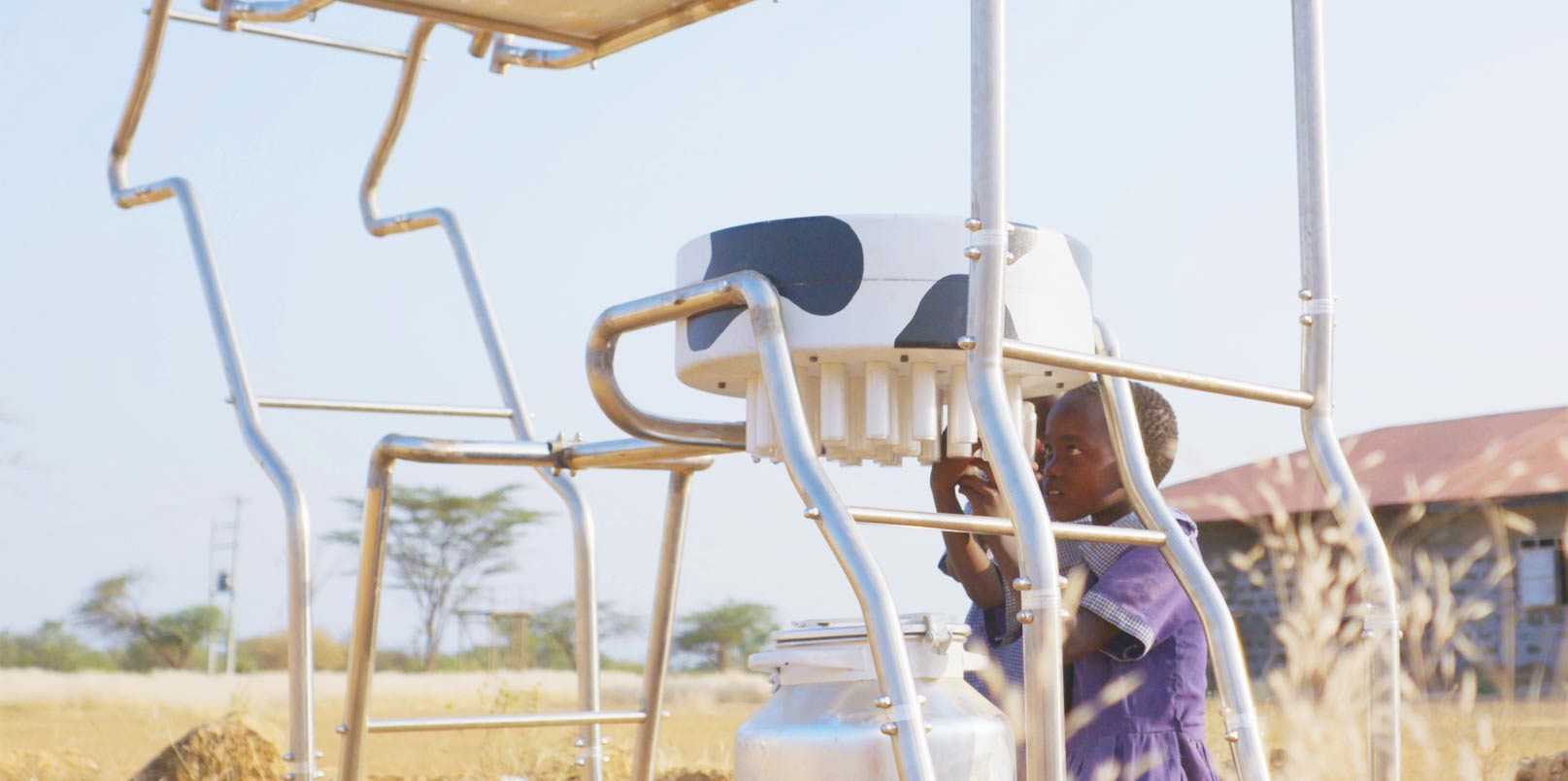
A solar system that increases school attendance sounds like a product success story. In practice, it becomes a test of how systems behave after deployment. The Solar Cow field experience shows that scaling off-grid energy solutions is less about technology performance and more about how local actors use, adapt, or reshape them. For global startups, this distinction defines whether impact can extend beyond pilot environments.
When Solar Cow Technology Meets Reality, Systems Are Tested by People
In global discussions around off-grid energy, the conversation often begins with infrastructure and technology. Solar panels, storage systems, and distribution models dominate the narrative. Yet once deployed, these systems enter environments shaped less by engineering and more by human behavior, local authority, and social norms.
This distinction becomes visible in the case of Solar Cow, developed by Korea-based startup YOLK.
The system has been recognized globally, including selection in TIME’s Best Inventions and international design awards. Field deployments across Tanzania, Kenya, and the Democratic Republic of Congo have also demonstrated that the model can influence school attendance by linking it with household energy access.
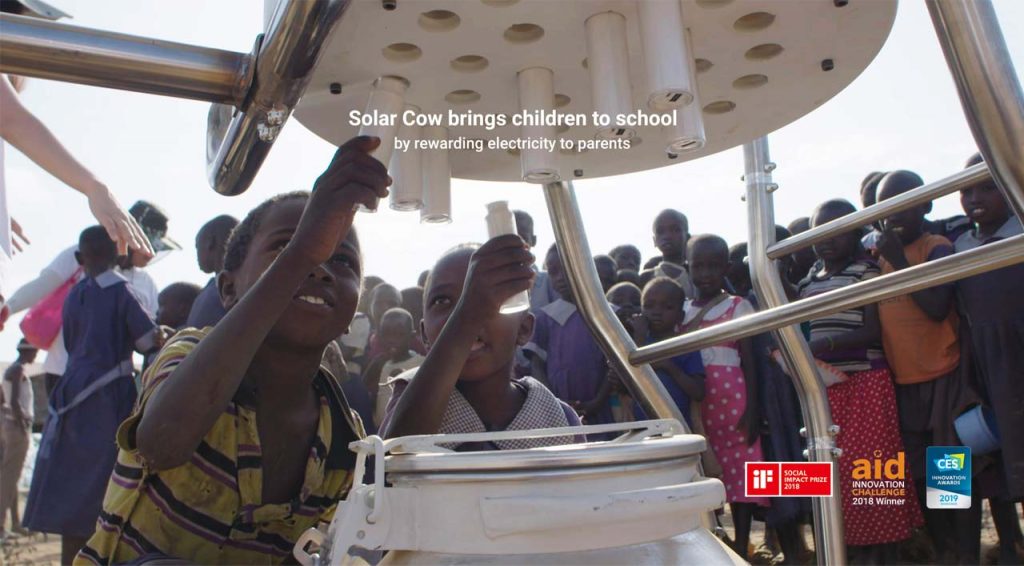
However, as implementation expands beyond controlled environments, a different reality emerges. The system’s performance is no longer determined by design alone. It is shaped by how local communities engage with it, how authority is exercised within schools, and how cultural context interacts with product features.
Local Governance Determines Whether Systems Hold or Break
Solar Cow is installed within schools, positioning teachers and school staff as key operators of the system. This creates a dependency that is rarely visible in product design, but critical in execution.
As discussion on Solar Cow technology and implementation continues, Sena (Sung-Un) Chang, founder of YOLK, described one such case observed during field deployment:
“In one case, a teacher relocated the Solar Cow to his home, prioritizing personal electricity use over its intended role within the school.”
This was not framed internally as an isolated failure, but as a signal. It revealed that once deployed, the system operates within existing local governance structures. Authority over infrastructure does not remain with the developer. It shifts to individuals on the ground.
In practical terms, this means that scaling a school-based energy system requires more than technical replication. It requires alignment with local incentives and accountability mechanisms. Without that alignment, even a well-designed system can be redirected away from its intended purpose.
Community Alignment Defines Impact Variability
Field results from Solar Cow deployments show that outcomes are not uniform across locations. Instead, they vary depending on the level of engagement from teachers, parents, and local stakeholders.
Chang explained that in certain communities, especially in Kibera, Kenya, strong participation from school staff contributed to more consistent results:
“In communities where teachers and parents were highly engaged, we observed stronger participation from students and more consistent educational outcomes.”
These observations align with broader development research. According to the United Nations Development Programme, local ownership and participation are central to the success of community-level initiatives. Systems introduced without sustained engagement often fail to maintain long-term impact.
Solar Cow operates within this reality. The technology introduces an incentive, but the outcome depends on whether the surrounding community reinforces or weakens that incentive over time.

Cultural Context Can Reshape Product Design
Beyond governance and engagement, Solar Cow’s deployment has also highlighted how cultural context can influence product acceptance in ways that are not immediately visible during design.
In Zanzibar, where the majority of the population follows Islamic practices, a feature embedded within the Solar Milk device created unexpected friction.
Chang noted:
“We encountered situations where certain features, such as access to music, were not aligned with local cultural expectations, and this required us to rethink aspects of our design.”
The issue did not prevent adoption, but it introduced resistance. It revealed that even secondary features can carry assumptions about user behavior that do not hold across regions.
For startups entering global markets, this becomes a critical lesson. Product design is not neutral. It reflects assumptions about daily life, preferences, and norms. When those assumptions do not align with local context, adoption becomes conditional rather than seamless.
Measuring Impact Remains Structurally Difficult
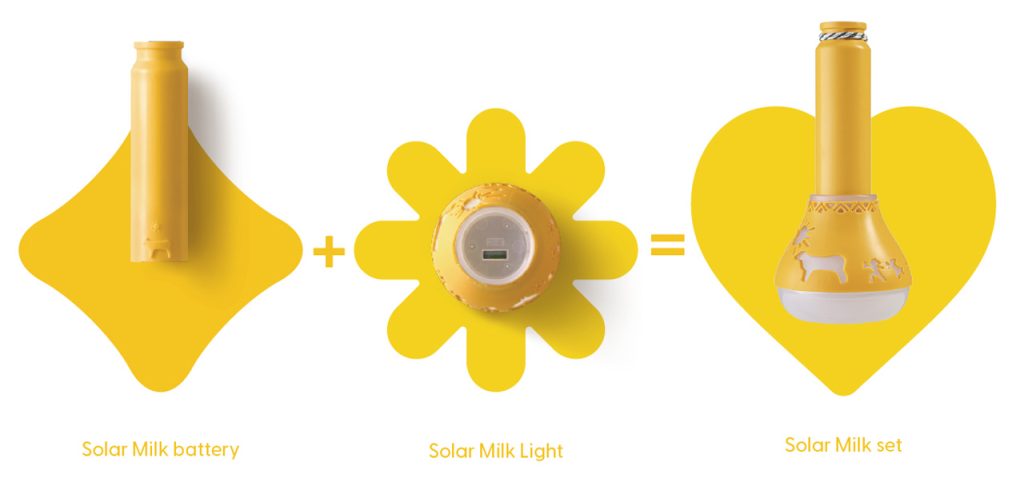
Solar Cow incorporates a data mechanism through its Solar Milk batteries, recording each charging event as a proxy for school attendance. This approach provides visibility into usage patterns and offers a measurable signal of engagement.
Each battery is assigned a unique identifier, and charging activity is logged as an indicator that a student has attended school. This allows stakeholders to track participation at an individual level.
At the same time, translating these signals into long-term impact remains challenging.
Chang acknowledged this limitation directly:
“Tracking long-term outcomes in a consistent and systematic way remains difficult due to the realities of operating in these environments.”
This constraint is not unique to Solar Cow. The OECD notes that impact measurement in social and community-based projects often faces structural barriers, especially in regions with limited infrastructure and data systems.
This means that while proxy indicators such as attendance or device usage provide insight into behavior, they do not fully capture educational outcomes, retention, or long-term socio-economic change.
Field Evidence Aligns with Broader Off-Grid Energy Research
Independent research reinforces the patterns observed in Solar Cow’s deployments.
A World Bank study on solar lighting interventions found that access to solar energy increased study time and reduced reliance on kerosene. However, the same study observed that improvements in school attendance were not always sustained over time and did not consistently translate into measurable academic gains.
At a structural level, the International Energy Agency estimates that around 600 million people in Africa still lack access to electricity. This scale highlights both the opportunity and the complexity of off-grid solutions.
The challenge extends beyond delivering access. Long-term outcomes depend on whether behavioral change can be sustained and institutional alignment maintained over time.
What This Means for Korean Startups Expanding Globally
Solar Cow reflects a broader shift in how Korean startups are approaching international markets. Traditionally associated with product-driven innovation, Korean companies are increasingly engaging with system-level challenges in emerging markets.
In this context, Solar Cow offers a practical case study.
The system demonstrates that:
- Product design can influence behavior in constrained environments
- Field deployment reveals gaps that cannot be anticipated in development stages
- Scaling depends on factors outside the control of the original developer
For startups targeting regions such as Africa or Southeast Asia, these insights carry direct implications.
Entering these markets requires more than technical capability. It requires understanding how local institutions operate, how authority is distributed, and how cultural context shapes user behavior.
Without this layer, product success in pilot environments does not translate into scalable systems.
Solar Cow: Expanding Through Continuous Field Learning
Solar Cow’s deployments across Tanzania, Kenya, and the Democratic Republic of Congo represent a growing operational footprint in diverse local contexts. Each implementation has contributed to a deeper understanding of how the system performs under real-world conditions.
What distinguishes the project is not only its design, but its ongoing adaptation based on field experience. YOLK continues to refine both the technical and operational aspects of Solar Cow as new insights emerge from communities on the ground.
This progression reflects a broader reality in scaling social technology. Expansion is not a fixed rollout, but a process shaped by continuous learning across hardware, operations, and community engagement.
And eventually, Solar Cow’s development illustrates how impact-driven systems evolve over time, with scalability increasingly tied to how effectively local environments and stakeholders can support and sustain the model.

Key Takeaway
- Solar Cow demonstrates that social technology can influence behavior, but outcomes depend on local participation and trust
- Governance at the point of deployment becomes a critical variable, with schools and local actors shaping how systems are used
- Community alignment determines consistency of impact, not just technology availability
- Cultural context can directly affect product adoption, requiring ongoing design adaptation
- Impact measurement remains limited by field conditions, with proxy data not fully capturing long-term outcomes
- For global expansion, Korean startups must design for human systems, not just product performance
– Stay Ahead in Korea’s Startup Scene –
Get real-time insights, funding updates, and policy shifts shaping Korea’s innovation ecosystem.
➡️ Follow KoreaTechDesk on LinkedIn, X (Twitter), Threads, Bluesky, Telegram, Facebook, and WhatsApp Channel.
🤝 Looking to connect with verified Korean companies building globally?
Explore curated company profiles and request direct introductions through beSUCCESS Connect.