Artificial intelligence is moving deeper into telecommunications infrastructure, where reliability and safety requirements are far stricter than in consumer software. A new global initiative led by the GSMA is now attempting to formalize how AI systems should be tested before entering telecom networks. South Korean startup Selectstar has joined that effort as the only startup participant from Korea, placing the company inside a global push to define telecom-specific AI benchmarking and validation practices.
GSMA Launches Global Alliance to Build Telecom-Specific AI Standards
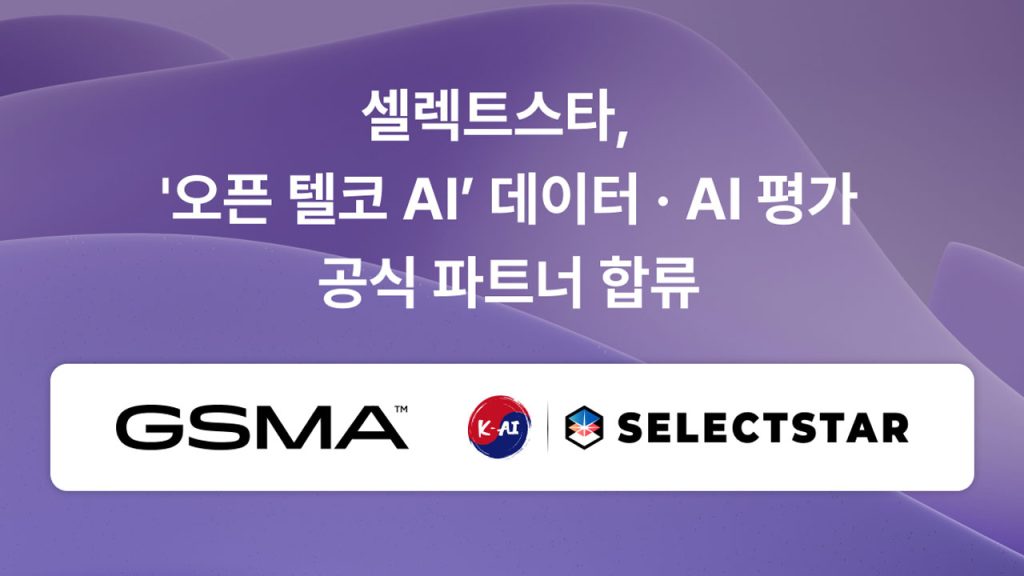
Selectstar (also known as Datumo) has joined the Open Telco AI alliance, a global initiative organized by the GSMA.
The consortium brings together more than 40 organizations across telecommunications, technology, and academia. Participants include major global companies such as AT&T, AMD, and Google Cloud.
Within Korea, SK Telecom and LG Uplus are also part of the initiative. However, Selectstar is the only Korean startup listed among the participants.
The alliance focuses on developing AI systems tailored to telecommunications environments, where operational reliability and data security requirements differ significantly from typical enterprise AI applications.
Telecom networks handle sensitive infrastructure operations and confidential customer data. According to the sources, this creates limitations when applying general-purpose large language models directly to telecom use cases.
Open Telco AI aims to address that gap by building a shared framework for telecom-focused AI development, testing, and validation.
Open Telco Benchmark Launch Signals a Shift Toward AI Testing Standards
One of the alliance’s early initiatives is the Open Telco Benchmark, introduced during MWC 2026.
The benchmark framework is built around seven evaluation metrics designed specifically for telecommunications applications.
Selectstar will support the operation of the benchmark and contribute AI reliability validation within the ecosystem.
Its role includes:
- telecom AI reliability evaluation
- red-teaming validation services
- support for telecom model benchmarking
Benchmark frameworks allow telecom operators to compare AI systems under consistent testing conditions.
In practice, these benchmarks may influence how operators evaluate AI tools before integrating them into operational environments such as network management systems.
This creates a layer of infrastructure around AI deployment where reliability testing becomes part of procurement and system validation.
Red Team Testing at MWC Highlights Industry Focus on AI Vulnerabilities
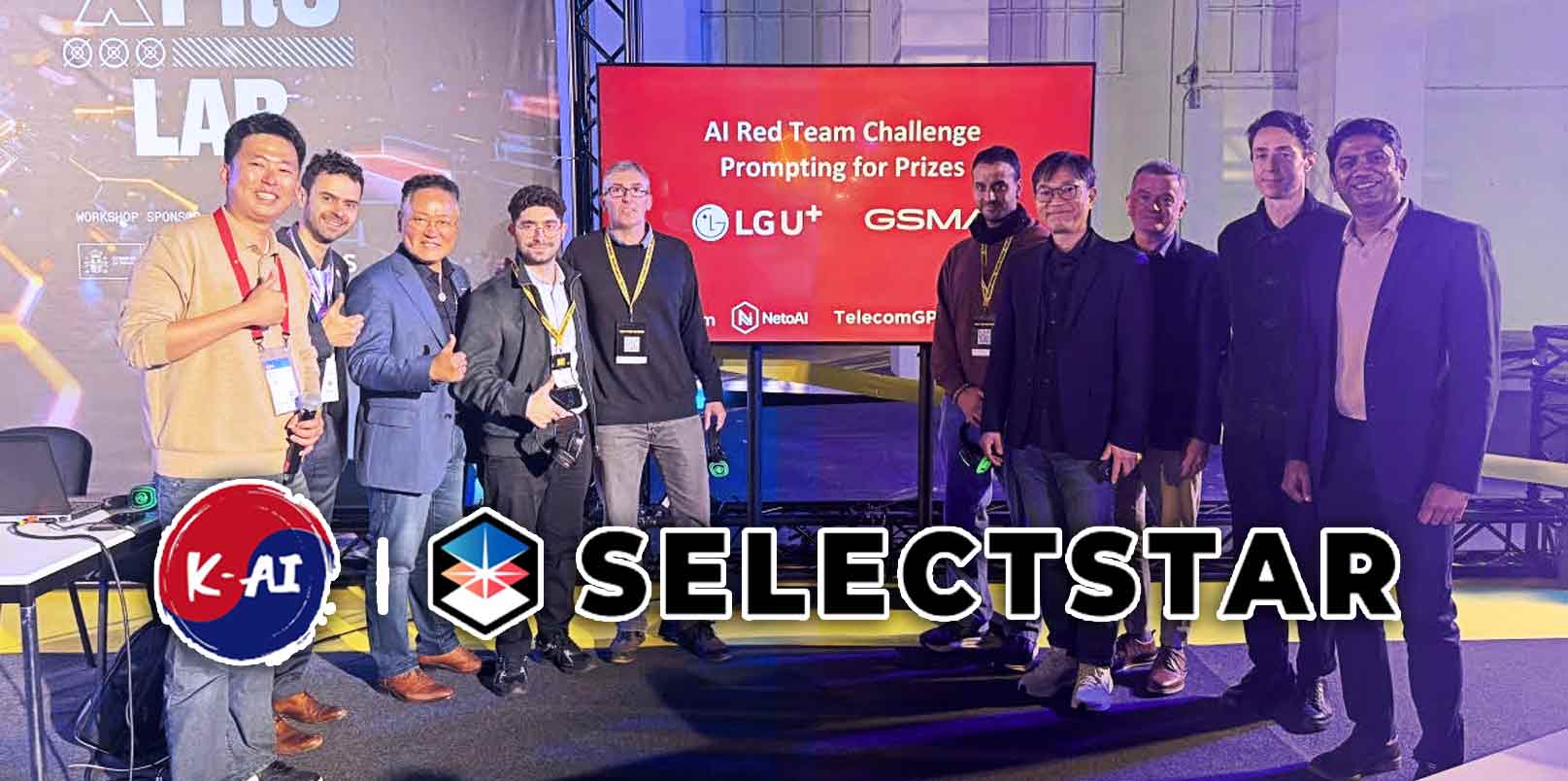
Selectstar also co-hosted the Global AI Red Team Challenge during MWC 2026 together with GSMA.
The event gathered more than 130 participants, including developers, AI experts, and corporate practitioners.
Participants attempted to identify vulnerabilities in large language models by conducting prompt-based attacks. A total of 78 participants submitted vulnerability analysis results.
The models examined during the exercise included telecom-oriented systems such as:
- SK Telecom’s A.X K1
- LG Uplus’ ixi-GEN
- the UAE-developed TelecomGPT
- AT&T’s Ask AT&T
- Tslam, developed by NetoAI
Organizers operated the event in a non-competitive format. Model identities were anonymized for participants and judges.
The goal was not ranking models but generating vulnerability insights that telecom operators could use to strengthen AI systems.
The red-teaming exercise relied on Selectstar’s AI reliability evaluation platform Datumo, which supported simultaneous attack testing and result analysis.
Datumo Platform Draws Attention From Global Telecom Operators
During MWC 2026, Selectstar also introduced its Datumo Platform, a system designed to evaluate the safety and performance of generative AI models, which has also become the company’s global brand name.
According to the company, Datumo has successfully attracted attention from major global telecom operators including:
- SoftBank (Japan)
- Orange (France)
- Deutsche Telekom (Germany)
The platform analyzes AI model performance across multiple dimensions and supports environments where large numbers of participants attempt simultaneous tests in multiple languages.
Selectstar demonstrated this capability during the red-team challenge held at the conference.
Telecom Operators Begin Coordinating AI Deployment Practices
The Open Telco AI initiative reflects a broader shift in how telecom companies approach artificial intelligence.
Operators are increasingly experimenting with AI tools for network operations, customer services, and infrastructure management. However, the reliability expectations in telecom environments are closer to critical infrastructure standards.
As a result, telecom operators are beginning to coordinate around shared evaluation practices.
Efforts such as Open Telco AI focus on building:
- telecom-specific AI benchmarks
- testing frameworks for model reliability
- structured red-teaming methodologies
These mechanisms allow telecom companies to assess risks and performance before deploying AI models inside operational systems.
A Different Global Pathway for Korean AI Startups
Selectstar’s participation also illustrates a different pathway for Korean startups entering global technology ecosystems.
Rather than competing directly with large model developers, the company operates in the evaluation and validation layer of the AI stack.
This layer is becoming increasingly important as industries move from AI experimentation to operational deployment.
Participation in the GSMA-led alliance places Selectstar inside discussions involving telecom operators, infrastructure vendors, and AI platform providers.
For Korean startups, this suggests that specialized technical capabilities such as evaluation and reliability testing can open access to global industry alliances.
CEO Seyeob Kim of SelectStar said in the company’s official press release:
“Joining Open Telco AI as an official partner is a meaningful achievement that demonstrates global recognition of SelectStar’s reliability verification technology.
Having confirmed worldwide demand for the Datumo Platform at MWC, we will work with GSMA to lead the development of world-class AI safety frameworks.”
What Comes Next for Telecom AI Standards
Telecommunications companies are still in the early stages of integrating large language models into network environments.
Initiatives such as Open Telco AI indicate that operators are beginning to define how AI should be tested and validated before deployment.
As these frameworks develop, the organizations involved in designing benchmarks and testing infrastructure could play an influential role in shaping telecom AI adoption worldwide.
Selectstar’s entry into the alliance places the Korean startup within that emerging governance layer.
Key Takeaways on Selectstar as Korea’s Only Startup in GSMA-led Open Telco AI Alliance
- Selectstar joined the GSMA-led Open Telco AI alliance as the only Korean startup participant.
- The initiative includes more than 40 organizations, including AT&T, AMD, and Google Cloud.
- The alliance launched the Open Telco Benchmark at MWC 2026 using seven telecom-specific evaluation metrics.
- Selectstar supports telecom AI reliability evaluation and red-teaming services.
- The company also co-hosted the Global AI Red Team Challenge, testing vulnerabilities in telecom-focused large language models.
– Stay Ahead in Korea’s Startup Scene –
Get real-time insights, funding updates, and policy shifts shaping Korea’s innovation ecosystem.
➡️ Follow KoreaTechDesk on LinkedIn, X (Twitter), Threads, Bluesky, Telegram, Facebook, and WhatsApp Channel.
🤝 Looking to connect with verified Korean companies building globally?
Explore curated company profiles and request direct introductions through beSUCCESS Connect.