South Korea’s startup policy is moving into a defining phase. The Ministry of SMEs and Startups (MSS) is no longer focused only on capital or new programs—it is confronting the machinery that runs them. The message from Sejong this January was unmistakable: if policy execution is to restore Korea’s “growth ladder,” then the executors themselves must first be fixed.
Korea’s MSS Tightens Oversight of Public and Partner Institutions
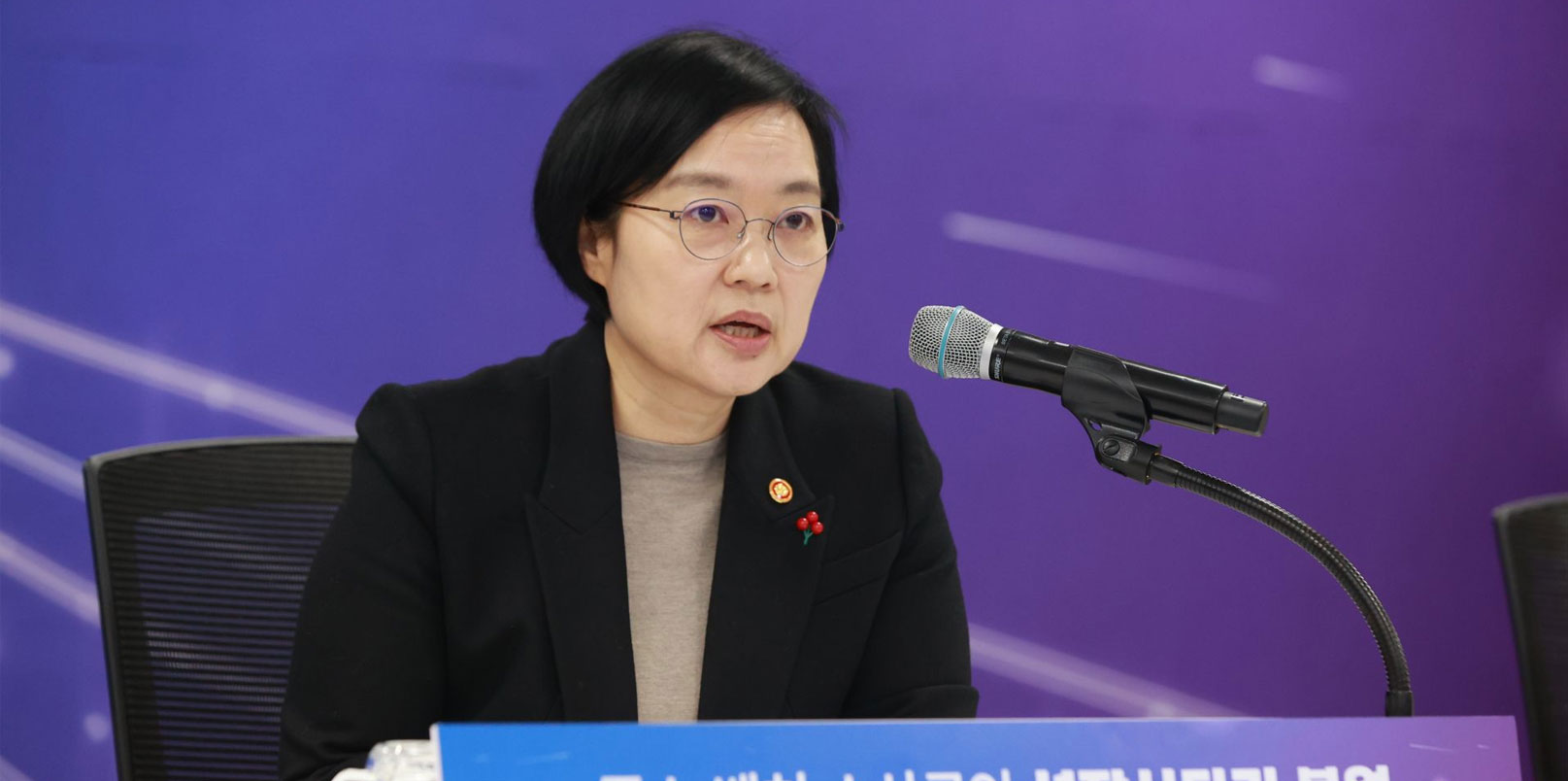
The Ministry of SMEs and Startups convened 15 affiliated public institutions and five business associations on January 12, 2026, at the Government Sejong Convention Center to review operational efficiency and detailed execution strategies.
Minister Han Seong-sook led the 2026 Work Report for Public and Related Institutions, joined by leaders from the Korea SMEs and Startups Agency (KOSME), the Small Enterprise and Market Service (SEMAS), the Korea Technology Finance Corporation (KIBO), and others.
For the first time, the ministry broadcast the entire session live via YouTube to enhance transparency and convey each agency’s plans directly to the public. The meeting assessed progress on the government’s national task of “restoring the growth ladder” for small and medium enterprises, venture firms, and small merchants—an agenda previously unveiled in the 2026 policy roadmap.
Participating agencies presented their core plans:
- KOSME announced the launch of Regional Growth Innovation Centers and expanded policy financing for facilities, R&D, and digital transformation.
- SEMAS outlined AI-based training and digital transition programs for small merchants while intensifying its crackdown on illegal policy-fund brokers.
- KIBO pledged to expand hybrid financing for venture growth and strengthen protection for technology-theft victims.
- Korea Venture Investment Corp. (KVIC) is developing mechanisms to attract pension and private capital into venture markets.
All agencies pledged to concentrate management resources on three shared objectives—regional economic revitalization, safety management, and public engagement.
Institutional Accountability Emerges as the Real Reform
Minister Han’s tone during the briefing marked a clear shift from policy expansion to institutional discipline.
She directly addressed the issue of low integrity scores across several MSS-affiliated organizations, warning that integrity would now affect end-of-year performance evaluations. The minister then urged each agency to conduct internal reviews and adopt corrective measures.
“Public institutions manage taxpayers’ money. There is no excuse for poor integrity ratings.”
According to late-2025 data released by the Anti-Corruption and Civil Rights Commission, both the Korea Institute of Startup & Entrepreneurship Development (KISED) and Small Enterprise and Market Service (SEMAS) received grade 4 or D-grade integrity ratings—among the lowest across public institutions.
Han emphasized that such results jeopardize not just administrative credibility but the broader startup policy mission itself. She instructed each institution to engage in professional consulting and implement measurable improvements before year-end.
From Policy Ambition to Governance Discipline
Behind the minister’s remarks lies a deeper tension within Korea’s innovation system. The MSS has committed billions of won in policy finance to accelerate startup growth, but policy credibility ultimately depends on how its executing agencies behave.
The 2026 directives reflect a shift in priority:
- Speed with Accountability – Agencies must deliver programs faster but under stricter compliance and transparency frameworks.
- Data-Based Oversight – Expand AI-based oversight tools to monitor execution and regional disparities.
- Institutional Integrity as a Growth Variable – The government now treats ethical performance as a measurable component of policy success.
This approach reframes Korea’s startup policy not as a funding challenge but as a governance challenge—a test of whether a state-led innovation model can remain clean, responsive, and trusted.
Why Governance Now Defines Startup Policy Credibility
The integrity push comes at a time when Korea’s startup ecosystem is drawing greater international attention. After record-high SME exports and venture funding in 2025, the country’s 2026 strategy aims to move beyond crisis recovery toward structural reform.
For global investors, however, the reliability of policy executors matters as much as the scale of public capital. Integrity breaches, delayed fund disbursements, or opaque evaluation systems directly affect investor confidence in Korea’s co-investment programs.
By making agency governance part of the reform, MSS signals a broader modernization effort—one aligning Korean public finance standards with international expectations in venture governance and policy transparency.
Trust as the New Growth Multiplier
Korea’s “growth ladder” no longer depends solely on the size of its national fund. It depends on the integrity, efficiency, and coordination of those administering it.
Minister Han’s enforcement stance turns governance itself into policy infrastructure—a necessary precondition for scaling sustainable innovation.
For startups, this means a cleaner, faster, and more predictable pipeline of support. For investors, it means policy risk mitigation. And for policymakers, it means that reform success will now be measured not by funding volume, but by institutional credibility.
Korea’s Growth Ladder Ambition Meets Its Executors’ Accountability
Korea’s startup economy has entered the stage where ambition meets accountability. The Ministry of SMEs and Startups is no longer just a funding arm; it is becoming a governance regulator for its own network.
If this recalibration holds, Korea’s 2026 innovation agenda could set a new precedent in Asia—where policy speed, transparency, and integrity are treated as interconnected engines of growth.
The “growth ladder” will stand only if its foundation—the executors—can carry the weight of trust.
– Stay Ahead in Korea’s Startup Scene –
Get real-time insights, funding updates, and policy shifts shaping Korea’s innovation ecosystem.
➡️ Follow KoreaTechDesk on LinkedIn, X (Twitter), Threads, Bluesky, Telegram, Facebook, and WhatsApp Channel.
🤝 Looking to connect with verified Korean companies building globally?
Explore curated company profiles and request direct introductions through beSUCCESS Connect.