South Korea is reshaping its startup policy around one clear idea: recovery is no longer enough. In 2026, the government plans to restore what it calls the “growth ladder,” spanning early entrepreneurship, venture investment, and scale-up pathways. The ambition is large, with expanded funding commitments and new programs. The question facing founders and investors is whether these measures will translate into durable growth beyond the first round of support.
Cabinet-Led Policy Reset Puts Startups at the Center
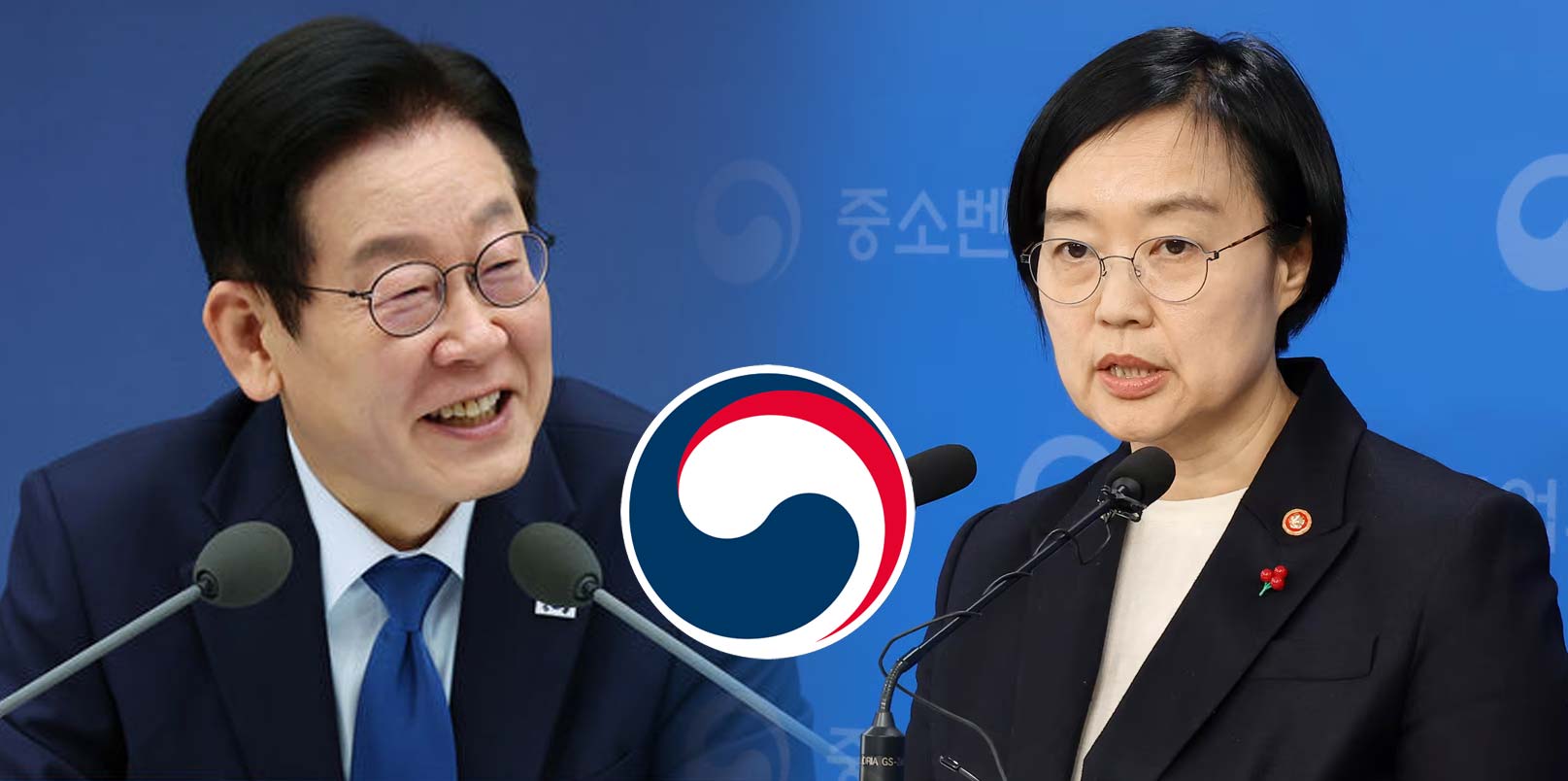
On December 17, 2025, the Ministry of SMEs and Startups (MSS) presented its 2026 policy roadmap at the Sejong Convention Center, under a cabinet-level briefing attended by President Lee Jae-myung. The ministry set “restoring the growth ladder for SMEs, ventures, and small merchants” as its core vision.
The plan places startup and venture activation alongside small merchant recovery, manufacturing SME innovation, and fair-market reform as top national priorities. MSS confirmed targets including KRW 40 trillion in annual venture investment, KRW 1.6 trillion in Fund of Funds capital, and the creation of a KRW 3.5 trillion Regional Growth Fund by 2030.
President Lee framed the policy shift as a move toward shared responsibility in entrepreneurship, saying:
“If people have ideas but cannot start a business because they lack money, then the state must step in together.”
Korea Is Rebuilding the “Growth Ladder”: From Recovery to Growth-Oriented Policy Design
MSS officials described 2025 as a year focused on crisis response and recovery. Policy results cited in the briefing included KRW 14.1 trillion in consumption stimulation, KRW 4 trillion in quarterly venture investment, and record-high SME exports in the third quarter of 2025.
Starting in 2026, the policy emphasis moves toward growth differentiation. Companies will be categorized by growth potential, with investment, R&D, and financing concentrated on firms deemed scalable, while others receive restructuring or transition support.
The ministry also plans to launch an AI-based Integrated SME Support Platform, designed to consolidate central and local government programs and reduce administrative burden by more than half.
Government’s Promise: Capital Expansion, Regional Depth, and Scale-Up Signals
The 2026 roadmap outlines a multi-layered startup pipeline. Early-stage founders will be supported through the “Entrepreneurship for All Project,” an audition-based program selecting 100 startup rookies annually, paired with preparation and investment linkage.
At the venture stage, MSS plans to anchor private capital participation by enabling pension funds and retirement funds to invest through a new national account within the Fund of Funds structure. The government will continue absorbing first-loss risk to encourage private participation.
For scale-up and later-stage growth, MSS reaffirmed plans to expand TIPS participation to 1,200 companies annually, concentrate funding on AI and deep tech startups, and offer support packages of up to KRW 100 billion in combined investment and guarantees for selected next-generation unicorn candidates. Regional startup cities, five by 2026 and ten by 2030, are intended to decentralize these opportunities beyond Seoul.

Structural Change Over Volume: Government Position on Execution Risk
MSS Minister Han Seong-sook acknowledged that previous systems often penalized novel ideas and produced inconsistent outcomes depending on evaluators. She described the new audition-style and staged support mechanisms as a response to early failure driven by inadequate preparation rather than weak ideas.
President Lee also addressed cultural barriers around entrepreneurship,
“A culture that prevents people from getting back up after failing is the problem. Those who have failed already possess experience itself as an asset, and their probability of success is higher.”
This perspective underpins expanded restart support programs under the Ministry of SMEs and Startups. The ministry has outlined a restart framework that integrates guarantees, loans, and fund-based support under a single operational system.
At the same time, officials emphasized that the growth ladder does not imply indefinite support. Startup recognition, funding, and scale-up assistance remain tied to performance, market validation, and measurable progress.
Toward Selective, Performance-Linked Startup Growth Support
Korea’s 2026 strategy signals a clear departure from uniform, entry-heavy startup policy toward selective, performance-linked growth support. The scale of capital committed places Korea among the more actively state-backed startup ecosystems in advanced economies, particularly in AI, manufacturing technology, and deep tech.
For global founders considering Korea, the policy reinforces the country’s appeal as a capital-accessible market with strong public co-investment, particularly outside the Seoul metropolitan area. For investors, the emphasis on pension participation and structured scale-up pipelines suggests a maturing venture market aligned with global norms.
However, the effectiveness of this approach hinges on execution. The policy documents emphasize connectivity between stages, yet do not eliminate the risk of fragmentation if early-stage screening, regional programs, and scale-up tracks fail to align operationally.
Ambition Is Clear, Coordination Is the Test
Korea’s 2026 startup agenda is ambitious, well-funded, and politically backed at the highest level. It acknowledges that entrepreneurship does not fail at entry alone but often stalls between survival and scale.
Yet, the success of this strategy will depend less on how many startups enter the system, and more on how effectively capital, policy, and market access connect across stages. That is why the coming year will eventually reveal whether Korea’s rebuilt growth ladder can truly support companies all the way up.
🤝 Looking to connect with verified Korean companies building globally?
Explore curated company profiles and request direct introductions through beSUCCESS Connect.
– Stay Ahead in Korea’s Startup Scene –
Get real-time insights, funding updates, and policy shifts shaping Korea’s innovation ecosystem.
➡️ Follow KoreaTechDesk on LinkedIn, X (Twitter), Threads, Bluesky, Telegram, Facebook, and WhatsApp Channel.