South Korea is redefining industrial innovation through robotics. The Ministry of SMEs and Startups (MSS) is turning robots—once seen as factory tools—into the core engines of Physical AI. A new policy roundtable in Daegu signals not just sectoral support, but a strategic blueprint for aligning AI-driven manufacturing with startup agility and national-scale industrial transformation.
MSS Brings Robotics Startups to the Center of Korea’s Industrial Policy
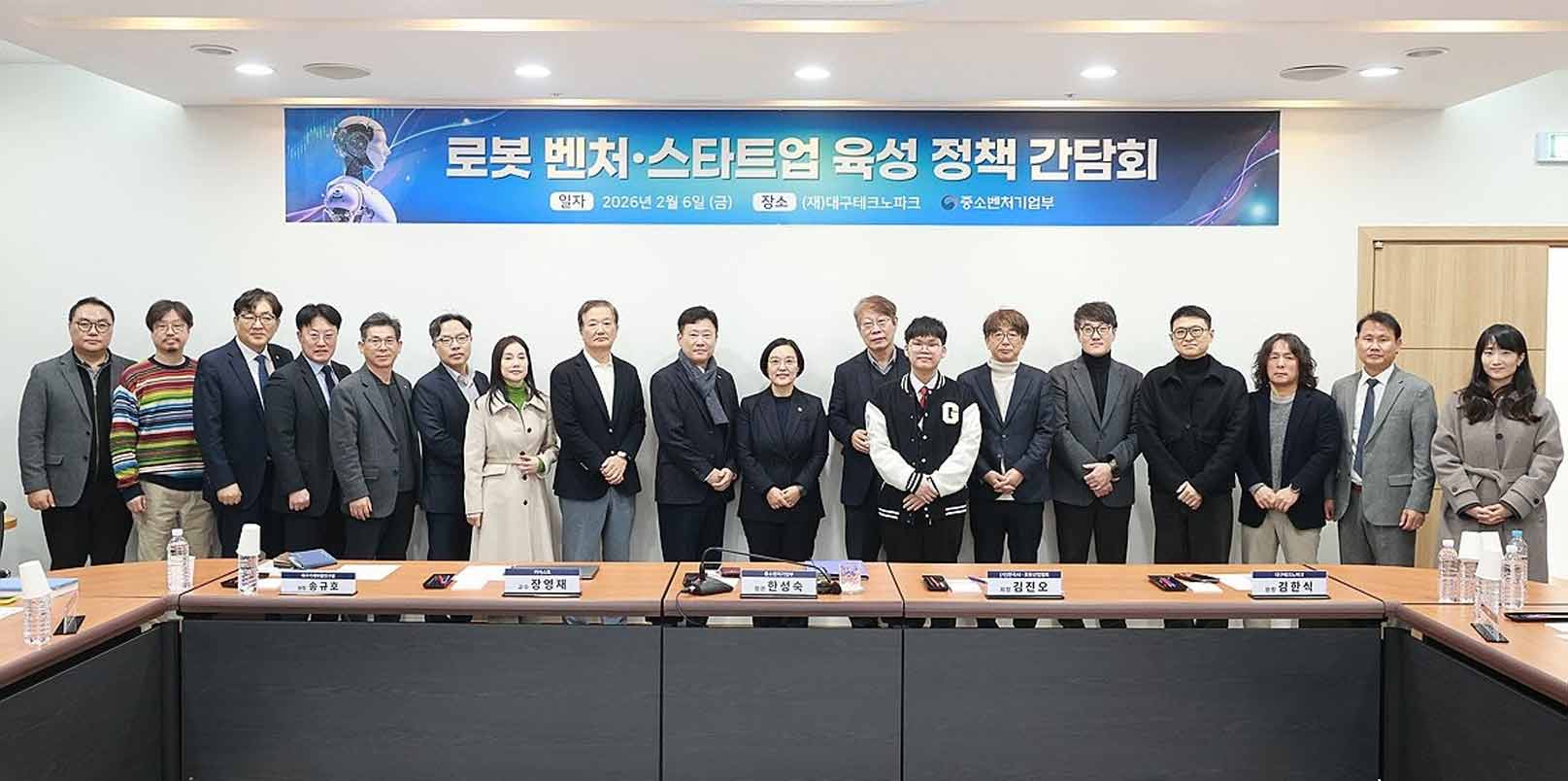
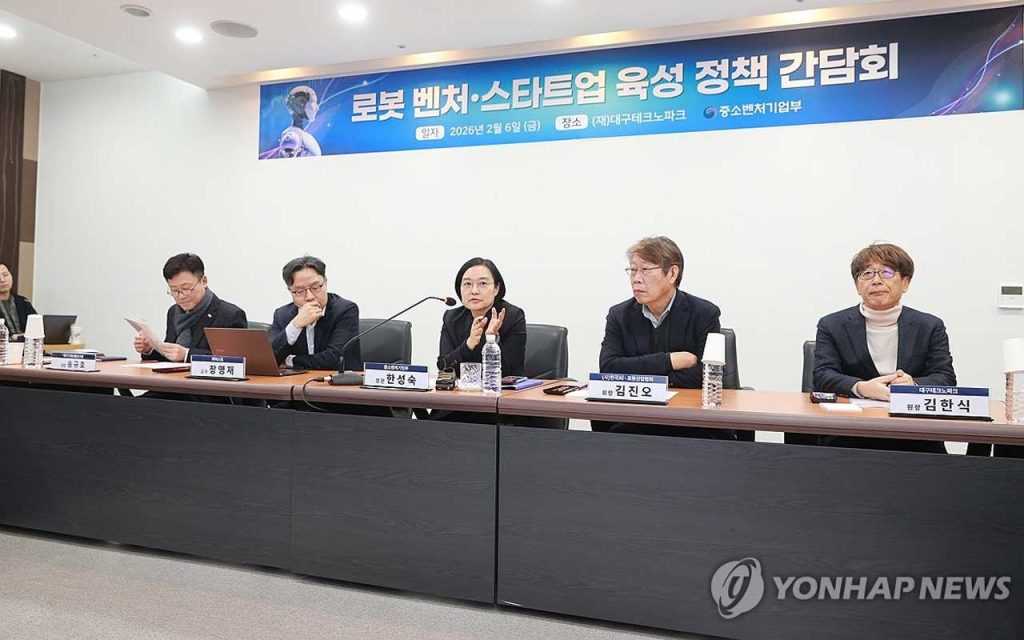
On February 6, 2026, Minister Han Seong-sook of the Ministry of SMEs and Startups (MSS) led a policy roundtable at Daegu Techno Park focused on advancing Korea’s robotics ventures and startups.
The event gathered over fifty participants from robot manufacturers, system integration (SI) firms, Physical AI model developers, research institutions, and technical schools, establishing a direct dialogue between policymakers and industry players.
Minister Han outlined a multi-stage plan to help robotics startups become industrial pillars, emphasizing targeted support in startup creation, venture investment, R&D assistance, and public demonstration projects that accelerate real-world deployment.
She stated:
“Robots are the key instruments that bring AI into real-world operation. The robotics industry is poised to become Korea’s next growth engine as a manufacturing powerhouse. We will drive company-specific support that connects innovation to commercialization.”
Robotics Becomes Korea’s Testbed for Physical AI
The Daegu meeting followed the National Startup Era Strategy Conference held on January 30, where the MSS identified robotics as a next-generation strategic sector.
Daegu’s designation as a Global Innovation Zone for AI Robots added both symbolism and practicality, as the city now functions as a national pilot zone for integrating AI, hardware, and industrial automation.
This focus reflects Korea’s broader policy trajectory since 2025, when “Physical AI” became a defining theme across government technology agendas. It represents the convergence of artificial intelligence with physical systems—robots, mobility platforms, and industrial machines—that can perceive, act, and adapt within real-world environments.
The MSS’s latest initiative positions startups as operational leaders within this transformation, extending the nation’s deep-tech ambitions beyond semiconductors and software into embodied AI systems.
Field Voices Shape Policy Direction in Robotics Startups and Physical AI Korea
During the discussion, participants emphasized the urgency of translating policy intent into executable mechanisms.
Their recommendations included:
- Expanding venture capital channels to bridge seed-stage robotics funding gaps.
- Strengthening R&D grant programs that integrate AI and sensor fusion technologies.
- Creating early markets through public procurement and demand-driven demonstration projects.
- Building talent pipelines that connect specialized education to startup recruitment.
Minister Han also addressed administrative friction in government financing systems—urging vigilance against illegal third-party fund brokers—and called on field officers to ensure that policy funds reach SMEs without distortion.
Before the roundtable, she met with financial officers at the Small Enterprise and Market Service (SEMAS) Daegu Northern Center to inspect loan execution practices and reaffirm transparency standards.
From Robotics to Physical AI — Korea’s Next Leap
The MSS’s robotics initiative represents more than industrial policy; it signals a strategic convergence of AI, hardware, and manufacturing ecosystems.
By centering robotics within Korea’s Physical AI framework, the ministry is linking startup agility to industrial-scale transformation—a model that global economies are increasingly watching.
This initiative aligns with Korea’s broader trajectory following its Physical AI Startup Alliance with NVIDIA and venture capital leaders, as well as the government’s participation in AI-driven manufacturing acceleration programs led by MOTIE and MSIT.
In ecosystem terms, the Daegu initiative expands Korea’s startup policy horizon:
- Robotics startups now benefit from national-level institutional visibility once limited to digital tech ventures.
- Local innovation hubs like Daegu Techno Park are becoming testbeds for public-private collaboration in industrial AI applications.
- The policy also complements Korea’s deep-tech expansion strategy, ensuring that Physical AI startups gain structured support similar to software-based innovators.
For global readers—investors, founders, and policymakers—this shift illustrates how Korea is operationalizing AI across real-world industries. It positions the country not just as a fast adopter of intelligent automation, but as an emerging exporter of embodied AI systems built by startups.
Robotics as a Bridge Between Policy and Market Execution
The Daegu roundtable shows how Korea is translating its Physical AI vision into field-level execution. For startups, this means policy access tied to real commercialization pathways. For government agencies, it demonstrates how AI-driven manufacturing can evolve through cooperation, not just funding.
Minister Han’s message underscored that Korea’s next wave of innovation will not be powered by digital platforms alone, but by machines that can learn, adapt, and work alongside humans—an evolution rooted in manufacturing but driven by startups.
Key Takeaway on Korea’s Robotics Startup and Physical AI Policy
- Event: Robotics Venture and Startup Policy Roundtable, February 6, 2026, Daegu Techno Park.
- Led by: Minister Han Seong-sook, Ministry of SMEs and Startups (MSS).
- Core Theme: Positioning robotics as Korea’s next growth engine within the Physical AI era.
- Policy Actions: Tailored support for startups through funding, R&D, public verification, and procurement.
- Ecosystem Impact: Strengthens Korea’s industrial AI and robotics ecosystem; bridges national manufacturing strategy with startup innovation.
- Global Context: Aligns with Korea’s broader Physical AI agenda following the NVIDIA–Korea partnership and emerging industrial AI alliances.
🤝 Looking to connect with verified Korean companies building globally?
Explore curated company profiles and request direct introductions through beSUCCESS Connect.
– Stay Ahead in Korea’s Startup Scene –
Get real-time insights, funding updates, and policy shifts shaping Korea’s innovation ecosystem.
➡️ Follow KoreaTechDesk on LinkedIn, X (Twitter), Threads, Bluesky, Telegram, Facebook, and WhatsApp Channel.