

Brands today can measure clicks, app downloads, loyalty memberships, and purchase history with increasing precision. Yet one basic question often remains unanswered after the transaction is complete: who actually owns the product now?
As resale markets grow and customer relationships move across digital platforms, Korean companies are beginning to face a deeper infrastructure problem that traditional CRM systems were never designed to solve.
Why Buyer Data No Longer Guarantees Customer Visibility
Modern commerce systems are highly effective at identifying buyers at the moment of transaction. Brands can collect email addresses, payment records, membership information, and behavioral data through e-commerce platforms, loyalty applications, and social channels.
The problem begins after the product leaves the checkout system.
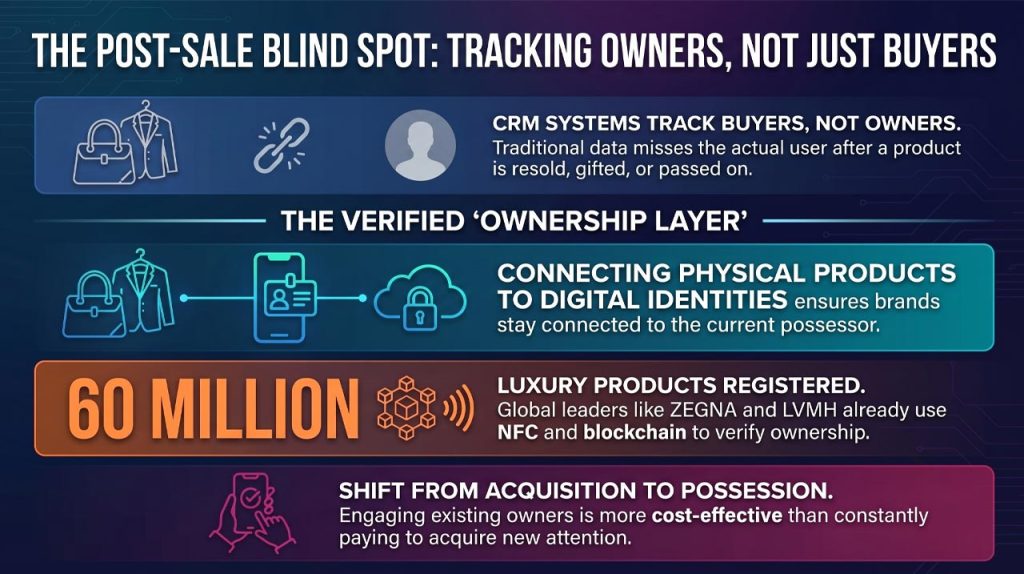
A customer may purchase a product as a gift, resell it through secondary marketplaces, or pass it to another owner entirely. In many cases, the brand continues communicating with the original buyer while losing visibility into the person actually using or owning the product.
That gap has become increasingly relevant as brands attempt to build longer-term digital relationships around physical products, particularly in sectors where resale, collectibles, fandom engagement, and premium ownership experiences continue expanding.
Chaeun Jung, Brand Lead at RIBO’s, works on NFC-based ownership access systems designed to help brands connect physical products with authenticated digital experiences after purchase.
In a written interview with KoreaTechDesk, Jung argued that many existing customer systems still struggle to verify one critical point after the sale is completed.
“Traditional CRM systems are generally based on purchase history, email addresses, phone numbers, or membership accounts,”
he said.
“However, these systems often cannot answer one simple but important question: ‘Does this person actually own the product?’”
According to Jung, the issue is not simply a lack of customer data. The deeper problem is “the absence of a verified ownership layer that connects the physical product, the actual owner, and the brand’s digital relationship.”
That distinction is becoming more important as companies search for more durable post-sale engagement models.

Loyalty Programs Still Matter, But Brands Are Competing for Attention
Brands continue investing heavily in loyalty ecosystems, customer engagement applications, and membership programs. Yet maintaining meaningful post-sale interaction has become increasingly difficult as consumers divide attention across multiple platforms and reward systems.
EY’s 2025 Loyalty Market Study found that more than 80% of consumers surveyed are willing to download loyalty applications. At the same time, the study noted that the growing number of loyalty programs has intensified competition for customer attention and spending.
Deloitte’s 2025 Consumer Loyalty Program Survey also highlighted a similar challenge. The firm reported that 40% of respondents sometimes forget to redeem rewards, underscoring how enrollment alone does not necessarily translate into sustained engagement.
For Jung, ownership-based access attempts to solve a different problem entirely.
“We describe RIBO’s approach as ownership-based access because the starting point is not points, membership status, or rewards.
The starting point is verified possession of a physical product.”
That changes how brands structure digital interaction around the customer.
“In a typical open community or social platform, users participate because they like the brand, follow it, or are interested in its content,”
Jung explained.
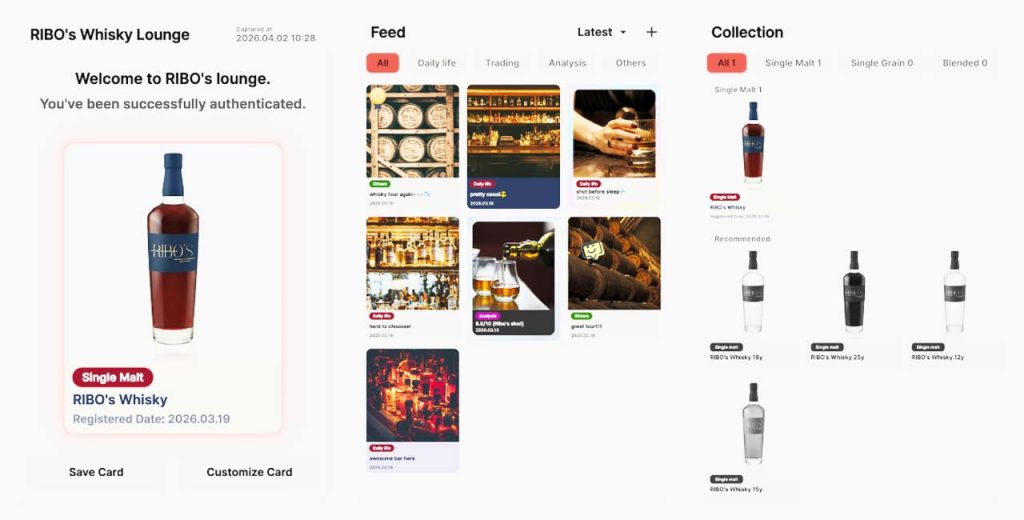
“With ownership-based access, the interaction starts from a more specific context. The user taps the product they own and enters a space connected to that product.”
Why Products Are Becoming Digital Entry Points
The broader market is already moving toward product-linked digital infrastructure.
In April 2025, the European Commission launched a public consultation related to the Digital Product Passport (DPP), part of the European Union’s Ecodesign for Sustainable Products Regulation framework. The initiative is designed to store and share product-related information across supply chains, consumers, businesses, and regulators.
While DPP discussions often focus on sustainability, traceability, and compliance, the commercial implications are also expanding into customer engagement and post-sale relationship management.
Bain & Company and eBay stated in a June 2025 analysis that Digital Product Passports could potentially double the lifetime value of fashion products by enabling stronger resale ecosystems, transparency, and post-sale services.
Luxury brands are already testing product-linked identity systems in practice.
ZEGNA uses NFC-supported digital product passports that allow customers to verify authenticity, activate ownership-linked experiences, and access product information through physical product interaction. The Aura Blockchain Consortium, backed by brands including LVMH, Prada Group, Cartier, and OTB, says more than 60 million luxury products have already been registered across its ecosystem.
Jung believes the underlying shift is larger than NFC itself.
“The product itself becomes the entry point to content, campaigns, community, or collection experiences,”
he said.
“As acquisition costs continue to rise, maintaining a relationship with people who already own the product can be more efficient than constantly paying to reacquire attention.”
Korea’s Digital Product Shift Is Advancing More Slowly
South Korea is already preparing for parts of this transition, particularly through export and compliance readiness tied to Europe’s Digital Product Passport framework.
Korean government-linked support programs and industry institutions including FITI Testing & Research Institute and the Korea International Trade Association have expanded guidance and pilot support related to DPP preparation for textile and fashion companies responding to future EU requirements.
Yet Jung argues that adoption challenges inside Korean companies are more operational.
“Ownership-based infrastructure is different because it connects product, manufacturing, marketing, e-commerce, and sometimes IT. It is not just another marketing tool.”
According to Jung, one of the largest barriers is determining internal ownership of the initiative itself.
“This type of product experience does not belong to just one department.
The idea is interesting, but it is unclear which department should lead it.”
That organizational friction can slow implementation even when companies understand the strategic potential.
In many cases, product development timelines, marketing schedules, customer support requirements, and operational planning move separately inside organizations. As a result, companies may struggle to integrate ownership-linked experiences into real commercial workflows.
The Bigger Shift Is Happening After the Transaction
The long-term significance of ownership verification may ultimately depend less on the technology itself and more on how brands redefine post-sale relationships.
For decades, digital commerce infrastructure focused heavily on customer acquisition, transaction tracking, and audience growth. But resale ecosystems, collectibles, fandom commerce, premium goods, and digitally connected physical products are changing the economics of customer visibility.
Jung believes the next phase of brand infrastructure will depend on whether companies can continue meaningful engagement after the initial purchase.
“I do not think the future is ‘NFC everywhere,’”
he said.
“I think the future is ownership-based access wherever the relationship between the product and the owner truly matters.”
Why Ownership Visibility May Become a New Commerce Infrastructure Layer
The modern commerce stack already knows who clicked an advertisement, downloaded an application, subscribed to a membership program, or completed a purchase.
What it often cannot verify is who still owns the product afterward.
As Digital Product Passport systems, authentication tools, and post-sale engagement models continue evolving globally, the strategic question for brands is shifting beyond customer acquisition alone.
The larger challenge is becoming increasingly practical: how to maintain direct visibility and meaningful interaction with verified product owners after the sale itself is already complete.
Key Takeaway
- Traditional CRM and loyalty systems primarily identify buyers, not necessarily the actual product owner after resale, gifting, or transfer
- Ownership-based access systems aim to create a verified connection between physical products and digital engagement layers
- Digital Product Passport initiatives in Europe are accelerating global discussions around product-linked digital infrastructure
- Luxury brands including ZEGNA and Aura Blockchain Consortium members are already testing ownership-linked digital product systems
- Korean companies are beginning DPP preparation, particularly in textile and export-linked sectors responding to EU regulations
- Operational fragmentation inside organizations remains one of the main adoption barriers for ownership-linked infrastructure in Korea
- Post-sale customer visibility is emerging as a strategic issue as brands seek more sustainable retention and engagement models beyond one-time transactions
– Stay Ahead in Korea’s Startup Scene –
Get real-time insights, funding updates, and policy shifts shaping Korea’s innovation ecosystem.
➡️ Follow KoreaTechDesk on LinkedIn, X (Twitter), Threads, Bluesky, Telegram, Facebook, and WhatsApp Channel.
🤝 Looking to connect with verified Korean companies building globally?
Explore curated company profiles and request direct introductions through beSUCCESS Connect.