South Korea is entering 2026 with a bold policy shift that places innovation freedom at the center of its SME strategy. The Ministry of SMEs and Startups (MSS) has launched a KRW 22.3 billion R&D program designed not just to fund research, but to deregulate how startups innovate. It signals a move toward agility, autonomy, and global competitiveness across Korea’s rapidly evolving tech ecosystem.
Government Launches ₩22.3B SME R&D Initiative
The Ministry of SMEs and Startups announced that it will provide KRW 22.3 billion in research and development (R&D) support to 70 small and medium-sized enterprises (SMEs) in the first half of 2026. Recruitment for the 2026 SME Technology Innovation Development Project began on January 9.
The program—one of the MSS’s flagship technology development initiatives—focuses on enhancing SME competitiveness and enabling overseas expansion through R&D in promising and globally leading technologies.
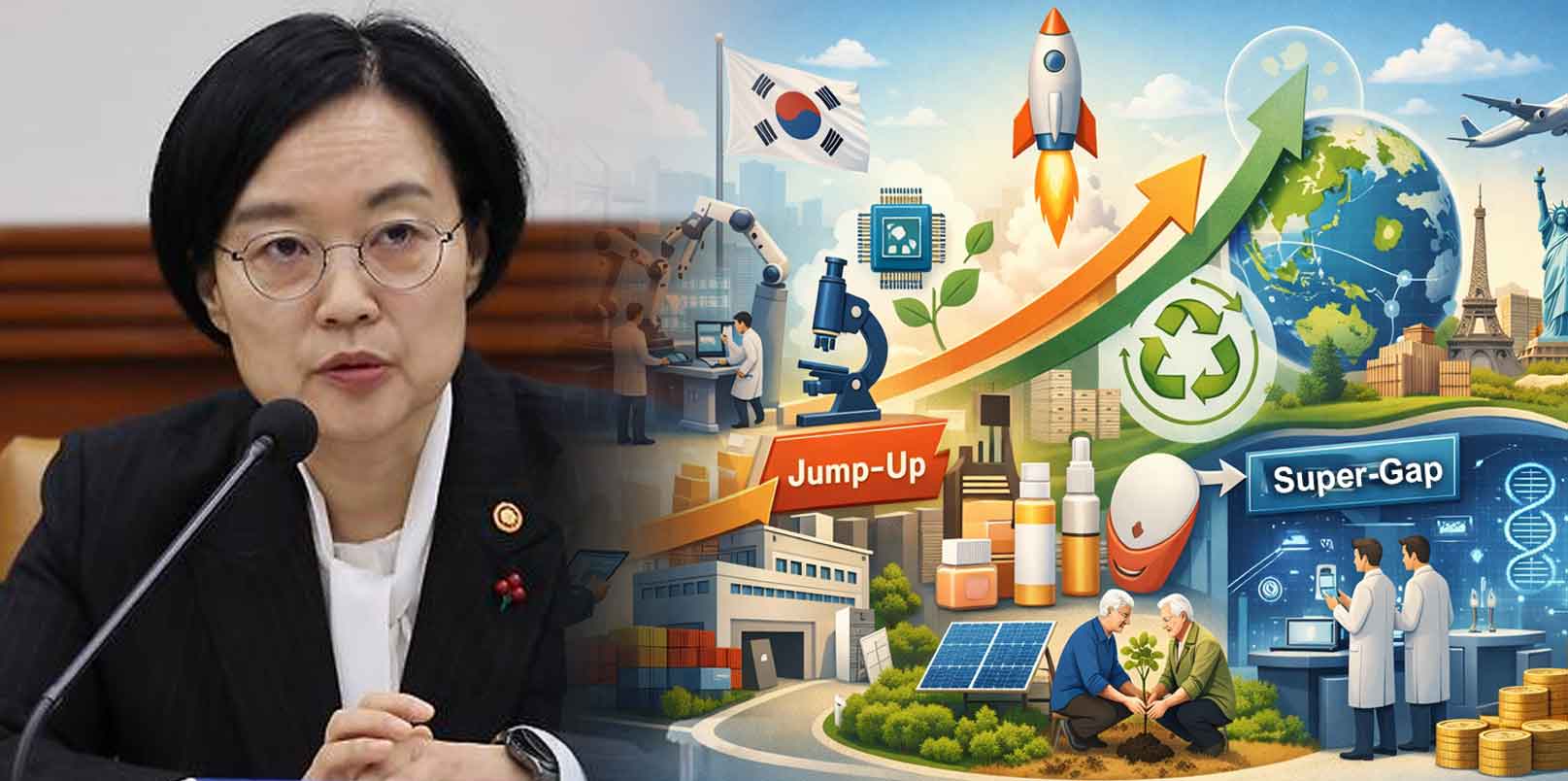
The funding is structured to support four primary categories: Export-Oriented, Jump-Up Linked, K-Beauty Expansion, and Social Venture & Super-Gap Linked Projects. Each category reflects Korea’s policy emphasis on diversification, sustainability, and long-term competitiveness in both domestic and global markets.
Background: A Shift Toward Deregulated, Value-Driven Innovation
The 2026 program marks a structural departure from past frameworks. The MSS has abolished the 124-category limitation on strategic technologies, giving SMEs freedom to propose independent, market-driven innovation projects. This change acknowledges the need for flexibility in a global environment where technological boundaries shift faster than regulatory cycles.
While restrictions have been lifted, the ministry will continue to grant preferential evaluations to proposals in critical areas such as National Strategic Technologies and carbon-neutral innovation, ensuring alignment with Korea’s industrial and sustainability goals.
This shift illustrates how Korea is adapting its SME policy to match the pace of global technology races, prioritizing both competitiveness and resilience.
The new initiative aligns closely with the Ministry’s recent Deep Tech Challenge Project (DCP), which introduced Korea’s largest deep tech R&D framework with up to KRW 20 billion per project. While the DCP targets ecosystem-scale collaboration among startups, corporates, and investors, the KRW 22.3 billion SME R&D program extends that policy logic to early-stage innovators, emphasizing agility and deregulation at the firm level.
Together, these initiatives signal a synchronized policy direction—one focused on restoring trust in innovation by linking Korea’s deep tech ambition with practical SME growth mechanisms.
Key Policy Streams
Export-Oriented Projects
Designed to build global competitiveness, these projects will provide up to KRW 1 billion per year per company, capped at KRW 2 billion over two years. The goal is to empower SMEs to develop technologies that can position them as key players in international markets.
Jump-Up Linked Type
This new category connects the MSS’s existing “Jump-Up Program” to direct R&D funding. Five companies selected under this track will each receive up to KRW 2 billion over two years, helping them scale from domestic growth to global leadership.
K-Beauty Industry Expansion
Reflecting the continued rise of K-Beauty as a global industry, the ministry expanded support beyond functional ingredients and eco-friendly packaging to include beauty devices and dermacosmetics. Ten companies will each receive up to KRW 500 million over two years.
Social Venture & Super-Gap Linked Projects
A newly established Social Venture category supports startups tackling complex social challenges, such as climate change and aging. Five ventures identified through the Korea Technology Finance Corporation (KIBO) will receive support based on both technological output and social impact metrics.
In parallel, the Super-Gap Linked track will fund five companies selected under the Super-Gap Startup 1000+ Project, part of Korea’s strategy to develop next-generation growth engines.
Reinforcing Korea’s Global Competitiveness
Hwang Young-ho, Director of Technology Innovation Policy at the Ministry of SMEs and Startups, emphasized the urgency of strengthening Korea’s SME competitiveness amid global industrial shifts.
He stated,
“In an environment of deepening global competition, technology is the defining factor for corporate survival and growth. We will reinforce support for SMEs with strong export potential to secure Korea’s standing in international markets.”
This stance reflects the ministry’s shift from volume-based funding to a structural innovation strategy, prioritizing scalability and global readiness.
Ecosystem Significance: A Policy Evolution in Real Time
The decision to remove R&D category restrictions signals Korea’s evolving view of innovation governance. Rather than prescribing what startups should build, the government is enabling market-responsive innovation that aligns with real-world demand.
For investors and global partners, this move widens Korea’s collaboration spectrum. The inclusion of K-Beauty, social ventures, and super-gap startups represents a broader recognition that industrial competitiveness depends not just on hardware or manufacturing, but on cultural and social innovation as well.
The approach also aligns with trends seen in advanced ecosystems such as Japan’s Deep Tech Push and Singapore’s Open Innovation Framework, which similarly decentralize state-led innovation to empower private enterprise.
By linking social responsibility with economic incentives, the MSS is also signaling a new governance model—one that views sustainability, inclusion, and export capability as inseparable parts of long-term industrial resilience.
This initiative also reveals how Korea is now operating through two complementary innovation channels: one long-cycle track for deep tech and AI through the Deep Tech Challenge Project, and another for agile, export-driven SMEs through this KRW 22.3 billion program. The first builds structural depth; the second ensures market agility.
If the government succeeds in connecting both pipelines, Korea could achieve the balance between visionary innovation and real-time economic scalability that many advanced economies still struggle to master.
What Korea’s Deregulated R&D Era Means for Startups
Korea’s KRW 22.3 billion R&D allocation for SMEs is more than a financial injection—it’s a structural experiment in deregulated innovation. By reducing entry barriers and trusting startups to define their own innovation agendas, the government is testing a model that blends policy discipline with market freedom.
For global founders, investors, and analysts, this moment underscores a key signal: Korea’s startup ecosystem is moving beyond protectionist growth and toward adaptive competitiveness, where policy becomes an enabler of innovation rather than its gatekeeper.
As the 2026 initiative unfolds, the real test will be how SMEs translate this freedom into sustainable, globally viable technologies—and how Korea’s ecosystem continues to evolve toward a truly open innovation frontier.
– Stay Ahead in Korea’s Startup Scene –
Get real-time insights, funding updates, and policy shifts shaping Korea’s innovation ecosystem.
➡️ Follow KoreaTechDesk on LinkedIn, X (Twitter), Threads, Bluesky, Telegram, Facebook, and WhatsApp Channel.
🤝 Looking to connect with verified Korean companies building globally?
Explore curated company profiles and request direct introductions through beSUCCESS Connect.