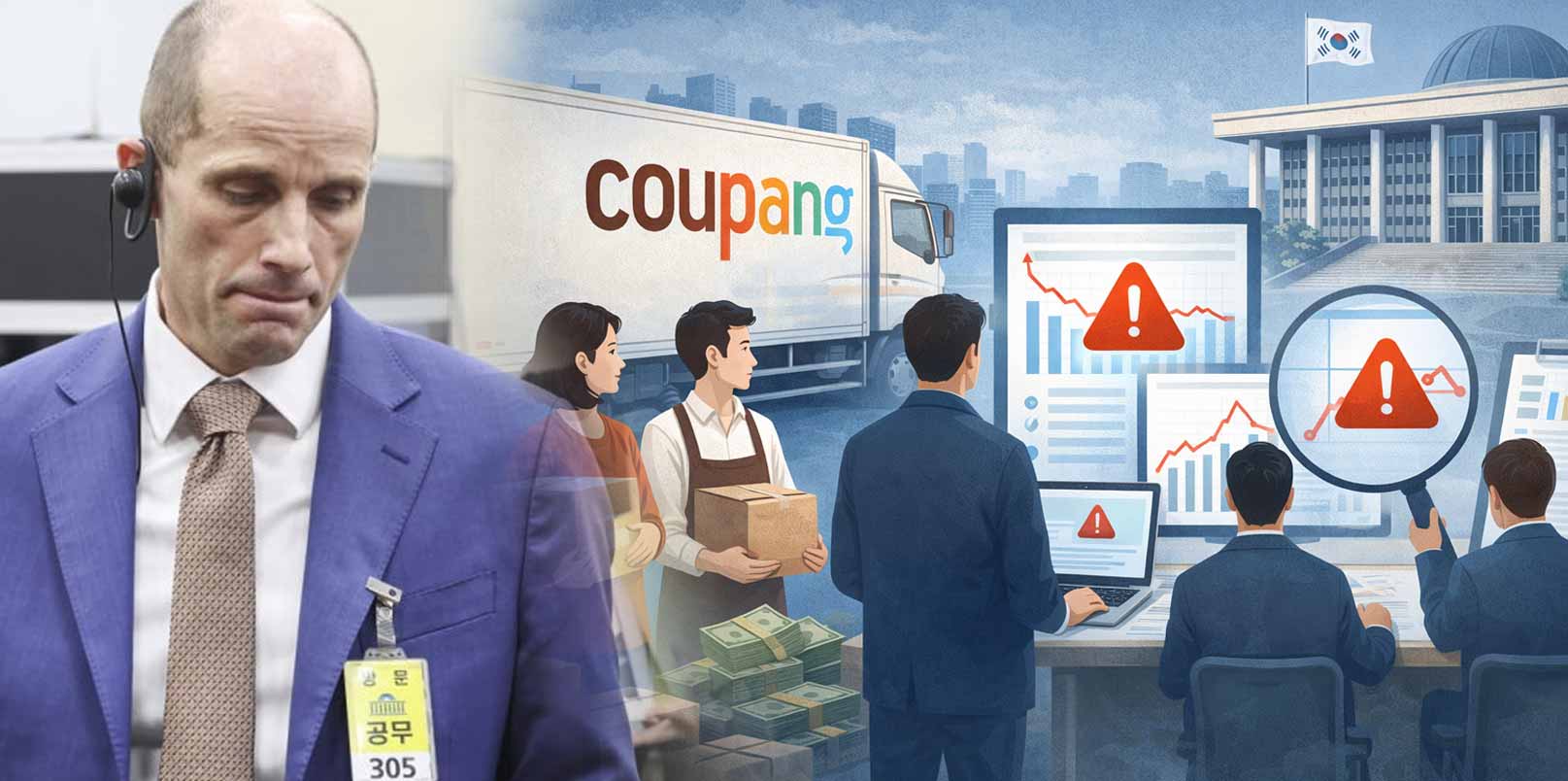
What began as Korea’s largest-ever data leak has now entered its policy phase. Two months after the Coupang 33.7 million-account breach, the government has moved beyond investigation and into remediation—this time, for small businesses. As the platform’s fallout spreads, the Ministry of SMEs and Startups (MSS) is launching a coordinated national survey to assess and contain the economic damage.
Government Opens SME Damage Report Center after Coupang Crisis
The Ministry of SMEs and Startups (MSS) and the Korea Federation of Micro Enterprise (KFME) officially launched the “Coupang Incident Small Business Damage Report Center” on January 8, marking the first government-backed mechanism to document and respond to merchant-level losses.
The online center, hosted on the federation’s website, allows any small business facing direct or indirect losses—from falling sales to disrupted logistics—to file a report. The ministry and federation will jointly conduct a national-scale survey across 89 SME associations to capture the full scope of damage among Coupang’s partner merchants.
The data collected will feed into the Pan-Governmental Task Force (TF) overseeing the Coupang crisis, which includes multiple ministries and agencies such as the Fair Trade Commission, the Ministry of Science and ICT, and the Personal Information Protection Commission. The TF will use the findings to shape future government intervention, including potential support measures for affected sellers.
Understanding the Policy Shift: From Corporate Accountability to Ecosystem Recovery
The move signals a strategic transition in Korea’s response—from holding corporations accountable to stabilizing the ecosystem dependent on them.
Since the Coupang breach was first confirmed in November 2025, the government has led overlapping investigations into data protection, platform compliance, and consumer redress. But as Coupang’s customer exodus intensified, with millions of users deleting accounts and boycotting the platform, small and medium-sized enterprises (SMEs) found themselves caught in a liquidity crisis.
According to multiple industry surveys, Coupang’s partner sellers—who account for nearly three-quarters of its total merchant base—have reported sales declines exceeding 40 percent, with some small retailers citing losses severe enough to threaten closure.
Until now, there had been no centralized system for small businesses to document these cascading effects. Officials said the absence of a formal reporting channel made it difficult to quantify the damage or design targeted policy responses.
By establishing a government-operated submission platform, the MSS is effectively institutionalizing “merchant-level crisis mapping,” a new policy tool for platform governance in Korea’s digital economy.
Accountability Expands Beyond Data
In a public statement, an MSS official said,
“The Coupang incident cannot remain a series of isolated complaints. We are officially documenting the real-world impact on small businesses and linking it to government-level response and support.”
Song Chi-young, Chairman of the Korea Federation of Micro Enterprise, emphasized the urgency of the move.
“We are entering the second month of this crisis, yet no one has taken responsibility. The suffering among small merchants who depend on Coupang is becoming extreme. The fact that the government is now coordinating a unified response is significant.”
Consumer organizations and business associations also welcomed the initiative but warned that financial aid alone would not be enough. They called for stronger regulation of platform accountability, noting that a governance vacuum allows large digital marketplaces to externalize risk while small sellers bear the losses.
Coupang Data Leak: A Critical Test for Korea’s Platform Economy
The government’s intervention highlights how deeply Korea’s startup and SME ecosystem has become intertwined with major digital platforms. Coupang alone handles more than half of Korea’s e-commerce transactions, functioning as both marketplace and logistics backbone for tens of thousands of small enterprises.
The data breach, initially viewed as a cybersecurity incident, has exposed a structural fragility within Korea’s digital economy: when platform trust collapses, SME liquidity and employment stability can quickly follow.
This situation further shows that Korea’s startup economy, while technologically advanced, remains systemically dependent on a few dominant platforms. The Coupang case now reinforces calls for policy diversification—encouraging multi-platform distribution and fairer marketplace governance.
The new SME-focused investigation could also serve as precedent for future crises involving data-driven platforms. By directly linking platform accountability to SME resilience, Korea is setting the groundwork for a hybrid model of digital governance—where innovation incentives coexist with systemic risk management.
From Containment to Reform
What started as a corporate data failure is now reshaping the boundaries of Korea’s digital policy. The launch of the Small Business Damage Report Center represents a new dimension of accountability—one that measures not only cybersecurity compliance but also the socioeconomic fallout of digital platforms.
As the Pan-Governmental TF consolidates findings, policymakers are expected to expand discussions on platform governance reform, SME protection, and compensation mechanisms. If this effort evolves into concrete regulatory action, it could redefine the relationship between platforms and the small businesses that power them.
Ultimately, Korea’s handling of the Coupang aftermath will determine whether its digital economy can transform short-term crisis management into long-term resilience—and whether platform innovation in Asia’s fourth-largest economy can grow without leaving its smallest players behind.
– Stay Ahead in Korea’s Startup Scene –
Get real-time insights, funding updates, and policy shifts shaping Korea’s innovation ecosystem.
➡️ Follow KoreaTechDesk on LinkedIn, X (Twitter), Threads, Bluesky, Telegram, Facebook, and WhatsApp Channel.
🤝 Looking to connect with verified Korean companies building globally?
Explore curated company profiles and request direct introductions through beSUCCESS Connect.