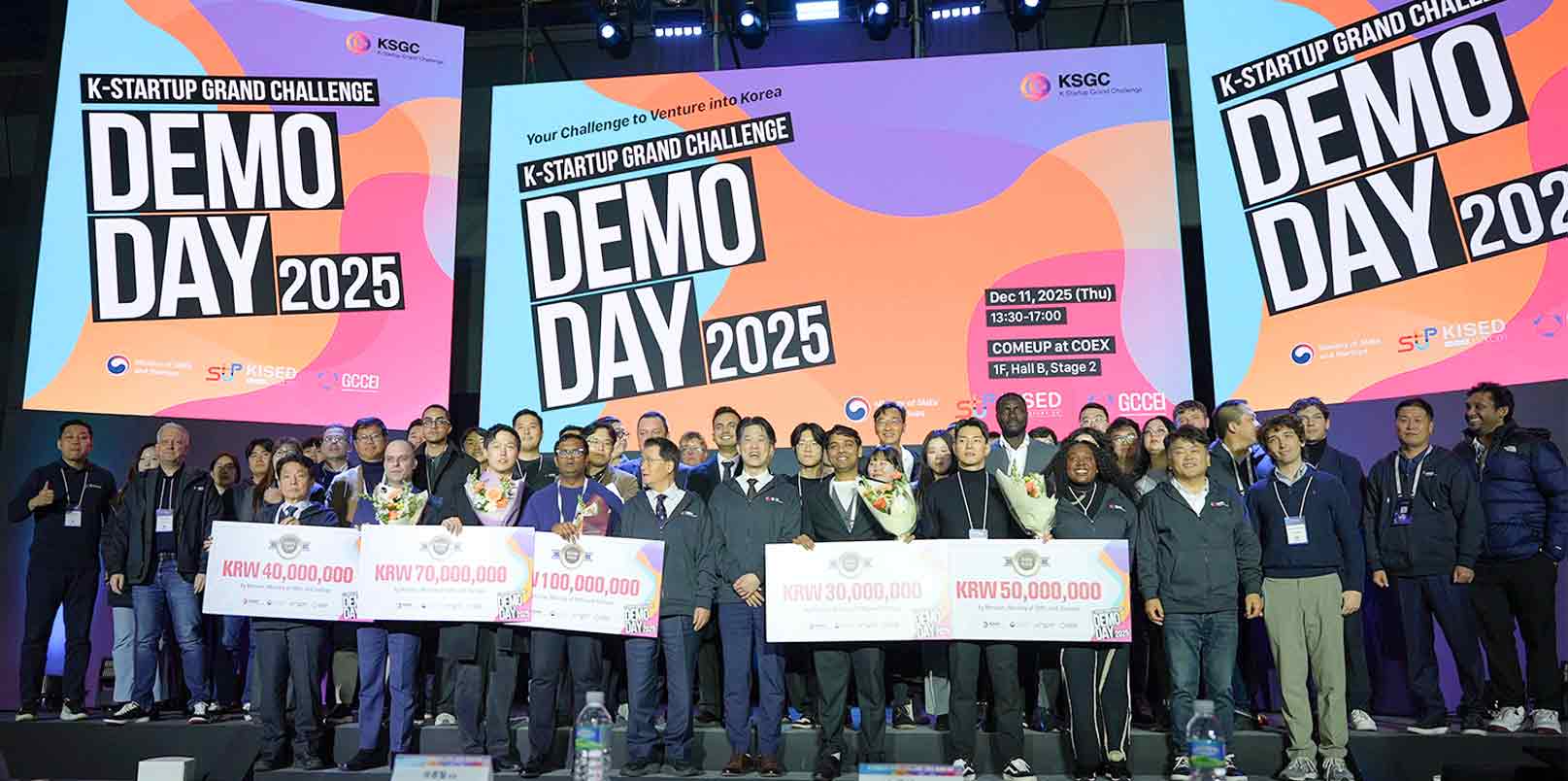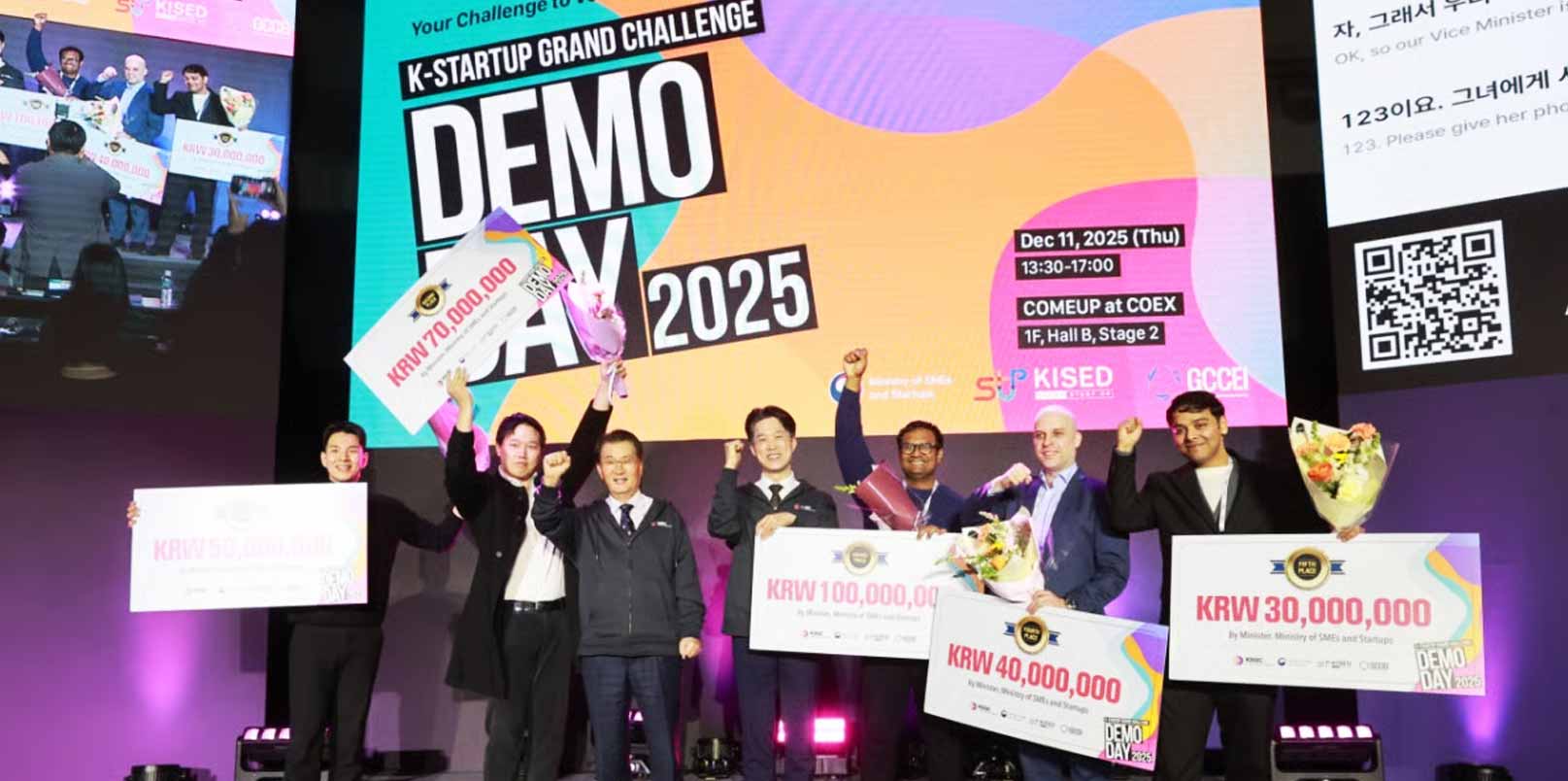
South Korea has become increasingly effective at attracting global founders. Applications for the K-Startup Grand Challenge (KSGC) continue climbing, inbound startup infrastructure is expanding, and the government is steadily lowering early entry barriers for overseas entrepreneurs. Yet after the applications, demo days, and introductions, a harder question begins to emerge inside the ecosystem itself: how many foreign startups can actually build long-term businesses in Korea once the program phase ends?
KSGC 2026 Expands Korea’s Global Founder Pipeline
South Korea’s Ministry of SMEs and Startups (MSS) and the Korea Institute of Startup & Entrepreneurship Development (KISED) officially opened applications for K-Startup Grand Challenge (KSGC) 2026 on May 6, with recruitment running through June 17.
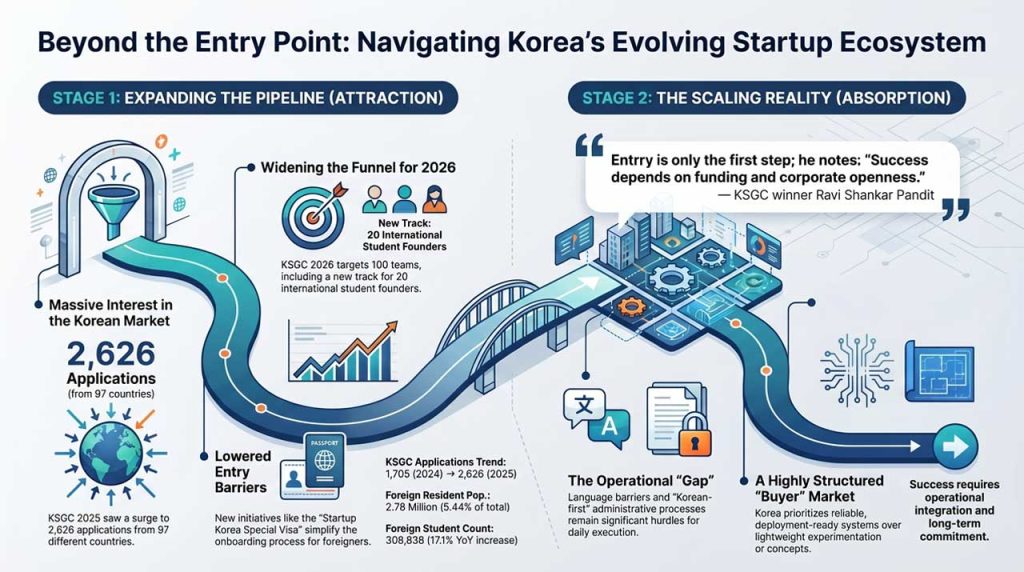
According to official program materials and Korean media reports, this year’s expansion includes around 100 teams across two tracks: approximately 80 teams in the general category and 20 teams in a newly-introduced international student founder track. The student category was added to expand participation from foreign students already studying in Korea.
The timing reflects a broader shift inside Korea’s startup policy direction. Korea is no longer positioning foreign founders only as temporary participants in startup competitions. Increasingly, the government is framing overseas entrepreneurs as long-term contributors to the domestic innovation economy.
Official KSGC materials emphasize incorporation support, visa assistance, corporate partnerships, investor networking, local hiring support, and up to three years of continued post-program support. The broader policy environment has also expanded through initiatives such as the Global Startup Center Korea, the Startup Korea Special Visa, and the Global Startup Commercialization Program.
The scale behind this push is growing quickly. MSS previously reported that KSGC 2025 attracted 2,626 startup teams from 97 countries, sharply higher than the 1,705 applications recorded in 2024.
At the same time, Korea’s foreign resident population reached 2.78 million at the end of 2025, accounting for 5.44% of the country’s population, according to the Ministry of Justice. The number of foreign students also climbed to 308,838, up 17.1% year-on-year.
Together, these figures show that Korea’s foreign founder strategy is increasingly tied to a larger demographic and economic transition.

Korea’s Startup Challenge Is No Longer Attraction Alone
The more difficult issue now sits beyond entry.
Over the past two years, Korea has steadily improved founder onboarding infrastructure: English-language startup programs have expanded, visa pathways have become more flexible, and global startup hubs and settlement centers are also growing.
Still, multiple founders interviewed by KoreaTechDesk over the past year consistently described the same operational reality after entering the market: long-term scaling depends less on access to startup programs and more on whether companies can integrate into Korea’s broader business environment.
Ravi Shankar Pandit, Founder and CEO Konnect and the winner of KSGC 2025, told KoreaTechDesk that attracting founders alone is not enough to determine long-term success.
“Ultimately, long-term success for foreign founders in Korea depends on two things: access to funding and the openness of Korean companies to work with international entrepreneurs beyond initial programs and introductions.”
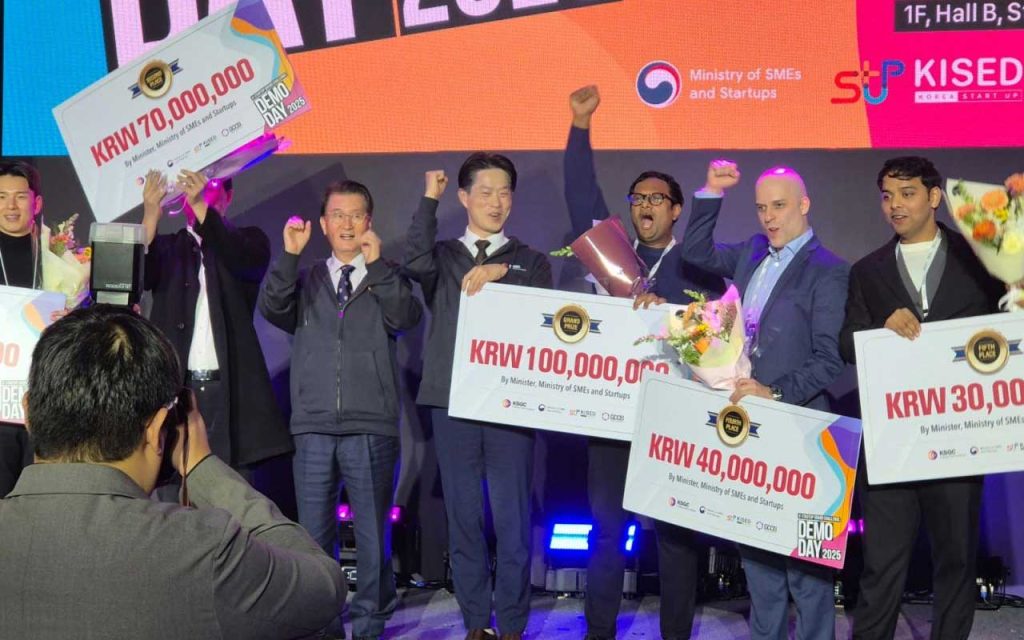
His comments reflect a broader pattern emerging across Korea’s inbound startup ecosystem. Government-led programs increasingly succeed at creating visibility and early connections. The harder phase begins once startups attempt to move into partnerships, procurement systems, deployment discussions, and long-term operations.
Korea Is Expanding Entry Faster Than Operational Accessibility
The introduction of the international student founder track signals that Korea wants to widen its foreign founder funnel earlier and more aggressively.
But scaling founder intake also creates new operational pressure points inside the ecosystem itself.
Pandit noted that language accessibility remains one of the biggest unresolved barriers once founders move beyond startup programs and begin operating locally.
“As more foreign founders enter the ecosystem, operational friction will still remain a challenge, especially around language barriers and Korean-first administrative processes. Many official procedures still operate primarily in Korean, which can make scaling and long-term execution difficult for overseas founders.”
This tension is becoming increasingly important because Korea’s startup ecosystem is no longer operating only as an event-driven exposure platform. It is attempting to function as a long-term business environment for global founders.
Officially, Korea has made visible progress in the language integration. Programs such as the Global Startup Commercialization Program now conduct the entire application and evaluation process in English. The Global Startup Center also provides translation, incorporation, visa, and administrative support.
However, many founders still describe a gap between program-level accessibility and day-to-day operational execution inside the broader market.
That includes:
- navigating Korean-language administrative systems,
- building relationships with local corporates,
- securing long-term capital access,
- integrating into enterprise procurement structures,
- and managing local hiring and compliance.
These issues become more visible after entry, not before it.
Korea’s Ecosystem Is Becoming More Selective About Execution
Another important shift is how Korea increasingly evaluates foreign startups after the initial attraction phase.
Several KSGC founders interviewed previously by KoreaTechDesk described Korea less as a fast-moving startup market and more as a highly structured buyer ecosystem focused on operational reliability.
Ashley Reeves, founder of deep-tech startup ArbaLabs, previously described Korea as an environment that prioritizes systems capable of surviving real-world deployment conditions rather than simply presenting strong concepts.
Meanwhile, TaggIoT founder Hendriansyah, described how Korean pilot discussions often resemble near-production evaluations instead of lightweight experimentation.
This operational culture helps explain why Korea’s startup ecosystem is becoming increasingly valuable for infrastructure, manufacturing, logistics, AI deployment, and enterprise-focused startups. At the same time, it also raises the execution threshold for foreign founders attempting to scale locally.
The expansion of KSGC 2026 therefore signals more than a larger competition cycle.
It reflects Korea’s broader attempt to institutionalize inbound entrepreneurship at scale while simultaneously balancing industrial reliability, corporate integration, and long-term ecosystem coordination.
Korea’s Real Startup Test Begins After KSGC
Finally, KSGC 2026 shows that South Korea is continuing to invest heavily in foreign founder attraction. The country is expanding startup visas, scaling inbound programs, and building more visible support infrastructure for overseas entrepreneurs.
The next challenge is operational absorption.
As more foreign founders enter Korea’s startup ecosystem, the long-term success of the strategy may depend less on how many teams arrive and more on how many can secure funding, integrate into Korean business networks, navigate operational systems, and continue scaling after the structured support period ends.
That distinction matters because Korea’s ecosystem is now evolving beyond startup promotion alone. It is increasingly testing whether global founders can become lasting participants inside one of Asia’s most structured and industrially connected innovation markets.
Key Takeaway
- KSGC 2026 expanded recruitment to around 100 teams, including a newly introduced international student founder track.
- South Korea is widening its foreign founder pipeline through KSGC, startup visas, Global Startup Center Korea, and commercialization programs.
- KSGC 2025 attracted 2,626 applications from 97 countries, highlighting growing international interest in Korea’s startup ecosystem.
- Foreign student numbers in Korea reached 308,838 in 2025, reinforcing the government’s focus on long-term talent integration.
- According to KSGC 2025 winner Ravi Shankar Pandit, long-term founder success depends heavily on funding access and Korean corporate openness beyond initial startup programs.
- Language barriers and Korean-first operational systems remain major scaling challenges after foreign founders enter the market.
- Korea’s ecosystem is increasingly behaving as a structured buyer and deployment market, particularly in deep-tech, infrastructure, logistics, and enterprise sectors.
- The real test for Korea’s inbound startup strategy is no longer founder attraction alone. It is whether the ecosystem can operationally absorb and sustain foreign startups after entry.
– Stay Ahead in Korea’s Startup Scene –
Get real-time insights, funding updates, and policy shifts shaping Korea’s innovation ecosystem.
➡️ Follow KoreaTechDesk on LinkedIn, X (Twitter), Threads, Bluesky, Telegram, Facebook, and WhatsApp Channel.
🤝 Looking to connect with verified Korean companies building globally?
Explore curated company profiles and request direct introductions through beSUCCESS Connect.