Las Vegas was noisy, as CES always is. But what stood out in the K-Startup Pavilion this year wasn’t the flashing prototypes—it was the quiet deals, the measured interest, and the unspoken realization that Korea’s startup ecosystem has changed shape even more. After years of B2C-centric showings, this time the spotlight belonged to companies solving enterprise problems, not chasing consumer attention.
Korean Deep-Tech and B2B Startups Redefine Their Global Image at CES 2026
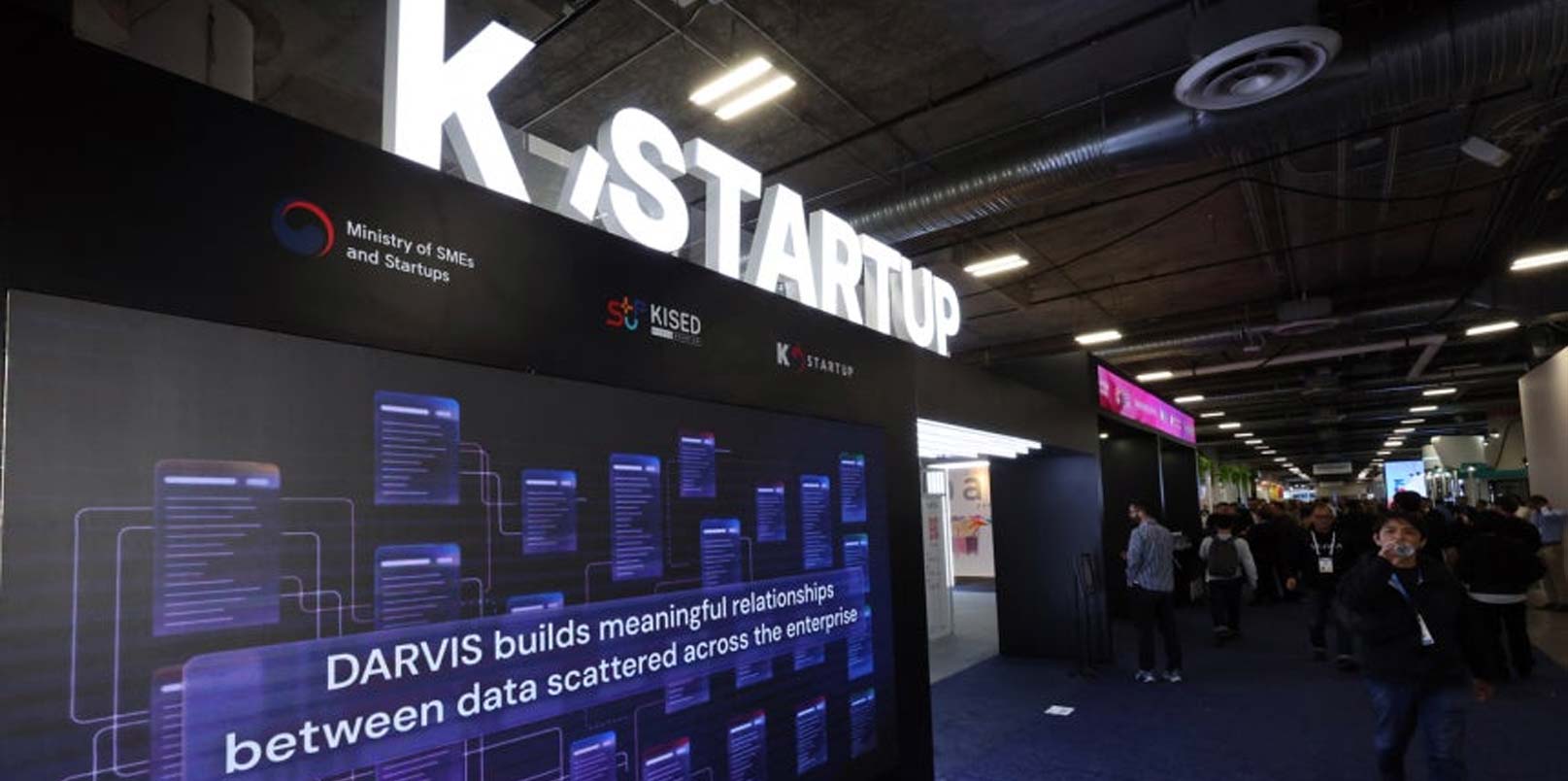
At CES 2026, held from January 6 to 9 in Las Vegas, Korea’s K-Startup Pavilion gathered 81 startups, the largest single-brand presence in Eureka Park.
Supported by the Ministry of SMEs and Startups (MSS) and organized by the Korea Institute of Startup and Entrepreneurship Development (KISED), it showcased startups spanning AI, robotics, energy, and quantum applications—industries traditionally underrepresented in Korea’s startup expos.
Vice Minister Noh Yong-seok of the MSS personally toured the booths of eight CES Innovation Award-winning startups, emphasizing that participation should be “a starting point, not a goal.” He noted that Korean startups were shifting away from consumer apps toward technologies that anchor future industries:
“This year, I saw a striking increase in B2B companies. Many are deep-tech startups showing real technical depth, which means Korea’s startup scene is growing in quality.”
Foreign VCs attending K-Startup Night echoed that sentiment. “Korean startups have the technology; what they need next is strengthening their sales and commercialization capabilities,” one Silicon Valley investor reportedly told Noh.
Korea’s Startup Story Evolves—From Showcasing Innovation to Building Depth
Until recently, Korea’s global startup presence often leaned on visibility—winning innovation awards, demonstrating user-facing products, and appealing to general audiences. CES 2026 marked a tonal break. The companies now driving attention are those building technical infrastructure—machine vision, data processing, industrial automation, and AI middleware—core layers that underpin the digital economy.
Now that shift isn’t just cosmetic. It actually reflects Korea’s larger policy recalibration.
Since 2023, Korea’s startup policy has emphasized “quality over quantity”—fewer show startups, more scale-ready ventures. The government’s global accelerator strategy, including new hubs in Silicon Valley and Singapore, aligns with this.
The success of Korean startups on display—such as Play Legend, a virtual sports platform securing export partnerships, and MAZE, a vision AI firm attracting U.S. investors—illustrate that transformation in motion.
When Korean Innovation Meets Global Reality: The Challenge of Scaling Beyond Policy
Behind the optimism, however, lies a familiar tension. Korea’s startups are strong in technology but often stumble in business development.
As Vice Minister Noh acknowledged, Korean founders “must complement their sales capabilities” to compete globally. Many still rely on government programs for early exposure, which risks creating dependency rather than market readiness.
At CES 2026, several founders privately noted that while investor interest was real, localizing operations abroad—legal incorporation, distribution contracts, or post-investment support—remains a challenge.
Korea’s institutional backing can get startups to the global stage, but sustaining presence requires a different kind of ecosystem maturity: one driven by private networks, not public showcases.
What Korea’s Deep-Tech Momentum Unlocks—and the Gaps Still Holding It Back
The presence of these 81 startups, under an integrated national brand at Eureka Park that involves 470 unified startups and innovators, signals Korea’s soft power in the innovation landscape. It demonstrates coordination and credibility that many smaller ecosystems envy.
Yet, it also highlights what still needs fixing: long-term commercialization pipelines, cross-border operational fluency, and organic investor-founder relationships.
Programs like MSS’s planned Silicon Valley Venture Campus may bridge some of these gaps by embedding Korean founders in local deal ecosystems. Still, structural dependence on government initiative remains an unresolved issue.
Scaling deep-tech requires not just R&D funding but business autonomy—the very trait Korean startups are still cultivating.
Why Korea’s Deep-Tech Shift Matters to Global Investors and Founders
International investors left CES 2026 with a different picture of Korea’s startup landscape. The spotlight no longer sits on consumer gadgets. It has moved toward engineering‑driven companies showing real traction across industrial software, AI infrastructure, and advanced materials.
Global founders see another layer of change. Korea’s public institutions no longer behave like gatekeepers. They increasingly function as growth enablers, opening concrete paths into the market through regulatory support, funding channels, joint programs, and the expanding K‑Startup Center network.
Policymakers watching Korea now face a more complex question. At what point does active government involvement accelerate innovation, and at what point does it begin steering the shape of that innovation too tightly?
Korea’s Next Test Post CES 2026: Turning Deep-Tech Confidence into Global Consistency
CES 2026 did not signal a sudden victory for Korea’s startups. It signaled something more unusual: restraint. This year, founders resisted the urge to overstate ambition and instead presented B2B-driven solutions that invited serious discussion rather than spectacle.
If 2025 was about proving global competitiveness, 2026 may stand as the moment Korea began learning how to compete sustainably. Progress came with less noise, more negotiation, and a clearer sense of what long-term execution actually requires.
🤝 Looking to connect with verified Korean companies building globally?
Explore curated company profiles and request direct introductions through beSUCCESS Connect.
– Stay Ahead in Korea’s Startup Scene –
Get real-time insights, funding updates, and policy shifts shaping Korea’s innovation ecosystem.
➡️ Follow KoreaTechDesk on LinkedIn, X (Twitter), Threads, Bluesky, Telegram, Facebook, and WhatsApp Channel.