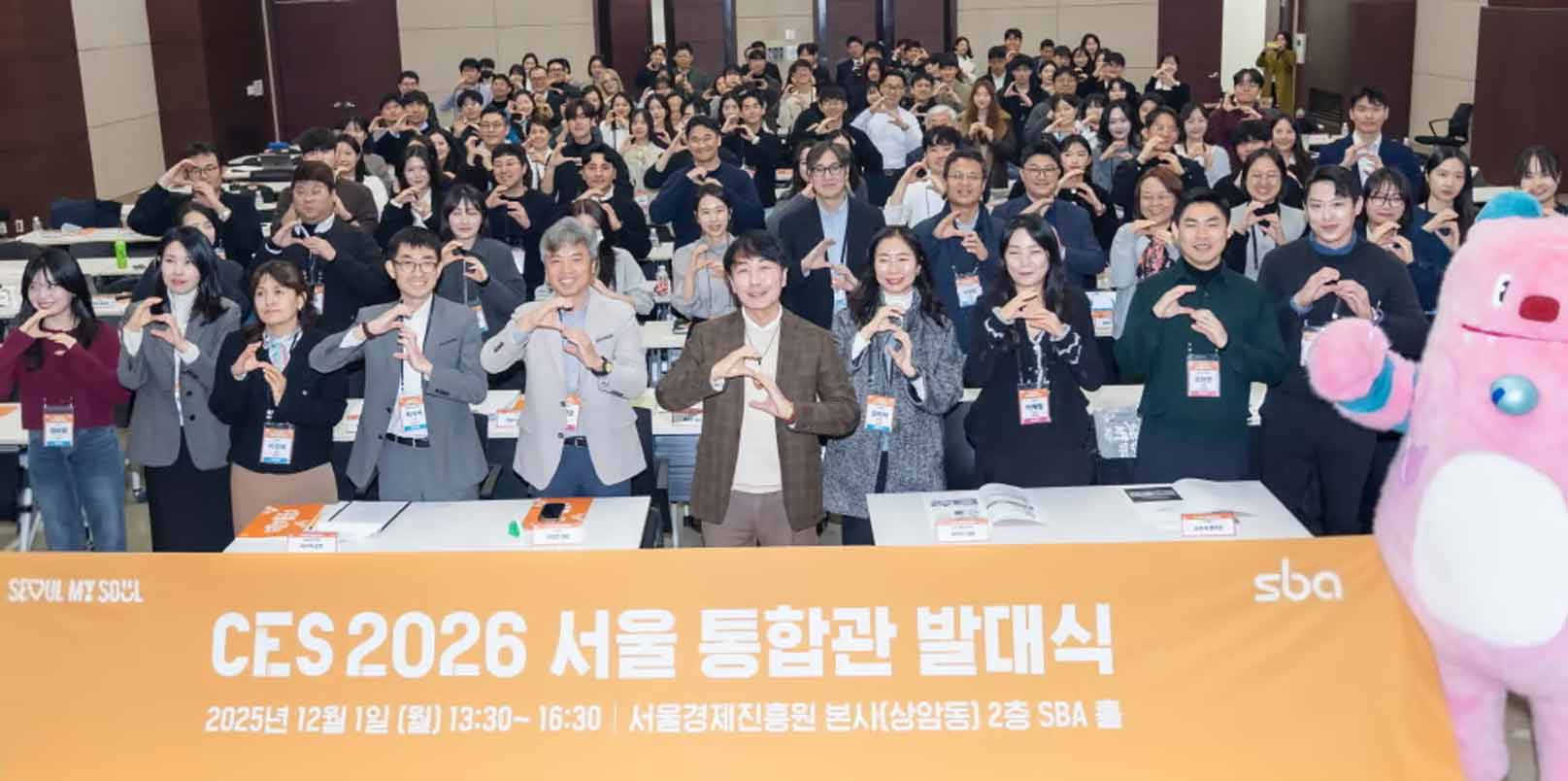
As global attention turns toward Las Vegas this January, Korea’s startup presence at CES 2026 is no longer about showcasing gadgets. It’s about policy, coordination, and the quiet evolution of a national strategy. Through the Seoul Business Agency (SBA) and a record 19 partner institutions, Korea is turning CES into a case study in how public agencies can serve as the scaffolding for global startup expansion.
Seoul Unites 70 Startups for CES 2026 in Record Public–Private Collaboration
At CES 2026, opening on January 6, 2026, in Las Vegas, nearly 70 of Korea’s leading startups will gather under the Seoul Pavilion, jointly organized by the City of Seoul and the Seoul Business Agency (SBA).
For the first time, the effort brings together four autonomous districts — Gangnam, Gwanak, Guro, and Geumcheon — alongside Seoul-affiliated institutions and nine universities, forming the largest CES collaboration in the capital’s history. In total, 19 startup support organizations have joined forces to position Seoul as the most unified local startup ecosystem on the global stage.
And this brings tangible results. According to SBA and CES organizer CTA (Consumer Technology Association), out of 3,600 global Innovation Award entries, Korean companies secured roughly 60 percent of the wins. SBA’s two-month consulting program helped 17 startups claim awards, contributing to Korea’s third consecutive year as the leading nation in CES Innovation Award recognition.
Seoul’s CES 2026 Strategy as Policy Instrument
Since 2022, SBA has treated CES not as a branding exercise but as a policy mechanism for export acceleration. Through its one-on-one Innovation Award consulting program, the agency has systematically refined how startups prepare, apply, and compete for global recognition.
This strategy has yielded measurable outcomes with 18 awardees in 2024, 21 in 2025, and 17 in 2026 — a consistent top-tier performance among global participants. Each year, SBA has refined its methodology, matching startups with IT professors and sector experts to improve their submissions, emphasizing technical depth, design quality, and innovation value.
By embedding this model within its broader startup support system, Seoul is demonstrating how local government-led frameworks can directly enhance Korea’s global startup competitiveness — an approach that contrasts with fragmented initiatives often seen in other countries.
Industry Voices from Korea’s CES 2026 Frontline
Studio Lab, winner of the Top Innovation Award for its AI-based fashion product page generator, attributed its success to SBA’s long-term backing.
CEO Kang Sung-hoon of Studio Lab stated,
“SBA provided years of generous support — from Innovation Award consulting to AI and robotics R&D assistance. We aim to keep building outcomes through sustained collaboration.”
Similarly, First Habit, developer of the AI education platform “Chalk AI,” became a double Innovation Award winner in both AI and Educational Technology categories. Chalk AI’s visual LLM-based immersive learning environment exemplifies how Korean startups are integrating frontier technologies with real consumer value.
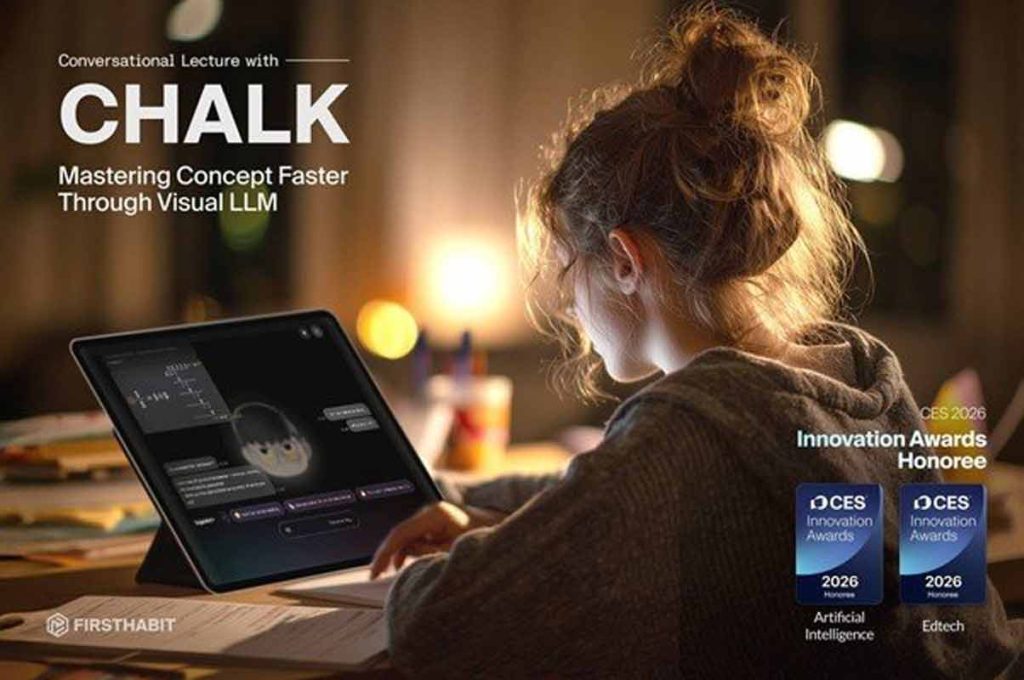
Other honorees include Otiton Medical (smart therapeutic device for ear conditions), Kizling (short-form content platform for children), and QSIM+, a quantum communication startup. All of these companies benefited from SBA’s CES Community Program, underscoring the agency’s multi-sector support structure.
CES 2026: A Policy Blueprint in Action
CES 2026 has evolved into more than just a trade show for Korea. It has now become a policy testing ground for Seoul’s innovation infrastructure.
The Seoul Integrated Pavilion illustrates how public–private coordination can operate as a coherent export mechanism: local governments, universities, and agencies functioning together as an integrated platform for global exposure.
SBA’s concurrent initiatives — including buyer and investor matchmaking, on-site IR pitching, and the Global Innovation Forum — further reflect this systemic approach. The forum, first introduced at CES 2025, expands this year to include seven participating countries — Korea, Japan, Taiwan, Switzerland, the Netherlands, Israel, and Canada.
Each national pavilion will nominate one representative startup to compete in a global IR contest. For Korea, First Habit, the dual Innovation Award winner, will represent the country, gaining expanded promotion and investment support.
According to SBA President Kim Hyun-woo, this effort represents more than participation; it’s about building continuity, saying:
“CES brings together the world’s big tech and the global startup ecosystem. The Seoul Pavilion serves as a platform for startups to directly connect with investors, partners, and media worldwide — and to take that next leap into the global market.”
Global Context: Korea’s Strategic Shift Toward Unified Startup Diplomacy
The scale and structure of Korea’s CES engagement reflect a broader shift in its startup diplomacy. Rather than focusing solely on capital or export incentives, Seoul’s ecosystem is positioning coordination itself — among municipalities, universities, and national agencies — as a form of innovation infrastructure.
This model mirrors global trends toward clustered innovation governance, comparable to Singapore’s EDB–EnterpriseSG partnership or Japan’s METI–Jetro–Startup Japan frameworks, where local ecosystems are synchronized under a national competitiveness agenda.
For Korea, CES 2026 marks the transition from showcasing innovation to governing it — treating startup promotion as statecraft, not spectacle.
Seoul’s Model for the Next Stage of Korea’s Startup Globalization
What stands out about the Seoul Pavilion is not its scale alone but its structure of intent. It represents a maturing of Korea’s startup policy into one that blends visibility, coordination, and measurable impact. The public sector no longer plays a passive supporting role; it has become an active architect of ecosystem outcomes.
As global investors and policymakers look ahead to CES 2026, Seoul’s model shows that national competitiveness now depends not only on innovation itself but on how innovation is organized.
CES 2026 opening ceremony is opening in January 2026 but the CES Innovation Awards announcement itselfhas confirmed Korea’s strong showing even before the event begins. The scale and structure of Seoul’s participation suggest how Korea is shaping its next stage of startup globalization — one grounded in cross-agency collaboration, data-informed policy, and coherent ecosystem governance that could define its innovation exports in the years ahead.
🤝 Looking to connect with verified Korean companies building globally?
Explore curated company profiles and request direct introductions through beSUCCESS Connect.
– Stay Ahead in Korea’s Startup Scene –
Get real-time insights, funding updates, and policy shifts shaping Korea’s innovation ecosystem.
➡️ Follow KoreaTechDesk on LinkedIn, X (Twitter), Threads, Bluesky, Telegram, Facebook, and WhatsApp Channel.