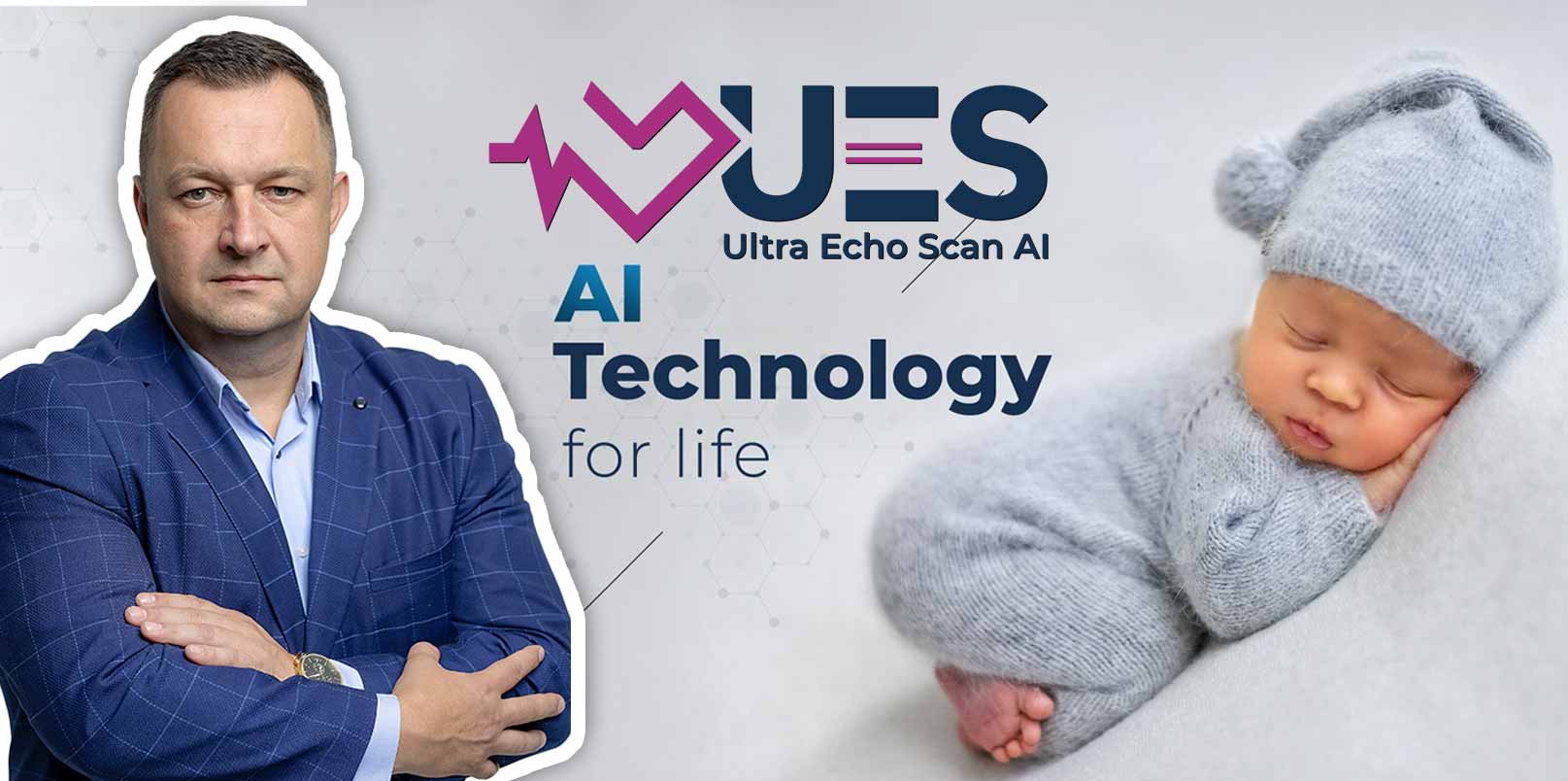
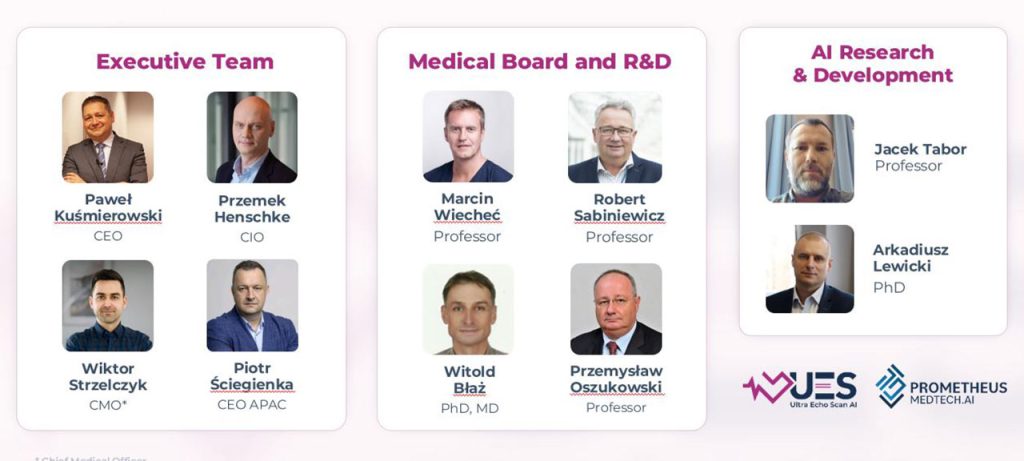
Even in advanced healthcare systems, congenital heart defects often go undetected until it’s too late. Founded by Pawel Kusmierowski, Poland’s Prometheus MedTech.AI is working to change that. The company is using AI to assist physicians through its platform Ultra Echo Scan (UES) in diagnosing heart anomalies in fetuses and newborns faster, more accurately, and more equitably.
In this exclusive interview, co-founder and the company’s APAC CEO Piotr Ściegienka explains how the company is pioneering early cardiac AI screening, why Korea is central to their expansion, and what global healthcare can learn from collaboration as the company advanced through Phase 2 of K-Startup Grand Challenge 2025.
“Korea is our key pillar and KSGC opened the door for our technology to gain real traction in Korea’s healthcare system, creating partnership and validation pathways that move us closer to certification and commercialization.”
Tackling the Silent Crisis in Early Heart Detection with Prometheus MedTech.AI
Q1. What motivated you to start this company, and what core problem were you trying to solve?
We started the company after recognizing a serious and under-addressed issue: the low detection rate of congenital heart defects in fetuses and newborns — only 35–50% are identified early enough. Too many infants are diagnosed late or not at all, creating enormous stress for parents and adding avoidable costs to healthcare systems.
The root of the problem lies in the limited access to pediatric cardiologists. Even in advanced healthcare systems, there are very few specialists, their workloads are heavy, and a full echocardiographic examination of a newborn’s heart is time-consuming. In many cases, a child’s outcome depends on the skill of a single doctor on a particular day. Parents often assume that a “normal” ultrasound means safety, yet many congenital heart defects are still missed during both prenatal ultrasound and pulse oximetry screening.
This situation felt unacceptable. Together with my co-founders, we realized that artificial intelligence could become a powerful ally for physicians—helping them interpret cardiac ultrasound images more quickly and accurately, supporting earlier diagnosis, and ensuring that newborns are referred to pediatric cardiology specialists without delay.
Bridging Technology and Healthcare Equity in Korea
Q2. What opportunity or unmet need did you identify in the Korean market, and what early signals convinced you that your solution could gain real traction here?
In Korea, we identified a clear need for an early, standardized screening pathway for congenital heart disease in both the prenatal and neonatal stages, especially outside the major referral centers. Korea has excellent ultrasound infrastructure and highly skilled medical professionals, but the time and availability of pediatric cardiologists remain limited, especially in regional hospitals.
At the same time, Korea’s government is actively promoting digital innovation in healthcare and prioritizing the early detection of serious diseases. This combination creates a unique opportunity for AI-driven solutions that are clinically reliable, explainable, and seamlessly integrated into existing medical workflows.
Our technology fits perfectly within this vision — helping Korea strengthen its screening system for congenital heart disease and expanding equitable access to advanced cardiac care across all regions.
Lessons from the 2025 KSGC Accelerator
Q3. During KSGC, were there any mentors, partners, or specific insights that significantly influenced your product or strategy?
Through KSGC, we gained a much deeper understanding of how to introduce our software for supporting the diagnosis of congenital heart defects in newborns to the Korean market. We discovered that the pathway for medical device certification and reimbursement in Korea is remarkably similar to that in Poland — both countries operate under comparable frameworks for medical validation and procedural approval.
KSGC played a key role in helping us navigate the practical aspects of market entry, from taxation and employment regulations to establishing the right legal entity structure for future investment and growth. This experience gave us not only a roadmap for entering the Korean healthcare ecosystem but also the confidence that our technology can be smoothly adapted to meet local compliance and certification requirements.
Prometheus MedTech.AI at KSGC 2025: Opening Doors to Clinical Validation in Seoul
Q4. After joining KSGC, what has been the most meaningful change for your company and what evidence supports this growth?
As a MedTech company, our progress depends on certifying our software as Software as a Medical Device (SaMD), which requires extensive clinical validation in hospitals. While we are not yet able to publicly disclose full details of our upcoming projects, we can share that we have successfully drawn the interest of one of the largest hospitals in Seoul in our technology.
Securing such a partnership would not have been possible without the support of government-linked institutions like KSGC. In Korea, hospitals can formally engage with foreign companies only through recognized intermediaries, and KSGC played a crucial role in facilitating this process. The team supported us with document preparation, translation, and — most importantly — introductions and meetings with key healthcare stakeholders.
Thanks to these efforts, our technology has gained genuine interest within the Korean healthcare system, opening the door to future partnerships and validation opportunities that bring us closer to certification and commercialization.
Prometheus MedTech.AI Global Mission: Preventing the Preventable
Q5. Looking ahead, what is the most important vision or long-term goal your company aims to achieve, and what steps are you taking to move toward it?
“No child, anywhere in the world, should suffer harm that could have been prevented by early detection of a congenital heart defect” – this is our long-term vision.
Our primary goal is for AI-supported cardiac screening to become as routine, standardized, and trustworthy as today’s measurements of oxygen saturation or heart rate.
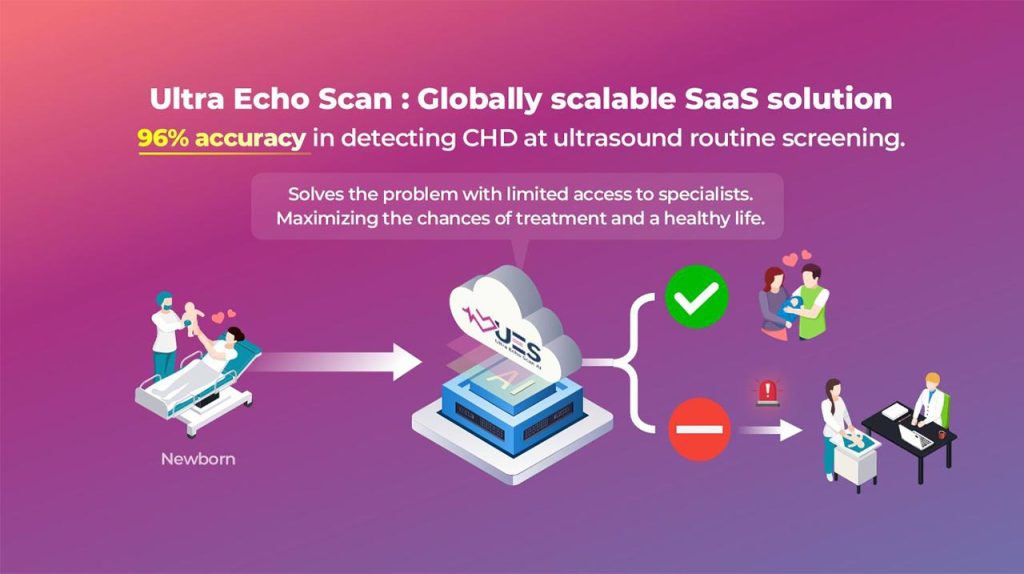
To achieve this, we are building Ultra Echo Scan and the broader Prometheus MedTech.AI platform as a global “cardiac screening layer”—technology that operates seamlessly on existing ultrasound systems and within current clinical workflows. And we have built a clear and concrete roadmap for this mission.
First, we are preparing for rigorous clinical validation in collaboration with leading hospitals, including planned multi-center studies in Korea to support MFDS (Ministry of Food and Drug Safety) registration.
Second, we are designing our solution as a scalable SaaS/SaMD (Software as a Service / Software as a Medical Device) platform that integrates smoothly with PACS (Picture Archiving and Communication System), EMR (Electronic Medical Record), and other vendor systems—making implementation effortless for hospitals.
Third, we are developing a strong reimbursement and health-economic case, demonstrating that early detection of CHD (congenital heart disease) significantly reduces costly emergency interventions and long-term complications.
Finally, we are extending our technology from neonatal to prenatal screening, ensuring earlier and more comprehensive detection.
And in this global roadmap, Korea is the key pillar. Success here will provide both the clinical validation and regulatory credibility needed to expand across the broader Asia-Pacific region, bringing us closer to a world where every newborn benefits from advanced, AI-powered cardiac screening.
From hospitals in Poland to pilot partnerships in Seoul, Prometheus MedTech.AI is building technology that saves time, empowers physicians, and safeguards lives.
Its journey through K-Startup Grand Challenge 2025 highlights how innovation in medical AI isn’t about replacing doctors — it’s about giving every newborn, everywhere, an equal chance at life.

About This Series
This article is part of the “K-Startup Grand Challenge 2025 Interview Series,” featuring 40 global startups from Phase 2 of Korea’s leading accelerator program. The series highlights how international founders are scaling innovation through Korea’s startup ecosystem.
Read more stories from the K-Startup Grand Challenge 2025 Interview Series on KoreaTechDesk.
🤝 Looking to connect with verified Korean companies building globally?
Explore curated company profiles and request direct introductions through beSUCCESS Connect.
– Stay Ahead in Korea’s Startup Scene –
Get real-time insights, funding updates, and policy shifts shaping Korea’s innovation ecosystem.
➡️ Follow KoreaTechDesk on LinkedIn, X (Twitter), Threads, Bluesky, Telegram, Facebook, and WhatsApp Channel.