As cities around the world race toward smarter, more connected futures, one challenge continues to undermine progress: infrastructure failures detected too late. From collapsing bridges to hidden underground leaks, most inspection systems still rely on periodic, manual processes that miss the warning signs of fatigue. That’s the gap Predulive Innovations aims to close.
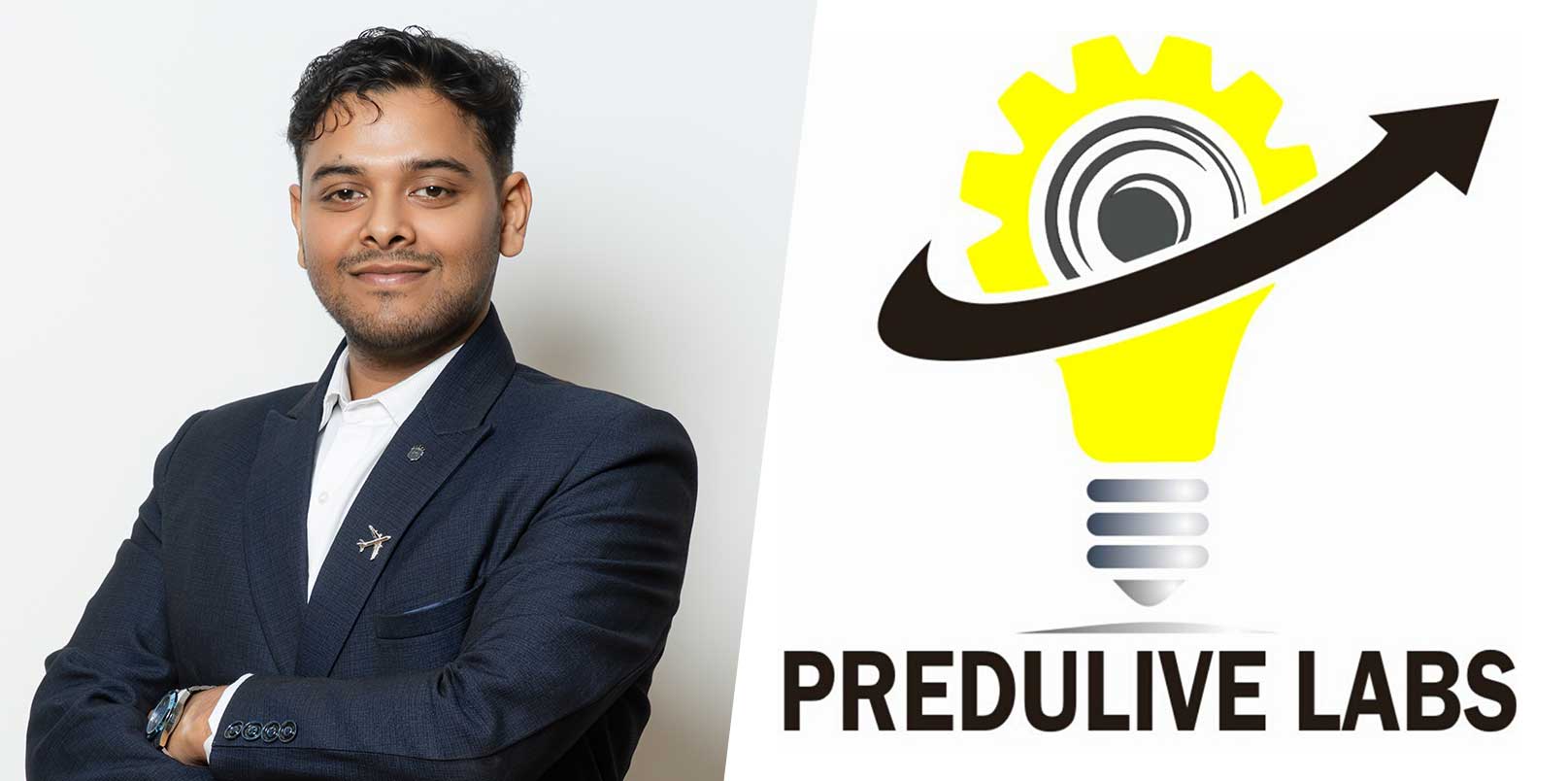
Founded by Shivanshu Dwivedi, an AI and drone technologist with years of experience in smart-city applications, the company is building an edge-AI system that enables real-time, predictive monitoring of critical structures.
In this exclusive KoreaTechDesk interview, Dwivedi discusses how a personal story led to a global mission, how the company grew with K-Startup Grand Challenge 2025 — and how Korea has become the proving ground for next-generation infrastructure safety.
“Since joining KSGC, we have shifted into a Korea-focused company with clear commercial and investment momentum with measurable results across team structure, funding commitments and a growing sales pipeline.”
Turning Personal Tragedy into Predictive Technology with Predulive Innovations
Q1. What motivated you to start this company, and what core problem were you trying to solve?
I founded Predulive Labs to solve a critical global problem of infrastructure failures that are still detected too late due to the manual, slow and reactive inspections. Our core goal is to enable predictive, real-time monitoring that prevents failures before they occur.
My motivation comes from a personal family experience during the 2001 Bhuj Earthquake in India. Several of my relatives were in Gujarat at the time and I grew up hearing how buildings that appeared structurally sound collapsed instantly. Years later, while studying these events, I realized the real issue wasn’t only the natural disasters—it was long-term, undetected structural fatigue.
This experience guided my path into AI, drones and smart-city safety projects over the last seven years. When I came to Korea, I saw a similar structural risk emerging. With 44.4% of buildings now over 30 years old, the country faces an urgent need for continuous monitoring rather than periodic inspections.
Predulive Labs was created to address this gap. Our mission is to provide practical, real-time predictive intelligence to help prevent avoidable infrastructure failures.
Why Predulive Innovations Believes Korea’s Infrastructure Is Ready for an AI Upgrade
Q2. What opportunity or unmet need did you identify in the Korean market, and what early signals convinced you that your solution could gain real traction here?
Korea has a clear unmet need: secure, compliant and uninterrupted infrastructure monitoring that operates independently of foreign cloud services. With nearly half of the nation’s buildings now more than 30 years old, concerns involving sinkholes, bridge degradation and underground utility failures highlight the need for reliable, real-time oversight.
This shows a structural market gap because many of the existing Digital Twin solutions rely on public cloud processing, and this model does not work for government agencies that must maintain full data sovereignty. Infrastructure data cannot be transferred outside Korean premises. Our edge-native platform was designed specifically to address this issue. All processing runs locally through our on-site AI Box, ensuring complete data retention within Korea.
The early signals of traction were strong and specific. We received six paid project Letters of Intent from partners such as VisualCam, BrainDeck and Airport Safety, along with several MoUs from organizations active across Korea’s built-environment sector. We also received early investment interest from ecosystem partners. Together, these signals confirm that our solution aligns well with Korea’s regulatory expectations and market needs.
Lessons in Localization: The KSGC Effect
Q3. During KSGC, were there any mentors, partners, or specific insights that significantly influenced your product or strategy?
The most influential guidance we received during K-Startup Grand Challenge 2025 was the importance of treating regulatory localization as a core part of the product, not a final step. Mentors from CNT Tech and the KSGC team encouraged us to align with standards from MOLIT and KICT from the outset rather than after deployment.
This advice prompted a significant shift in our roadmap. We recognized that without the right certifications, our solution would be legally excluded from government tenders regardless of its technical performance. As a result, we prioritized KC Certification for our hardware, adopted a fully on-premise architecture to ensure data sovereignty and prepared documentation tailored to public procurement requirements.
This adjustment strengthened our credibility in Korea and reframed our role from an external software provider to a potential local supplier capable of meeting government expectations. Without this early guidance to localize our compliance strategy, our initial global-first approach would not have gained traction in the Korean public infrastructure market.
From Market Exploration to Real Commercial Momentum
Q4. After joining KSGC, what has been the most meaningful change for your company and what evidence supports this growth?
The most significant change since joining KSGC has been our shift from operating as a foreign entrant to becoming a Korea-focused company with clear commercial and investment momentum. Before entering the program, we were assessing the market; now, we are actively contributing to it.
This progress is reflected in several concrete developments. On the investment side, we secured 150 million KRW in Investment Letters of Intent from CNT Tech and Glide Ventures, offering institutional validation from leading Korean accelerators. Our commercial traction has also strengthened. We have also signed five MoUs with Korean industry partners and received multiple Paid Project LoIs, demonstrating that partners recognize and are ready to pay for the value we provide.
As for the team level, we onboarded a Korean co-founder and added a local sales partner. And this became an essential step in a relationship-driven B2G environment where trust and local leadership are key.
We have also built working relationships with district offices and infrastructure operators, further confirming the need for edge-based monitoring in Korea. These developments show clear market acceptance. In a short period, our Korea-specific direction has translated into measurable results across team structure, funding commitments and a growing sales pipeline.
Building the Operating System for Infrastructure Safety
Q5. Looking ahead, what is the most important vision or long-term goal your company aims to achieve, and what steps are you taking to move toward it?
Our long-term objective is to build the standard operating system for infrastructure safety in Korea, supporting continuous and predictive monitoring across bridges, buildings, tunnels and utility networks. By 2030, we aim to oversee digital-twin monitoring for more than $2.2 billion worth of Korean assets, positioning our platform as a foundational layer for the country’s aging infrastructure.
So to move toward this goal, we have prepared structured and actionable next steps. We will begin with completing the incorporation of Predulive Labs Korea and expand our engineering presence in Pangyo. On the technical side, we plan to finalize KC Certification for our AI Edge Box and submit our application to the TIPS Program, a key milestone for funding deep-tech R&D and gaining formal government recognition.
Then, from a commercial perspective, we intend to convert existing Letters of Intent into a Seed Round and secure our first direct B2G contract in 2026.
Korea serves as our primary reference market. Operating successfully within its strict regulatory environment provides a “gold standard” validation that supports expansion into Southeast Asia and the Middle East, where demand for Korean-standard smart city technology is growing.
Our focus remains on practical execution, regulatory alignment and sustainable scaling.
Predulive’s vision represents a shift in how societies can manage urban safety — not through reaction, but prediction. With its edge-based AI and strong foundation in Korea’s regulatory ecosystem, the company stands at the frontier of a new kind of infrastructure intelligence: one that could define how cities prevent disasters before they happen.
About This Series
This article is part of the “K-Startup Grand Challenge 2025 Interview Series,” featuring 40 global startups from Phase 2 of Korea’s leading accelerator program. The series highlights how international founders are scaling innovation through Korea’s startup ecosystem.
Read more stories from the K-Startup Grand Challenge 2025 Interview Series on KoreaTechDesk.
🤝 Looking to connect with verified Korean companies building globally?
Explore curated company profiles and request direct introductions through beSUCCESS Connect.
– Stay Ahead in Korea’s Startup Scene –
Get real-time insights, funding updates, and policy shifts shaping Korea’s innovation ecosystem.
➡️ Follow KoreaTechDesk on LinkedIn, X (Twitter), Threads, Bluesky, Telegram, Facebook, and WhatsApp Channel.