In a digital economy obsessed with innovation, few stop to consider the vast amount of usable technology quietly gathering dust. Pierrot Company, founded by Minjin Park, is one of the few building a system to change that.
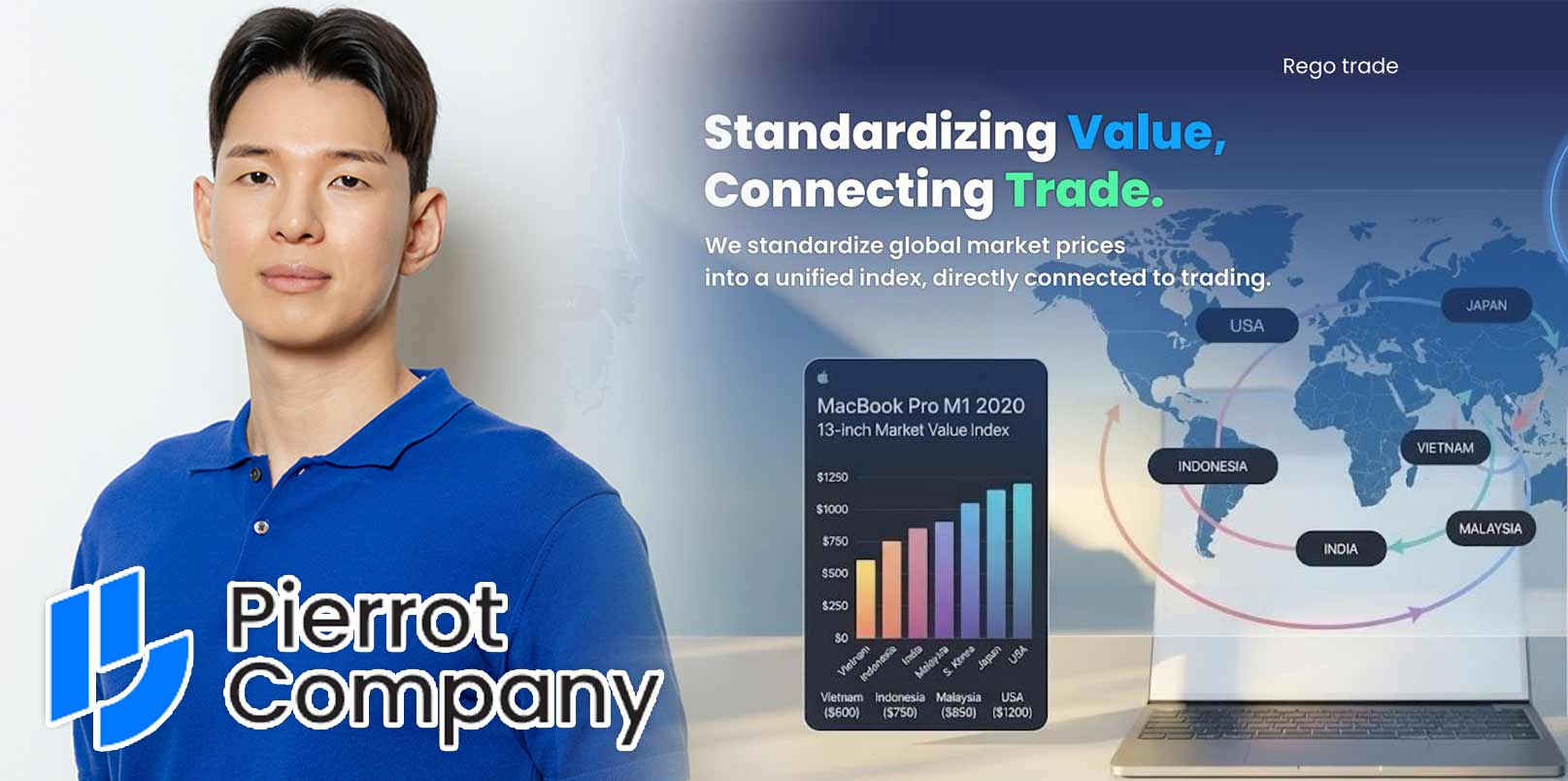
Through platforms like phoneGO, reGO, and reGO Trade, the company has created a transparent, scalable model for recovering, reusing, and redistributing IT devices — turning what once was waste into an asset with measurable impact.
Pierrot Company progressed through Phase 2 and eventually won the third place of K-Startup Grand Challenge 2025. And so, Pierrot Company founder shares in this exclusive interview how a simple idea about responsible reuse evolved into an investable, globally scalable platform connecting Korea’s idle tech inventory to markets in need.
“KSGC was more than just a program for us. It was also a turning point that provided the momentum, partners, and conviction to move forward at a much faster pace.”
The Origin of Pierrot Company: Building a Circular Bridge for Technology
Q1. What motivated you to start this company, and what core problem were you trying to solve?
Too many perfectly usable IT devices remain idle or discarded, even though there are communities that urgently need them.
I decided to start this company after repeatedly seeing how easily electronic devices are thrown away once they fall out of use, while people in other regions still struggle to access the same devices at an affordable price. This imbalance felt both inefficient and unnecessary.
Through operating phoneGO, I saw this reality even more clearly. Companies and individuals often had fully functional devices but lacked reliable processes for handling them responsibly. As a result, these assets sat in storage or were discarded, while demand for the same models remained high in emerging markets—especially in education and small business sectors.
And so for me, bridging this gap was never just about reselling electronics. It was about extending the lifecycle of technology and creating a system where unused assets can generate new value in the right environment.
In essence, the core problem we set out to solve is simple: usable IT devices are not fulfilling their potential because they are stuck in the wrong place.
Building a seamless, transparent flow of recovery, reuse, and redistribution became the starting point of our journey.
The Hidden Potential of Korea’s Idle Devices
Q2. What opportunity or unmet need did you identify in the Korean market, and what early signals convinced you that your solution could gain real traction here?
The first opportunity I recognized in the Korean market was the unexpectedly large volume of underutilized IT devices held by both companies and individuals. In many organizations, laptops are replaced on short refresh cycles, leaving large numbers of perfectly functional devices sitting in storage without a clear or trustworthy recovery process. I saw unmistakable demand for a transparent, well-structured reuse system that could transform idle devices into real value.
As we operated phoneGO and reGO, the signals of real market traction became unmistakable. Our combined B2C and B2B subscription services quickly surpassed 5,000 users, while inquiries for device recovery and resale continued to grow. More importantly, corporate clients who tried our service once often returned for additional recovery or resale requests, showing that this was not a one-time need but an ongoing operational requirement.
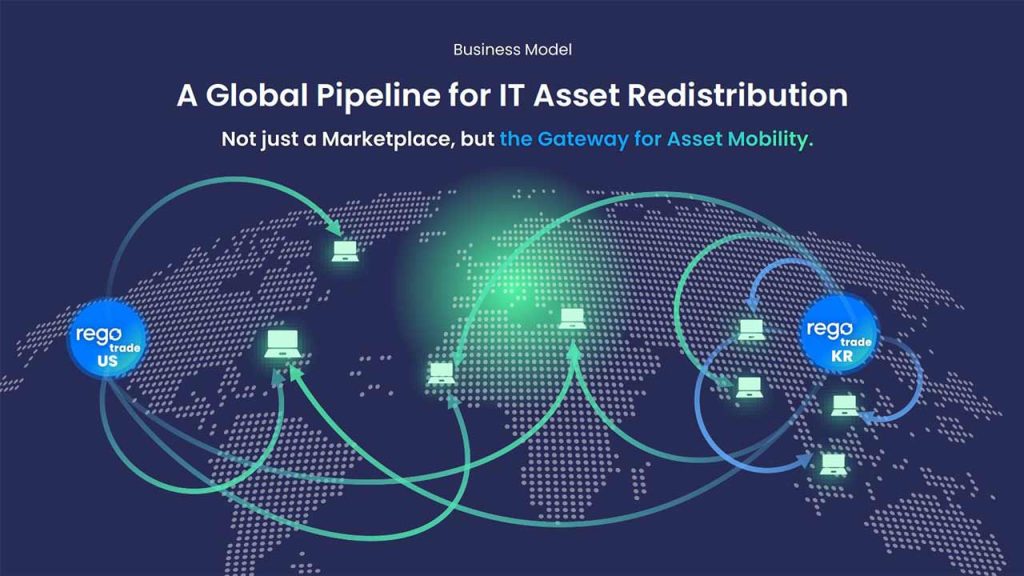
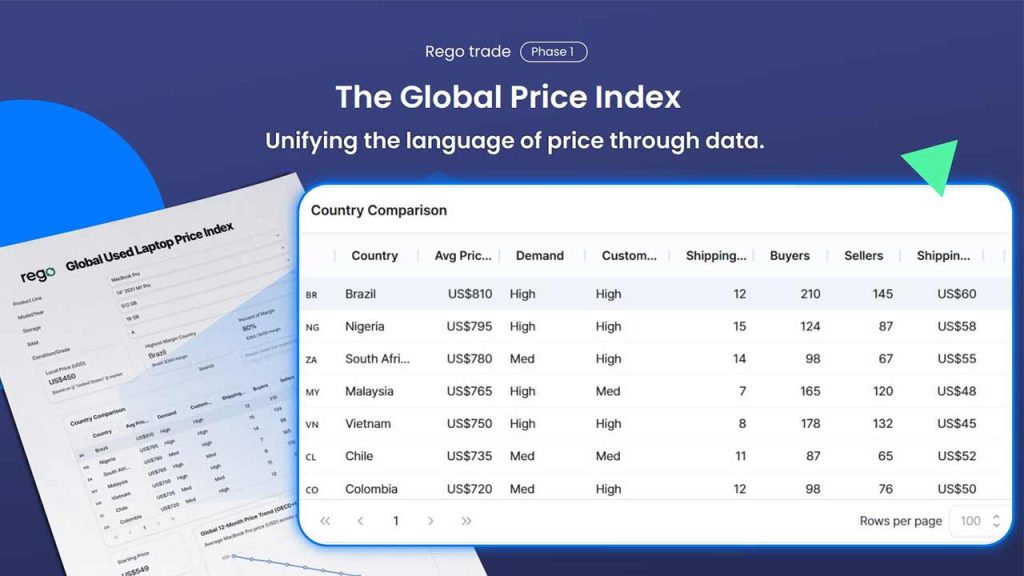
We also began receiving targeted purchase requests from international buyers seeking specific device models and quantities. This confirmed the global potential of our mission: connecting Korea’s idle IT assets with active demand in overseas markets.
Turning Mentorship Into Momentum
Q3. During KSGC, were there any mentors, partners, or specific insights that significantly influenced your product or strategy?
One of the most valuable aspects of the KSGC program was the direct guidance we received from the Gyeonggi Center for Creative Economy & Innovation. Their insights on market structure, partnership opportunities, and the practicalities of running pilot projects helped us refine our strategy in a concrete and grounded way.
We also received meaningful support from SparkLabs and CNT Tech, whose engagement went beyond mentorship and led to actual investment. Their involvement gave us clearer direction for global expansion and strengthened our confidence in the scalability of our model.
Equally important was the opportunity to interact with startups from around the world. Listening to their pitches and learning from their diverse approaches broadened my perspective and encouraged me to think bigger about the kind of impact we want to create. It also reminded me that a founder’s role is not only to achieve economic results but to contribute positively to the broader community.
Together, these experiences sharpened the long-term direction of reGO and reGO Trade, helping us evolve from an operational platform into a company with a clearly defined global mission.
Investment, Direction, and Acceleration of Pierrot Company at KSGC 2025
Q4. After joining KSGC, what has been the most meaningful change for your company and what evidence supports this growth?
Since joining the KSGC program, our company has experienced several meaningful changes, but the most transformative impact has been the combination of strategic clarity and real investment.
The program allowed us to reexamine and refine our business model, particularly how reGO and reGO Trade should evolve into globally scalable platforms. Through extensive discussions with mentors and industry partners, we defined clearer pathways for partnerships, product development, and cross-border logistics. This process helped us identify which parts of our model needed reinforcement and where the long-term opportunities truly lie.
Another major outcome was the expansion of our professional network. KSGC connected us with global partners, logistics specialists, and other founders whose practical insights directly shaped our international roadmap. These interactions made our expansion strategy not only more ambitious but also more realistic and actionable.
Most importantly, the program led to actual investment. Both SparkLabs and CNT Tech chose to invest after evaluating our model and its potential. Their involvement goes far beyond financial backing—they are now strategic partners who share our vision and are committed to supporting our next phase of growth.
This investment gives us the resources and confidence to accelerate the development of reGO Trade and build the global reuse infrastructure we have envisioned from the start.
In essence, KSGC was more than just a program for us—it was a turning point that provided the momentum, partners, and conviction to move forward at a much faster pace.
Pierrot Company: Redefining Value in the Global IT Lifecycle
Q5. Looking ahead, what is the most important vision or long-term goal your company aims to achieve, and what steps are you taking to move toward it?
Our long-term vision is to build a company that delivers both economic value and measurable environmental and social impact. We want to prove that a business can be financially strong, capable of showing a clear J-curve growth trajectory that attracts investors, while also driving meaningful change in how the world treats its unused IT assets. Our goal is not to simply operate a profitable company, but to redefine the global standard for responsible technology circulation.
To achieve this, we are continually refining our business model and deepening our understanding of global market dynamics. We invest time in learning from international partners, studying best practices, and strengthening the operational fundamentals that will allow us to scale sustainably. Above all, I recognize that this vision can only be realized through collaboration—with talented teammates and mission-aligned partners who share our belief that this market can and must evolve.
reGO Trade represents the foundation of that vision. Building on the model we have validated in Korea, our ambition is to evolve into a global platform that actively solves the problem of unused IT assets. Over time, we aim to become a catalyst for a more sustainable and equitable global market, where devices circulate efficiently across borders and create new value for both people and the planet.

Through the K-Startup Grand Challenge 2025, Pierrot Company has emerged as a leader in Korea’s growing reuse economy—a reminder that sustainability and profitability can coexist when technology is treated as an enduring asset, not disposable waste.
About This Series
This article is part of the “K-Startup Grand Challenge 2025 Interview Series,” featuring 40 global startups from Phase 2 of Korea’s leading accelerator program. The series highlights how international founders are scaling innovation through Korea’s startup ecosystem.
Read more stories from the K-Startup Grand Challenge 2025 Interview Series on KoreaTechDesk.
– Stay Ahead in Korea’s Startup Scene –
Get real-time insights, funding updates, and policy shifts shaping Korea’s innovation ecosystem.
➡️ Follow KoreaTechDesk on LinkedIn, X (Twitter), Threads, Bluesky, Telegram, Facebook, and WhatsApp Channel.
🤝 Looking to connect with verified Korean companies building globally?
Explore curated company profiles and request direct introductions through beSUCCESS Connect.