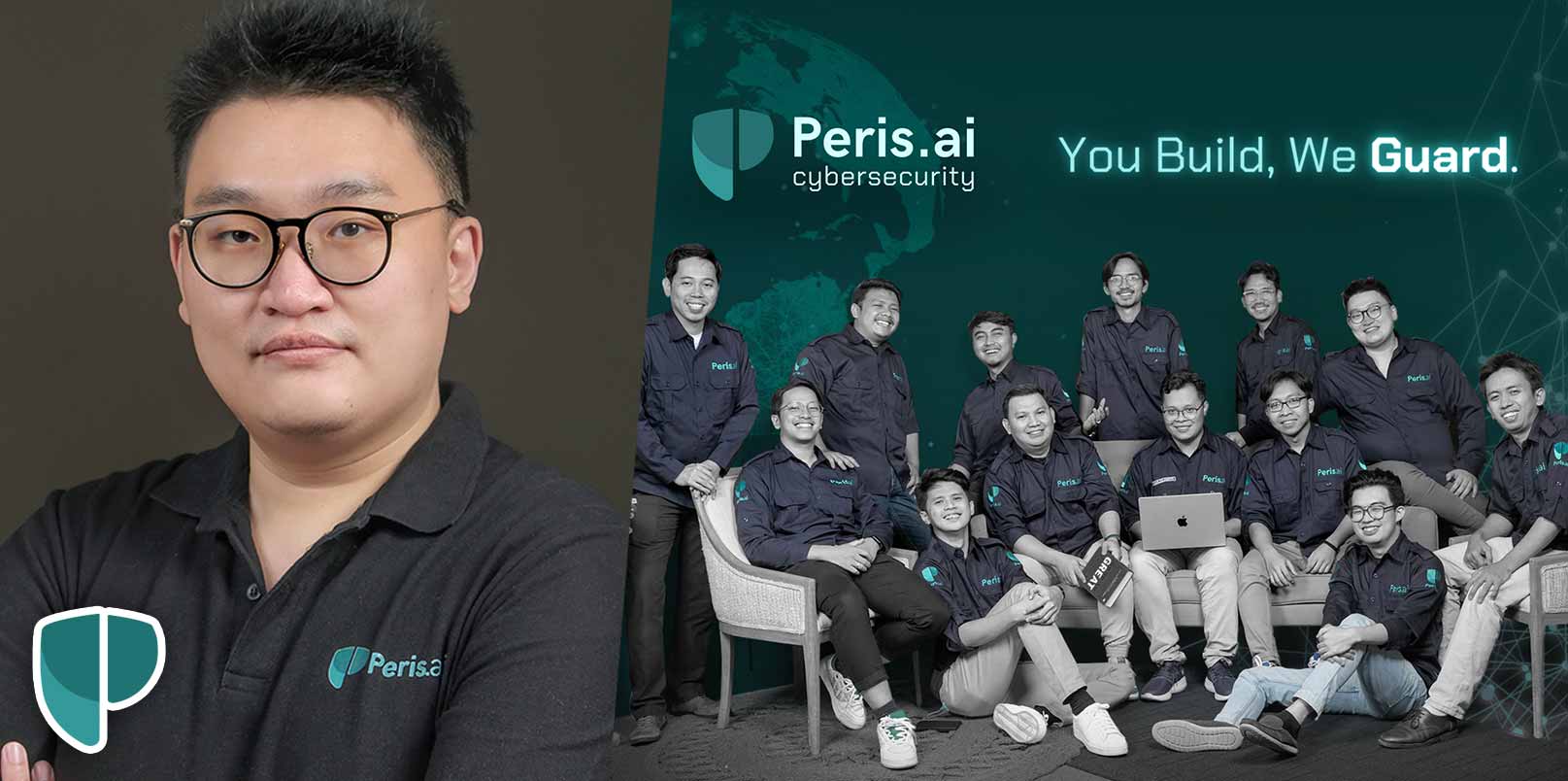
Every day, enterprises are bombarded with millions of security alerts—far more than any human team can handle. Peris.ai, founded by David Samuel, a cybersecurity veteran with over a decade of red teaming and SOC operations experience, believes it’s time for AI to take command.
As the company advanced through Phase 2 of K-Startup Grand Challenge 2025, Samuel shared how Peris.ai is transforming the future of cybersecurity through agentic AI, why Korea became one of its earliest focus markets, and how the program helped refine its go-to-market approach.
“KSGC has amplified our visibility, sharpened our market strategy, and positioned Peris.ai for sustainable expansion within Korea and across Asia.”
Peris.ai in Redefining Defense: From Human Overload to AI Autonomy
Q1. What motivated you to start this company, and what core problem were you trying to solve?
Modern cybersecurity is too slow, too manual, and too complex for most organizations to manage effectively.
The motivation to start Peris.ai came from witnessing how security teams everywhere were drowning in alerts, buried under fragmented tools, and unable to respond to threats fast enough despite heavy investment in technology.
Our founder and leadership team had spent years inside enterprise security operations and saw the same pattern repeat: long investigation cycles, limited staff capacity, and disconnected systems, leaving companies exposed. We believed there had to be a better way, one where technology itself could shoulder the operational load instead of humans chasing endless logs.
That belief led us to build an autonomous security platform powered by agentic AI—technology capable of investigating, correlating, and reporting threats in minutes. Our mission from day one has been to remove the operational barriers that prevent companies from achieving strong protection and to make advanced cybersecurity accessible not only to the largest enterprises, but to every organization that needs it.
Korea’s Fast-Moving Digital Economy Needs Autonomous Defense
Q2. What opportunity or unmet need did you identify in the Korean market, and what early signals convinced you that your solution could gain real traction here?
Many Korean organizations face fast-growing cyber threats but still rely on manual security processes that can’t scale with the volume of daily alerts. They need an autonomous system that reduces investigation time, improves accuracy, and operates without requiring large SOC teams.
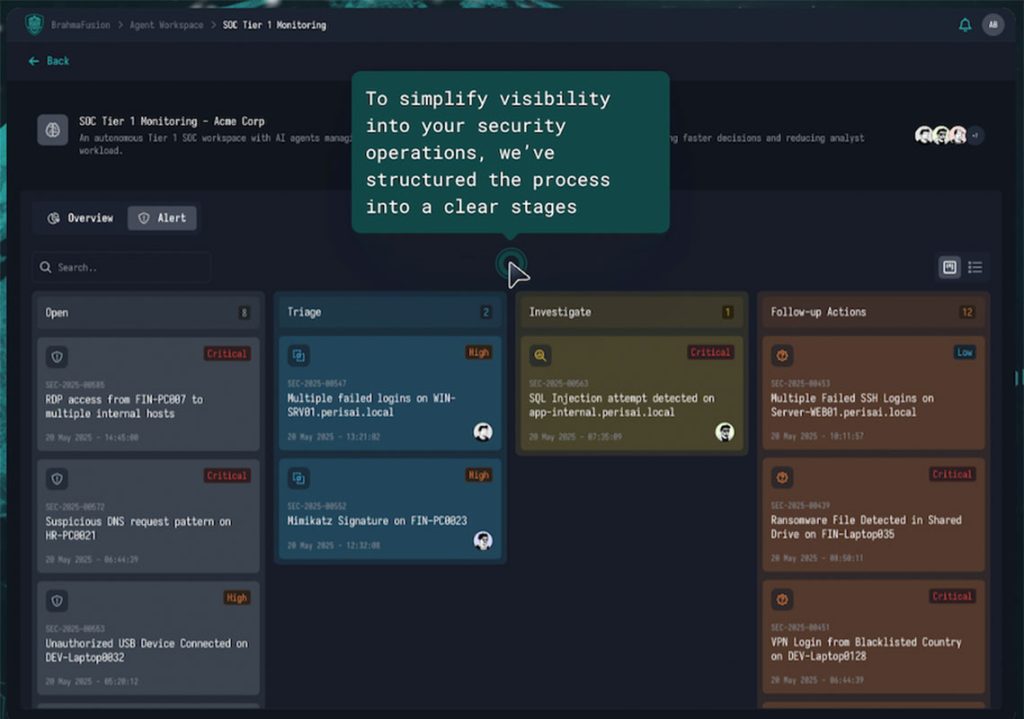
Early signals confirmed this demand. During our initial discussions, Korean companies consistently described the same pain points—alert fatigue, staff shortages, and the inefficiency of manual triage. When our AI agents were deployed, the results were immediate: investigation workloads were cut by more than half, and teams reported sharper visibility through clear, consistent reports generated in minutes.
The strong response from local security communities and requests for deeper collaboration from potential partners reinforced our belief that Korea is ready for autonomous cybersecurity systems that can match the country’s digital speed and precision.
Insights from KSGC 2025 That Changed the Playbook
Q3. During KSGC, were there any mentors, partners, or specific insights that significantly influenced your product or strategy?
One of the most influential aspects of KSGC was the mentorship we received from experts with deep experience in Korean enterprise operations. The most valuable insight came from understanding how Korean organizations balance two priorities—precision and operational simplicity—within their security workflows.
A mentor helped us recognize that our autonomous investigation and reporting capabilities addressed a critical gap for teams facing high alert volumes but limited staff capacity. This prompted us to strengthen our AI agents to produce clearer, more structured reports aligned with the expectations of Korean SOC teams and compliance frameworks.
We also learned that in Korea, trust and local compliance are as important as performance. This insight guided us to refine our integration strategy so our platform seamlessly connects with the tools Korean companies already rely on. Collectively, these lessons reshaped our go-to-market approach and accelerated our traction in the region.
Scaling Trust and Speed Through Korean Partnerships
Q4. After joining KSGC, what has been the most meaningful change for your company and what evidence supports this growth?
The most meaningful change after joining KSGC has been the strong market validation and surge in qualified business opportunities that followed our participation in the program. KSGC opened direct conversations with Korean enterprises and strategic partners who immediately recognized the value of autonomous security operations. These interactions led to active engagements and a growing pipeline across finance, technology, and manufacturing—sectors that demand both speed and accuracy in threat response.
This exposure expanded our presence in Korea while giving us deeper insight into how local SOC teams operate. It directly influenced our product roadmap, driving improvements in structured investigation reporting and tighter integration with enterprise tools commonly used in Korea.
We also saw measurable growth indicators: a notable rise in qualified inbound inquiries, larger deal sizes than projected, and stronger investor confidence backed by this clear regional traction. Collectively, these outcomes demonstrate how KSGC has amplified our visibility, sharpened our market strategy, and positioned Peris.ai for sustainable expansion within Korea and across Asia.
Peris.ai and the Path Toward a Fully Autonomous Cyber Future
Q5. Looking ahead, what is the most important vision or long-term goal your company aims to achieve, and what steps are you taking to move toward it?
Our long-term vision is to build a future where cybersecurity is fully autonomous—a world in which every organization, regardless of size or resources, can achieve strong protection without large teams or complex operations. We envision AI systems that handle the heavy investigative work, correlate data instantly, and deliver reliable decisions in real time, allowing human experts to focus on strategy instead of managing endless alerts.
To move toward this vision, we are continuously advancing the intelligence of our AI agents so they can perform deeper analysis, generate clearer reports, and adapt autonomously to emerging threats. We are also expanding our modular platform to support diverse enterprise environments, ensuring that companies can implement autonomous security seamlessly on top of their existing infrastructure.
Our partnerships and pilot deployments across Korea, Southeast Asia, and the Middle East provide real-world insights that guide our product evolution and validate new capabilities. In parallel, we are investing in research, certifications, and global integrations that reinforce trust and readiness for scale. Each of these steps brings us closer to our mission—making autonomous cybersecurity the global standard, from mid-market innovators to the largest enterprises.
Peris.ai represents a new philosophy in cybersecurity—AI as an operator, not just an assistant. Through the K-Startup Grand Challenge 2025, the company has transformed its vision into a market-ready solution built for precision-driven economies like Korea. As digital transformation accelerates, Peris.ai’s approach could become the model for the next era of intelligent, self-operating defense systems.
About This Series
This article is part of the “K-Startup Grand Challenge 2025 Interview Series,” featuring 40 global startups from Phase 2 of Korea’s leading accelerator program. The series highlights how international founders are scaling innovation through Korea’s startup ecosystem.
Read more stories from the K-Startup Grand Challenge 2025 Interview Series on KoreaTechDesk.
– Stay Ahead in Korea’s Startup Scene –
Get real-time insights, funding updates, and policy shifts shaping Korea’s innovation ecosystem.
➡️ Follow KoreaTechDesk on LinkedIn, X (Twitter), Threads, Bluesky, Telegram, Facebook, and WhatsApp Channel.
🤝 Looking to connect with verified Korean companies building globally?
Explore curated company profiles and request direct introductions through beSUCCESS Connect.