The future of Korea’s creative economy isn’t unfolding in studios or concert halls—it’s taking shape inside headsets, immersive theaters, and global innovation stages. At SIGGRAPH Asia 2025, Korean startups proved that art and technology are no longer separate worlds. They are building a new export engine—one where culture, code, and creativity converge into Korea’s next global growth narrative.
SIGGRAPH Asia 2025: A Global Stage for Korea’s Art-Tech Ecosystem
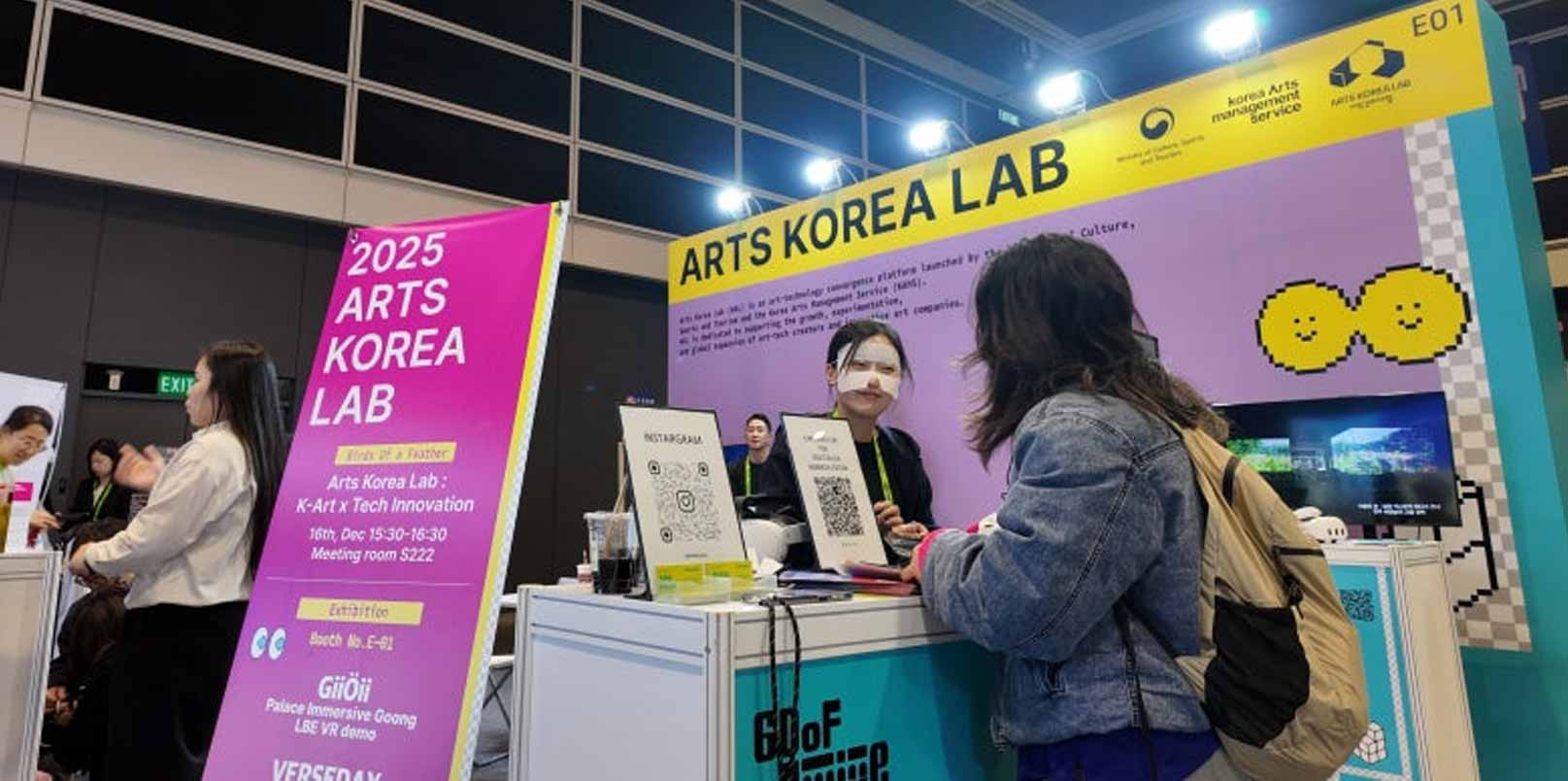
At SIGGRAPH Asia 2025 in Hong Kong, Korea’s art-tech ecosystem demonstrated its creative and technological strength to a global audience.
Hosted by the Association for Computing Machinery (ACM), the event gathered more than 9,000 artists, developers, researchers, and investors to explore new intersections of creativity and technology across the Asia-Pacific region.
Through Arts Korea Lab (AKL)—an art-tech incubator under Korea Arts Management Support Service (KAMS) and the Ministry of Culture, Sports and Tourism (MCST)—four leading Korean startups presented groundbreaking projects that combined immersive storytelling, cultural heritage, and advanced media technologies.
These projects did more than showcase Korean creativity—they positioned art-tech as a serious frontier for innovation, business, and soft power in Korea’s expanding creative economy.
Reimagining Heritage Through Immersive Technology
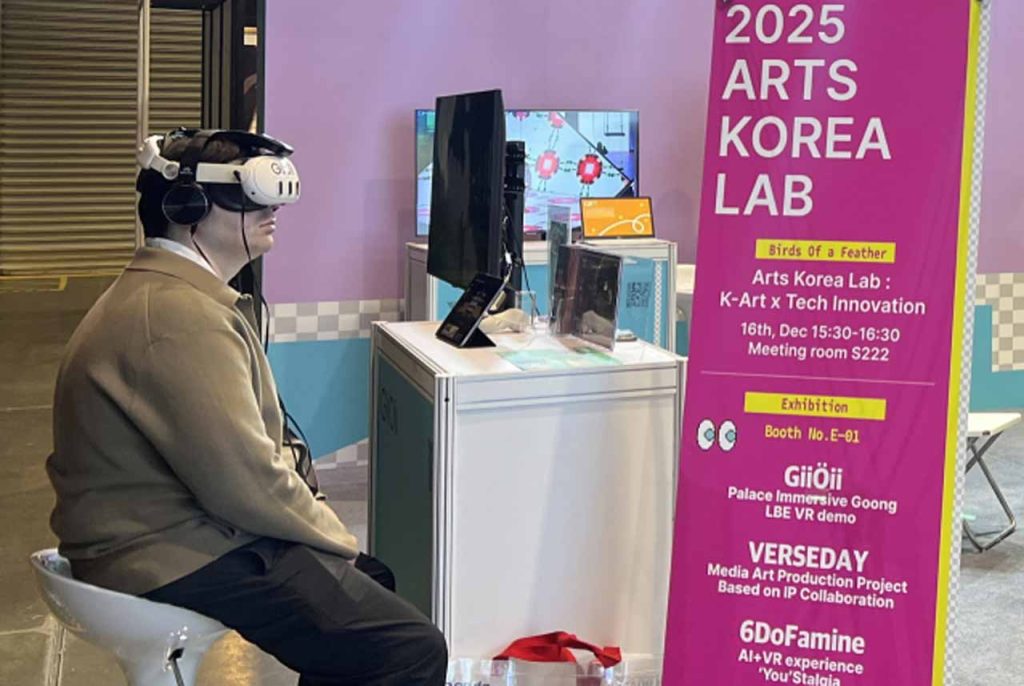
Among the featured startups, GiiÖii Studio (기어이) captured international attention with “Immersive Palace,” a multi-user VR experience recreating a royal ceremony that never took place in 1902 during the Korean Empire era.
Participants wearing VR headsets were guided by Miss Sontag—a historical figure and hotel manager—through a digitally restored Gyeongbokgung Palace, where a grand banquet unfolds under the reign of Emperor Gojong.
The project used AI-based avatar generation and motion capture to reproduce the gestures and dances of real traditional performers, blending historical authenticity with modern virtual storytelling. Up to ten participants could experience the same scene simultaneously.
CEO Lee Hye-won described the project as an effort to create “K-immersive content that goes beyond K-pop and drama—combining K-heritage and XR technology to deliver cultural experiences unavailable anywhere else.”
Creative Convergence on Display
Korean media art company VERSEDAY (버스데이) showcased how intellectual property can evolve into immersive experiences. Using augmented and virtual reality, the company visualizes creators’ ideas as interactive media art. During the event, it presented collaborative AI-based works co-developed with domestic institutions and technology firms.
6DoFamine (식스도파민) introduced “Neur-stalgia,” an extended reality (XR) performance that turns audiences into co-creators. Spectators could influence the flow of the performance through movement, reactions, and decision-making.
CEO Park Eok said, “Overseas audiences were fascinated by how Korean narrative and movement are integrated into technology.”
Meanwhile, Topos Studio (토포스스튜디오) presented “The Ethereal World,” an immersive visual art installation that explored how sensory media art can evolve into commercial experiences. CEO Heo Dae-gyeom confirmed that the event opened real partnership discussions with international curators and exhibition organizers.
Art Korea Lab: Building Korea’s Art-Tech Infrastructure
Behind these successes is Arts Korea Lab (아트코리아랩, AKL)—the government-backed hub that nurtures startups combining art and technology.
Established in 2023, AKL supports over 20 resident companies and hundreds of independent creators with access to media walls, motion capture studios, XR testing facilities, and international partnership programs.
In just two years, AKL’s ecosystem has grown rapidly.
- The platform has supported over 150,000 visitors and 8,000 projects, with a 45% increase in studio usage since 2024.
- Resident companies created 496 new jobs in 2025.
- AKL-affiliated startup Millennial Works (밀레니얼웍스) secured KRW 500 million (~ USD 375,000) in funding from SM Culture Partners, contributing to a total accumulated investment of roughly KRW 4 billion (~USD 3 million).
Notable AKL-supported projects include:
- Audioguy (오디오가이): Produced spatial sound for (G)I-DLE’s VR concert in Tokyo.
- Kimchi and Chips Research (김치앤칩스리서치): Exhibited “Another Moon” at the National Museum of Modern and Contemporary Art.
- 6DoFamine (식스도파민): Collaborated with Heineken Korea on an XR performance.
- Dello (델로): Designed official merchandise for the drama “My Youth.”
AKL also runs Super Testbed, an experimental program supporting creative prototyping. It produced 47 hybrid art projects this year, including a 3D anamorphic media art installation displayed on Shinsegae’s giant Myeongdong Media Wall.

Korea’s Cultural Technology on the Global Map
AKL’s mission extends beyond domestic incubation. It has forged partnerships with seven global institutions, including IRCAM at the Pompidou Center (France) and Sónar+D Festival (Spain).
In 2025, AKL and its supported startups joined five major global events, from the NewImages Festival (France) to SIGGRAPH Vancouver, where Gieoi Studio won the Best Immersive Pavilion Award.
According to Kim Jang-ho, CEO of the Arts Management Support Center,
“Our focus is to expand creative experimentation and distribution support so that Korean companies can sustain collaboration and growth on the global stage.”
Art-Tech Startups as Korea’s New Growth Engine
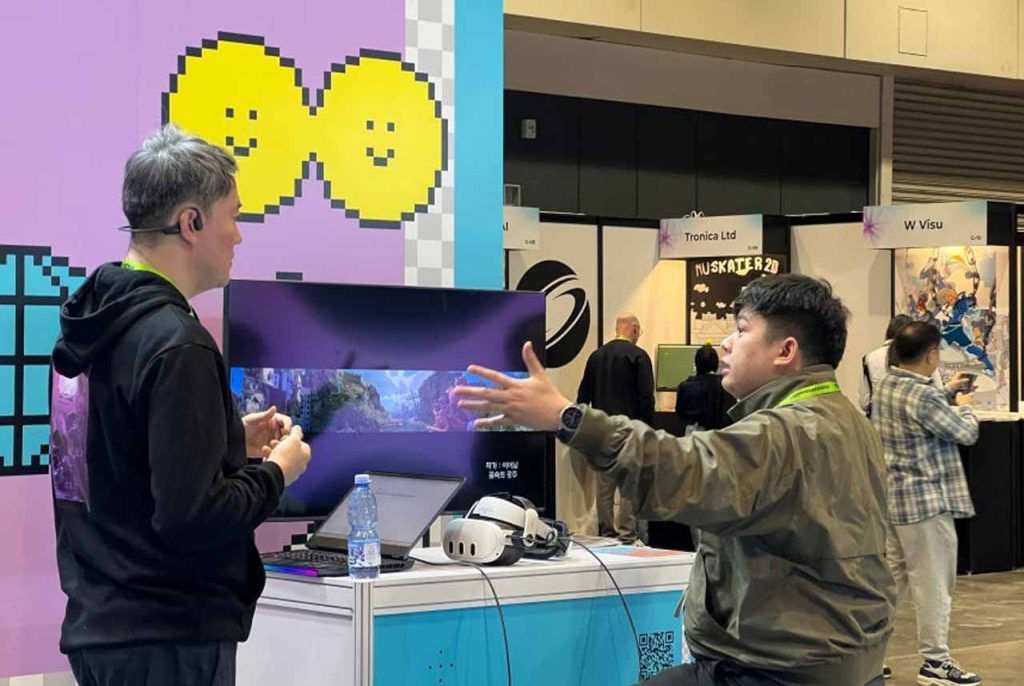
Korea’s participation in SIGGRAPH Asia 2025 signals more than cultural pride—it demonstrates how art-tech startups are emerging as a new growth engine in the country’s innovation ecosystem.
By merging technology, heritage, and creativity, these startups are expanding Korea’s soft power while developing exportable intellectual property across XR, AI, and digital performance sectors. The government’s backing through AKL creates an infrastructure where artistic experimentation can evolve into scalable global ventures.
For investors, these companies represent a new category—creativity as a service—with applications in entertainment, education, tourism, and cultural diplomacy. As immersive experiences become mainstream, Korea’s early commitment to art-tech innovation could define its competitive edge in the global creative economy.
AKL & Art-Tech Startups: Leading the Next Phase of Creative Economy
Similar to K-content and Biotech, 2026 is likely to mark a turning point for Art-Tech as well. With AI-driven storytelling, digital twins, and XR performance technology converging, Korea’s art-tech startups are well-positioned to lead the next phase of the creative economy.
If AKL continues to support commercialization and global collaboration, the country could soon transform its cultural legacy into a sustainable innovation sector—where creativity and technology grow hand in hand.
🤝 Looking to connect with verified Korean companies building globally?
Explore curated company profiles and request direct introductions through beSUCCESS Connect.
– Stay Ahead in Korea’s Startup Scene –
Get real-time insights, funding updates, and policy shifts shaping Korea’s innovation ecosystem.
➡️ Follow KoreaTechDesk on LinkedIn, X (Twitter), Threads, Bluesky, Telegram, Facebook, and WhatsApp Channel.