Korea’s AI economy is entering its most revealing phase: one where innovation will be judged not by Seoul’s laboratories, but by what happens in Daegu, Jeonnam, or Gyeongnam’s factory floors. The Ministry of SMEs and Startups is betting that true transformation begins outside the capital—if local governments can turn policy grants into working AI infrastructure, not just another round of plans.
AI Transformation (AX) Expands as Korea Recruits Local Governments to Lead Regional SME Programs
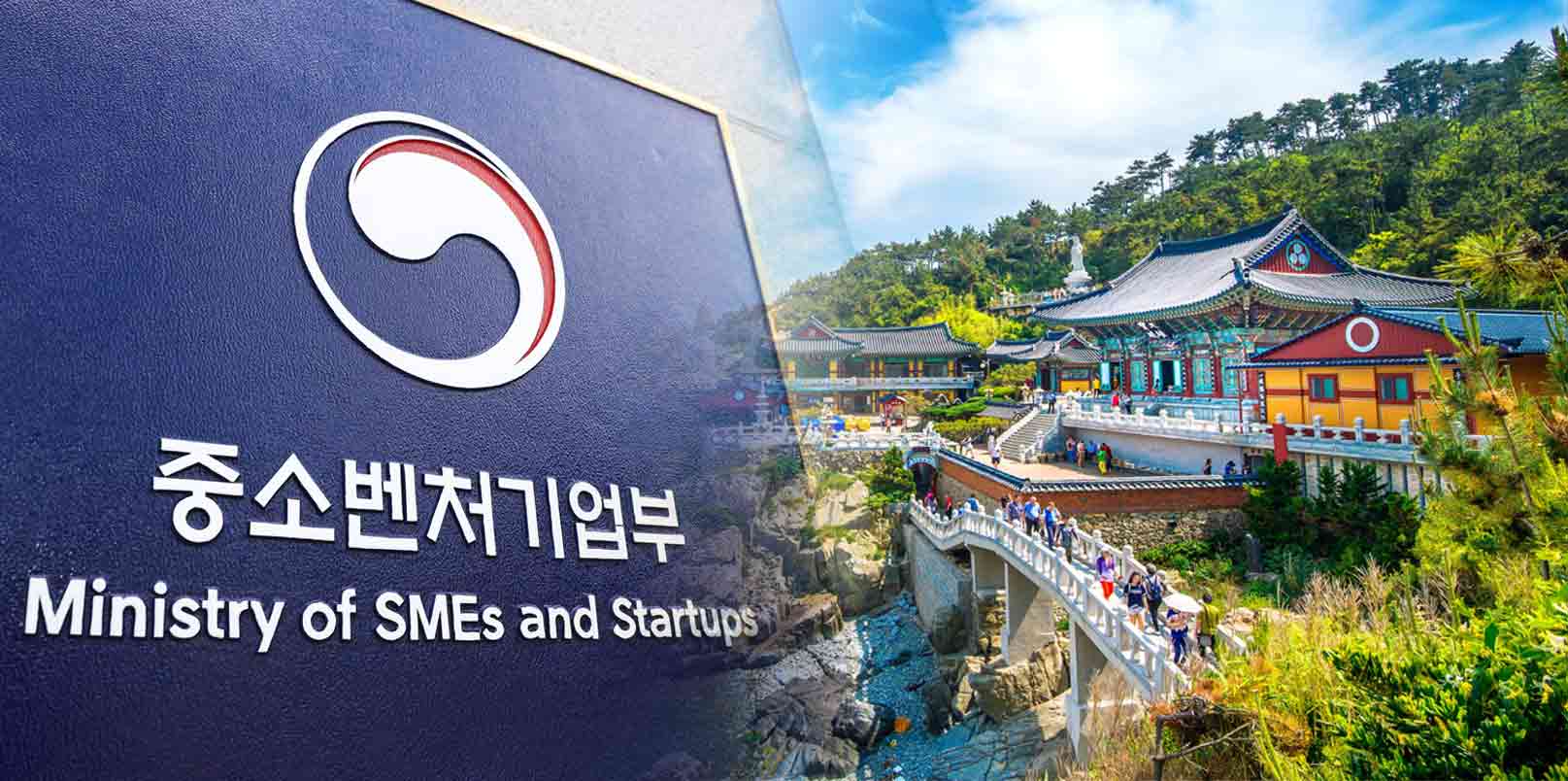
South Korea’s Ministry of SMEs and Startups (MSS) and the Korea SMEs and Startups Agency (KOSME) have launched the 2026 recruitment for metropolitan and provincial governments to join the “Region-Led AI Transformation” program.
The initiative funds local authorities to design and execute AI adoption projects tailored to their industrial ecosystems—each selected region receiving around 7 billion KRW in central support.
The program was born out of a stark disparity. A joint 2024 study by the Korea Chamber of Commerce and Industry and the Korea Institute for Industrial Economics and Trade found AI utilization at 40.4 percent in the Seoul area but only 17.9 percent elsewhere.
In 2025, five regional governments—Gyeongnam, Daegu, Ulsan, Jeonnam, and Jeju—were chosen for the first wave. Two more will join this year.
Park Yong-soon, Director-General of SME Policy at MSS, emphasized that the ministry’s goal is not short-term spending but structural decentralization:
“We will help regional SMEs adopt AI faster and support the growth of self-sustaining local AI ecosystems.”
Why This Shift Signals a Structural Turning Point for Korea’s AI Economy
Korea’s AI industrial policy has so far been led by ministries and large corporate partnerships concentrated in Seoul, Pangyo, and Daejeon. The Region-Led AI Transformation program represents a deliberate inversion of that pattern.
Instead of funneling resources through central agencies, the government now treats local governments as ecosystem operators—responsible for connecting regional SMEs with AI vendors, training institutions, and manufacturing networks.
This marks a shift from top-down intervention toward what policymakers call “distributed execution.” The model aims to align local industrial characteristics—automotive in Ulsan, machinery in Gyeongnam, energy in Jeonnam—with customized AI integration plans.
It also aligns with the previous regional manufacturing scale-up support and the country’s broader regional development frameworks, giving regional startups access to the same tools as their Seoul counterparts.
The Friction Beneath Korea’s Regional AI Ambition
Despite its promise, decentralization exposes uneven readiness.
Many provincial governments still lack technical staff and data infrastructure to administer AI programs. In previous regional pilots, local project execution depended heavily on third-party integrators from Seoul—undermining the intent of regional autonomy.
Another friction point lies in budget composition. Each region must contribute at least 20 percent of total project costs from its own funds, which may limit participation among less-resourced provinces. Local matching is meant to enforce accountability, but it also reveals fiscal asymmetry between industrialized areas like Daegu and smaller provinces struggling with declining tax bases.
These issues do not invalidate the policy, but they define its limits: Korea’s regional AI strategy will rise or fall on whether local governments can develop operational, not just administrative, competence.
How Korea’s Regional AI Push Is Changing What’s Actually Possible
The initiative indeed provides concrete tools for local progress. Participating governments can propose projects ranging from AI solution development and dissemination to infrastructure construction and AI workforce training. For SMEs that have yet to cross the digital threshold, these projects can reduce barriers to entry and generate measurable productivity gains.
However, the policy does not yet close Korea’s systemic AI talent shortage. Training regional workforces requires not just funding but a pipeline of instructors and engineers who can teach practical AI application within manufacturing lines. Without this, even well-funded local programs risk becoming showcase initiatives rather than scalable models.
The framework also lacks a long-term financing mechanism beyond the initial 7 billion KRW grants. Once the first cycle ends, sustainability will depend on how well regional governments embed AI capability into existing innovation institutions like Technoparks and university labs.
Global Investors and AI Builders Are Watching Korea’s Regional Experiment
For global investors and founders, Korea’s regional AI transformation opens a different kind of opportunity. Instead of competing for over-saturated Seoul partnerships, cross-border AI solution providers can now collaborate directly with local governments and manufacturing SMEs in provincial cities. These regions offer access to supply-chain networks in automotive, shipbuilding, and energy—industries where practical AI deployment creates immediate economic impact.
Foreign VCs and accelerators with manufacturing or deep-tech portfolios may find in these new programs a clearer entry route into Korea’s industrial base. The decentralized model also aligns with global shifts toward local innovation sovereignty seen in Japan and the EU.
What’s Really Being Tested: Can Policy Become Capability?
What Korea is testing now is not just another AI support scheme—it is an institutional experiment in redistributing technological capability. The success or failure of these regional pilots will determine whether the country’s AI transformation becomes inclusive industrial progress or remains a capital-region phenomenon.
Policy ambition is now measured less by budget size than by the government’s ability to make innovation infrastructure function where it has rarely existed before.
Key Takeaway on MSS Regional-Led AI Transformation (AX) Program
- Policy Launch: MSS and KOSME recruit two new regional governments for the 2026 Region-Led AI Transformation program.
- Funding: 14 billion KRW total (7 billion KRW per region); cost-sharing ratio 60:40 between central and local governments.
- Purpose: Empower local authorities to design AI adoption projects reflecting regional industrial strengths.
- Background: AI utilization 40.4 % in Seoul vs 17.9 % outside capital region (2024 data).
- Challenge: Fiscal asymmetry and shortage of AI talent limit execution capacity.
- Outlook: Success depends on whether regional governments can turn grants into permanent AI infrastructure and skills pipelines.
- Global Relevance: Opens new avenues for foreign AI solution providers and investors in manufacturing and deep-tech sectors.
– Stay Ahead in Korea’s Startup Scene –
Get real-time insights, funding updates, and policy shifts shaping Korea’s innovation ecosystem.
➡️ Follow KoreaTechDesk on LinkedIn, X (Twitter), Threads, Bluesky, Telegram, Facebook, and WhatsApp Channel.
🤝 Looking to connect with verified Korean companies building globally?
Explore curated company profiles and request direct introductions through beSUCCESS Connect.