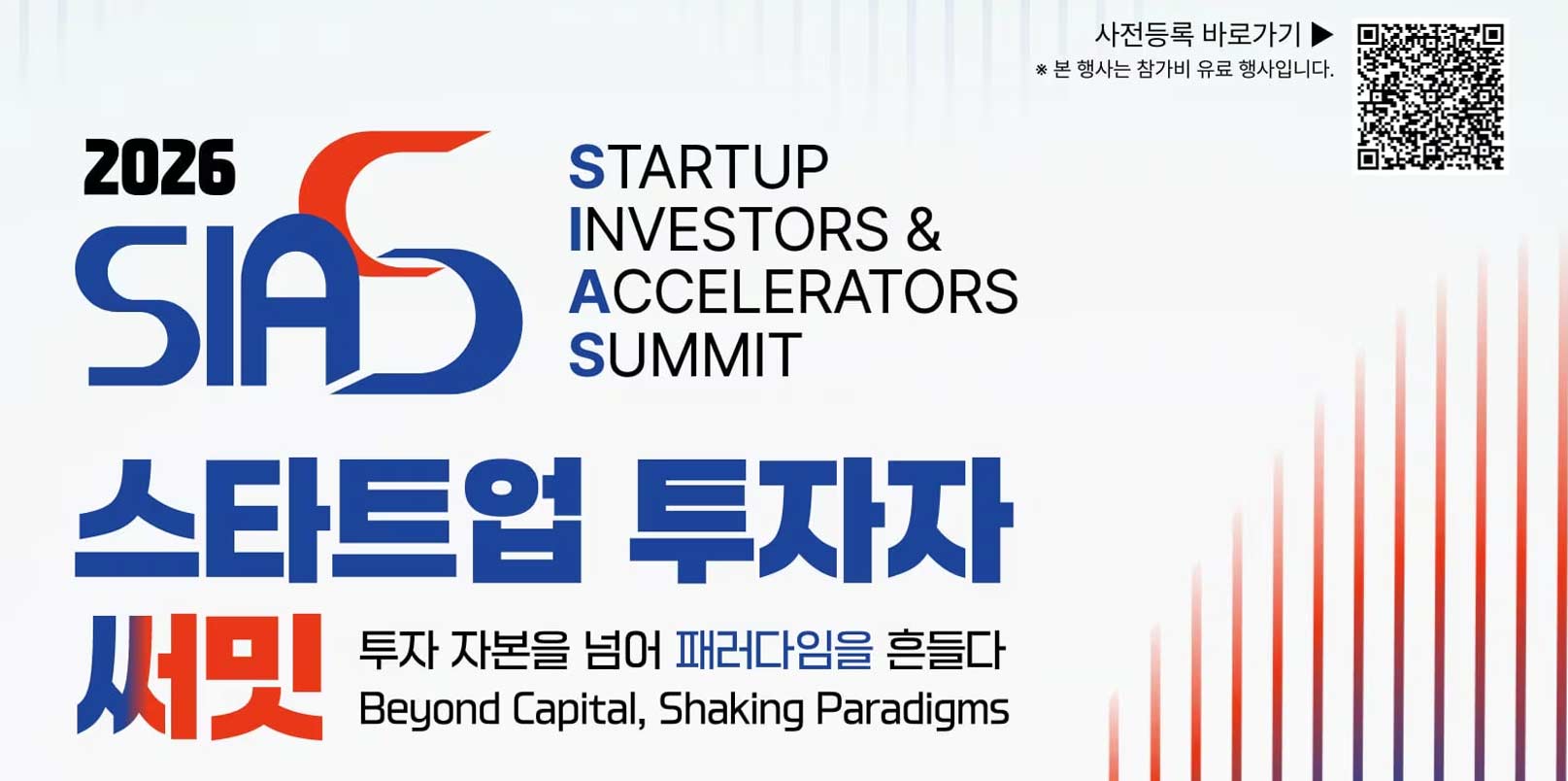
Korea’s startup ecosystem is entering a new chapter where capital is no longer defined by money alone. As investment patterns shift from policy dependency to private initiative, the 2026 Startup Investor Summit, opening in Busan on January 29–30, brings together leading accelerators, early investors, and policymakers to explore what sustainable innovation funding really requires—trust, experience, and shared learning.
Startup Investor Summit 2026 to Be Held in Busan
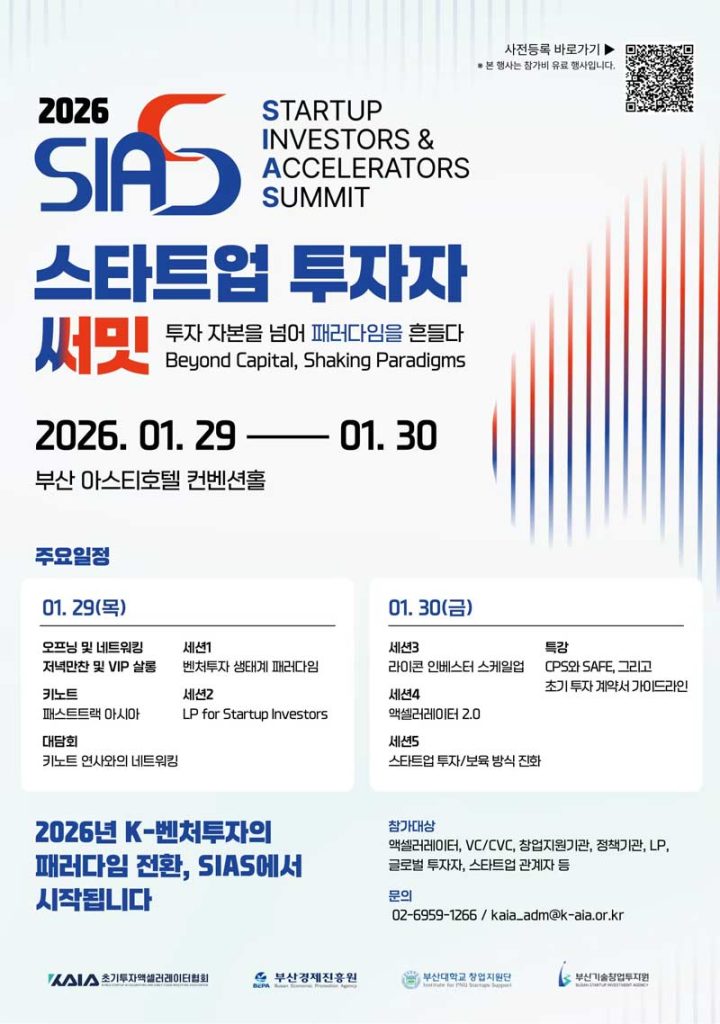
The Korea Association of Initial Investment Accelerators (KAIA) announced that it will host the 2026 Startup Investor Summit in Busan, from January 29 to 30, under the theme “Beyond Capital, Shaking Paradigms.”
The two-day event will focus on how Korea’s startup funding landscape can evolve into a mature, private-led investment ecosystem rooted in connection, solidarity, and continuous learning. It coincides with the tenth anniversary of Korea’s accelerator (AC) system—a milestone moment for reviewing what has changed and what still must.
Participants will include investors, accelerators, founders, policy institutions, and regional innovation hubs, all gathering to discuss how early-stage capital can transition from transactional funding toward ecosystem-building.
A Turning Point for Accelerators and Early Investors
According to KAIA, the summit’s program will address five structural themes shaping Korea’s next investment decade:
- Paradigm shifts in the venture investment industry
- New collaboration models between limited partners (LPs) and general partners (GPs)
- LIPS Investor Scale-up initiatives
- Accelerator Business Model 2.0
- AI-driven technologies for startup investment and incubation
These topics mirror the sector’s growing recognition that knowledge, experience, and networks—not just capital—define the sustainability of Korea’s startup economy.
The summit’s hybrid program includes keynote sessions, insight presentations, fireside talks, roundtables, and networking receptions, creating both open forums and private IR spaces for startup-investor dialogue.
Stakeholder Statements Reflect Industry Self-Awareness
A KAIA representative emphasized that the association intends to redefine accelerators as the architects and connectors of Korea’s startup ecosystem, stating:
“The accelerator model has evolved beyond simply supplying money. Knowledge, experience, networks, and trust are now the core assets that determine long-term sustainability. This summit is about accelerating that transition.”
The spokesperson added that Busan’s role as a regional and cross-border innovation hub will be strengthened through this summit, as it connects domestic investors with global capital channels and regional startup ecosystems.
From Policy Dependency to Private-Led Maturity
The Busan summit reflects a broader market transformation already visible across Korea’s investment environment. Recent national venture reforms—led by the Ministry of SMEs and Startups—have opened structural pathways for private capital to take leadership in early-stage financing.
However, KAIA’s initiative goes beyond policy adaptation. It signals the private sector’s readiness to build its own collective infrastructure—where accelerators, investors, and founders co-develop standards of transparency, shared data, and long-term collaboration.
This shift aligns with the ongoing “Four Venture Powerhouses” strategy, but from the opposite end: not through regulation, but through self-organization.
Busan as a Bridge Between Regions and Global Markets
Hosting the event in Busan carries strategic meaning. As Korea decentralizes innovation from Seoul, Busan’s growing startup base and cross-border logistics position it as an emerging link between regional and global investment networks.
By placing the summit outside the capital, KAIA reinforces the idea that innovation must scale inclusively across regions, not only through capital concentration but through local capacity-building and international connectivity.
Startup Investor Summit 2026: Redefining Venture Capital for Korea’s Next Decade
The Startup Investor Summit 2026 is not another investor conference—it is a statement about Korea’s venture maturity.
A decade after accelerators first formalized their role in the national startup ecosystem, the conversation has shifted: money alone cannot sustain innovation. What drives resilience now is shared governance, transparent growth, and long-term collaboration between investors and founders.
If this summit succeeds, it could mark the start of Korea’s post-policy investment era, where private actors lead through accountability, not dependence—transforming accelerators from financial intermediaries into strategic builders of the innovation economy.
🤝 Looking to connect with verified Korean companies building globally?
Explore curated company profiles and request direct introductions through beSUCCESS Connect.
– Stay Ahead in Korea’s Startup Scene –
Get real-time insights, funding updates, and policy shifts shaping Korea’s innovation ecosystem.
➡️ Follow KoreaTechDesk on LinkedIn, X (Twitter), Threads, Bluesky, Telegram, Facebook, and WhatsApp Channel.