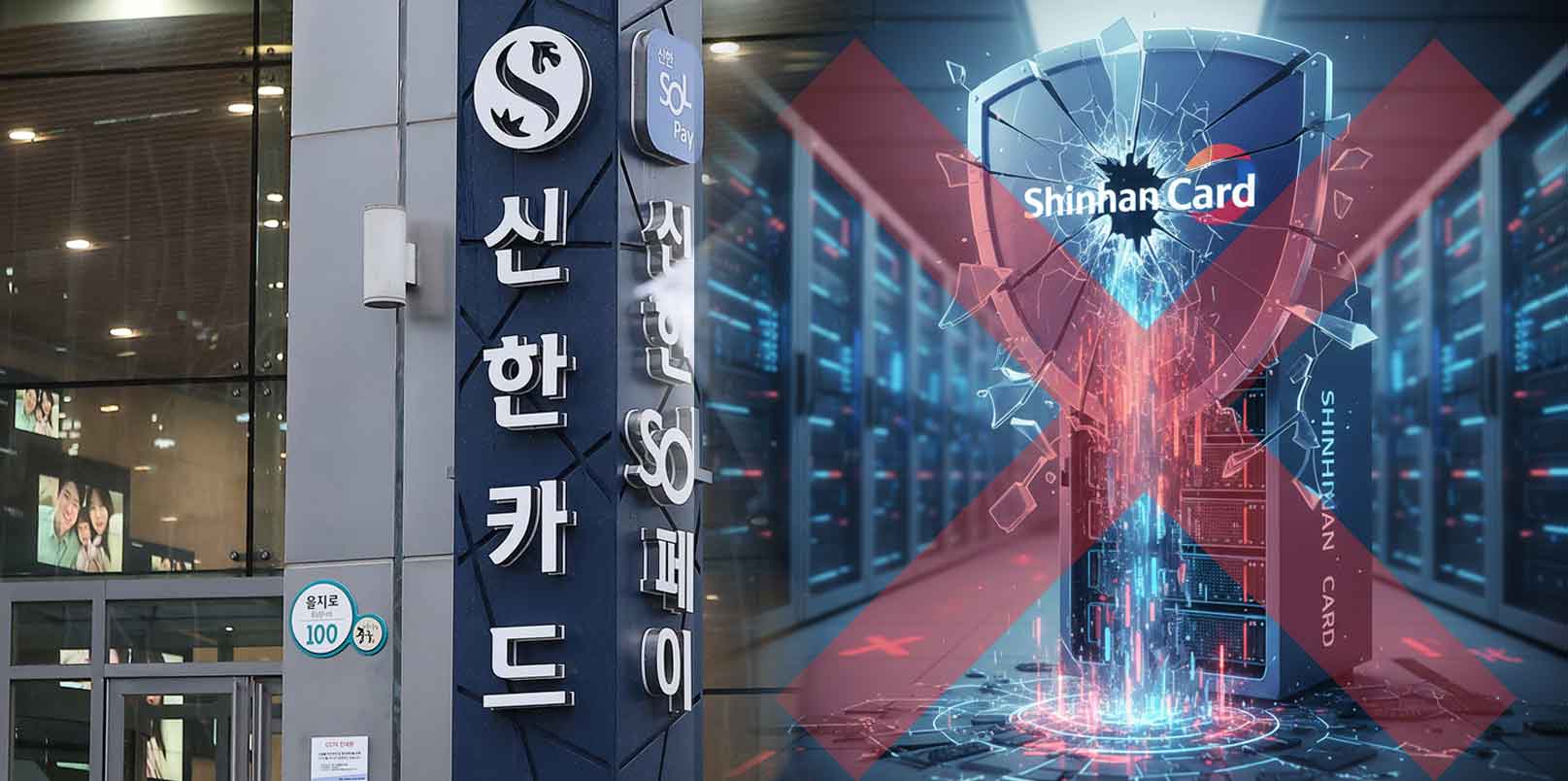
A data breach at Shinhan Card, South Korea’s largest credit card issuer, has reignited concerns over internal data governance across the financial sector. Unlike previous hacking incidents, this case underscores a systemic issue: employee-led misuse of customer information. The episode challenges Korea’s financial institutions to confront human-factor vulnerabilities in an age where trust and compliance define digital competitiveness.
Shinhan Card Confirms Internal Data Leak Affecting 190,000 Records
Shinhan Card disclosed on December 23 that approximately 192,088 records containing merchant representatives’ personal data were leaked by internal employees between March 2022 and May 2025. The compromised information included mobile phone numbers, names, birth dates, and gender data linked to around 190,000 franchise owners.
According to official findings, 18,1585 entries involved phone numbers alone, while over 10,500 cases contained additional identifying details. No resident registration numbers, credit card numbers, or bank account information were involved. Shinhan Card confirmed that general customers were not affected and that the incident was unrelated to any external hacking or system breach.
The leak was exposed when a whistleblower submitted evidence to the Personal Information Protection Commission (PIPC), triggering a full investigation. After receiving the report on November 12, PIPC requested materials from Shinhan Card, which began an internal review the following day.
From Data Oversight to Human Error
Investigations revealed that twelve employees at multiple regional branches in Chungcheong and Jeolla were involved in taking screenshots or photos of merchant data and sharing them via mobile messengers with card sales agents. The goal was to use the information for unauthorized sales activities, including soliciting new card applications from newly registered merchants such as restaurants and pharmacies.
The incident took nearly a month to verify due to the inconsistent format of the leaked files—2,247 images containing around 280,000 merchant entries. The company had to standardize and cross-check each file against its internal database before confirming the breach.
This is not the first internal data exposure in Korea’s financial ecosystem. Similar cases, including Woori Card’s 2023 violation that resulted in a KRW 13.4 billion fine, reflect recurring gaps in employee supervision and internal control frameworks.
Shinhan Card Stakeholder Statements and Accountability on the Data Breach
Shinhan Card CEO Park Chang-hoon issued an official apology on the company’s website, acknowledging the severity of the incident:
“We deeply apologize for the personal information leak involving some of our merchant representatives. The data was not compromised by external hacking but through an employee’s unauthorized use for card solicitation.”
He added that Shinhan Card immediately blocked further data exposure, completed internal audits, and reinforced access controls:
“As a company entrusted with sensitive financial information, we bear full responsibility for ensuring its protection. We will hold the employees involved accountable and strengthen both internal and external security systems.”
Shinhan Card stated that all affected merchant owners are being individually notified and can verify exposure through a dedicated online portal. The company pledged prompt compensation should any damage occur.
The Hidden Cost of Internal Data Risk
The breach exposes a deeper structural issue in Korea’s financial governance—insufficient internal surveillance over privileged data access. While the nation has invested heavily in cybersecurity against external threats, insider misuse remains a blind spot.
The timing of the Shinhan Card incident also deepens unease within the Korean market. It followed shortly after the Coupang data exposure and a cyberattack on Upbit, a cryptocurrency exchange operated by Dunamu. Though the causes differ—external hacking in those cases and internal misuse here—the close sequence of events has amplified investor scrutiny of Korea’s data governance culture. December has proven a volatile period for Korea’s digital infrastructure, renewing questions over how financial and technology sectors safeguard trust amid rising systemic pressure.
For startups and fintech innovators, this case is a cautionary benchmark. It underscores that compliance frameworks must evolve beyond infrastructure protection toward real-time behavioral monitoring and ethical accountability. The same principle applies to Korea’s growing open-banking and AI-fintech sectors, where the volume of sensitive data increases exponentially.
As Korea positions itself as a data-driven finance hub, the Shinhan incident will likely accelerate regulator-led reforms emphasizing traceability, access logging, and workforce ethics training. The PIPC and the Financial Supervisory Service (FSS) are now coordinating to determine penalties and assess whether the case constitutes a formal breach under national data laws. An official stated,
“The Financial Supervisory Service has been notified of the case and, at present, we have no indications of credit information leakage.
We will monitor the situation and decide on further actions once additional confirmation regarding possible credit data exposure is available.”
The Shinhan Card Data Breach: Governance Lessons for a Data-Driven Economy
Beyond its corporate failure, the Shinhan Card data breach incident has now become another defining stress test for Korea’s data governance architecture. The incident reveals that the greatest risks in financial digitization often originate not only in code, but also in human conduct.
For a nation seeking to lead Asia’s digital finance and startup innovation, transparent data ethics and unified compliance systems are no longer optional. Korea’s financial institutions must now demonstrate that digital trust can withstand both cyber threats and internal negligence—because in a connected economy, credibility is the new capital.
– Stay Ahead in Korea’s Startup Scene –
Get real-time insights, funding updates, and policy shifts shaping Korea’s innovation ecosystem.
➡️ Follow KoreaTechDesk on LinkedIn, X (Twitter), Threads, Bluesky, Telegram, Facebook, and WhatsApp Channel.
🤝 Looking to connect with verified Korean companies building globally?
Explore curated company profiles and request direct introductions through beSUCCESS Connect.