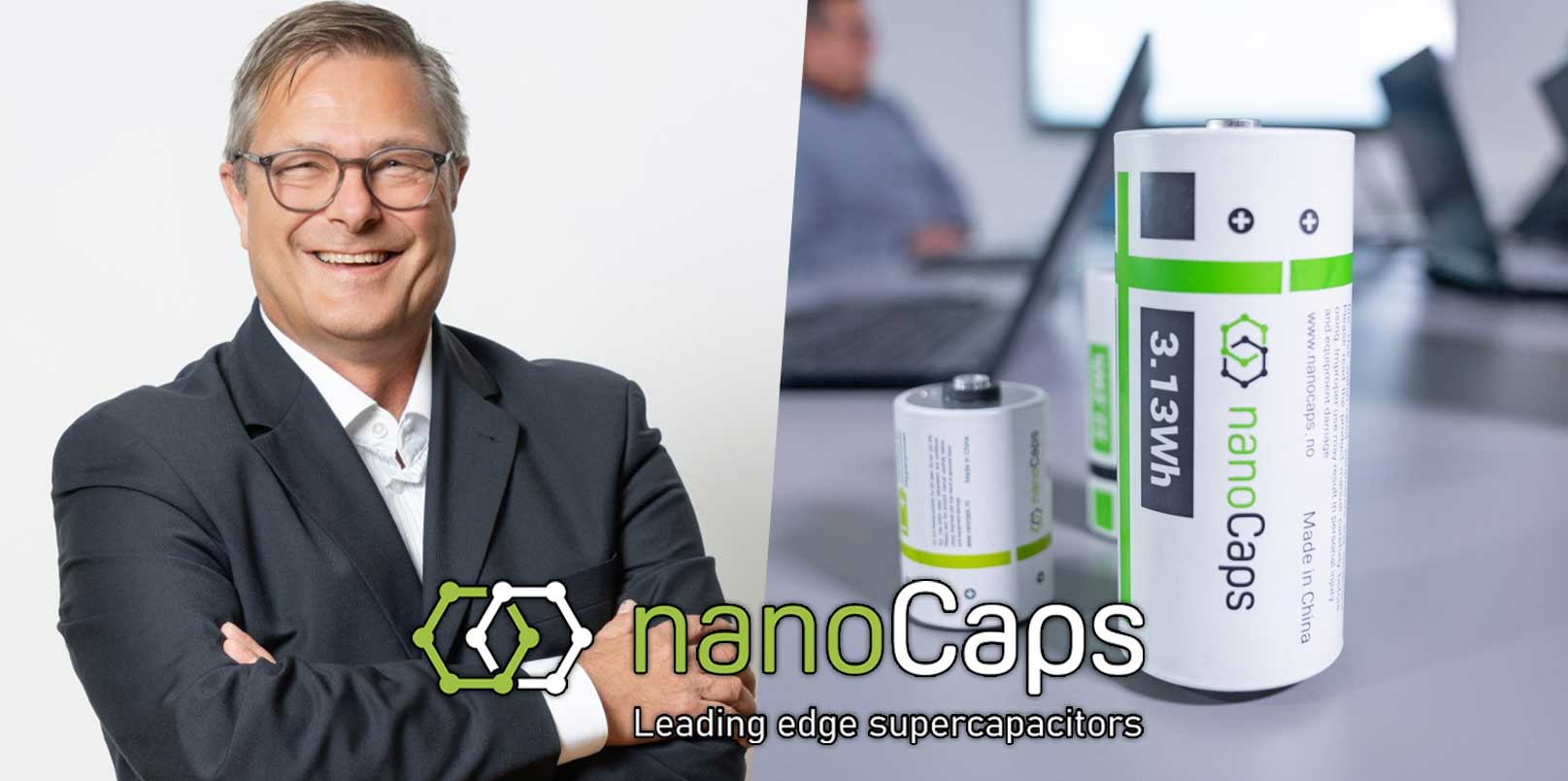
In an era obsessed with battery breakthroughs, nanoCaps AS is betting on a quieter revolution — one built not on bigger batteries but on fundamentally stronger electrodes.
Founded by Per Ohlckers, Professor Emeritus at University of South-Eastern Norway with decades of expertise in micro- and nanotechnologies along with Professor Xuyuan Chen, a prominent expert in world leading Aluminum capacitance products, the Norwegian company is reengineering supercapacitors from the ground up.
In this exclusive conversation, KoreaTechDesk speaks to CEO Egill Elvestad, a veteran with over 25 years in deep tech commercialization, discussing how nanoCaps’ carbon-nanotube technology could triple energy performance, why Korea’s manufacturing ecosystem matters, and how the K-Startup Grand Challenge (KSGC) 2025 helped refine their strategy for entering Asia.
nanoCaps AS: Breaking the Plateau in Supercapacitor Innovation
Q1. What motivated you to start this company, and what core problem were you trying to solve?
The supercapacitor sector remained tied to legacy electrode materials that limited real improvements in energy density and efficiency. After years working with advanced materials, I saw how little the core technology had evolved.
Most products still relied on activated carbon and graphene, delivering only incremental gains while the market needed something far stronger: higher energy density, rapid charging, longer lifetime, and a cleaner environmental footprint.
Through my work with interconnected, cross-linked carbon nanotubes, I realized there was a clear opportunity to overcome this stagnation. This insight became the foundation of the company.
Our aim has been to develop electrodes that enable the next generation of energy storage — not by adjusting existing materials, but by introducing a fundamentally stronger platform capable of delivering performance improvements of three to four times above current standards.
With this advancement, entirely new use cases become possible, including smart cards, IoT devices, and electric vehicles. That vision remains at the center of our work today.
Why Korea is an Ideal Testbed for Advanced Materials
Q2. What opportunity or unmet need did you identify in the Korean market, and what early signals convinced you that your solution could gain real traction here?
Korea has built a strong foundation in advanced materials and energy storage, yet supercapacitors and Li-ion capacitors still depend on the same legacy electrodes used globally. This created a clear gap in the market. Manufacturers were looking for higher energy density while maintaining long cycle life, and they needed solutions without delay. Our iCL-CNT electrodes integrate directly into existing production lines, which made the opportunity even more compelling.
The early response was far stronger than expected. Several Korean companies immediately requested prototype electrodes to verify improvements compared with their current materials. One partner mentioned that they had been searching for this level of performance improvement for nearly a decade. The combination of technical feedback, fast engagement, and genuine interest in co-development showed us that Korea is a market where our technology can grow rapidly.
Learning the Value of Timing and Precision
Q3. During KSGC, were there any mentors, partners, or specific insights that significantly influenced your product or strategy?
Yes — one insight from KSGC had a real impact on our timing and strategy. A mentor with deep experience in Korea’s energy-storage sector advised us not to enter the market until we could provide full-size test samples for partners such as Vinatech and Corchip.
He gave us clear guidance: Korea offers strong potential, but only when we can meet the exact dimensions and formats required by local manufacturers. Entering before that point could slow our progress instead of supporting it.
This recommendation led us to adjust our approach. Rather than moving into Korea immediately, we are preparing for a focused entry in 2026. Our current priorities are scaling APCVD capacity, improving coating consistency, and ensuring our pouch-cell prototypes match the specifications Korean companies expect.
The program also made it clear that timing is just as important as the technology itself. With proper preparation, our entry next year will be far stronger and more credible, and the discussions we have had so far give us confidence that the interest will remain when we are ready.
nanoCaps at KSGC 2025: Refining the Roadmap for Scale
Q4. After joining KSGC, what has been the most meaningful change for your company and what evidence supports this growth?
The most significant shift has been the clarity we gained on the timing and approach for entering the Korean market. Before KSGC, our plan was to move more quickly. But throughout the program, we learned that it is essential to wait until we can supply test samples in the exact formats required by companies such as Vinatech and Corchip. This guidance reshaped our strategy in a very practical way.
Instead of pushing too early, we are now reinforcing the groundwork: scaling our APCVD reactors, improving coating uniformity, and preparing equipment to deliver full-size electrodes and pouch cells in 2026. This direction aligns far better with the expectations of Korean manufacturers.
At the same time, KSGC helped us validate our technology with international partners. Our prototype cells have already been selected for smart-card projects moving into piloting orders. The feedback has been consistent across tests: lower ESR, higher energy density, and self-discharge times three to four times longer than the cells they have worked with for years. This gives us confidence that our performance is ready for top-tier manufacturers — including future Korean partners — once we can meet their required formats.
In summary, KSGC supported more than networking. It helped us refine our timing, strengthen our technical roadmap, and build a more realistic path toward scale.
nanoCaps AS’ Vision: Scaling a Global Licensing Model
Q5. Looking ahead, what is the most important vision or long-term goal your company aims to achieve, and what steps are you taking to move toward it?
Our long-term vision is to become the leading provider of advanced electrodes for supercapacitors and hybrid Li-ion capacitors, while licensing our process globally so manufacturers can produce faster-charging, longer-lasting, and more sustainable energy-storage products. We see the iCL-CNT electrode as an essential material for the next generation of storage technologies, and our focus is on enabling partners rather than building every component ourselves.
To support this model, we are scaling production in a structured and deliberate way. Over the next year, we are adding new APCVD reactors, improving gas-distribution systems, and upgrading coating equipment to deliver full-size electrodes and pouch cells that meet industrial requirements. These investments prepare us for larger pilot projects and allow us to supply the specific formats needed by partners in both Europe and Asia.
Korea is an important part of this roadmap. It is one of the first markets where we aim to license our process once we can provide samples in the required dimensions. The ecosystem, manufacturing expertise, and early interest make it a natural location for initial licensing efforts.
Alongside this, we are expanding work in smart-card and IoT applications, refining QA processes, and building a licensing framework that partners can adopt efficiently. Each step brings us closer to a scalable global model in which our technology supports a new class of high-performance energy-storage products.
As the company advanced through K-Startup Grand Challenge 2025, nanoCaps AS is demonstrating how advanced materials can break decades of stagnation in supercapacitor technology.
By focusing on timing, precision, and partnership-driven scale, nanoCaps is not only preparing to enter Korea but also building the foundation for a new global standard in energy storage.
“KSGC showed us that timing matters as much as technology. It strengthens our technical roadmap and build a more realistic path toward scale.”
About This Series
This article is part of the “K-Startup Grand Challenge 2025 Interview Series,” featuring 40 global startups from Phase 2 of Korea’s leading accelerator program. The series highlights how international founders are scaling innovation through Korea’s startup ecosystem.
Read more stories from the K-Startup Grand Challenge 2025 Interview Series on KoreaTechDesk.
🤝 Looking to connect with verified Korean companies building globally?
Explore curated company profiles and request direct introductions through beSUCCESS Connect.
– Stay Ahead in Korea’s Startup Scene –
Get real-time insights, funding updates, and policy shifts shaping Korea’s innovation ecosystem.
➡️ Follow KoreaTechDesk on LinkedIn, X (Twitter), Threads, Bluesky, Telegram, Facebook, and WhatsApp Channel.