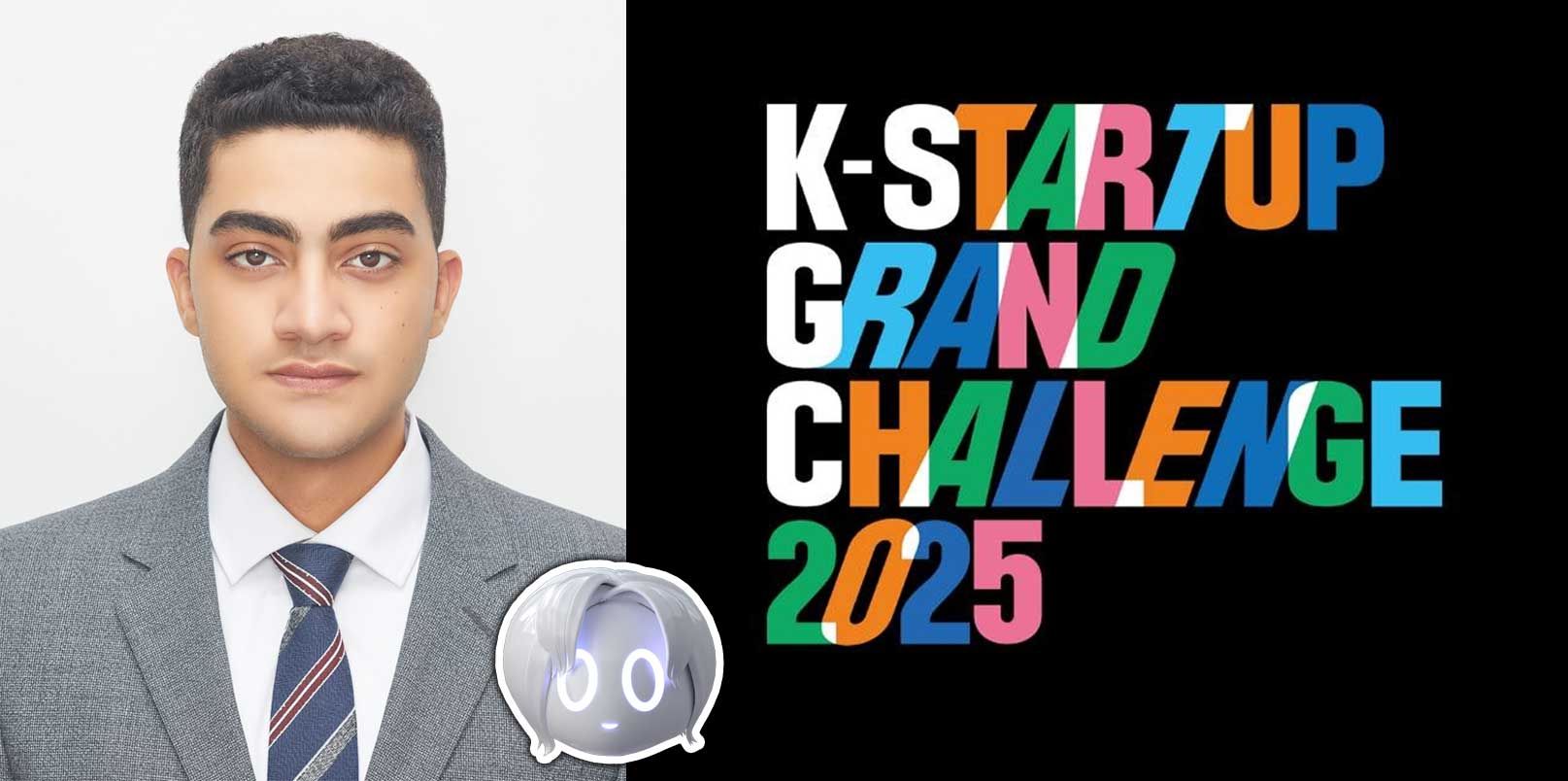

For most startups, innovation begins with code but stalls at the cloud. Metroo.dev, founded by Enyegue Carl Dimick, aims to rewrite that story. With a background in scaling global developer platforms—including experience at Fiverr Korea—Dimick saw a global pain point that Korea’s fast-moving tech ecosystem could help solve: making cloud infrastructure predictable, affordable, and developer-friendly.
In this exclusive interview, we spoke with Dimick about Metroo’s evolution, its localization in Korea and how it plans to redefine the economics of cloud computing as the company advanced through K-Startup Grand Challenge Phase 2.
Simplifying the Cloud for Builders Everywhere with Metroo.dev
Q1. What motivated you to start this company, and what core problem were you trying to solve?
Cloud infrastructure is too expensive, too complex, and too unpredictable for early-stage teams, especially those without in-house DevOps talent.
I founded this company after seeing countless developers struggle not with their product ideas, but with the infrastructure required to bring those ideas to life. Most teams are forced to adopt large-scale cloud platforms like AWS or GCP too early, where unpredictable billing, operational complexity, and fragmented tooling slow down innovation instead of enabling it. The challenge is even greater for AI-driven startups that need persistent compute environments but lack the resources to manage Kubernetes or build custom developer platforms.
Our motivation stemmed from a simple insight: if cloud infrastructure could be predictable, simple, and developer-friendly, more teams could innovate faster. That’s why we built Ortcloud, a flat-rate Micro-VM infrastructure layer, and Metroo, a suite of developer tools designed on top of it. Together, they remove the friction and volatility that plague early-stage teams, allowing developers to focus on building—not battling—the cloud.
This mission has been validated through our early customer traction, enterprise proofs of concept, and the overwhelmingly positive response we received during the K-Startup Grand Challenge (KSGC).
Why Korea’s Developers Are Ready for Change
Q2. What opportunity or unmet need did you identify in the Korean market, and what early signals convinced you that your solution could gain real traction here?
Korea has one of the world’s fastest development cultures, yet many startups face the same persistent infrastructure challenges: rising cloud costs, difficulty hiring DevOps talent, and the need for in-country data residency. During our market discovery, Korean founders repeatedly cited unpredictable AWS billing and operational complexity as two of their biggest barriers to scaling efficiently.
We also identified a structural gap in the market. While hyperscale providers offer broad, general-purpose services, there is no dominant local provider offering predictable, flat-rate Micro-VM compute designed specifically for the needs of Korean developers and AI-driven teams.
The strongest validation came from direct conversations with more than 20 Korean teams—including fintech startups, SaaS developers, AI companies, and university research labs—who confirmed that a flat-rate Micro-VM model would immediately lower their burn rate and simplify deployment. Several indicated readiness to migrate once localized infrastructure became available.
Our proof-of-concept collaborations with OpenEnergy and GoodGang Labs further confirmed that our solution works seamlessly in Korean environments. The convergence of high cost sensitivity, deep cloud frustration, and enthusiastic early feedback gave us clear confidence that Korea represents one of the strongest markets for Ortcloud’s model.
Metroo.dev at KSGC 2025: From Insight to Localization
Q3. During KSGC, were there any mentors, partners, or specific insights that significantly influenced your product or strategy?
Yes. One of the most valuable insights came from discussions with the Gwangju AI Data Center and several KSGC mentors, who underscored Korea’s growing need for localized, developer-friendly compute infrastructure. They pointed out two crucial realities: Korean startups are seeking predictable cloud costs, and there is strong national momentum toward expanding domestic AI infrastructure capacity.
This guidance fundamentally reshaped our approach. We refined our focus from a general “developer studio” model to an infrastructure-first strategy, positioning Metroo’s developer tools as accelerators built on top of Ortcloud’s Micro-VM architecture. Mentors also encouraged us to prioritize regions like Gwangju, where government investment in AI and cloud infrastructure is actively growing.
These insights directly influenced our decision to incorporate Metroo Dev Korea in Gwangju, deploy localized VM clusters, and pursue partnerships with INNOPOLIS for long-term collaboration opportunities.
Ultimately, KSGC shifted our perspective from a global-first mindset to a Korea-first localization strategy—a change that has already strengthened our product-market fit, expanded our partnership pipeline, and clarified our roadmap for sustainable growth in the region.
Scaling with Focus and Precision
Q4. After joining KSGC, what has been the most meaningful change for your company and what evidence supports this growth?
The most meaningful change has been the clarity and traction gained from shifting to an infrastructure-first business model and validating strong demand within the Korean market. This pivot directly strengthened our product, customer pipeline, and overall business performance.
During KSGC, we fully launched Ortcloud IaaS, completed Metroo.ai, and advanced Metroo.dev and Metroo.db toward release. In just 15 weeks, we deployed 20,000+ Micro-VMs, grew to 300+ active users, and secured two enterprise POCs—OpenEnergy (100K VM potential) and GoodGang Labs (2-year deployment potential). These partnerships alone represent more than $1.2M in potential deal flow.
We also made substantial progress on localization. We initiated incorporation in Gwangju, built relationships with the Gwangju AI Data Center and INNOPOLIS, and validated demand across more than 20 Korean teams. All of this demonstrated that Korean startups are eager for predictable, developer-friendly cloud infrastructure.
KSGC directly accelerated our growth: it strengthened our go-to-market strategy, expanded our partner network, and validated that our infrastructure model can scale both financially and operationally in Korea.
Metroo.dev: Redefining the Future of Developer Infrastructure
Q5. Looking ahead, what is the most important vision or long-term goal your company aims to achieve, and what steps are you taking to move toward it?
The most meaningful change for Ortcloud after joining KSGC has been the clarity and traction gained through our shift to an infrastructure-first business model, which validated strong market demand in Korea and accelerated measurable growth across products, partnerships, and performance.
During the program, we fully launched Ortcloud IaaS, completed Metroo.ai, and advanced both Metroo.dev and Metroo.db toward release. In just 15 weeks, we deployed over 20,000 Micro-VMs, grew to 300+ active users, and secured two enterprise proof-of-concept projects—with OpenEnergy (representing a 100,000 VM opportunity) and GoodGang Labs (with a two-year deployment potential). Combined, these partnerships represent over $1.2 million in potential deal flow.
Localization has also been a major milestone. We initiated incorporation in Gwangju, built partnerships with the Gwangju AI Data Center and INNOPOLIS, and validated demand across more than 20 Korean teams spanning fintech, SaaS, and AI sectors. These engagements clearly demonstrated that Korean developers are eager for predictable, developer-friendly cloud infrastructure.
KSGC directly accelerated our growth by sharpening our go-to-market strategy, expanding our partner ecosystem, and proving that our infrastructure model is both financially scalable and operationally viable in the Korean market.
Through K-Startup Grand Challenge 2025, Metroo.dev is no longer just building cloud infrastructure—it’s building the foundation for the next generation of Korean and global developers. By prioritizing predictability, localization, and developer empowerment, it’s redefining what “cloud-native” means in an era that demands both innovation and control.
“KSGC shifted our perspective from a global-first mindset to a Korea-first localization strategy, sharpening our go-to-market strategy, expanding our partner ecosystem, and proving that our infrastructure model is both financially scalable and operationally viable in the Korean market.”
About This Series
This article is part of the “K-Startup Grand Challenge 2025 Interview Series,” featuring 40 global startups from Phase 2 of Korea’s leading accelerator program. The series highlights how international founders are scaling innovation through Korea’s startup ecosystem.
Read more stories from the K-Startup Grand Challenge 2025 Interview Series on KoreaTechDesk.
– Stay Ahead in Korea’s Startup Scene –
Get real-time insights, funding updates, and policy shifts shaping Korea’s innovation ecosystem.
➡️ Follow KoreaTechDesk on LinkedIn, X (Twitter), Threads, Bluesky, Telegram, Facebook, and WhatsApp Channel.
🤝 Looking to connect with verified Korean companies building globally?
Explore curated company profiles and request direct introductions through beSUCCESS Connect.