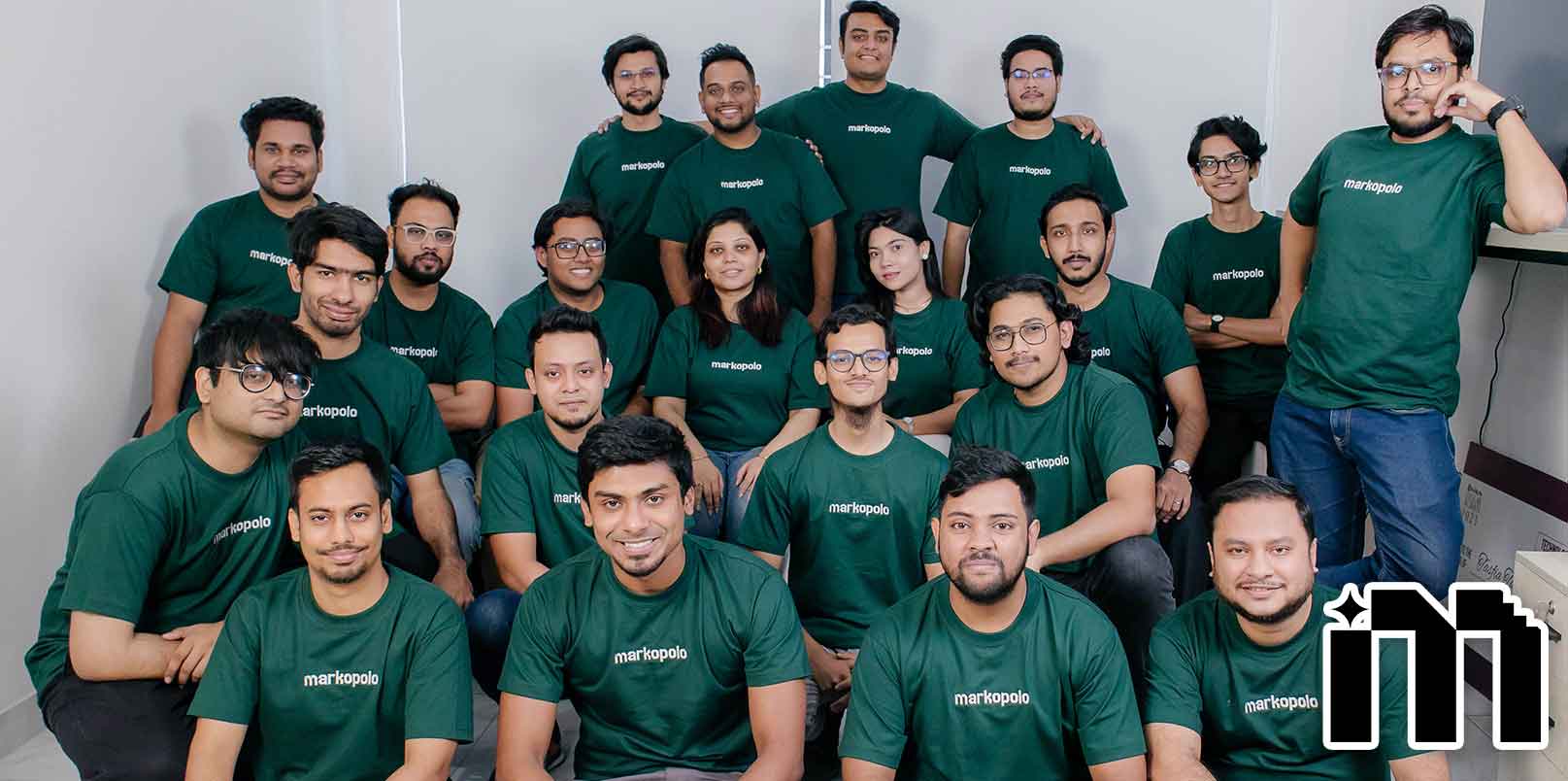
In the ultra-competitive world of e-commerce, even the most advanced digital strategies often fail at the final step—checkout. Markopolo AI, founded by Tasfia Tasbin, a global marketing technology innovator, is reimagining how brands recover lost sales by combining behavioral intelligence with automated multi-channel engagement.
We spoke with Tasbia in an exclusive interview to discuss Markopolo’s rapid evolution, its strategic localization for Korea, and how it’s redefining e-commerce efficiency as the company advanced through K-Startup Grand Challenge (KSGC) 2025 Phase 2.
Markopolo AI: The Origin of a Smarter Checkout
Q1. What motivated you to start this company, and what core problem were you trying to solve?
We started Markopolo AI after noticing a frustrating pattern across nearly every brand: companies spend thousands attracting customers to their checkout pages, only to watch 70–75% of them abandon their carts and disappear. The existing “solutions” weren’t really solving the problem as they were simply sending generic email reminders that most customers ignore.
We realized the real issue wasn’t about sending more reminders; it was about understanding why someone abandoned them in the first place and then engaging them in a way that actually works.
So we built something different—a system that tracks hundreds of behavioral signals to understand customer intent, then uses AI to start real conversations through email, SMS, WhatsApp, or even voice calls.
Why Korea’s E-Commerce Market Became the Perfect Test Ground
Q2. What opportunity or unmet need did you identify in the Korean market, and what early signals convinced you that your solution could gain real traction here?
Korea possesses a massive USD 84 billion e-commerce market. And yet, the country’s cart abandonment rates are actually higher than the global average, reaching around 74.5%. But what really caught our attention during KSGC wasn’t just the numbers; it was what we heard directly from the ecosystem.
In conversations with Korean agencies and merchants, we kept hearing the same topic: everyone is extremely data-driven and ROI-focused, yet most are still using basic email automation tools. There’s a clear gap between how advanced Korea’s e-commerce operations are and how outdated their cart recovery systems remain.
The other thing we noticed was that Korean merchants typically don’t buy tools directly as in the U.S. They rely on agency partners to vet and introduce proven solutions. Those agencies, in turn, are looking for platforms that deliver measurable ROI quickly.
Since Markopolo consistently demonstrates results within a few weeks, our model fits that ecosystem perfectly.
Another advantage is Korea’s mobile commerce penetration—over 70%, one of the highest in the world. That makes it an ideal market for our multi-channel engagement system, especially through SMS and WhatsApp, where customer response rates are strongest.
Reframing Market Entry Through Mentorship
Q3. During KSGC, were there any mentors, partners, or specific insights that significantly influenced your product or strategy?
KSGC gave us far more than just market insights—the hands-on support was incredibly valuable. The team connected us with lawyers for Korean company registration, guided us through legal and administrative requirements, and organized deep-dive networking sessions that directly led to two partnership opportunities we’re currently pursuing. That kind of on-the-ground, practical help is hard to find when you’re entering a new market from abroad.
The real turning point, though, came from the market expert sessions. We initially came in thinking we’d replicate our usual model—sign up merchants directly and scale from there. Pretty standard. But our mentors quickly helped us understand that Korea operates differently. Cold outreach simply doesn’t work here. Business runs on relationships, and merchants overwhelmingly prefer to adopt new tools through trusted agency partners, not directly from new vendors.
So we completely shifted our approach. Instead of chasing individual merchants, we restructured Markopolo’s Korea strategy around an agency-first model—positioning our platform as a tool agencies can offer to their clients, either white-labeled or co-branded. This approach gives us instant access to existing merchant networks that would have taken us months, or even years, to build on our own.
Markopolo AI at KSGC 2025: From Acceleration to Action
Q4. After joining KSGC, what has been the most meaningful change for your company and what evidence supports this growth?
Two major changes stand out for us after joining KSGC: strategic partnerships and product improvements driven directly by Korean market feedback.
On the partnership side, collaborating with CNT Tech opened doors we wouldn’t have been able to access on our own. Through them, we’re now in conversations with several Korean agencies, each working with more than 50 merchants. It’s still early, and the discussions are progressing carefully, but the pipeline potential is significantly larger than what we could have achieved through a direct-to-merchant approach.
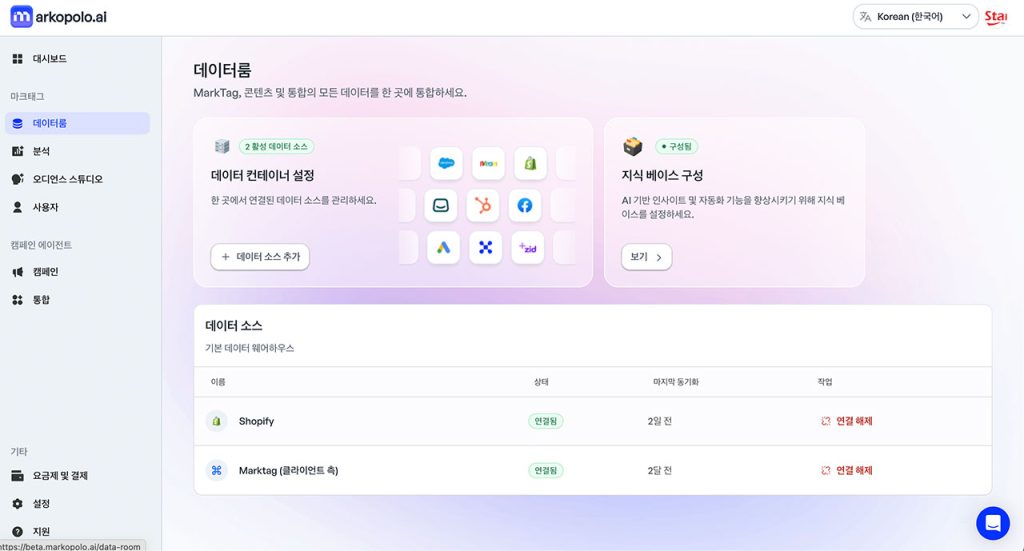
On the product side, the Korean market challenged us to raise our standards. Based on feedback from local users, we rebuilt our entire analytics dashboard, introducing separate Campaign Analytics and Audience Analytics tabs and integrating time-decay attribution models to better track multi-channel performance—something highly valued in Korea’s data-driven ecosystem. We also implemented Korean UI and full content localization, ensuring a smoother experience for local clients.
Another key improvement was infrastructure optimization. We’re transitioning from Twilio to Meta’s WhatsApp Cloud API, which will reduce our messaging costs by roughly USD 40,000 per month while improving delivery performance. This cost reduction is crucial for staying competitive in Korea, where merchants are highly price-sensitive.
Operationally, we’ve prepared all business registration documents and capital procurement plans to establish our Korean entity. Based on our projections, we aim to onboard 40–50 customers, generate KRW 65–80 million in monthly recurring revenue, and reach break-even by month eight.
We’re realistic about the challenges ahead, but we have a clear trajectory: Korea has already pushed us to become sharper, more localized, and more scalable than before.
Building the Autonomous Commerce Engine
Q5. Looking ahead, what is the most important vision or long-term goal your company aims to achieve, and what steps are you taking to move toward it?
Long-term, our vision is to make Markopolo the autonomous commerce engine for global e-commerce brands. We aim to become a platform that doesn’t just recover abandoned carts but actually predicts and prevents revenue loss before it happens.
For Korea specifically, we’re taking a deliberate, step-by-step approach. The first priority is completing our Korean business registration to show we’re serious about long-term operations and local compliance. Next, we’re focused on building agency partnerships the right way. We’d rather move carefully and earn trust than push an aggressive sales model that doesn’t fit how the Korean market works.
On the product side, we’re developing AI-powered intent prediction, allowing us to identify customers likely to abandon their carts before they do—so brands can engage proactively instead of reactively. We’re also pursuing Shopify Plus Partnership status to strengthen our enterprise credibility.
In parallel, we’re exploring integrations with local Korean platforms that merchants actually use, including KakaoTalk for messaging and potentially Coupang for marketplace sellers. To support this, we plan to expand our team with Korean market specialists who understand the local e-commerce ecosystem and can assist our agency partners effectively.
Our broader growth strategy centers on partnerships—both agency partnerships where Markopolo becomes part of their merchant toolkit, and reseller agreements with established players who already have trusted merchant relationships. We’re in early discussions with several potential resellers who see value in adding our behavioral intelligence capabilities to their offerings. It’s a longer sales cycle than direct sales, but the depth of access and credibility it brings makes it worth it.
Through K-Startup Grand Challenge 2025, Markopolo AI is doing more than adapting to Korea—it’s reshaping the country’s e-commerce playbook by turning behavioral data into a competitive edge and proving that smarter engagement drives measurable growth.
“Korea has pushed us to become sharper, more localized, and more scalable than before. KSGC provided complete transformation in our strategic partnerships and product improvements based on Korean market feedback.”
About This Series
This article is part of the “K-Startup Grand Challenge 2025 Interview Series,” featuring 40 global startups from Phase 2 of Korea’s leading accelerator program. The series highlights how international founders are scaling innovation through Korea’s startup ecosystem.
Read more stories from the K-Startup Grand Challenge 2025 Interview Series on KoreaTechDesk.
– Stay Ahead in Korea’s Startup Scene –
Get real-time insights, funding updates, and policy shifts shaping Korea’s innovation ecosystem.
➡️ Follow KoreaTechDesk on LinkedIn, X (Twitter), Threads, Bluesky, Telegram, Facebook, and WhatsApp Channel.
🤝 Looking to connect with verified Korean companies building globally?
Explore curated company profiles and request direct introductions through beSUCCESS Connect.