The latest AI move from Korean gaming giant Krafton signals a shift from infrastructure building to operational experimentation. The company has placed its top leadership directly inside a new robotics unit focused on physical artificial intelligence. The development shows how one of Korea’s largest game companies is attempting to translate virtual-world technologies into real-world machine intelligence, a path that could reshape how AI research connects with the gaming sector.
Krafton CEO Kim Chang-han Takes Direct Control of Ludo Robotics
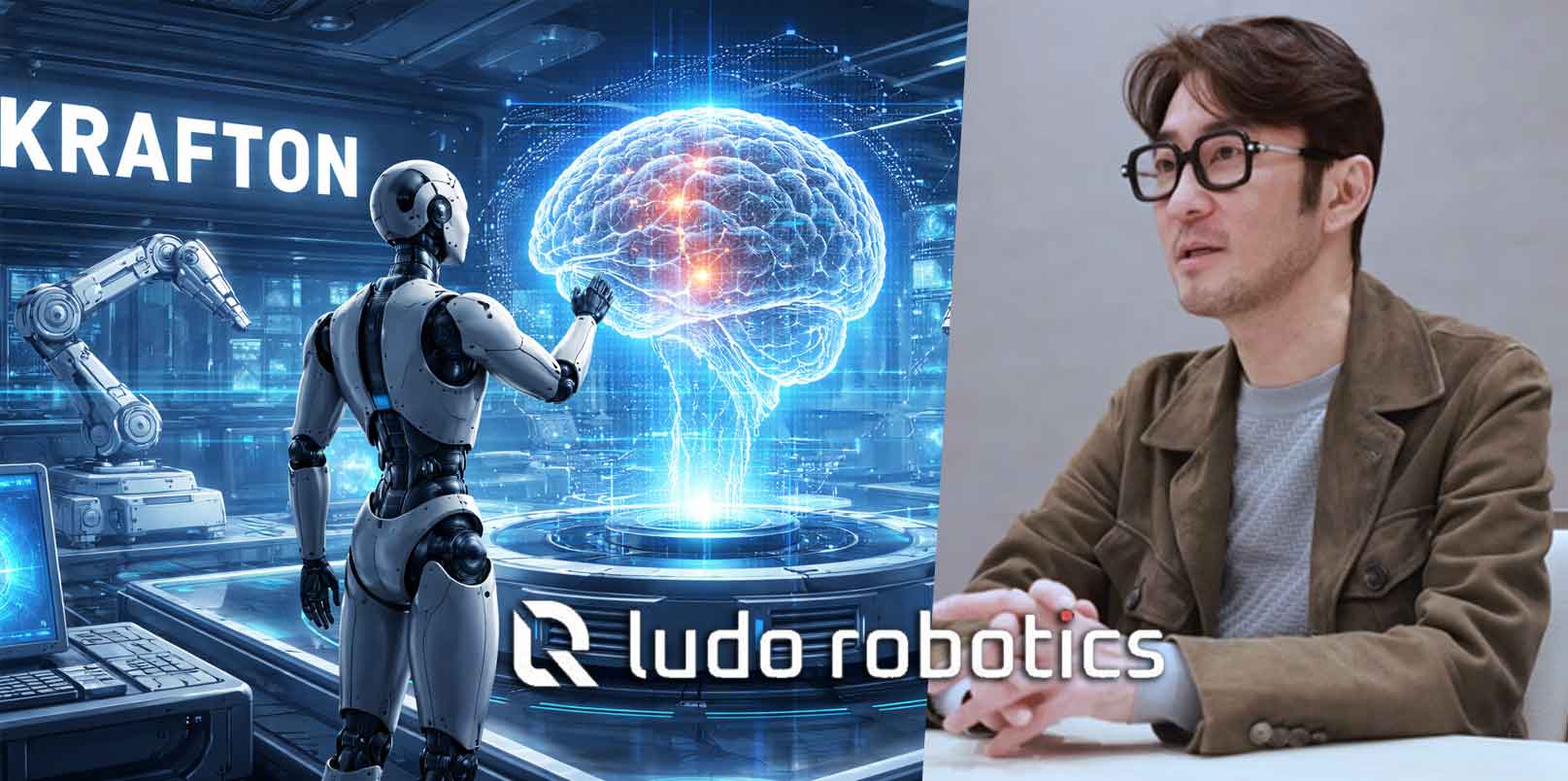
Krafton CEO Kim Chang-han has been appointed Chief Executive Officer of Ludo Robotics, an artificial intelligence and robotics company established by the game developer to pursue research in physical AI.
Multiple Korean media reports say Ludo Robotics operates with a structure that places its parent entity in the United States while maintaining a Korean subsidiary. The company was founded in San Francisco to conduct research in robotics and physical AI.
At the same time, Krafton’s Chief AI Officer Lee Kang-wook will serve as Chief Technology Officer of Ludo Robotics. Lee also leads Ludo Robotics Korea, the Korean entity established earlier this year.
Industry reports describe the new unit as a research-focused effort designed to explore how AI technologies developed in gaming environments can be applied to robotics systems.

Ludo Robotics Aims to Build the “Social Humanoid Brain”
Ludo Robotics describes itself with the slogan “The Social Humanoid Brain Company.”
The company says its goal is to build the intelligence systems that act as the “brain” for humanoid robots capable of interacting with people.
According to company descriptions, the research focuses on advancing physical AI through technologies such as cognition, learning, and manipulation. The effort combines robotics, physics, and computer science to address real-world challenges.
One description on the company’s website states that Ludo Robotics aims to develop robust and adaptive robotic intelligence systems capable of operating in real environments.
Krafton Extends Its “AI for Game” Strategy Into Physical AI
The leadership appointments suggest Krafton is moving from long-term AI planning into practical experimentation with physical AI.
In previous statements reported by Korean media, the company described artificial intelligence as a core mid- to long-term business area. Krafton has also outlined an “AI for Game” strategy, which applies AI technologies to game development and gameplay systems.
Hence, the company’s latest development now connects that earlier strategy with a dedicated robotics entity.
Several Korean sources say Krafton intends to extend technologies developed in game environments into robotics research. These technologies include physics engines, simulation systems, and large-scale interaction data generated through online games.
Titles such as PUBG: Battlegrounds and inZOI are noted as examples of games that produced simulation capabilities and virtual-world operational data that could support AI research.
Not only that but virtual simulation environments may also help address challenges in testing robot intelligence, where repeated experimentation in the physical world can be costly and difficult.
A U.S.–Korea Structure Designed to Attract Global Robotics Talent
The structure of Ludo Robotics also reflects a cross-border approach to talent and research.
It is also reported that the company’s U.S. headquarters is intended to secure robotics specialists and AI researchers working around Silicon Valley. The Korean entity is expected to support research and operational activities.
The company is reportedly recruiting robotics engineers as well as experts in machine learning and human-robot interaction.
Lee Kang-wook’s technical leadership is another key element in the structure. Before joining Krafton, he served as a professor in electrical and computer engineering at the University of Wisconsin–Madison and previously earned a PhD in electrical engineering and computer science from the University of California, Berkeley.
His research background includes work in machine learning and deep learning.
How Game Simulation and AI Data Could Feed Robotics Research
Krafton’s robotics initiative is closely linked to the company’s existing AI development efforts.
Last year the company introduced CPC (Co-Playable Character) technology through a collaboration project with NVIDIA. CPC systems allow users and AI-controlled characters to interact with each other during gameplay.
Krafton has said it intends to build on these types of AI capabilities as part of a broader push into next-generation technologies.
The company believes simulation technologies developed for gaming can support experimentation in robotics and physical AI. The idea is that virtual environments may provide a controlled setting where robot behavior and machine intelligence systems can be tested before deployment in real-world settings.
This approach reflects a broader research trend in embodied AI, where simulated environments are used to train and validate machine learning systems that control physical machines.
What Krafton’s Robotics Move Signals for Korea’s AI Ecosystem
Krafton’s new robotics unit shows how some Korean technology companies are beginning to treat AI as a platform that can extend beyond software services.
The company’s approach links game development technologies such as simulation systems, physics engines, and large-scale interaction data with robotics research. Krafton believes these capabilities may help train or validate machine intelligence systems before they operate in the physical world.
This logic reflects a broader shift in how companies are thinking about AI commercialization. Early corporate AI strategies often focused on productivity tools or digital services. Krafton’s move explores whether capabilities built in virtual environments can support research into physical AI.
For founders and investors watching Korea’s technology sector, the development highlights a possible intersection between gaming technology, machine learning, and robotics experimentation. Simulation environments, AI-driven character behavior, and virtual interaction systems are areas where gaming infrastructure can overlap with embodied AI research.
The Ludo Robotics initiative therefore offers a glimpse of how Korean companies may attempt to repurpose entertainment software expertise as part of longer-term physical AI exploration.
Physical AI Execution Still Faces Major Technical and Commercial Hurdles
Despite the strategic signal, Ludo Robotics remains at an early research stage.
The latest development only reveals the company’s structure, leadership appointments, and research direction. It does not yet indicate commercial products, robotics deployments, or revenue-generating business models.
Translating game simulation capabilities into real-world robotics systems is technically demanding. Virtual environments can accelerate experimentation, but robots operating in physical settings must handle unpredictable conditions that simulations cannot fully replicate.
The uncertainty explains why Krafton has placed both its chief executive and its chief AI officer directly inside the new unit. The structure suggests the company intends to closely supervise the transition from experimental research toward potential real-world applications.
For now, Ludo Robotics represents an exploratory step rather than a confirmed business line. Its progress will depend on whether game-derived AI capabilities can be adapted to robotics systems operating outside controlled virtual environments.
Key Takeaways: Krafton’s Physical AI Strategy
- Krafton CEO Kim Chang-han has been appointed CEO of the robotics research company Ludo Robotics.
- Ludo Robotics operates with a U.S. parent structure and a Korean subsidiary, according to multiple Korean reports.
- Lee Kang-wook, Krafton’s Chief AI Officer, will serve as CTO of Ludo Robotics and lead the Korean entity.
- The company’s stated goal is to build humanoid robot intelligence systems capable of interacting with people.
- Krafton aims to explore how game simulation, physics engines, and interaction data can contribute to physical AI research.
- The move reflects an early attempt by a Korean game company to test whether virtual-world AI capabilities can translate into robotics and embodied AI systems.
🤝 Looking to connect with verified Korean companies building globally?
Explore curated company profiles and request direct introductions through beSUCCESS Connect.
– Stay Ahead in Korea’s Startup Scene –
Get real-time insights, funding updates, and policy shifts shaping Korea’s innovation ecosystem.
➡️ Follow KoreaTechDesk on LinkedIn, X (Twitter), Threads, Bluesky, Telegram, Facebook, and WhatsApp Channel.