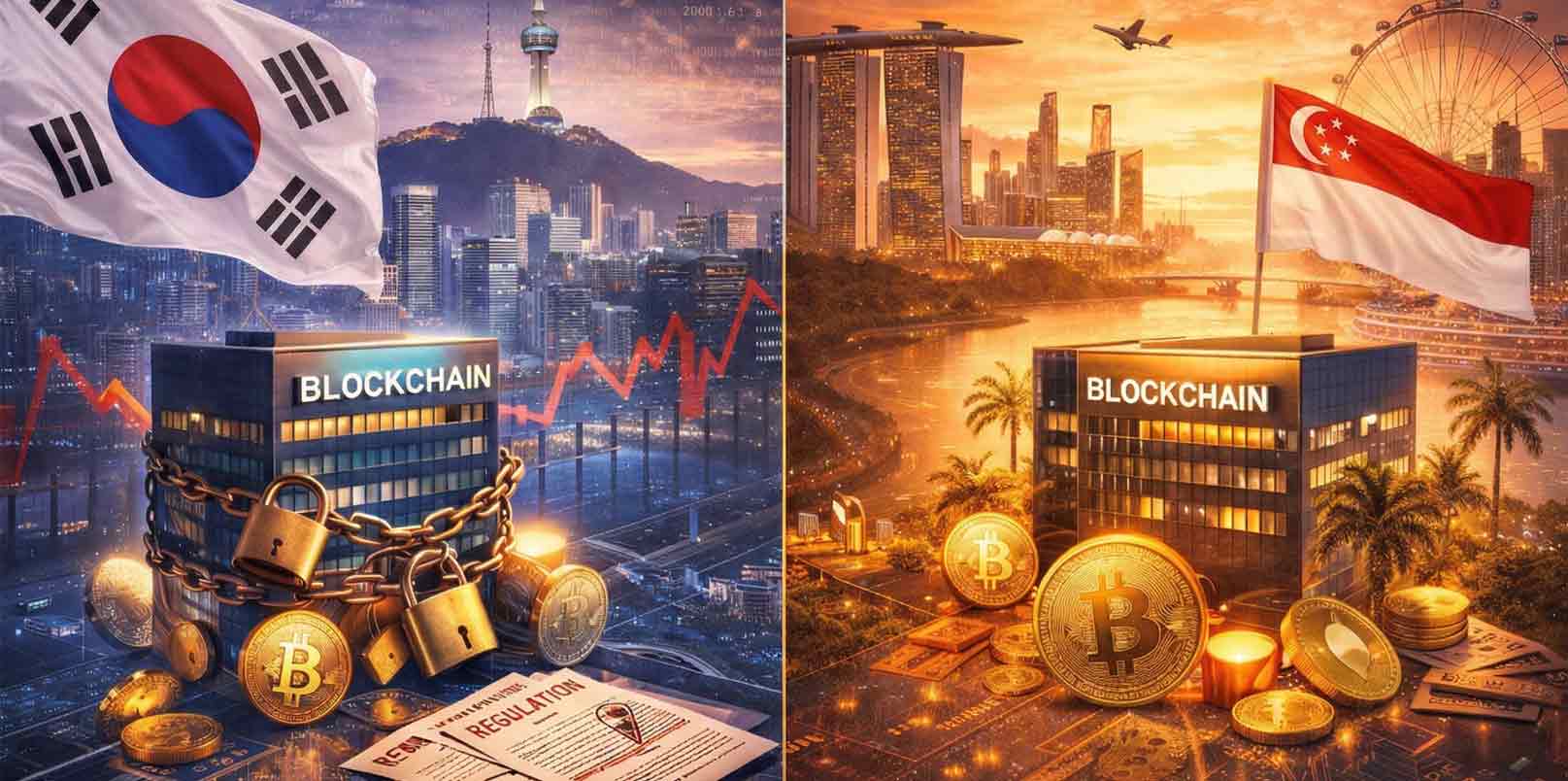

Retail capital does not wait for policy debates to settle. It moves when cash becomes available. In Korea, Lunar New Year bonuses and gift money have arrived just as the country’s Security Token Offering framework shifts from sandbox experiment to formal securities regime. The question is no longer who won the license battle. It is whether ordinary investors will actually use what regulators have built.
Korea STO Market: Investment Contract Securities Expand into Livestock & Art
Fractional investment products structured as investment contract securities are seeing renewed activity ahead of Lunar New Year, as startups target small-ticket retail investors with tangible asset offerings.
According to industry reporting, startups including Stockeeper and Yeolmae Company have launched public offerings backed by livestock and fine art.
Stockeeper, which operates the Hanwoo-focused platform “BankCow,” will begin subscriptions for its Series 7-1 and 7-2 livestock investment contract securities on February 28. Each offering seeks KRW 370 million with a minimum investment amount of KRW 20,000. Funds will be used for purchasing calves, breeding, and auction sales.
Stockeeper reported approximately 57,000 members as of the end of 2025, with an average investment amount of KRW 826,631 per user. The company stated that 51% of investors are in their 20s and 30s.
CEO Ahn Jae-hyun said,
“The structure allowing participation with small amounts appears to have driven the influx of younger investors.”
Fintech firm DataGen, in partnership with Hana Securities, issued pork-backed investment contract securities through its “PinDon” platform, raising approximately KRW 216 million to fund the purchase and raising of 500 piglets.
In the art segment, Yeolmae Company conducted subscriptions totaling KRW 1.17 billion across two offerings, allocating funds to works by artists including Yayoi Kusama and Ayako Rokkaku. Other operators, including TogetherArt and Yes24 subsidiary Artipio, are also issuing art-based investment contract securities.
These issuances fall under the Capital Markets Act’s investment contract securities category, which permits issuance upon acceptance of a securities registration statement. This differs from non-monetary trust beneficiary securities, which historically operated under regulatory sandbox permissions.
Lunar New Year Korea: Small-Ticket Money Becomes a Retail STO Stress Test
Korea’s STO market is in transition. Real estate–based fractional investment operators are currently waiting for final decision of over-the-counter trading platforms. Meanwhile, startups issuing investment contract securities tied to movable assets are operating within an already recognized legal pathway.
Then, came the Lunar New Year, which brings a crucial turning point.
Seasonal liquidity during Lunar New Year—through corporate bonuses and gift money—traditionally fuels short-term retail allocation decisions. At the same time, asset managers are promoting ETFs and high-dividend products, and banks are offering youth savings accounts with preferential rates and bundled insurance.
Indeed, retail capital has wide-ranging options today.
In this environment, tangible-asset STO issuers are not competing against policy uncertainty. They are competing against mainstream financial products.
The Financial Services Commission has approved preliminary licenses for two consortia to operate a fractional investment over-the-counter market, with final authorization pending. That infrastructure is not yet fully operational. As a result, movable-asset investment contract securities are effectively serving as the most active segment of Korea’s institutionalized STO landscape today.
The shift is subtle but structural. The regulatory framework now exists. What remains uncertain is whether retail participation will scale beyond seasonal inflows.
Korea STO Reality Check: Retail Moves Faster Than OTC Trading Infrastructure
Additionally, there is an asymmetry in Korea’s STO transition.
Regulators have formalized rules for investment contract securities under the Capital Markets Act. At the same time, the broader over-the-counter trading platform for trust beneficiary securities remains in the authorization phase. Distribution venues led by institutional consortia are still completing regulatory conditions before final approval.
This creates temporary divergence. Issuers of livestock and art-backed securities can raise capital under existing disclosure rules. Real estate operators dependent on licensed trading venues must wait for full infrastructure rollout.
That does not automatically signal advantage. Movable-asset offerings still carry liquidity constraints and principal risk, as industry officials have cautioned. Asset damage, delayed liquidation, or limits on secondary trading remain real considerations. Investors are advised to review offering documents carefully and invest surplus funds.
But the retail test is happening now, not after infrastructure completion.
Policy design can define issuance standards. It cannot compel participation.
What Korea’s STO Rules Enable for Startups — and What They Still Cannot Fix
Korea’s STO formalization clarifies issuance pathways and raises investor protection standards. The Capital Markets Act framework distinguishes between investment contract securities and trust beneficiary certificates, reducing ambiguity that characterized the sandbox era.
This clarity benefits issuers seeking regulatory legitimacy and investors seeking formal disclosure standards.
It does not guarantee secondary liquidity, price discovery, or sustained retail demand.
If movable-asset platforms continue to attract 20- and 30-something investors beyond Lunar New Year, it would suggest that Korea’s STO regime can support alternative asset access at the retail level. If participation fades after seasonal cash dissipates, the market may prove narrower than early momentum suggests.
For founders, the implication is practical. Regulatory recognition is a prerequisite. It is not product-market fit.
Global Playbook: How to Read Korea’s Retail STO Signals in 2026
For international fintech founders evaluating Korea’s regulated digital asset landscape, this period offers a different signal than the recent licensing debates.
The regulatory path for investment contract securities is operational. Issuers can structure offerings tied to tangible assets within established disclosure rules. That lowers one layer of uncertainty.
At the same time, distribution infrastructure for certain asset classes remains institutionally controlled and still in rollout. Entry strategy must account for where capital can be raised today versus where liquidity may depend on licensed venues tomorrow.
For global investors, the development suggests that Korea’s alternative asset experimentation is shifting from policy negotiation to capital behavior. The sustainability of retail participation will determine whether tokenized livestock and art remain niche products or evolve into recurring allocation channels.
Seasonal liquidity has accelerated the timeline. It has not resolved the underlying question.
Korea STO Market 2026: Participation Will Matter More Than Permission
For years, the conversation centered on whether Korea would institutionalize tokenized securities. That phase has largely concluded with investment contract securities.
The next stage is less dramatic and harder to manage. It unfolds quietly in subscription data, investor demographics, and renewal rates after Lunar New Year bonuses are spent.
Markets do not mature because rules are written. They mature when capital returns voluntarily.
Key Takeaway on Korea STO Market After Lunar New Year 2026
- Korea’s investment contract securities segment is active under the Capital Markets Act, even as OTC trading platform approvals remain in progress.
- Livestock and art-backed offerings are attracting retail investors, with one platform reporting 51% participation from investors in their 20s and 30s.
- Lunar New Year liquidity is serving as the first meaningful retail stress test of Korea’s newly institutionalized STO framework.
- Regulatory clarity has enabled issuance, but sustained retail adoption and secondary liquidity remain unproven.
- Global entrants should differentiate between operational issuance pathways and still-developing distribution infrastructure when evaluating Korea’s STO market regulation in 2026.
🤝 Looking to connect with verified Korean companies building globally?
Explore curated company profiles and request direct introductions through beSUCCESS Connect.
– Stay Ahead in Korea’s Startup Scene –
Get real-time insights, funding updates, and policy shifts shaping Korea’s innovation ecosystem.
➡️ Follow KoreaTechDesk on LinkedIn, X (Twitter), Threads, Bluesky, Telegram, Facebook, and WhatsApp Channel.