
Early 2026 began with investors signaling a clear recalibration toward core innovation. In just the second week of January, 15 Korean startups across AI, materials science, robotics, and healthcare announced successful funding rounds. The concentration of deals in early-stage rounds highlights where investors see future value: fundamental technologies with scalable global potential.
Investment Flow in Early 2026: Deep Tech Takes Center Stage
Between January 5 and 9, fifteen startups—including LabIncube, CVSM, Korea Deep Learning Inc., RXC, People Changing the World (세상을바꾸는사람들), WithPoints, Popup Studio, Peb, Rebodis, Q-Solution, LPHYSIO Wellness, Yolda Company, ANEW Production (에이뉴프로덕션), Nursing Standard (요양의정석), and Evom AI—secured new funding.
Now this has been a striking pattern, especially after the sluggish 2025 dominated by late-stage capital scarcity, seed and early-stage deep tech companies are once again attracting capital. The trend signals investor confidence in Korea’s technology foundations and their long-term commercial viability.
Material Innovation Anchored by Nobel-Winning Technology
Among the most significant rounds, LabIncube (랩인큐브) stood out. Founded by Professor Choi Kyung-min of Sookmyung Women’s University, the company develops materials based on metal-organic frameworks (MOFs)—the same class of materials recognized in the 2025 Nobel Prize in Chemistry.
MOFs connect metal ions and organic molecules to form porous structures capable of storing and filtering gases. Their versatility makes them applicable in carbon capture, water harvesting, and hydrogen fuel storage.
LabIncube received a strategic investment from MetaBiomed, a leading biodegradable medical materials company. The funding will accelerate the company’s expansion into biomedical applications, focusing on R&D collaboration and commercialization of MOF-based medical and bio-material technologies.
Another materials innovator, CVSM (커버써먼), raised a follow-on Series A round from Intervest. The company develops smart fabric technology inspired by air, heat, and light, and uses it to produce sustainable fashion materials. Its patented “AirTech” technology injects air into textile structures to improve insulation and structural support while reducing weight. The brand’s “Pillowdy”, a hood-pillow hybrid, surpassed 100,000 cumulative sales, showcasing practical adoption of smart materials in consumer goods.
AI Startups Advance Document Processing and Retail Media Commerce
Korea Deep Learning (한국딥러닝) completed its Series A round at KRW 12 billion (USD 9 million), following an expanded commitment from KDB Industrial Bank. The company’s “DEEP Agent+”, powered by a Vision-Language Model (VLM), interprets document structures semantically—surpassing traditional OCR systems that rely on coordinate mapping. It automatically recognizes and processes unstructured documents, extracting key information to automate workflows without predefined templates.
RXC (알엑스씨), founded by Yoo Han-ik, a founding member of Coupang and former TMON board chair, secured KRW 7 billion (USD 5.3 million) in Series A funding. While smaller than its previous seed round, the deal stands out for overcoming the “platform investment winter.”
RXC operates PRIZM, a retail media commerce platform connecting brands to high-sensitivity consumers through curated content. Its cross-channel promotions bridge online and offline experiences across hotel, travel, and K-culture sectors, positioning PRIZM as an emerging hub for lifestyle commerce integration.
Deep Tech Startups Lead Robotics, Energy, and Automation
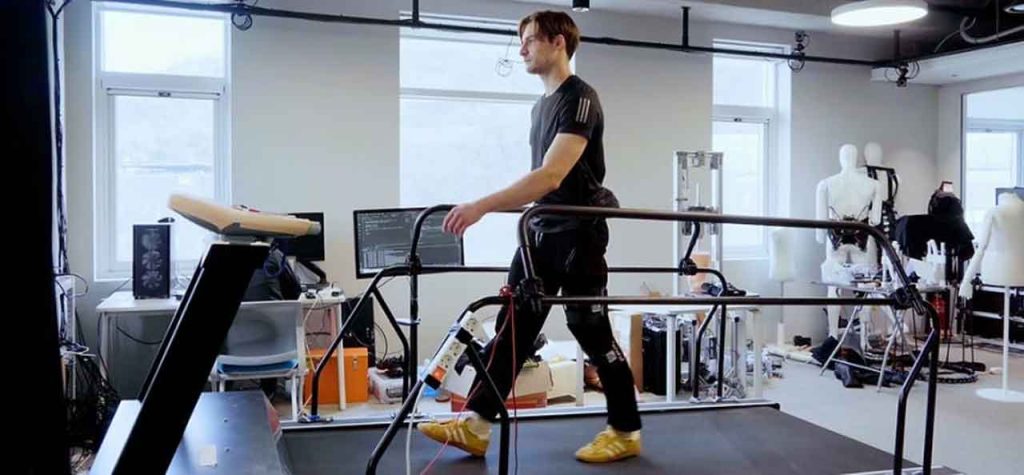
Rebodis (리보디스), a spin-off from Seoul National University’s Biomechatronics Lab, secured KRW 500 million (USD 375,000) in seed funding from Base Ventures. The company develops soft wearable robots that enhance human movement through flexible exosuit designs—offering natural motion assistance without the heavy frames of conventional robotic exoskeletons.
WithPoints (위드포인츠) raised KRW 4 billion (USD 3 million) in a pre-Series A round to expand WeNect, a robotic automation platform that handles non-repetitive, complex manufacturing tasks such as welding and inspection. Using 3D vision processing and adaptive robot control, the platform enables autonomous operation even under heat, vibration, and reflection-heavy industrial environments.
Meanwhile, People Changing the World (세상을바꾸는사람들), backed by Genexis, develops BECS (Building Energy & Control System)—a real-time AI platform that predicts peak energy usage and dynamically manages surplus power. Designed to support electric vehicle (EV) charging infrastructure without additional transformers, BECS reduces installation costs and improves efficiency by integrating KEPCO’s data for precise power demand forecasting.
AI CareTech and Spatial Intelligence Attract Strategic Interest
In a rapidly aging society, investors are also backing startups in senior-tech and spatial infrastructure.
Nursing Standard (요양의정석), supported by Seoul National University Technology Holdings, operates an AI-driven care coordination platform that integrates fragmented elderly care data. The service matches users with personalized care providers, reducing both the time and financial burdens faced by families.
Yolda Company (열다컴퍼니), operator of the home organization platform “Yolda”, goes beyond decluttering to create data-driven spatial management systems. Its experts analyze user lifestyle and item patterns to design customized storage and home layout solutions. The startup digitizes item-level data to build a “spatial data infrastructure”—a concept investors see as a foundation for the emerging Physical AI era.

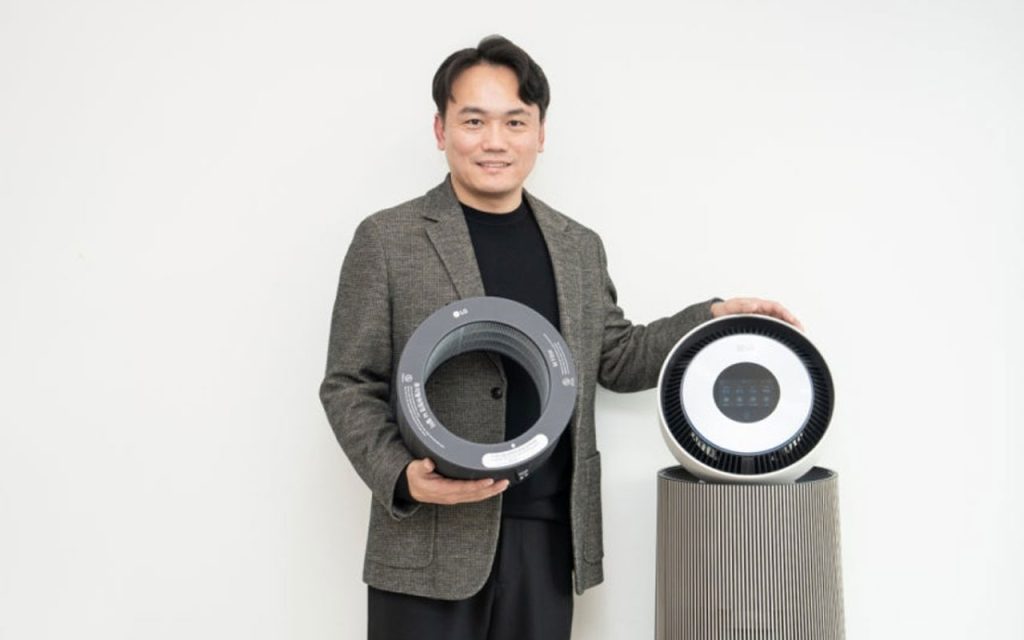
Q-Solution (큐솔루션즈), backed by Korea Institute of Science and Technology Holdings, raised KRW 200 million (USD 150,000) to develop an intelligent indoor environment management service. The platform monitors and predicts both environmental pollutants (like VOCs, fine dust, radon) and biological contaminants (bacteria, viruses), enabling facilities such as hospitals, laboratories, and schools to respond in real time.
Early-Stage Creative, Gaming, and Health AI Startups Join the Wave
The early-stage ecosystem also saw movement in creative media and healthcare AI.
Popup Studio (팝업스튜디오), operator of the Vibe Coder developer community, and Peb (펩), a hybrid casual game studio, secured new investments.
LPHYSIO Wellness (엘피지오웰니스), a medical beauty company, and Anew Production (에이뉴프로덕션), producer of the XR-based family musical “Dr. Dolittle,” also announced early funding rounds.
Evom AI (에봄에이아이), which develops AI-powered electrocardiogram (ECG) diagnostic solutions, received seed funding from Kleem Ventures and was selected for the DeepTech TIPS Program by the Ministry of SMEs and Startups (MSS).
CEO Nam Hyun-seop emphasized the company’s mission to commercialize early heart disease detection through specialized AI:
“Heart disease remains the world’s leading cause of death, and its incidence continues to rise. Early prediction and preventive care are essential. We aim to lead global innovation in AI-based cardiovascular diagnosis.”
A Shift Back to Core Technologies
The second week of January reveals a clear directional shift in Korea’s startup ecosystem. After several years of platform saturation and capital tightening, investors are returning to real technology fundamentals—materials science, robotics, AI systems, and healthcare applications grounded in research.
This wave of early-stage deep-tech investment also reflects Korea’s policy realignment toward technology-driven growth. The Ministry of SMEs and Startups has made AI and deep-tech commercialization the central axis of its 2026 strategy, framing it within the broader vision of transforming Korea into a Global Venture Powerhouse.
The momentum across materials science, robotics, and AI healthcare indicates that capital flows are now moving in step with national efforts to ignite a third venture boom—where government policy, private investment, and global collaboration converge around technological depth rather than startup volume.
For global investors watching Asia-Pacific innovation trends, Korea’s early 2026 activity illustrates an important lesson: sustained growth comes from technical depth, not speculative scale.
Korea’s Deep-Tech Cycle Enters a Constructive Phase
Early 2026 shows signs of recalibration in Korea’s venture landscape. The influx of early-stage capital toward scientifically grounded startups—spanning Nobel-grade materials to AI-driven caretech—demonstrates renewed market discipline.
For founders, this shift means that investors are once again rewarding substance over hype. For policymakers, it reinforces Korea’s position as a regional deep-tech hub that connects research institutions, venture capital, and global industry players under one emerging ecosystem of scalable innovation.
– Stay Ahead in Korea’s Startup Scene –
Get real-time insights, funding updates, and policy shifts shaping Korea’s innovation ecosystem.
➡️ Follow KoreaTechDesk on LinkedIn, X (Twitter), Threads, Bluesky, Telegram, Facebook, and WhatsApp Channel.
🤝 Looking to connect with verified Korean companies building globally?
Explore curated company profiles and request direct introductions through beSUCCESS Connect.