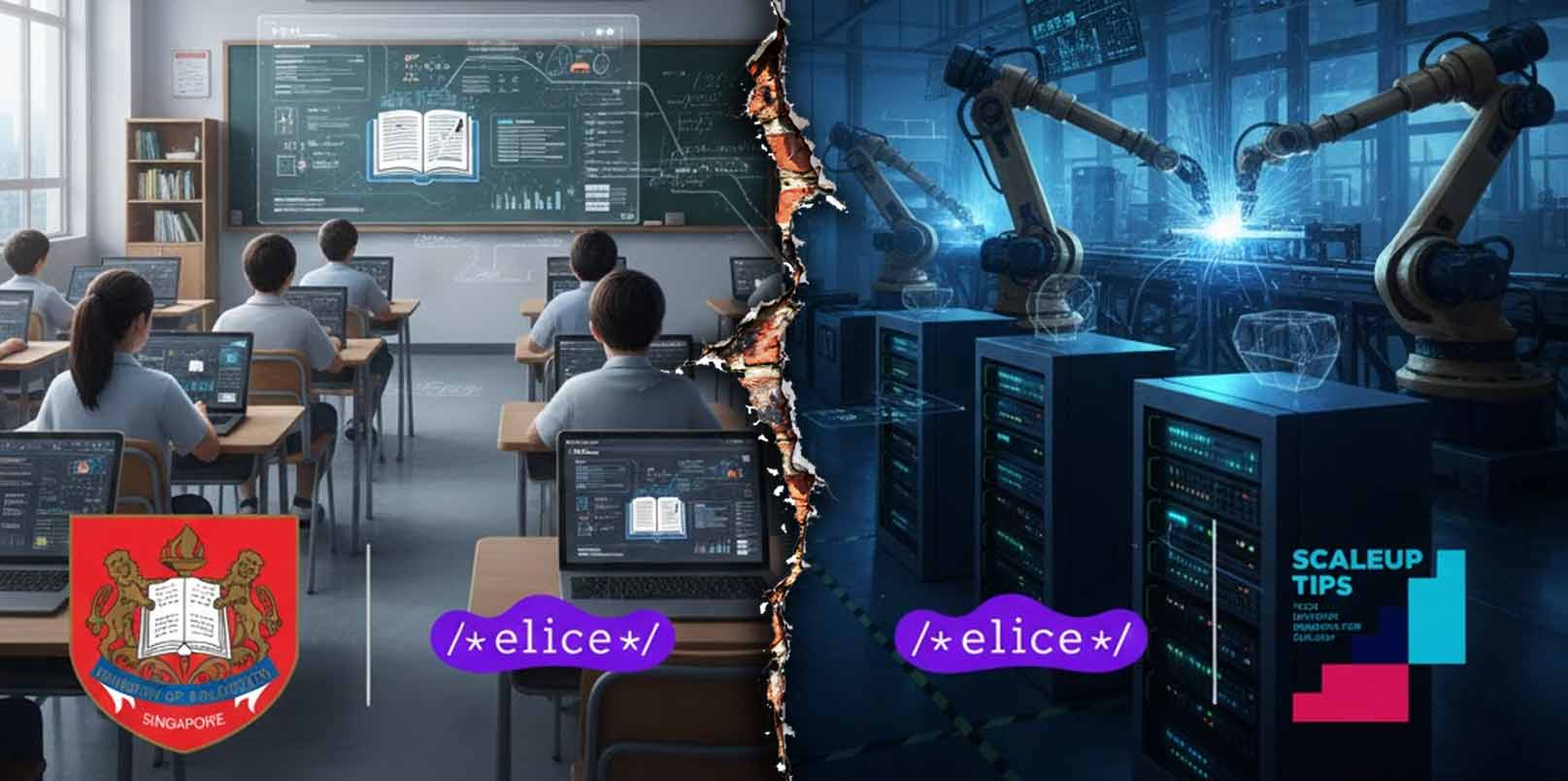
As global governments race to integrate artificial intelligence into education, Korea’s Elice Group has found its classroom breakthrough abroad. After political and regulatory hurdles sidelined its AI textbook project at home, the startup now leads Singapore’s digital curriculum initiative. Meanwhile, the Korean government is supporting Elice’s industrial AI research instead, signaling how national policy priorities shape the direction of innovation.
Korea’s AI Education Pioneer Elice Finds Opportunity in Singapore
Elice Group, a Seoul-based AI education and infrastructure company, has secured a contract from Singapore’s Ministry of Education to develop digital textbooks for secondary schools. Over the next six months, the company will design and test an AI-based prototype that uses adaptive learning and automated feedback tools to personalize instruction.
This project is part of Singapore’s national roadmap to digitize learning, modernize classroom infrastructure, and integrate AI into the public education system. The collaboration follows Singapore Deputy Prime Minister Heng Swee Keat’s 2024 visit to Elice’s Seoul education center, where he reviewed the company’s AI learning models and expressed strong interest in Korean educational technologies.
Industry analysts say the partnership validates Elice’s technological maturity and Korea’s global competitiveness in AI education, even as domestic deployment remains stalled.
Policy Reversal Stalls Korea’s AI Textbook Adoption
Ironically, Elice Group’s technology was originally developed for Korea’s own classrooms. The company created the nation’s first AI-driven digital textbooks for elementary and middle schools, which passed the Ministry of Education’s screening process in 2023 and early 2024.
However, after a change in administration, the National Assembly revised the Elementary and Secondary Education Act, lowering AI textbooks’ status from “official textbooks” to “educational materials.” The decision effectively barred their classroom adoption. Legislators also called for an audit of the previous government’s AI textbook program, freezing public rollout and leaving the technology unused domestically.
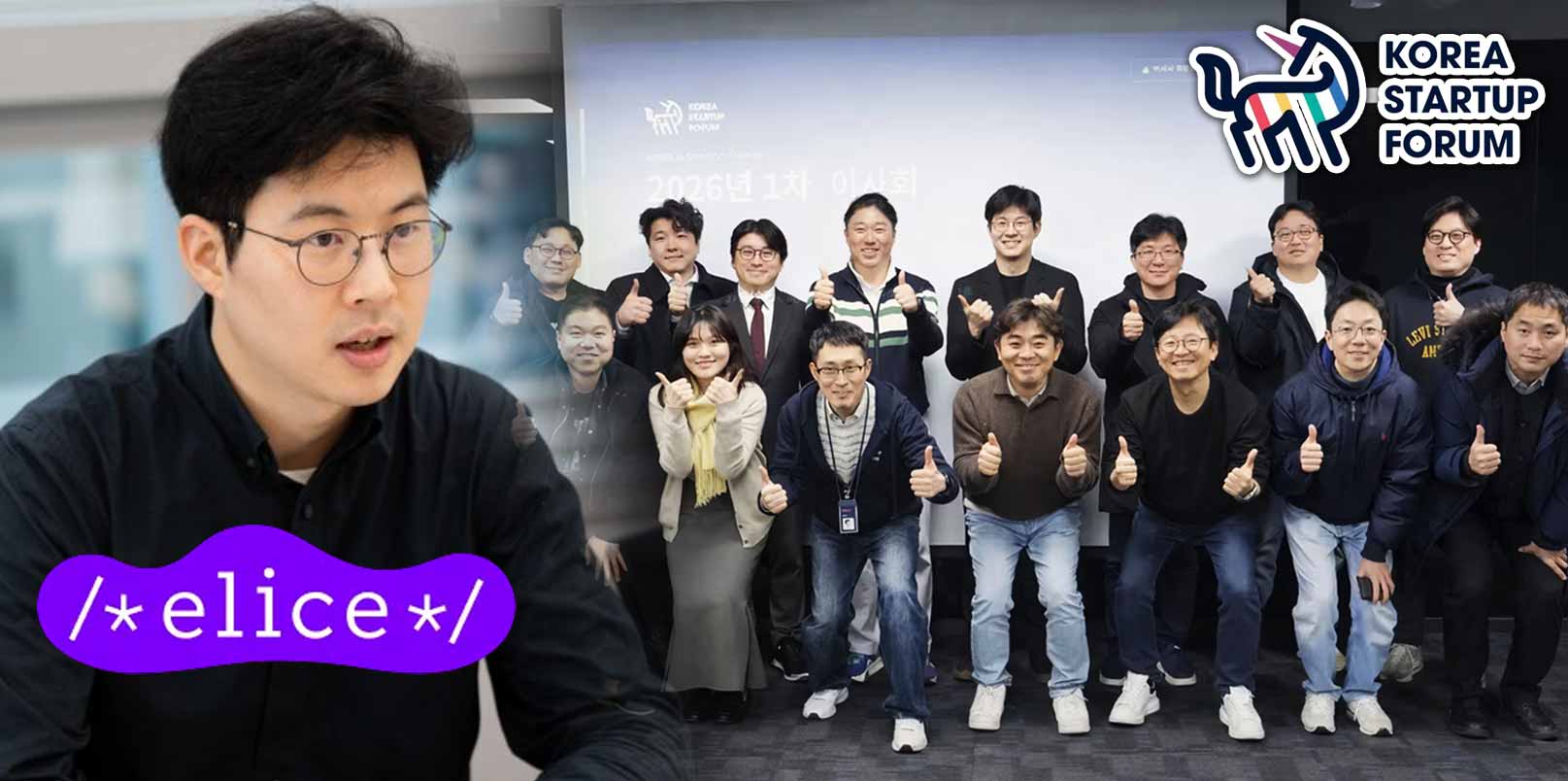
Elice CEO Kim Jaewon described the situation as “an outcome of political volatility and overregulation,” arguing that shifting policies have eroded predictability for startups. He warned that without stable frameworks, Korea risks losing momentum in AI education to faster-moving countries.
Elice Group CEO: “AI Policy Should Not Exclude Startups”
CEO Kim Jaewon of Elice Group stated in an interview with Seoul Economic Daily,
“Startups are playing on a field where the rules keep changing. This weakens not only their business confidence but also Korea’s competitiveness in the AI market.”
He further noted that AI policies tend to favor large corporations and vertically integrated consortia, while smaller startups are sidelined from government-led innovation projects. Kim emphasized the need for a more inclusive framework that mirrors the success of Korea’s fintech deregulation, which had accelerated growth through open participation,
“Just as the Financial Services Commission opened the market for fintech, we need similar courage in AI.”
Scale-Up TIPS: Korea’s Redirected Support Toward Industrial AI
While Elice Group’s education solutions have yet to gain domestic traction, the Korean government recently recognized the company under the Scale-Up TIPS program, a national initiative that links private investment with R&D funding. Through this program, Elice will receive up to KRW 12 billion (approximately USD 8.8 million) over three years to advance AI for manufacturing and industrial automation.
The company plans to develop high-reliability Intelligent Document Processing (IDP) systems that combine Vision-Language Models (VLMs) and multi-agent AI frameworks. These technologies aim to reduce productivity losses by automating document reading, verification, and integration across complex manufacturing workflows.
Elice’s project aligns with Korea’s broader AI Transformation (AX) policy, which prioritizes industrial digitalization and smart factory innovation. By targeting industrial AI infrastructure—such as private clouds, GPU-as-a-Service, and modular data centers—the startup is adapting its AI expertise to the government’s strategic focus on deep-tech industrial competitiveness.
When Policy Dictates Innovation
Elice Group’s journey reflects how policy direction can shape, and sometimes redirect, innovation.
- In education, policy uncertainty and legislative intervention stalled a world-class technology that could have strengthened Korea’s AI literacy pipeline.
- In industry, a strong government-led program is now channeling that same talent toward manufacturing efficiency and industrial AI transformation.
This dual narrative reveals both Korea’s strength in adaptive deep-tech capacity and its structural weakness in policy continuity. As countries like Singapore move swiftly to embed AI in education, Korea risks allowing bureaucratic hesitation to delay innovation that could empower its future workforce.
And so, Elice Group’s experience underscores a broader truth that in Korea’s evolving AI ecosystem, success often depends less on technological capability than on the direction of policy wind.
Additionally, Korea’s heavy national investment in its “Venture 4 Powerhouse” vision further illustrates this imbalance. The government is channeling unprecedented resources into deep tech and manufacturing, positioning industrial AI as the centerpiece of its global competitiveness strategy.
While this focus has strengthened Korea’s technological depth, it also reveals how other high-potential sectors—such as AI education—can be overlooked in the policy race toward industrial transformation.
Elice Group’s experience underscores this gap: a globally proven innovation born in Korea found real opportunity abroad, not because of lack of capability, but because national priorities left little space for it to grow.
If Korea aims to avoid similar losses, future innovation policy must balance industrial goals with inclusive support for human-centered AI development. And this is especially crucial if South Korea wants to pursue and become a true global AI power nation.
Elice Group: The Missed Classroom, The New Factory
Elice Group’s global recognition highlights the paradox of Korea’s innovation economy. The startup that once pioneered AI textbooks for students now builds AI systems for factory floors—a pivot shaped not by market failure, but by policy realignment.
If Korea aspires to lead in human-centered AI, it must ensure that education innovation receives the same institutional support as industrial transformation. Otherwise, the country may continue exporting its best ideas abroad, only to re-import them later as global standards.
– Stay Ahead in Korea’s Startup Scene –
Get real-time insights, funding updates, and policy shifts shaping Korea’s innovation ecosystem.
➡️ Follow KoreaTechDesk on LinkedIn, X (Twitter), Threads, Bluesky, Telegram, Facebook, and WhatsApp Channel.
🤝 Looking to connect with verified Korean companies building globally?
Explore curated company profiles and request direct introductions through beSUCCESS Connect.