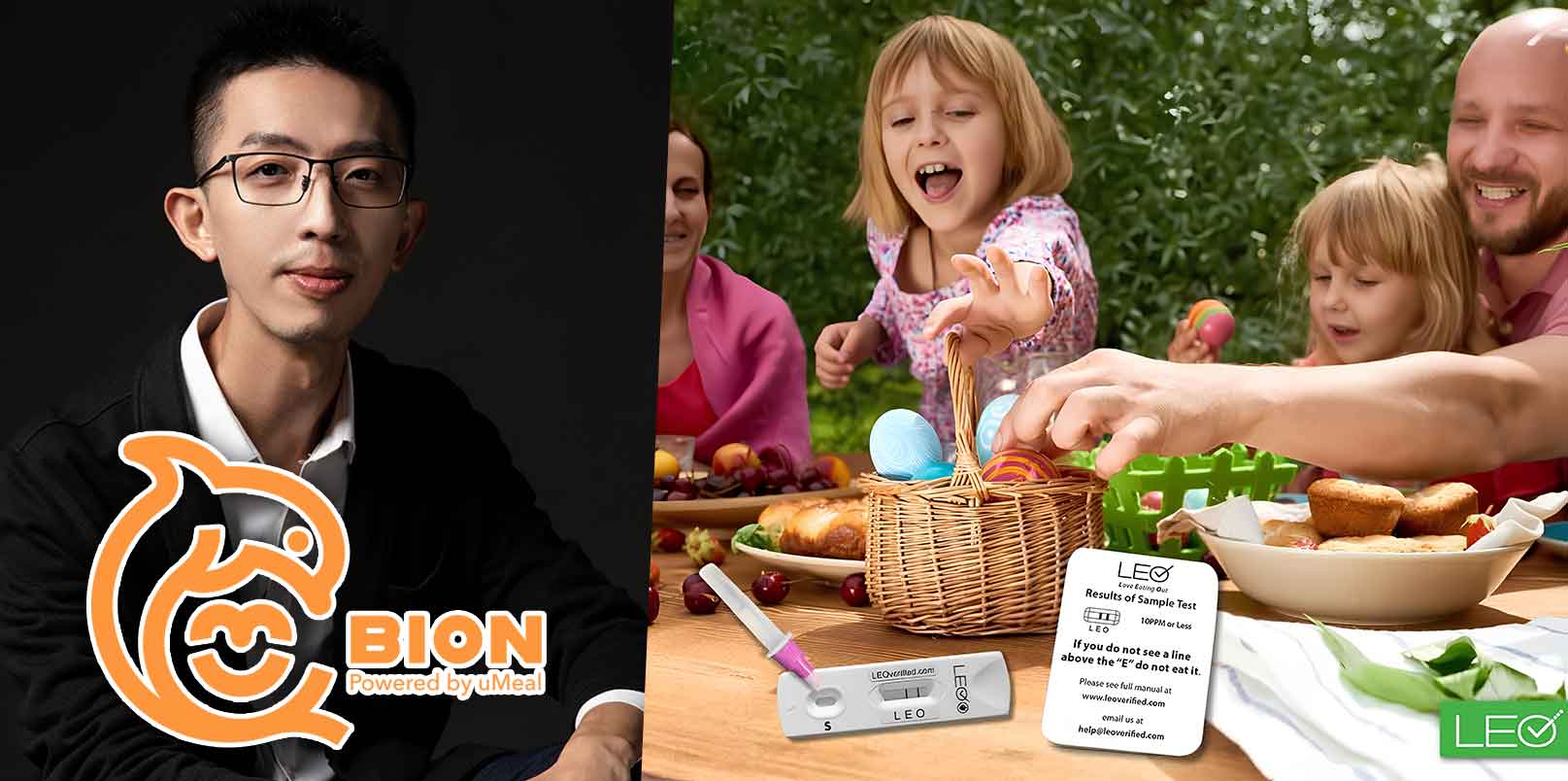
Founded by Yu-Cheng Hsiao, a biophotonics physicist ranked among the world’s top 2 percent of scientists, BION is on a mission to make food safety accessible, accurate, and real-time. The Taiwan-based company develops IoT-enabled allergen-testing devices that detect gluten and other hidden food allergens in seconds.
BION was also selected as a part of the 40 companies joining K-Startup Grand Challenge (KSGC) 2025 Phase 2, Korea’s flagship government-backed accelerator that helps global startups expand into Asia through access to funding, mentorship, and institutional partners.
KoreaTechDesk spoke with Hsiao about how the program accelerated BION’s entry into Korea’s fast-evolving health-tech market.
BION and The Origin of The Company
Q1. What motivated you to start this company, and what core problem were you trying to solve?
I founded BION because millions of people living with celiac disease or gluten intolerance still face the fear of hidden allergens—especially in processed or restaurant foods where labeling is often inaccurate.
As a physicist and biophotonics researcher, I realized that existing allergen-testing tools were either too slow, too bulky, or too inaccurate for daily use. There was no affordable, portable, and scientifically reliable device that empowered consumers to test their food instantly.
This became personal when I watched friends struggle with gluten sensitivity and unpredictable symptoms from accidental exposure. Technology could fix that. So, I began designing an IoT-enabled gluten detection system that integrates biomaterials, optical sensing, and a hydrolyzed gluten antibody—the world’s first of its kind. My goal has always been simple: to give people confidence and control over what they eat.
Recognizing an Untapped Market in Korea
Q2. What opportunity or unmet need did you identify in the Korean market, and what early signals convinced you that your solution could gain real traction here?
Korea has one of the fastest-growing populations of health-conscious consumers, yet reliable gluten-free verification tools remain scarce. I saw a clear unmet need: Korean consumers demand transparency in food safety, but existing options—imported test kits or manual ingredient checks—are often inconvenient or unreliable.
The opportunity became even clearer when we learned how often Korean packaged foods contain hidden or hydrolyzed gluten ingredients that traditional detection methods overlook.
Our early market signals were strong. In user interviews and pilot trials, over 300 Korean consumers participated, and 72 percent said they would use a portable gluten-testing device if it were accurate and affordable. During food-tech exhibitions, our booth consistently drew families, F&B professionals, and dieticians—and two major food manufacturers approached us for collaboration talks. These responses confirmed that our solution targeted a genuine pain point with clear scalability in Korea.
Data Builds Trust: BION’s Lessons from KSGC
Q3. During KSGC, were there any mentors, partners, or specific insights that significantly influenced your product or strategy?
One of our most impactful mentors came from the biomanufacturing and regulatory strategy track. He helped reshape our Korean market-entry plan by stressing clinical-style validation and local certification pathways. He explained that in Korea, scientific credibility is the foundation of consumer trust, especially for health-related devices.
Following his advice, we redesigned our roadmap to include Korean-standard testing protocols, built a stronger validation dataset, and aligned our manufacturing documentation with regulatory norms. He also introduced us to two key partners—a large F&B distributor and a diagnostics manufacturing advisor—who shared insights on Korean consumer behavior, packaging preferences, and price sensitivity.
This mentorship directly improved our product design and accelerated partnership discussions. The single takeaway that guided us since then is clear: data builds trust, and trust builds market share.
Commercial Readiness Accelerated by KSGC
Q4. After joining KSGC, what has been the most meaningful change for your company and what evidence supports this growth?
KSGC catalyzed our transition from a research-focused company to a commercialization-ready business. The results are visible across revenue, partnerships, and product advancement.
Globally, our allergen-sensor business now generates about NT$170 million annually, and KSGC allowed us to extend that momentum into Korea. Through local showcases and pilot trials, we secured early commitments from Korean distributors and F&B partners eager to integrate our technology into their safety workflows.
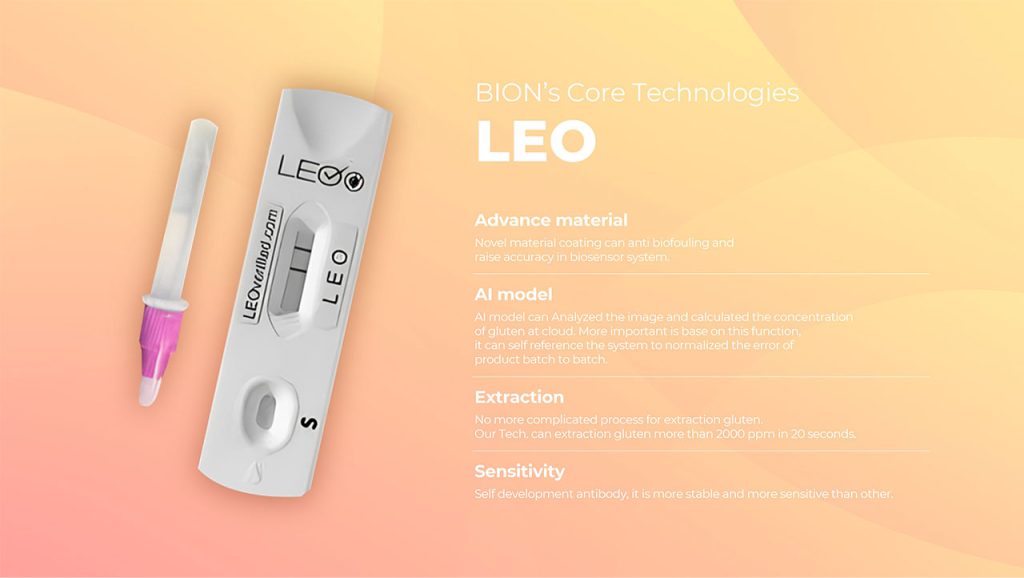
Product-wise, feedback from Korean mentors and users helped us refine our hydrolyzed-gluten antibody assay—already the world’s first of its kind—for portability, design, and connectivity. Sensitivity improved 23 percent, and the user interface became more intuitive for Korean users.
Our visibility also rose sharply. Through KSGC events, we engaged with food manufacturers, dieticians, and government-linked organizations that now view our device as a potential national standard for allergen verification. These discussions have led us toward localized production with Samsung Biologics and other Korean CDMOs.
Overall, KSGC moved us from “interested in Korea” to “strategically ready for Korea,” equipping us with data, partners, and a stronger product foundation.
BION: Building the Future of Food Safety
Q5. Looking ahead, what is the most important vision or long-term goal your company aims to achieve, and what steps are you taking to move toward it?
Our long-term vision is to create the world’s most trusted real-time food-safety verification ecosystem—starting with gluten and expanding to multiple allergens and contaminants. We want instant allergen detection to become as common as reading nutrition labels, empowering everyone to eat confidently anywhere.
To realize this, we are scaling our proprietary hydrolyzed-gluten antibody into a multi-allergen platform capable of detecting peanuts, soy, dairy, and shellfish. We are also developing an integrated mobile ecosystem that links IoT sensors with AI-driven analytics, enabling users to track exposure history and receive personalized risk assessments.
In Korea, we are working to secure local manufacturing partnerships for cost-efficiency and compliance while preparing Korean-specific clinical validation data to support regulatory approval.
Ultimately, our mission is to transform allergen detection from a reactive process into a proactive daily habit. With Korea as our strategic hub, we are taking deliberate steps to make real-time food safety a global standard.
Through the K-Startup Grand Challenge 2025, BION demonstrates how deep-tech innovation in biophotonics and AI can empower safer eating and build consumer trust in Korea’s health-tech landscape.
“KSGC gave us concrete data points, credible partners, and a more competitive product, allowing us to approach Korea with clarity and confidence.”
About This Series
This article is part of the “K-Startup Grand Challenge 2025 Interview Series,” featuring 40 global startups from Phase 2 of Korea’s leading accelerator program. The series highlights how international founders are scaling innovation through Korea’s startup ecosystem.
Read more stories from the K-Startup Grand Challenge 2025 Interview Series on KoreaTechDesk.
🤝 Looking to connect with verified Korean companies building globally?
Explore curated company profiles and request direct introductions through beSUCCESS Connect.
– Stay Ahead in Korea’s Startup Scene –
Get real-time insights, funding updates, and policy shifts shaping Korea’s innovation ecosystem.
➡️ Follow KoreaTechDesk on LinkedIn, X (Twitter), Threads, Bluesky, Telegram, Facebook, and WhatsApp Channel.