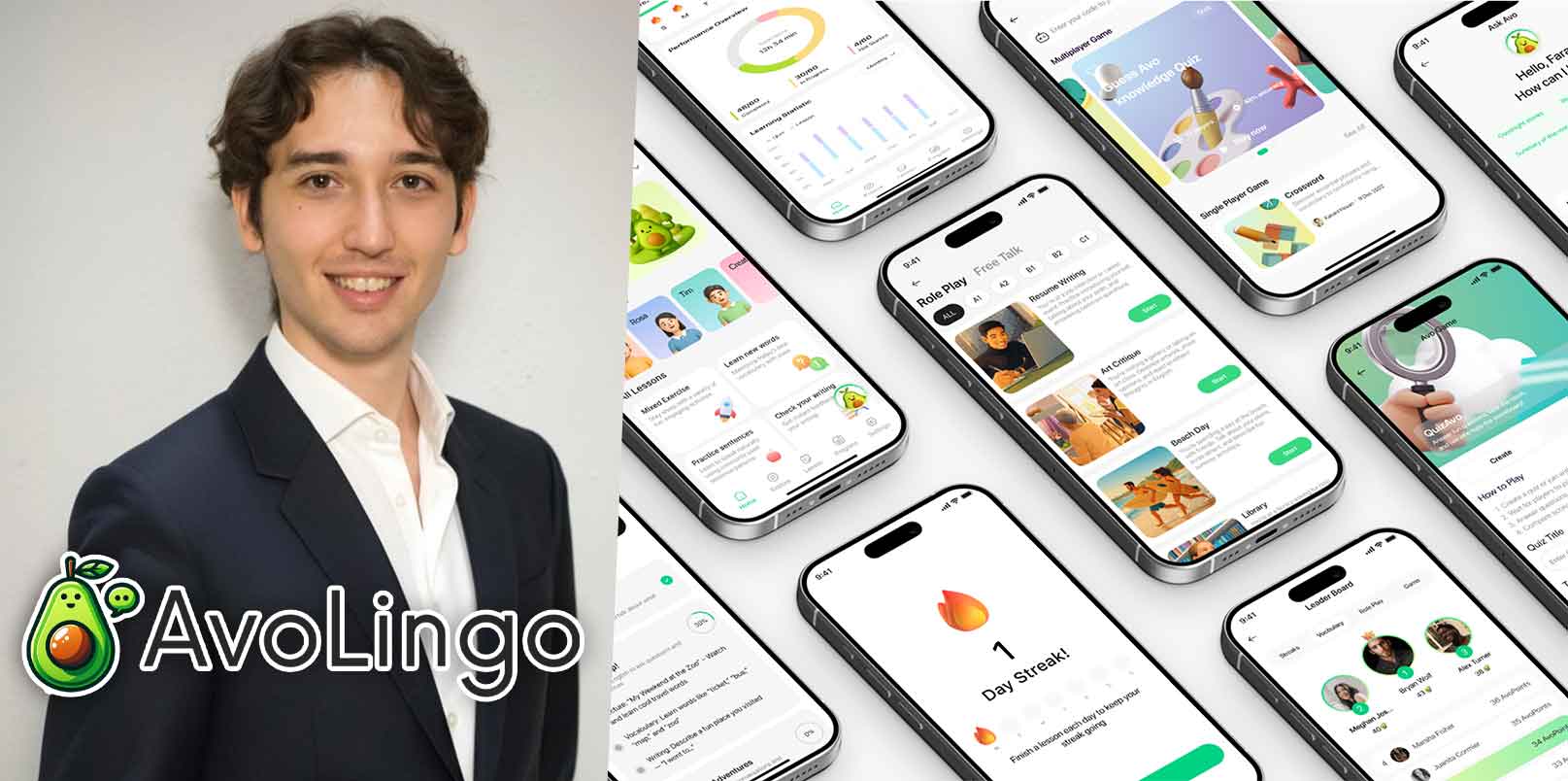
For Avolabs Inc., an edtech startup from the United States, innovation began with a fundamental question — why has education modernized so little in an age of AI and automation? Founded by former SAP HQ security consultant and AI engineer Deniz Albayrak, Avolabs is now reimagining the classroom experience with its “Agentic Learning Automation” system.
The company was selected to join the K-Startup Grand Challenge (KSGC) 2025 Phase 2, Korea’s flagship government-backed accelerator helping global startups expand into Asia through access to funding, partners, and institutional support.
KoreaTechDesk spoke with Albayrak about Avolabs’ journey, transformation, and vision as part of this year’s program.
Avolabs and The Problem That Sparked Its Idea
Q1. What motivated you to start this company, and what core problem were you trying to solve?
The initial motivation came from a simple, uncomfortable truth: while the rest of the world has modernized, classrooms have remained frozen in time. We are still relying on a “factory model” of education designed a century ago, where every unique student is forced to fit into the same standardized box.
I set out to fix that core problem — the “one-size-fits-all” system that treats students like memory drives to be filled, rather than humans to be understood. Schools don’t need another app or game; they need a complete shift in infrastructure.
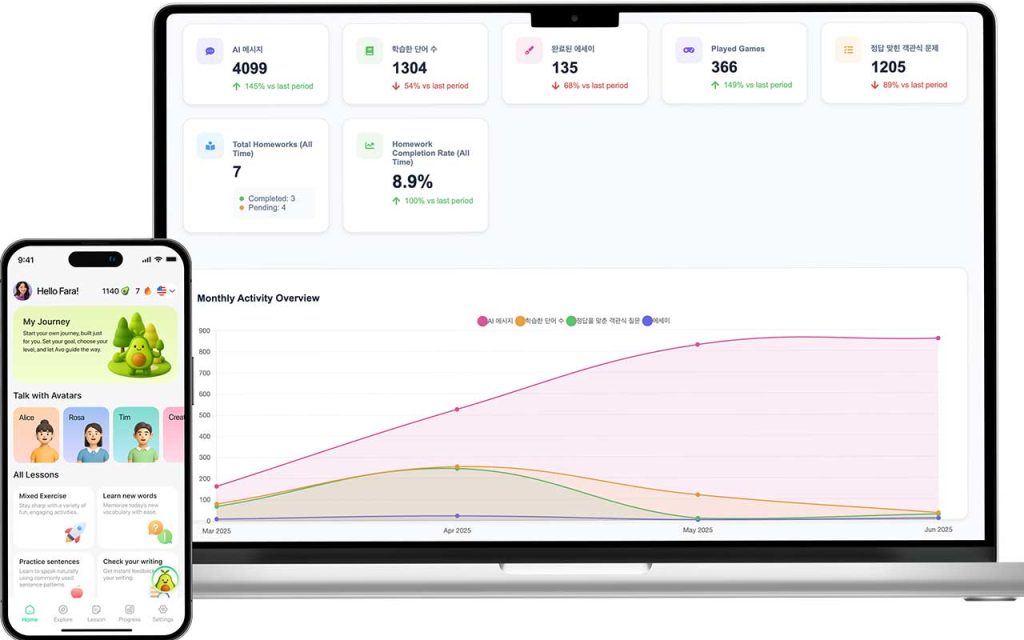
That’s why I founded AvoLingo, to build Agentic Learning Automation, an AI-driven system that gives every student a personal tutor. Our mission is to replace standardized learning with personalized empowerment, offering every learner the tools, freedom, and support to succeed on their own path.
Finding Fit in the Korean Education Market
Q2. What opportunity or unmet need did you identify in the Korean market, and what early signals convinced you that your solution could gain real traction here?
We saw a massive disconnect in Korea’s education sector. Parents and the government invest more in education here than almost anywhere else in the world, yet the system still relies heavily on manual, analog teaching methods that can’t deliver true personalization at scale. There was a clear hunger for a solution that could make this enormous investment genuinely effective.
The signal that convinced us wasn’t just interest — it was adoption speed. When we showed that our AI could automate up to 90% of a teacher’s administrative workload, educators didn’t just nod; they signed up. Within four months, we built a nationwide network of eight regional distributors and over 30 institutional partners.
In one word, the unmet need was efficiency. Teachers were drowning in paperwork and grading. By giving them a lifeline — a tool that lets them focus on teaching — we earned immediate, organic traction.
Mentorship That Changed Our Approach
Q3. During KSGC, were there any mentors, partners, or specific insights that significantly influenced your product or strategy?
The most critical insight we gained during KSGC was the concept of hyper-localization. One mentor told us, “To win in Korea, you must become a partner, not a vendor.”
That single sentence changed everything. We stopped trying to sell directly through a website and started building a community-driven model. We hosted offline events, empowered local distributors to become the face of our brand, and focused on cultivating relationships rather than transactions.
In Korea’s education market, trust is the most valuable currency. Shifting from a transactional sales model to a relationship-based one is the reason we penetrated both private and public education sectors so quickly. We stopped acting like outsiders and started building as insiders.
Growing from Product to Platform
Q4. After joining KSGC, what has been the most meaningful change for your company and what evidence supports this growth?
The biggest change has been our evolution from a product to a platform. Before KSGC, we had a strong piece of technology. Today, we have a validated business with nationwide reach.
Our growth is clear from our expansion beyond the capital. Many foreign startups get stuck in the “Seoul bubble,” but we built a distribution network covering the entire country — from the northern provinces to the southern coast and islands. We moved from small, direct sales to multi-year institutional contracts and government pilot programs.
This progress shows that our Agentic Automation is not just an innovation for early adopters but a scalable infrastructure for Korea’s education ecosystem. In many ways, KSGC is where we truly grew up as a company.
Building the Future of Learning with Avolabs
Q5. Looking ahead, what is the most important vision or long-term goal your company aims to achieve, and what steps are you taking to move toward it?
We have a simple but ambitious vision: to end the era of “teaching for the test” and begin the era of “learning for the world.”
Our goal is to make Agentic Learning the new global standard — a system that adapts to the student, not the other way around. To achieve this, we’re taking three key steps.
First, we are establishing Korea as our Global R&D Command Center, expanding our engineering team here to combine world-class AI innovation with Korea’s educational rigor. Second, we’re moving upmarket, focusing on major enterprise institutions and universities to demonstrate performance at the highest academic level. Finally, we’re using our success in Korea as our global validation milestone.
Our mission is to redefine how the world learns — and Korea is where that transformation begins. If our model can thrive in the world’s most competitive education market, it can thrive anywhere.
Through the K-Startup Grand Challenge 2025, Avolabs Inc. showcases how AI-driven personalization can turn Korea’s education ecosystem into a model for the world.
“In Korea, trust is the most valuable currency. Thanks to KSGC, we stopped acting like outsiders and started building as insiders. Today, we have a validated business with a nationwide footprint, and KSGC is where we truly grew up as a company.”
About This Series
This article is part of the “K-Startup Grand Challenge 2025 Interview Series,” featuring 40 global startups from Phase 2 of Korea’s leading accelerator program. The series highlights how international founders are scaling innovation through Korea’s startup ecosystem.
Read more stories from the K-Startup Grand Challenge 2025 Interview Series on KoreaTechDesk.
🤝 Looking to connect with verified Korean companies building globally?
Explore curated company profiles and request direct introductions through beSUCCESS Connect.
– Stay Ahead in Korea’s Startup Scene –
Get real-time insights, funding updates, and policy shifts shaping Korea’s innovation ecosystem.
➡️ Follow KoreaTechDesk on LinkedIn, X (Twitter), Threads, Bluesky, Telegram, Facebook, and WhatsApp Channel.