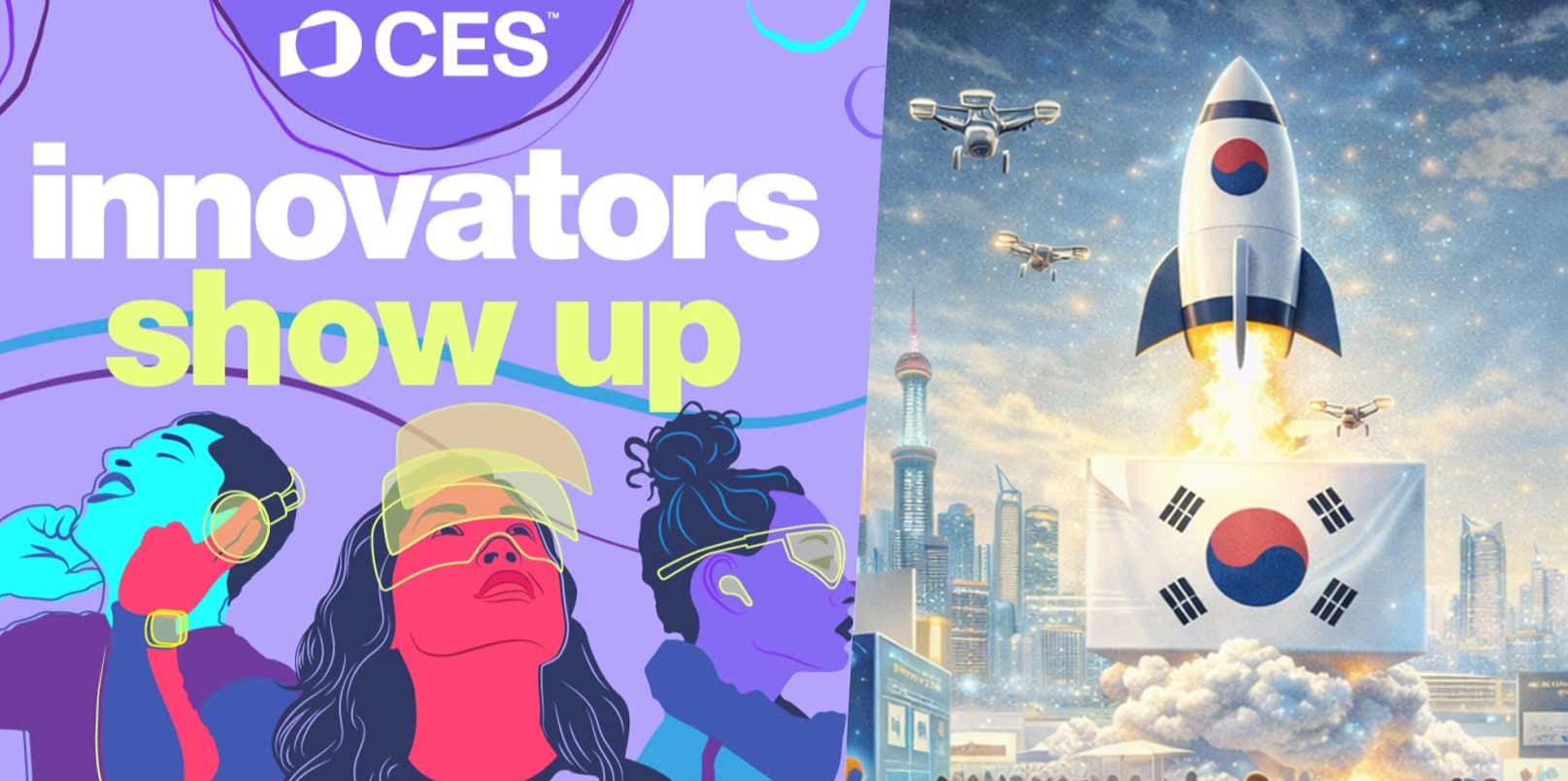
Korea is entering 2026 with its most coordinated startup strategy yet. At CES 2026 in Las Vegas, 470 Korean startups backed by 38 public and institutional partners are not merely exhibiting—they are positioning the nation’s venture ecosystem as a core driver of global innovation. The world’s largest technology event has effectively become Korea’s testing ground for venture-led globalization.
Korea’s Unified Startup Presence Dominates CES 2026
CES 2026, held in Las Vegas from January 6 to 9, gathers over 4,300 companies from more than 160 countries under the theme “Innovators Show Up.”
According to the Korea Information and Communication Technology Industry Association (KICTA), 853 Korean companies—including major conglomerates such as Samsung, LG, Hyundai, and SK—are taking part, securing Korea’s position as the third-largest national participant after the United States and China.
Among these, 470 startups supported by the Ministry of SMEs and Startups (MSS), the Ministry of Trade, Industry and Energy (MOTIE), the Seoul Business Agency (SBA), KAIST, and other ecosystem actors are showcasing their technologies across integrated Korea Pavilions within the startup-focused Eureka Park.
While the total number of Korean participants is slightly lower than last year, the number of startups involved has reached an all-time high, signaling a structural shift in how Korea defines its global tech competitiveness.
CES as Korea’s Strategic Export Platform
The Korean government and its agencies have turned CES into a national export strategy platform. Through unified branding—consistent booth designs and a shared “Korea Premium” identity—Korea presents a consolidated front in the global innovation economy.
The Ministry of SMEs and Startups operates the K-Startup Pavilion, while MOTIE manages the broader Korea Integrated Pavilion. Seoul’s city government leads the Seoul Pavilion under the SBA, helping local innovators tap global markets. The alignment among these entities marks a three-year growth streak in participation: 443 in 2024, 445 in 2025, and now 470 in 2026.
Startups are also engaging in K-Innovation Pitching Challenges, live demo sessions, and business networking events with multinational corporations such as Walmart and Intel. Supporting programs—including Korea’s Startup Special Visa, Inbound Startup Program, and COMEUP—are featured to introduce international investors to the country’s startup infrastructure.
CES 2026’s main sectors reflect Korea’s innovation strengths: AI, robotics, mobility, digital healthcare, and spatial computing. These areas mirror the direction of Korea’s industrial transformation—one that increasingly leans on startups rather than conglomerates to pioneer new technologies.
Government and Industry Reinforce a Shared Vision
According to Minister Han Seong-sook of the Ministry of SMEs and Startups,
“The government will continue to support innovative companies so they can use CES as a launchpad to expand globally.”
The Consumer Technology Association (CTA), which organizes CES, reported that 168 of the 284 first-round Innovation Award winners are Korean firms—59 percent of the total. Among them, 81 percent are small or medium-sized enterprises. This marks the third consecutive year that Korea has led globally in Innovation Award counts.
Recognized startups include Geeks Loft (portable media hub headphones), CT5 (wearable AI devices), and DeepFusion AI (radar-based autonomous driving perception)—each honored with Best of Innovation awards. Other notable winners supported by SBA and KAIST include MangoSlab, StudioLab, Nation A, ArtNova, and CrossHub, representing Korea’s diverse technological capabilities.
Korea’s Globalization Blueprint in Action at CES 2026
Korea’s record participation and award dominance reflect more than national pride. It reveals a systematic effort to position startups as the next-generation export engine. CES now functions as both a market validation platform and an international investor gateway for Korean ventures.
The collaboration among ministries, universities, and city-level agencies underscores a long-term blueprint: build a scalable, globally visible startup ecosystem capable of competing in AI-driven industries. This approach aligns with Korea’s 2026 economic policy to foster a “startup-centered society”—a shift from conglomerate-led growth to entrepreneurship-led national competitiveness.
For global investors and policymakers, Korea’s approach demonstrates how a government can integrate policy, branding, and ecosystem coordination to accelerate startup globalization. Rather than relying solely on financial incentives, Korea is embedding its startups directly into global technology value chains—a model increasingly studied by emerging innovation economies.
Korean Startups at CES 2026: From Exhibition to Expansion
CES 2026 reveals how Korea’s startup ecosystem is moving beyond showcasing products toward executing a unified internationalization strategy. With 470 startups aligned under one vision and multiple government bodies coordinating export readiness, Korea’s innovation engine is not just gaining recognition—it is gaining structure.
If 2025 was about proving capability, 2026 marks the year Korea tests scalability. What happens in Las Vegas this week will shape how the nation’s startups engage global markets in the years to come—and how Korea cements its identity as a venture-led economy on the world stage.
– Stay Ahead in Korea’s Startup Scene –
Get real-time insights, funding updates, and policy shifts shaping Korea’s innovation ecosystem.
➡️ Follow KoreaTechDesk on LinkedIn, X (Twitter), Threads, Bluesky, Telegram, Facebook, and WhatsApp Channel.
🤝 Looking to connect with verified Korean companies building globally?
Explore curated company profiles and request direct introductions through beSUCCESS Connect.