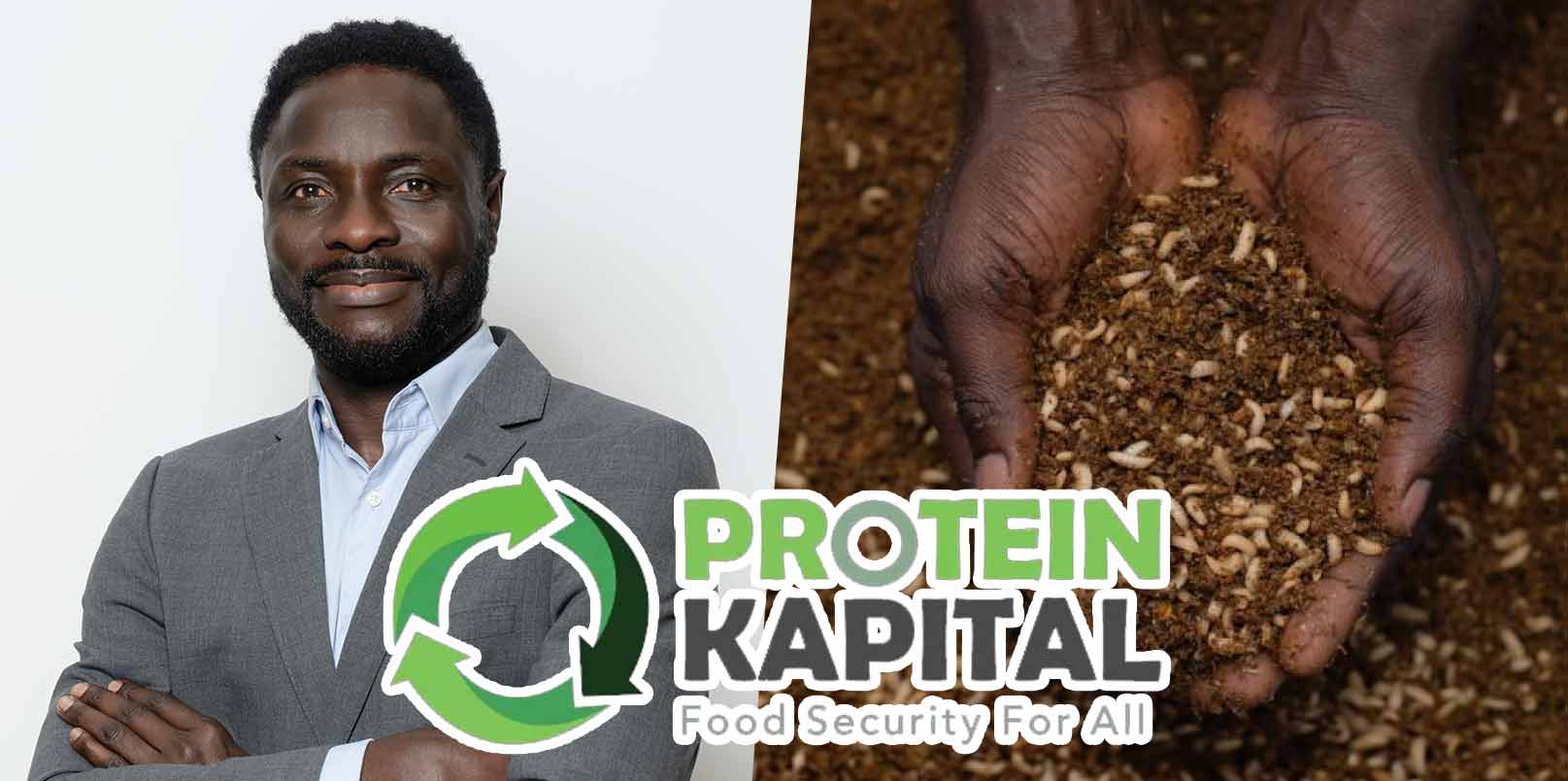
When Daniel Enebeli left a high-flying career in financial regulation to start a catfish farm, he encountered a paradox at the heart of food production: fish feed costs were rising faster than farmers could cope, yet the world was throwing away millions of tons of potential raw materials every day. That realization led to the creation of Protein Kapital, a company that turns food waste into sustainable protein using Black Soldier Fly (BSF) technology.
In this exclusive KoreaTechDesk interview, Enebeli explains how his circular model is helping solve one of agriculture’s most expensive problems—and why Korea has become one of the most strategic testing grounds for sustainable insect farming as the company advanced through K-Startup Grand Challenge 2025.
“Participating in the KSGC program dramatically increased our visibility and momentum: attracting international recognition and funding, building partnerships, and giving us breakthrough in raw material access.”
Protein Kapital Origin: Rewriting the Economics of Protein
Q1. What motivated you to start this company, and what core problem were you trying to solve?
The prices of fish meal and soybean meal—the traditional protein sources for animal feed—continue to rise steadily.
Fish feed accounts for nearly 75% of fish production costs, yet fish prices remain relatively stable. As a result, farmers are forced to absorb mounting losses year after year.
I experienced this challenge firsthand when I transitioned from a career in financial regulation in the Cayman Islands to catfish farming in Nigeria a decade ago. While pioneering super-intensive aquaculture in Nigeria helped reduce water use and fish mortality, my farm still struggled to stay profitable due to the high cost of imported fish and soybean meal.
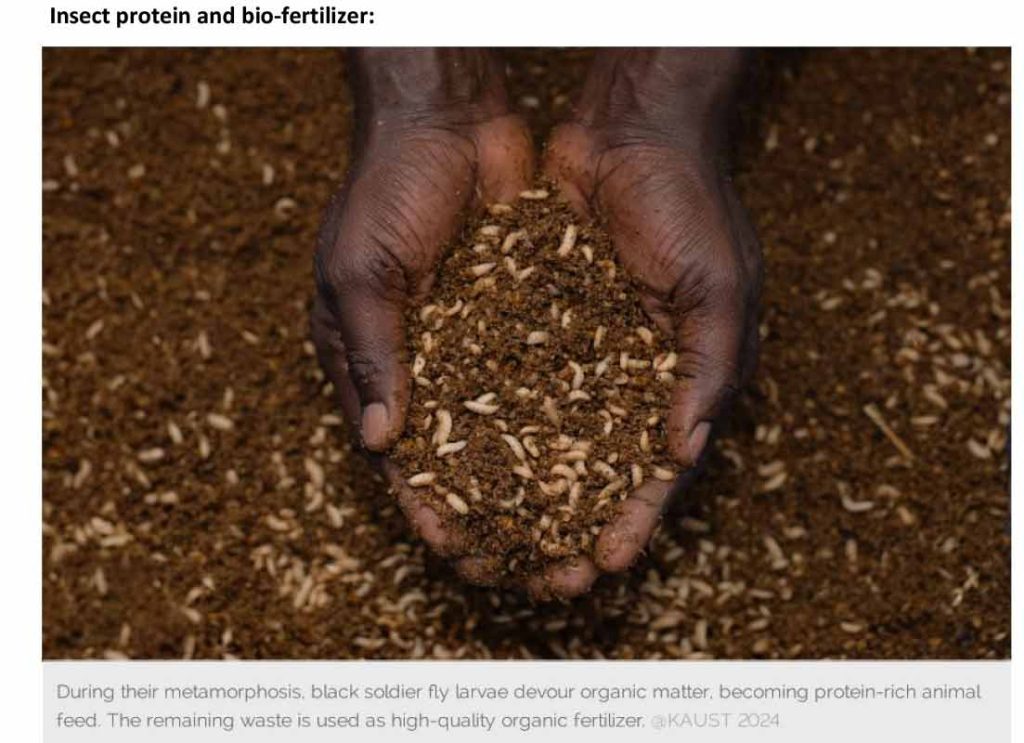
In search of a local solution, I turned to the Black Soldier Fly (BSF)—one of nature’s most efficient bio-converters. Native to many regions, BSF larvae can transform food waste, which contributes about 8% to global greenhouse gas emissions, into nutrient-rich protein in just ten days.
By using locally sourced BSF larvae to upcycle food waste, I replaced costly imported feed with affordable, sustainable insect protein—reversing the financial losses on my farm and proving that circular agriculture can deliver both economic and environmental impact.
Turning Korea’s Waste Efficiency into Opportunity with Protein Kapital
Q2. What opportunity or unmet need did you identify in the Korean market, and what early signals convinced you that your solution could gain real traction here?
At 98% food waste recycling coverage, Korea stands out as the world’s recycling leader. But its recycling methods, dominated by traditional composting, are costly, harmful, and low yielding.
In fact, the Korean government spends nearly USD 700 million each year to maintain these systems, even though local farmers often reject the resulting compost, sometimes offered free of charge.
At Protein Kapital, we saw a clear opportunity to help Korea transition toward a more sustainable and efficient model. By supplying affordable Black Soldier Fly (BSF) eggs—nature’s most effective bio-converter—we enable food waste to be recycled rapidly into high-value protein and organic fertilizer. This approach not only reduces costs and emissions but also transforms waste into an economic resource.
Our entry into Korea through the K-Startup Grand Challenge (KSGC) program quickly validated this potential. We secured two contracts with BSFF, Korea’s leading insect farm: a paid proof-of-concept to optimize BSFF’s insect-egg production and a supply agreement for our proprietary BSF diet. These early wins confirmed both market readiness and strong institutional confidence in our technology.
Collaboration That Changed Direction at KSGC 2025
Q3. During KSGC, were there any mentors, partners, or specific insights that significantly influenced your product or strategy?
The KSGC program was Protein Kapital’s introduction to Asia, and thanks to the dedication of the KSGC team, the transition was remarkably seamless. Through the program’s strong reputation and network, we were able to engage BSFF, Korea’s largest Black Soldier Fly farm.
Mr. Kim, BSFF’s CEO and one of the pioneers in Korea’s insect industry, shared valuable insights into local market dynamics—covering pricing structures, production costs, and government subsidies. His analysis revealed that Korea’s BSF industry remained fragmented, with no specialist insect breeders. He had even finalized plans to invest USD 200,000 in establishing a breeding facility in Vietnam, citing Korea’s climate as unsuitable for insect breeding.
However, our research showed that Busan’s temperate climate is, in fact, well-suited for BSF breeding. This realization exposed a major gap in Korea’s BSF egg supply chain and led us to launch an industrial breeding facility in Busan instead. Mr. Kim subsequently shelved his Vietnam plans and became Protein Kapital’s first customer in Korea, signing a formal contract for egg supply.
These developments—sparked by mentorship, collaboration, and market insight gained through KSGC—solidified our local strategy and positioned us to strengthen Korea’s growing insect-protein ecosystem.
KSGC 2025: Momentum That Scales Beyond Borders
Q4. After joining KSGC, what has been the most meaningful change for your company and what evidence supports this growth?
Participating in the K-Startup Grand Challenge program dramatically increased Protein Kapital’s visibility and momentum.
Within just 60 days, we signed over 40 MoUs, 3 Letters of Intent (LOIs), 2 Proofs of Concept (PoCs), and 2 paid contracts with a diverse network of food service companies and manufacturers across Korea. This rapid growth was led by our Korean intern—a 2024 KSGC alumnus—who has since joined the Protein Kapital team.
Our participation also helped us attract international recognition and funding, including a USD 30,000 grant from Startup Chile and selection as a Commonwealth Startup Fellow 2025.
Yet, the most transformative change came in access to raw materials. For insect farming, waste is good—but pre-consumer food waste is even better. For the first time, Protein Kapital secured direct access to pre-consumer food side streams—the highest-quality, HACCP-compliant materials—from partners such as FarmJoa, Korea’s leading frozen vegetable producer.
This breakthrough not only reduces our pre-treatment costs but also enables us to produce premium insect-based products. In Europe—the world’s highest-value market for insect-derived materials—products made from pre-consumer waste command up to three times the global average price.
Equally significant is our growing relationship with BSFF, Korea’s largest Black Soldier Fly farm. What could have been a competitor has become a strategic ally, resulting in a USD 350,000 LOI and a paid PoC, giving us valuable insight into local conditions for insect propagation. In parallel, we received another USD 50,000 LOI from Kangsen, a prominent Korean accelerator.
These partnerships not only accelerate our expansion in Korea but also strengthen our understanding of how to localize BSF innovation in one of the world’s most advanced agri-tech ecosystems.
Building the Global Backbone of Circular Protein
Q5. Looking ahead, what is the most important vision or long-term goal your company aims to achieve, and what steps are you taking to move toward it?
Protein Kapital’s long-term vision is to democratize insect farming globally and catalyze the worldwide supply of insect-based inputs. Our mission is to make Black Soldier Fly (BSF) eggs—the essential but often inaccessible foundation of bio-conversion—affordable and available to farmers and insect producers everywhere.
Because BSF is a global fly species, our technology is inherently scalable. By leveraging our proprietary insect diet made from locally sourced food waste, we can optimize BSF performance in diverse environments. This allows each fly population to become a prolific breeder, increasing egg yields for local supply.
To further reduce costs, we plan to establish breeding stations in tropical regions across every continent, using a low-technology breeding system that ensures affordability and accessibility.
Ultimately, our goal is to offer the world’s most cost-efficient BSF eggs and make insect protein production viable at scale.
Over the past four years, Protein Kapital has already proven its capacity for international scale-up. We have launched operations in Uganda, Chile, Saudi Arabia, and Korea, spanning three continents—Africa, Latin America, and Asia. Through participation in global accelerators in Colombia and Kenya, and through extensive international collaborations, we’ve gained deep insights into the dynamics of the global insect farming industry.
As a BSF expert breeding consultant to the United Nations, Protein Kapital has also developed strong expertise in insect-farming regulations worldwide, refining our go-to-market strategy for each region. With this foundation, we are well-positioned to lead the global shift toward circular, affordable, and sustainable insect farming.

With financial regulation and sustainable protein production, the journey of Protein Kapital is proof that innovation often begins by solving your own problem—and scaling that solution to help the world.
In Korea, the company’s success shows how global sustainability challenges can find real traction when aligned with national policy, local science, and the world’s hunger for change.
About This Series
This article is part of the “K-Startup Grand Challenge 2025 Interview Series,” featuring 40 global startups from Phase 2 of Korea’s leading accelerator program. The series highlights how international founders are scaling innovation through Korea’s startup ecosystem.
Read more stories from the K-Startup Grand Challenge 2025 Interview Series on KoreaTechDesk.
🤝 Looking to connect with verified Korean companies building globally?
Explore curated company profiles and request direct introductions through beSUCCESS Connect.
– Stay Ahead in Korea’s Startup Scene –
Get real-time insights, funding updates, and policy shifts shaping Korea’s innovation ecosystem.
➡️ Follow KoreaTechDesk on LinkedIn, X (Twitter), Threads, Bluesky, Telegram, Facebook, and WhatsApp Channel.