
Every day, satellites orbiting Earth capture terabytes of data—on climate, terrain, energy use, and security patterns. Yet, most of it remains locked away in complex formats, accessible only to highly specialized experts. RIFFAI, founded by Kolatat Katousano, a satellite and GIS expert with experience at Schneider and Crown Estate, aims to change that.
In this exclusive KoreaTechDesk interview, Katousano explains how RIFFAI is redefining the global use of satellite data, unlocking its potential to guide real-world decisions—and how Korea has become a key launchpad for this vision as the company grew with K-Startup Grand Challenge 2025.
“KSGC acted as a catalyst for RIFFAI, supporting revenue growth, deepened our presence in the Asia-Pacific region, and enabled us to build the strategic partnerships that continue to shape our long-term trajectory.”
The Origin of RIFFAI: Turning Space Data into Real-Time Earth Insight
Q1. What motivated you to start this company, and what core problem were you trying to solve?
The core problem we set out to solve is that space-generated data is massively underutilized because it is too complex, fragmented, and inaccessible for most industries to use effectively.
RIFFAI was founded on a simple realization: satellites produce enormous volumes of geospatial, meteorological, and environmental information, yet only a small portion of this data is transformed into practical insights for decision-making on Earth. Most organizations, across energy, environment, infrastructure, and intelligence, struggle to extract meaningful insights because the data requires specialized processing, advanced modeling, and expensive technical expertise.
We started RIFFAI to close this gap. Our motivation came from seeing how transformative space data could become if paired with modern AI capable of automating analysis, detecting patterns, and delivering actionable insights in real time. By turning raw, complex space data into accessible, ready-to-use insight, we help industries operate more sustainably, predictively, and efficiently.
Ultimately, we’re reshaping how the world uses space data—bringing space down to Earth.
Why RIFFAI Believes Korea Is Ready for AI-Driven Space Intelligence
Q2. What opportunity or unmet need did you identify in the Korean market, and what early signals convinced you that your solution could gain real traction here?
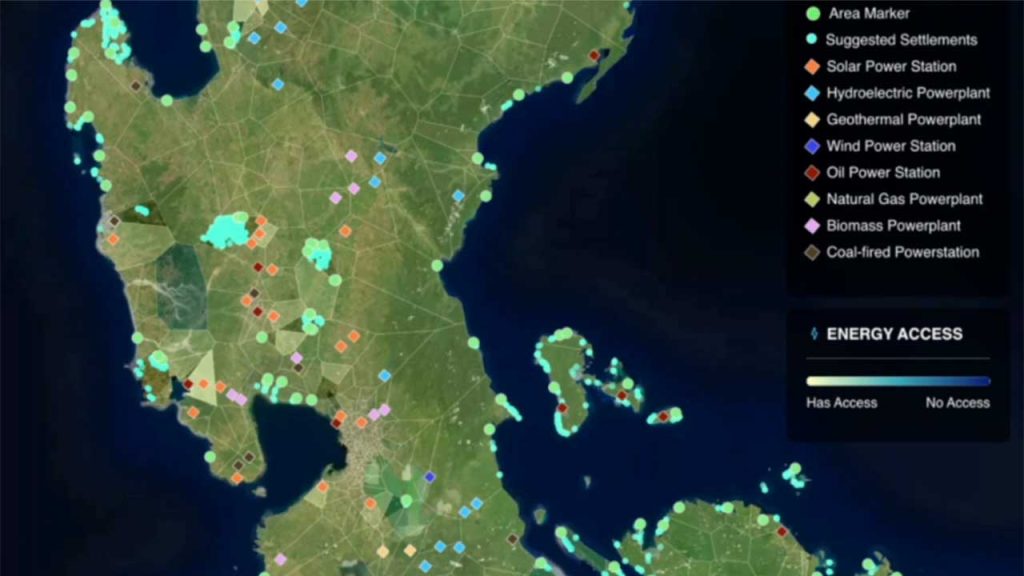
In Korea, we identified two major gaps that align closely with RIFFAI’s capabilities: energy intelligence and space-enabled defense monitoring. Korea aims to increase its renewable energy share to 35%, yet the country lacks efficient tools to identify new surface-level and subsurface renewable resources. Our geo-energy intelligence platform, which integrates satellite analytics with AI-driven subsurface modeling, directly supports this need. Early conversations with energy stakeholders showed strong interest in faster and more accurate site-scouting solutions.
In the defense sector, Korea currently operates forty-four satellites, compared with two hundred nine in Japan and nine hundred six in China. This creates a clear gap in regional space awareness. Korean defense partners highlighted the need for more consistent geospatial monitoring without depending entirely on national satellite capacity. Early pilot discussions and requests for proof-of-concept analyses were strong signals that our AI-enhanced satellite intelligence could address this strategic requirement.
These combined indicators gave us confidence that RIFFAI could achieve meaningful traction across both sectors.
The Turning Point: A Partnership That Changed Everything at KSCG 2025
Q3. During KSGC, were there any mentors, partners, or specific insights that significantly influenced your product or strategy?
One of the most transformative influences during K-Startup Grand Challenge 2025 came through our partnership with Google, supported by guidance from Esna, who led the Earth Katalyst program interviews. Early in RIFFAI’s development, we struggled to process eight terabytes of satellite and weather data using local machines and limited cloud capacity. A sudden increase in AI processing caused our daily cloud bill to rise from fifty dollars to seven hundred fifty dollars, forcing us to halt model training entirely. At that point, it felt as though the company might not survive.
During the program, we approached several cloud providers for support, but it was Google—and specifically Esna—who recognized the potential impact of our mission. After a short meeting, she approved us for the Earth Katalyst program, granting twenty-five thousand dollars in credits that later expanded to more than five hundred thousand dollars in Google support.
This partnership reshaped our technical strategy and enabled us to scale our Earth-observation AI in ways that were previously out of reach.
How KSGC 2025 Accelerated RIFFAI’s Growth
Q4. After joining KSGC, what has been the most meaningful change for your company and what evidence supports this growth?
Since joining KSGC, the most meaningful change for RIFFAI has been our rapid commercial and partnership growth. Before entering the program, our revenue stood at USD 49,000. During and after our participation in KSGC, this more than doubled to USD 112,000, driven by new customers across the Asia-Pacific region who adopted our satellite- and AI-powered intelligence solutions.
KSGC also played a crucial role in strengthening our entry into the Korean ecosystem. Through program introductions and exposure, we established partnerships with key Korean space agencies, research institutions, and major corporations, giving us both technical validation and local market credibility. These relationships opened doors to joint pilot projects in geospatial analytics, renewable energy site assessment, and defense-focused monitoring, areas where Korea is actively seeking innovation.
Additionally, being embedded in Korea’s fast-growing space and AI environment strengthened our product roadmap. Direct feedback from Korean industry partners helped us refine our geo-energy intelligence models and expand our real-time monitoring capabilities.
Overall, KSGC acted as a catalyst for RIFFAI. It supported revenue growth, deepened our presence in the Asia-Pacific region, and enabled us to build the strategic partnerships that continue to shape our long-term trajectory.
RIFFAI: Bringing Space Down to Earth
Q5. Looking ahead, what is the most important vision or long-term goal your company aims to achieve, and what steps are you taking to move toward it?
RIFFAI’s long-term vision is to become the global engine that processes all Earth observation data, enabling satellites around the world to deliver real-time, accessible intelligence for every industry on Earth. We imagine a future where space technology is no longer distant or specialized, but an invisible infrastructure supporting daily decisions in energy, agriculture, climate, security, transportation, and beyond.
To move toward this vision, we are starting with a focused strategy. Today, we are building deep domain expertise in the energy sector, helping countries and companies identify renewable resources, optimize infrastructure planning, and accelerate transition more efficiently toward sustainable systems.
At the same time, we are expanding our product pipeline to adjacent industries that face similar data and operational challenges, creating pathways for insights developed in one field to benefit several others.
We are also investing heavily in scalable AI models, multi-satellite integration, and global data partnerships to ensure our platform can support mission-critical applications across diverse regions. Each step with new partners, new industries, and new models brings us closer to a world where satellite intelligence becomes as accessible and influential as internet connectivity.
That is the future RIFFAI is building toward.
From transforming satellite data into tangible intelligence to bridging global industries through AI and space technology, RIFFAI is proving that the future of sustainability and strategic decision-making lies above us — quite literally.
Its journey through KSGC 2025 shows how innovation in orbit can reshape life on Earth, connecting the skies to the systems that power economies, protect nations, and sustain communities.
About This Series
This article is part of the “K-Startup Grand Challenge 2025 Interview Series,” featuring 40 global startups from Phase 2 of Korea’s leading accelerator program. The series highlights how international founders are scaling innovation through Korea’s startup ecosystem.
Read more stories from the K-Startup Grand Challenge 2025 Interview Series on KoreaTechDesk.
🤝 Looking to connect with verified Korean companies building globally?
Explore curated company profiles and request direct introductions through beSUCCESS Connect.
– Stay Ahead in Korea’s Startup Scene –
Get real-time insights, funding updates, and policy shifts shaping Korea’s innovation ecosystem.
➡️ Follow KoreaTechDesk on LinkedIn, X (Twitter), Threads, Bluesky, Telegram, Facebook, and WhatsApp Channel.